

Imagine a home office that sparks your limitless creativity—a workspace sanctuary where the air feels lighter, the clutter has vanished, and every tool you reach for is exactly where it should be. As the first rays of spring sunlight stretch across your desk, you realize that your environment is no longer just a place where you work; it is a living, breathing extension of your ambition. This is the power of a seasonal renewal. It is not merely about tidying up; it is about recalibrating your mental and physical space to align with the vibrant energy of a new season.
Here is how a day of deep work begins once you say goodbye to the winter chaos. You step into a room where the visual noise has been silenced. Your monitors are suspended at the perfect ergonomic height, and your wall-mounted organization system reflects the colors of a budding garden. The transition from the heavy, insulating layers of winter to the airy, organized efficiency of spring is a transformative experience that resets your focus and invites inspiration back to the table.
The Psychology of Spring Workspace Renewal
Why does a "spring cleaning" feel so profoundly different from a routine weekend tidy? The answer lies in the intersection of environmental psychology and cognitive load. According to experts in Color Psychology in the Workplace, the colors and arrangements within our immediate surroundings directly influence cognitive function, mood, and productivity.
During winter, we often accumulate "layers" in our workspace—extra cables, stacks of paper, and heavy accessories that provide a sense of coziness but eventually lead to mental stagnation. Spring renewal is an opportunity to leverage color psychology to stimulate different modes of work. For instance, incorporating shades of blue has been shown to improve concentration and stimulate thinking, while green is associated with relaxation and high-quality focus, as noted by Space Refinery.
By refreshing your organization system with these seasonal cues, you are not just decorating; you are engineering a more resilient state of mind. This alignment with the natural world is a core pillar of modern design, as explored in The 2026 Workstation White Paper: Converging Ergonomic Science and Sustainable Engineering, which emphasizes that a workspace must evolve alongside the user's biological and professional needs.
The Deep Maintenance Protocol: A Fresh Foundation
Before we can style a vibrant spring setup, we must address the "invisible" clutter and dust that winter leaves behind. A seasonal transition is the perfect time for a deep maintenance protocol that ensures your high-performance furniture and electronics continue to serve you reliably.
Cleaning is the most fundamental form of maintenance for modular organization systems. Over time, dust, dirt, and grime accumulate not just on the surface of your desk, but within the very holes of your pegboard and the crevices of your monitor arms. To begin your transformation, we recommend a complete teardown. Remove every accessory, hook, and electronic device.
Using a microfiber cloth dampened with a mild cleaner, wipe down the entire surface of your organization board. Avoid harsh chemicals that can degrade the finish or cause long-term damage to the material. Pay special attention to the peg holes; dust buildup here can hinder hook insertion and even lead to micro-scratches on your accessories. While the board is clear, inspect the mounting points. If you use a desk-mounted system, ensure the clamps are secure. This is a critical safety step, especially if you plan to reconfigure your layout with heavier spring accessories.

The Zoning Strategy: Mastering the Modular Pegboard
A common mistake we see among remote workers is overloading a pegboard with too many small items. This creates visual clutter that defeats the purpose of the tool, leading to "attention residue" where your brain struggles to filter out the noise. To combat this, we utilize a "zone" system—a method derived from professional workshop organization but adapted for the aesthetic needs of a home office.
Establish three distinct zones on your board:
- The Utility Zone: This area, usually at eye level or slightly below, holds the tools you use daily—headphones, charging cables, or frequently used pens.
- The Inspiration Zone: This is your "mood board" area. Use it for seasonal color swatches, motivational quotes, or sketches. In spring, this is where you introduce your lighter color palette.
- The Greenery Zone: Dedicate a corner to life. Small air plants or succulents not only improve air quality but provide a "soft" visual break for your eyes during long deep-work sessions.
The rule of thumb for accessory spacing is to leave at least 2 to 3 inches between items. This allows each piece to "breathe" and ensures that you can grab a tool without knocking over three others. For a seasonal update, you don't need a complete overhaul. Swapping out just 30% to 40% of your accessories—such as changing the color of your hooks or replacing a few decorative pieces with spring-themed items—is often enough to create an entirely fresh look.
Ergonomic Engineering: The Creator's ROI
While aesthetics spark the initial inspiration, functionality sustains the workflow. For content creators and professionals who spend upwards of 8 to 10 hours at their desks, the ergonomics of the setup are non-negotiable. We recently analyzed the performance requirements of a professional creator persona—someone managing a dual-monitor setup with high-end peripherals.
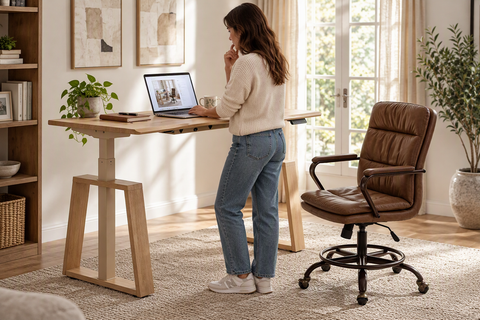
The data reveals a compelling case for investing in high-quality ergonomic foundations. For a creator earning $50/hour, standing for just four hours a day can lead to an estimated annual productivity gain of $7,500, assuming a modest 15% increase in focus and energy. This means a high-end standing desk effectively pays for itself within two months. Furthermore, the World Health Organization (WHO) recommends reducing sedentary time to lower cardiovascular risks, and our simulations suggest that this daily standing routine can contribute to significant caloric expenditure over a year.
However, a vibrant spring setup must also be a safe one. A typical "battlestation" consisting of a liquid-cooled PC, dual 34-inch ultrawide monitors, and studio-grade audio gear can weigh approximately 77 kg (170 lbs). If you are using a desk with a 120 kg capacity, you are operating at roughly 64% utilization. This is the "sweet spot" for motor longevity and stability. Pushing a single-motor desk to its 90% limit during a height transition can cause micro-vibrations that disturb your carefully curated pegboard arrangements or, worse, strain the motor.

Solving the Viewing Distance Deficit
One often-overlooked friction point in home office design is the "Viewing Distance Deficit." For those using large ultrawide monitors, the THX-recommended viewing distance for immersive work is approximately 43 inches. However, a standard 24-inch deep desk creates an 18.9-inch deficit, forcing you to sit far too close to the screen. This leads to eye strain and the "burning trapezius" sensation familiar to many developers and editors.
By utilizing a high-quality monitor arm, you can reclaim that lost space. Mounting your monitors on an adjustable arm allows you to push the screens back beyond the edge of the desk or pull them forward for detailed editing tasks. This flexibility is essential for maintaining a "neutral working posture," a concept championed by OSHA's Computer Workstation Guidelines. A neutral posture keeps your joints aligned, reducing the risk of musculoskeletal disorders (MSDs) and allowing you to stay in the "flow state" longer.
Ambiance and Lighting: The Emotional Anchor
As the evening sun sets, the "vibrant" spring look shouldn't disappear. This is where smart lighting transitions from a luxury to a productivity tool. Optimal office lighting should be glare-free and multidimensionally planned, as noted by Molto Luce.
For a spring theme, we recommend moving away from the harsh, cool whites of winter and toward a layered lighting approach:
- Task Lighting: A focused light for your keyboard and documents.
- Ambient Lighting: Soft, warm lights that fill the room and reduce the contrast between your bright monitors and the dark walls.
- Accent Lighting: Using smart LED panels or wooden wall lights to highlight your newly organized pegboard.
By using lighting to accentuate the textures of your workspace—the wood grain of the desk, the matte finish of the organization board, and the vibrant green of your plants—you create an emotional anchor. A tidy desk is beautiful, but a well-lit, tidy desk is inspiring. It signals to your brain that the workday is a structured, intentional event rather than a chaotic necessity.

Personal Tips for a Sustainable Rhythm
Transforming your space is the first step; maintaining your well-being within it is the second. Even the most ergonomic setup requires a behavioral component to be truly effective. We suggest adopting the "20-8-2" rhythm recommended by the Cornell University Ergonomics Web:
- 20 Minutes of Sitting: Maintain a neutral posture with your feet flat and back supported.
- 8 Minutes of Standing: Engage your core and shift your weight slightly.
- 2 Minutes of Movement: Stretch, walk to the window, or tend to your spring plants.
This rhythm prevents the "static loading" of muscles that leads to chronic pain. Use your pegboard as a visual cue for these breaks. Perhaps a small hourglass or a dedicated "movement" card in your inspiration zone can serve as a gentle reminder to step away.
Creating Your Holistic Lifestyle Solution
The journey from a cluttered winter desk to a vibrant spring sanctuary is a testament to the fact that our environment shapes our outcomes. By combining the rigorous standards of BIFMA G1-2013 Ergonomics Guidelines with the personal touch of seasonal styling, you create a space that is both a high-performance engine and a peaceful retreat.
Imagine finishing your day of deep work. You look up at your organized pegboard, the tools neatly spaced, the greenery thriving, and the soft glow of your accent lights reflecting a sense of accomplishment. You aren't exhausted; you are energized. You have built a workspace that doesn't just hold your computer—it holds your vision for the future.
As you plan your spring renewal, remember that the most important "accessory" in your office is you. Every adjustment, from the height of your monitor to the color of your hooks, should serve your comfort and your focus. Say goodbye to the chaos and hello to a season of limitless potential.
References
- BIFMA G1-2013 Ergonomics Guideline for Furniture
- Canadian Centre for Occupational Health and Safety (CCOHS) - Sit/Stand Desks
- Cornell University Ergonomics Web — Workstation Guides
- OSHA eTools: Computer Workstations - Neutral Working Postures
- WHO 2020 Guidelines on Physical Activity & Sedentary Behaviour
- Space Refinery: Color Psychology Guide
- Molto Luce: 5 Things to Consider in Office Lighting
- Office Principles: Color Psychology in the Workplace
Disclaimer: This article is for informational purposes only and does not constitute professional medical, legal, or financial advice. The ergonomic recommendations provided are general guidelines; individuals with pre-existing musculoskeletal conditions or specific health concerns should consult with a qualified healthcare professional or ergonomic specialist before making significant changes to their workstation or work habits. Productivity and ROI calculations are estimates based on generalized scenarios and may vary significantly based on individual circumstances.




Leave a comment