

Why does your shoulder tension peak by 3:00 PM, even if you have switched to a standing desk? For many office workers, the transition to a sit-stand routine is heralded as a cure-all for sedentary fatigue. However, for petite individuals—typically defined as those under 5'4"—the standard "ergonomic" setup often fails. Most office furniture is designed for the 50th percentile male, leaving shorter users to adapt their bodies to the equipment rather than the other way around. This mismatch leads to a phenomenon known as "zombie arm" posture, where the desk is too high, forcing the shoulders to hike and the neck to strain.
Finding the ideal standing desk height is not merely about comfort; it is about physiological alignment. When a desk does not accommodate your specific anthropometric needs, you invite repetitive strain and long-term musculoskeletal issues. To truly optimize your workspace, you must move beyond generic guidelines and understand the precise mechanics of your stature.
The Physiological Cost of the "Standard" Desk
The fundamental goal of ergonomics is to maintain a "neutral position"—a posture where the joints are not bent and the muscles are at their most efficient length. According to the U.S. Occupational Safety and Health Administration (OSHA), a neutral posture reduces the risk of Musculoskeletal Disorders (MSDs) by minimizing static load and pressure on peripheral nerves.
For petite users, the primary adversary is the "Standard Desk Height." Most fixed-height desks and many budget standing desks have a minimum height of 28 to 30 inches. While this accommodates a tall user, it is significantly too high for someone who is 5'2" or 5'3". When the desk is too high, the user is forced into one of two compromising positions:
- Shoulder Hiking: You lift your shoulders toward your ears to reach the keyboard. This creates chronic contraction in the trapezius muscles, leading to tension headaches and upper back pain.
- Ulnar Deviation: You rest your wrists on the edge of the desk and angle your hands outward to type. This compresses the carpal tunnel and strains the tendons in the forearm.
As noted in The 2026 Workstation White Paper: Converging Ergonomic Science and Sustainable Engineering, the integration of anthropometric data into furniture design is critical for preventing these "friction points." Without a desk that can descend to 25 inches or lower for sitting, or adjust precisely for standing, the petite user remains in a state of constant biomechanical stress.
Scientific Principles: Beyond the 90-Degree Myth
A common misconception in office ergonomics is the "90-degree elbow rule." While it is a useful starting point, clinical observations suggest it is often applied incorrectly. Many users set their desk height so their elbows are at 90 degrees while their shoulders are slightly tensed or their wrists are extended.
The ISO 11226:2000 standard for evaluating static working postures emphasizes that the duration of a posture is as important as the angle itself. For a petite person, even a 1-inch discrepancy in desk height can lead to significant cumulative strain over an eight-hour workday.
The Ulnar Styloid Process Method
The most accurate way to determine your ideal height is to measure from the floor to your ulnar styloid process—the bony protrusion on the outside of your wrist.
- Stand in your most comfortable, relaxed posture with your shoulders down and back.
- Bend your arm at the elbow, keeping your upper arm vertical and tucked close to your ribs.
- Measure the distance from the floor to the point just below your elbow crease.
- Subtract 1 to 2 inches from this measurement to account for the thickness of your keyboard and mouse.
This measurement provides a highly accurate starting height. Practitioners have found that the ideal height for intensive typing is often 0.5 to 1 inch lower than for mixed mouse use. This subtle adjustment prevents ulnar deviation and ensures the forearms remain parallel to the floor without the need for shoulder engagement.
Quantitative Data: The Impact of Precision Ergonomics
To illustrate the difference that precision makes, we analyzed the ergonomic requirements for a 5'2" (157.5 cm) user. The data reveals a significant "ergonomic gap" when using standard equipment.
| Metric | 5'2" (157.5 cm) Petite User | Standard Office Setup (Fixed) | Ergonomic Gap/Impact |
|---|---|---|---|
| Ideal Sitting Desk Height | 25.8 inches (65.5 cm) | 29.0 inches (73.6 cm) | 3.22-inch Deficit |
| Ideal Standing Desk Height | 37.6 inches (95.4 cm) | N/A | Requires adjustability |
| Metabolic Benefit (3 hrs standing) | +86.6 kcal / day | 0 kcal | ~6.2 lbs fat loss / year |
| Productivity ROI (Annual) | $2,812.50 (Est.) | $0 | 3.4-month payback period |
| Viewing Distance (27" 4K) | 43.9 inches | 24.0 inches (Avg. Depth) | 19.9-inch Deficit |
Note: Values are estimated based on common ergonomic practices and standard industry rates.

The L-Shaped Standing Desk with Accessories Set (60"x23") addresses these gaps through its dual-motor system, which provides smooth, incremental adjustments. For petite users, the ability to save memory presets is not just a convenience; it is a necessity for maintaining consistency in posture transitions.
The Solution: Engineering for the 5th Percentile
To accommodate a petite stature, a standing desk must possess a wide adjustment range. The BIFMA G1-2013 Ergonomics Guideline provides recommended dimensions for furniture to cover the 5th to 95th percentile of the population. For those under 5'4", this means seeking out desks that can lower significantly further than the industry standard.
The Standing Desk with Drawers, Wood Finish (47'' /55'') provides a versatile height range that accommodates both the seated and standing needs of petite individuals. Its integrated monitor riser helps resolve the viewing distance deficit identified in our data, ensuring the neck remains in a neutral position while the keyboard remains at the correct ulnar height.
Addressing the "Viewing Distance Deficit"
As shown in our quantitative analysis, petite users often face a viewing distance deficit. Because their reach is shorter, they tend to sit closer to the desk, which places the monitor too close to the eyes, leading to digital eye strain.
Using a Single Monitor Arm or a Dual Monitor Arm allows the user to push the screen back beyond the physical edge of the desk or pull it forward as needed. This flexibility is crucial for maintaining the CCOHS recommended monitor height, where the top line of text is at or slightly below eye level.

Practical Recommendations for Your Workday
Once you have identified your ideal heights, the next step is implementation. Ergonomics is a dynamic process, not a "set-and-forget" configuration.
The 20-8-2 Sit-Stand Rhythm
Cornell University’s Ergonomics Web recommends a specific rhythm to maximize the benefits of a sit-stand desk while avoiding the risks of prolonged static standing (which can lead to lower limb disorders).
- 20 Minutes Sitting: Maintain a neutral seated posture with feet flat on the floor or a footrest.
- 8 Minutes Standing: Switch to your calculated standing height. Ensure your weight is distributed evenly.
- 2 Minutes Moving: Take a micro-break. Stretch, walk, or perform gentle movements to stimulate blood circulation.
The Monitor Height Trap
Many petite users make the mistake of setting their monitor height based on their seated position and never adjusting it for standing. However, your eye level relative to the desk surface changes slightly when you stand due to the way the spine elongates. According to the HSE guidelines on DSE (Display Screen Equipment), the monitor should be easily adjustable to prevent neck tilting. A monitor arm with a gas spring mechanism, such as the Dual Monitor Arm, allows for these micro-adjustments in seconds.

Footwear Matters
For petite individuals, the choice of footwear can change your ideal desk height by up to 2 inches. If you transition from slippers to ergonomic sneakers or anti-fatigue mats, you must adjust your desk height accordingly. This is where memory presets on a smart controller become invaluable.
Beyond the Desk: A Holistic Approach
While the desk is the centerpiece of your ergonomic strategy, it is part of a larger ecosystem. For those under 5'4", consider these additional "gotchas":
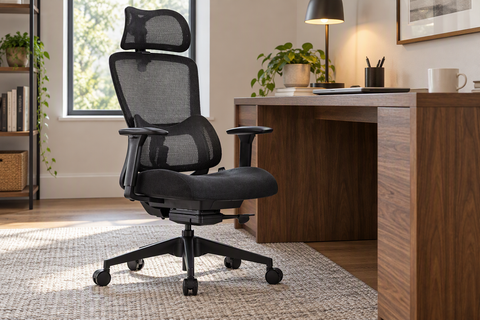
- Seat Depth: Ensure your chair allows you to sit with your back against the lumbar support while leaving a 2-inch gap between the edge of the seat and the back of your knees. If the seat is too deep, you will slump forward, negating the benefits of your standing desk.
- Keyboard Trays: If your desk cannot go low enough for a neutral seated posture, a L-Shaped Standing Desk with Accessories Set (60"x23") with a slide-out keyboard tray can provide that extra 2–3 inches of drop needed to keep your shoulders relaxed.
- Cable Management: Petite users often have a smaller "reach envelope." Ensure your most-used items (phone, mouse, notepad) are within the primary reach zone (within 10-12 inches) to avoid repetitive overreaching.
By grounding your workspace setup in anthropometric data rather than generic "elbow-height" rules, you transform your home office from a source of strain into a tool for longevity. The investment in a desk that truly fits a petite frame pays dividends not just in productivity, but in the long-term health of your musculoskeletal system.
YMYL Disclaimer: This article is for informational purposes only and does not constitute professional medical advice, diagnosis, or treatment. The ergonomic recommendations provided are based on general industry standards and anthropometric data. Individuals with pre-existing musculoskeletal conditions, chronic back pain, or other health concerns should consult with a qualified physiotherapist or occupational health professional before making significant changes to their workstation setup or work habits.
References
- BIFMA G1-2013 Ergonomics Guideline for Furniture
- CCOHS: Office Ergonomics - Sit/Stand Desk
- ISO 11226:2000 Evaluation of static working postures
- OSHA eTools: Computer Workstations - Neutral Working Postures
- HSE: Working safely with display screen equipment (DSE)
- The 2026 Workstation White Paper: Converging Ergonomic Science and Sustainable Engineering




Leave a comment