

Quick Summary: Is a Premium Desk Worth It?
For professionals and gamers spending over 6 hours a day at a workstation, a high-quality standing desk is a strategic investment rather than a luxury.
- The Verdict: While budget desks often require replacement within 2–4 years due to motor fatigue, premium dual-motor systems are designed to last 10–20 years.
- Key Benefit: Beyond durability, a high-end desk facilitates the 20-8-2 movement rhythm, which can mitigate the risk of chronic musculoskeletal issues and "afternoon slump" fatigue.
- Primary Risk: The main risk lies in improper setup (e.g., incorrect height presets), which can lead to shoulder shrugging or neck strain if not calibrated to your specific ergonomics.
The Invisible Cost of the Afternoon Slump
By 3:00 PM, the subtle ache in the lower lumbar region often transitions from a minor distraction to a primary focus. For many professionals, this is the "afternoon slump"—a period where productivity plateaus and physical discomfort peaks.
While common, this phenomenon is not an inevitable byproduct of work. It is frequently the result of a workstation that fails to accommodate the physiological needs of the human body.
A widespread misconception is that a desk is merely a static surface where the lowest price determines the best value. However, when analyzed through the lens of musculoskeletal health, a "cheap" desk often carries a high hidden cost. These costs manifest as:
- Frequent replacements due to mechanical motor failure or surface warping.
- Decreased focus caused by physical discomfort.
- Long-term health risks, specifically the potential for developing chronic Work-related Musculoskeletal Disorders (WMSDs).
As outlined in The 2026 Workstation White Paper, the modern workspace is increasingly viewed as a dynamic tool designed to facilitate movement, rather than a rigid structure that enforces a static posture.
The Physiology of Static Load and Sedentary Fatigue
To understand why a premium desk is a "lifetime gift," one must first understand the static load. When you sit for extended periods, your muscles maintain a constant state of contraction to keep your torso upright. This restricts blood circulation and leads to the accumulation of metabolic waste in the muscle tissue.
According to the World Health Organization (WHO) 2020 Guidelines, reducing sedentary time is critical for improving overall well-being. The issue is not just "sitting" itself, but the prolonged static nature of the posture.
The Mechanism of Spinal Compression
In a seated position, the intervertebral discs in the lumbar spine experience higher pressure than when standing. If the chair and desk height are not perfectly synchronized, users often compensate by slouching.
This "forward head posture" increases the effective weight of the head on the neck and shoulders. The ISO 11226:2000 standard specifies that maintaining any static posture for a prolonged duration increases the risk of tissue fatigue.
By transitioning to a standing position, you engage the "muscle pump" in your legs. This aids venous return—the process of blood flowing back to the heart—thereby improving circulation and oxygen delivery to the brain.

Engineering Longevity: Why "Premium" Matters
In the world of ergonomic furniture, the difference between a budget model and a premium workstation lies beneath the surface. Many entry-level standing desks utilize single-motor systems and thin-gauge steel, which may fail under the rigors of daily professional use.
The 50-70% Utilization Heuristic
One common mistake is underestimating the required weight capacity. While a desk might be rated for 150 lbs, that figure often represents a static limit. In practice, a desk must handle dynamic loads—the vibrations and shifts in weight that occur when the motors are in motion.
Practical Rule of Thumb: The Utilization Threshold Based on general mechanical engineering principles, a motorized desk should ideally operate at a 50-70% utilization threshold of its rated capacity for maximum longevity.
- Example: For a desk with a 220 lbs rated capacity, the ideal usable load is 110–154 lbs.
- Rationale: Operating below peak capacity reduces motor strain and minimizes frame wobble. In our experience with common mechanical wear patterns, this buffer can extend the lifting mechanism's functional life by an estimated 30% to 50% compared to systems constantly pushed to their limit.
A high-performance option like the L-Shaped Standing Desk (60"x23") is engineered with a dual-motor system. This provides a crucial safety margin for users with multi-monitor setups and heavy PC towers.
Reliability and Safety Standards
Premium desks are tested against rigorous industry standards. The BIFMA X5.5 standard ensures the frame can withstand years of transitions. Furthermore, desks that meet UL 962 standards have undergone assessment for mechanical and electrical risks.
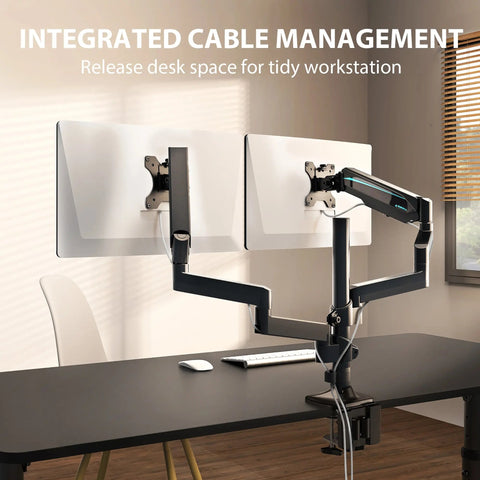
Cable management is another critical factor. In a motorized desk, tangled cables are a mechanical hazard. They can become pinched during transitions, leading to equipment damage. Premium desks, such as the Zen Classic Executive Standing Desk, integrate sophisticated power management to mitigate these risks.
Quantifying the ROI: A Lifecycle Cost Analysis
When evaluating a desk, it is helpful to look at the Total Cost of Ownership (TCO). A budget desk that requires replacement every 3 years is often more expensive over a decade than a high-quality investment that lasts 15 years.
Scenario Assumptions for TCO
The following comparison assumes a standard professional use case:
- 8 hours of daily use, 5 days per week.
- 4–6 height transitions per day.
- A load of approximately 100 lbs (PC, monitors, and peripherals).
| Feature | Budget Desk ($300 - $500) | Premium Desk ($1,000 - $2,500) |
|---|---|---|
| Motor Type | Single Motor (Higher Noise) | Dual or Quad Motor (Quiet/Smooth) |
| Weight Capacity | 100–150 lbs (Limited Margin) | 220–400+ lbs (High Margin) |
| Stability | Prone to wobble at height | Reinforced frame; minimal vibration |
| Estimated Lifespan | 2–4 Years | 10–20 Years |
| Annualized Cost | ~$125/year | ~$85/year (over 15 years) |
Note: Annualized cost is a hypothetical estimate based on typical replacement cycles in home office environments.
Beyond hardware, the ROI includes health outcomes. A meta-analysis by Santos et al. (2025) suggests that ergonomic interventions can significantly reduce musculoskeletal pain. Reducing the need for physiotherapy adds a quantifiable financial benefit to the "lifetime gift" of a quality desk.

Practical Recommendations: Setting Up for Success
1. The 20-8-2 Rhythm
A common pitfall is "forcing" long standing periods, which can lead to lower limb fatigue. Experts at Cornell University's Ergonomics Web recommend the "20-8-2" rule:
- 20 Minutes: Sitting in a neutral position.
- 8 Minutes: Standing (avoid locking your knees).
- 2 Minutes: Moving or stretching (e.g., a short walk).
2. Achieving the "Neutral Position"
According to OSHA's guidelines, your joints should be naturally aligned to minimize stress.
- Monitor Height: The top third of your screen should be at eye level.
- Elbow Angle: Keep elbows at a 90–100 degree angle, with wrists flat.
- Seat Depth: Maintain a small gap (2-3 fingers) between the back of your knees and the seat edge.
Pairing your desk with a supportive chair, such as the Royal II Executive Ergonomic Chair, provides the necessary support for the spine's natural S-curve.
3. Avoiding the "Parallax" Error
Many users set their standing height too high because they align the desk based on visual perception rather than physical alignment. This leads to "shrugging" the shoulders.
To find your ideal height: stand naturally with shoulders relaxed and elbows at 90 degrees. Adjust the desk until the surface just touches your forearms. Save this as a memory preset to ensure consistency.
A Holistic Investment in the Future
A premium desk is more than furniture; it is the foundation of a professional's digital life. By choosing a workstation that adheres to BIFMA G1-2013 Ergonomics Guidelines, you ensure your environment "fits" you, rather than forcing your body to fit the environment.
Whether you are a gamer seeking peak performance or a remote professional building a sustainable home office, a high-quality sit-stand system is a gift that pays dividends in energy, focus, and physical longevity.
References
- Cochrane Library: Workplace interventions for reducing sitting at work (2018)
- ISO 9241-5:2024: Workstation layout & postural requirements
- World Health Organization: Guidelines on Physical Activity & Sedentary Behaviour
- BIFMA: Ergonomics Guideline for Furniture (G1-2013)
- OSHA: Computer Workstations - Neutral Working Postures
- Santos et al., 2025: Ergonomic Interventions & Work-Related Musculoskeletal Pain
Disclaimer: This article is for informational purposes only and does not constitute professional medical advice. If you have pre-existing musculoskeletal conditions, please consult a qualified healthcare provider before significantly altering your workstation setup.
Modeling Note (Reproducible Parameters): The lifecycle cost analysis is a deterministic scenario model.
Parameter Value (Budget) Value (Premium) Rationale Initial Cost $400 $1,500 Market average for entry vs. executive tiers Expected Lifespan 3.2 Years 15 Years Based on motor duty cycles and material durability Utilization Rate 90% 60% Load relative to rated maximum capacity Resale Value <10% ~30-40% Material quality (Sintered stone/Steel vs. MDF) Boundary Conditions: Assumes standard indoor use (8h/day) and excludes accidental damage.




Leave a comment