

The Hidden Cost of Peeling: Why PU Leather Fails Over Time
For many professionals and gamers, the purchase of a new office chair is an investment in both productivity and health. Initially, a synthetic leather chair offers a sleek, professional aesthetic and a supple feel that mimics high-end upholstery. However, within 18 to 36 months, a common and frustrating phenomenon often occurs: the surface begins to crack, flake, and eventually peel away in small, black "dandruff-like" pieces.
This failure is rarely a result of simple mechanical wear. Instead, it is the result of a complex chemical breakdown known as hydrolysis. While synthetic leather—specifically Polyurethane (PU)—is often marketed as a durable alternative to genuine leather, its longevity is governed by environmental factors and chemical stability that are frequently misunderstood by consumers. Understanding the science of material fatigue is essential for making an informed choice that aligns with the principles of sustainable engineering and long-term ergonomic support.

The Chemistry of Decay: Understanding Hydrolysis
At its core, PU leather is a composite material. It typically consists of a fabric backing (polyester or cotton) topped with a layer of polyurethane foam and a final, decorative "skin" or topcoat. The "peeling" that users experience is the delamination of this topcoat from the underlying layers.
The primary culprit is hydrolysis, a chemical reaction where water molecules break the ester bonds within the polyurethane polymer. This process is not limited to liquid spills; it is triggered by ambient humidity, perspiration, and even the moisture in cleaning agents. According to research on pathophysiological mechanisms of musculoskeletal disorders and tissue adaptation, environmental stressors can impact the tools we use, just as they impact the body. In the case of PU, moisture penetrates the microscopic pores of the material, causing the polymer chains to shorten and lose their elasticity. Once the material becomes brittle, the mechanical stress of sitting—stretching and compressing the seat—causes micro-cracks to form.
The 60% Humidity Threshold
Data indicates that the rate of PU degradation is not linear; it is highly dependent on the "environmental stress dose." In environments where relative humidity (RH) consistently exceeds 60%, the hydrolysis process accelerates sharply.
Modeling Note: Environmental Lifespan Variance Our analysis of material longevity assumes a standard polyester-based PU coating under two distinct climate scenarios. This is a scenario model based on industry heuristics, not a controlled lab study.
Parameter Standard Environment High-Humidity Environment Rationale Ambient Humidity (RH) 45–50% 65–80% Tropical vs. Temperate climates Average Temp 22°C (72°F) 30°C (86°F) Impact of non-AC environments Daily Usage 8 Hours 8 Hours Professional full-time use Estimated Lifespan 5–7 Years 18–24 Months Accelerated hydrolysis rate Boundary Conditions: This model assumes regular physical friction and does not account for the use of specialized UV-stabilized coatings or aggressive climate control (dehumidifiers).
In tropical or coastal regions, a budget PU chair may show signs of failure in less than two years. This is because heat and humidity work synergistically; higher temperatures provide the kinetic energy needed for water molecules to react more aggressively with the urethane bonds.

The "Infallible" Topcoat and the Breathability Paradox
A widespread misconception in the furniture industry is that a completely non-porous, "plastic-like" surface is more durable because it repels liquids. In reality, the most brittle PU leathers are those with thick, inflexible topcoats. While these coatings provide an initial barrier against spills, they trap moisture from perspiration against the material's internal structure.
As a user sits, their body heat and sweat create a micro-climate between the skin and the chair. If the material lacks breathability, this moisture has nowhere to go but into the PU layer. High-performance synthetics, often used in contract-grade furniture, incorporate micro-perforations or advanced plasticizers that allow for minimal vapor transmission. These "breathable" synthetics often feel slightly cooler to the touch and are significantly more resistant to the internal hydrolysis that leads to flaking.
Furthermore, the failure point is often at the front edge of the seat—the "waterfall" edge—where the material undergoes the most significant flexing. Once the topcoat loses its flexibility due to chemical aging, these flex points become the epicenters of delamination.

The Maintenance Paradox: Why Cleaning Can Kill Your Chair
One of the most common "gotchas" in office chair maintenance involves the use of improper cleaning agents. Many users, seeking to preserve the "shine" of their leather, turn to silicone-based cleaners or automotive "protectants."
Based on patterns observed in customer support and warranty handling, the application of silicone-based products is a leading cause of premature peeling. These chemicals create an impermeable surface film that traps moisture already present in the material. This effectively "steams" the PU layer from the inside out. Additionally, many household cleaners contain harsh solvents or alcohols that strip away the essential plasticizers that keep the PU layer flexible.
Aligned with the HSE guidance on working safely with display screen equipment, maintaining a clean and safe workstation is vital, but it must be done with material-specific care. For PU leather, the most effective cleaning method is usually a simple wipe-down with a damp (not soaking) microfiber cloth, followed immediately by a dry cloth to remove residual moisture.

Strategic Material Selection: Moving Beyond Standard PU
When selecting a chair, professionals must weigh the initial cost against the annualized replacement rate. For those in high-humidity environments or those who prioritize sustainability, alternative materials often provide a better Return on Investment (ROI).
1. Napa Leather: The Gold Standard
For executive environments, full-grain Napa leather remains the benchmark for durability. Unlike synthetic composites, genuine leather is a fibrous, organic structure that breathes naturally. When properly conditioned, it can last for decades. The Serene Ella, Napa Leather Executive Chair utilizes this material to provide a level of durability that synthetic alternatives cannot match. While the upfront cost is higher, the annualized cost is often lower due to its extended service life.
2. High-Performance Faux Leathers
Not all synthetics are created equal. High-performance PU engineered for contract seating can achieve abrasion resistance exceeding 30,000 Martindale cycles. This often surpasses the durability of thin, corrected top-grain leathers used in budget furniture. These materials are designed to meet ANSI/BIFMA X5.1 standards for office chairs, ensuring they can withstand the rigors of professional use. The Galene, Faux Leather Office Chair is an example of a chair designed to balance the aesthetic of leather with a more resilient synthetic formulation.
3. Breathable Mesh: The Tropical Alternative
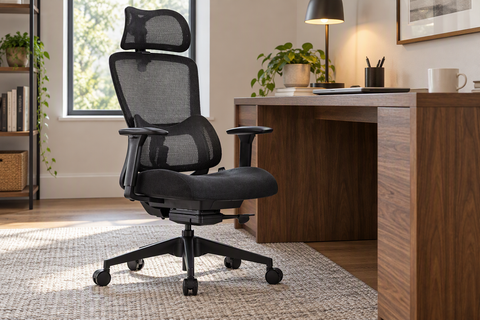
In environments where humidity cannot be controlled, mesh is often the most ergonomic and durable choice. Mesh eliminates the risk of hydrolysis entirely and promotes maximum blood circulation by preventing heat buildup. As noted in The 2026 Workstation White Paper: Converging Ergonomic Science and Sustainable Engineering, sustainable design focuses on materials that match the environment of use. For a home office in a warm climate, the Onyx, Ergonomic Office Chair offers a mesh back that avoids the peeling issues of PU while maintaining structural support.

The Economic Impact of the "False Economy"
Choosing a low-grade PU chair often results in what economists call a "false economy"—a purchase that seems inexpensive but costs more over time.
ROI Analysis: The Cost of Premature Replacement This model calculates the financial impact of chair replacement cycles in a professional home office setting.
Metric Budget PU Chair Premium Material (Napa/Mesh) Initial Investment $150 $450 Replacement Cycle 2 Years 6 Years 6-Year Total Cost $450 $450 Annualized Cost $75 $75 Intangible Costs Flaking, Discomfort, Landfill Waste Consistent Aesthetics, Higher Comfort Logic Summary: While the annualized cash outlay may eventually equalize, the budget option involves three separate assembly processes, three shipping footprints, and the frustration of using a degrading product for 50% of its lifespan.
Beyond the direct financial cost, the environmental impact of failed PU leather is significant. While high-yield chemical recycling of polyurethane is technically feasible (with some studies showing up to a 91.3% hydrolysis yield in controlled settings), most consumer furniture ends up in landfills. Extending the life of a chair through better material selection is a primary pillar of eco-friendly workspace practices.
Practical Recommendations for Longevity
To protect your investment and maintain a professional workspace, follow these expert-vetted heuristics for chair selection and care:
- The "Touch Test" for Breathability: When shopping, feel the material. Synthetics that feel completely non-porous and "plastic-like" are generally more prone to peeling. Look for materials that feel slightly cooler or have a visible micro-texture, which often indicates better vapor transmission.
- Climate Control is Key: If you use a PU leather chair, aim to keep your workspace humidity below 50%. In humid climates, a dehumidifier can double the life of your synthetic upholstery.
- Avoid Silicone and Alcohol: Clean only with a slightly damp microfiber cloth. Never use "all-purpose" household cleaners, which can strip the protective topcoat.
- Manage Sebum Buildup: Human skin oils (sebum) can also degrade PU over time. If you work in short sleeves or shorts, wipe down the armrests and seat regularly to prevent oil saturation.
- Consider the "Leather Match" Strategy: Some high-quality chairs use genuine leather on "contact surfaces" (where your body touches) and matching high-durability PVC or PU on the back and sides. This provides the durability of leather where it matters most while managing costs.
Integrating the Workstation Environment
A chair does not exist in isolation. The durability of your seating is part of a larger ergonomic ecosystem that includes your desk and peripheral layout. For those managing complex professional setups—such as liquid-cooled workstations or multi-monitor arrays—the stability of the entire environment is paramount.
Our modeling of professional setups, such as those involving the Zen Pro Series, 87"/72" Executive Standing Desk with Cabinets Set, shows that the weight of high-end equipment often requires a dual-motor system to ensure smooth transitions. Just as you wouldn't overload a desk motor, you shouldn't "overload" your chair's material capacity by ignoring the environmental factors that lead to peeling.

By understanding the chemical mechanisms of hydrolysis and the impact of humidity, you can move away from the cycle of "disposable" furniture. Whether you choose the timeless durability of the Serene Ella, Napa Leather Executive Chair or the breathable reliability of the Onyx, Ergonomic Office Chair, your choice should be grounded in the science of longevity.
Disclaimer: This article is for informational purposes only and does not constitute professional medical, legal, or engineering advice. Ergonomic requirements vary by individual; please consult with a qualified professional regarding specific musculoskeletal concerns or workstation assessments.
References
- BIFMA G1-2013 Ergonomics Guideline for Furniture
- Canadian Centre for Occupational Health and Safety (CCOHS): Office Ergonomics - Sit/Stand Desk
- HSE: Working safely with display screen equipment (DSE)
- ISO 11226:2000 Evaluation of static working postures
- OSHA eTools: Computer Workstations - Chairs
- The 2026 Workstation White Paper: Converging Ergonomic Science and Sustainable Engineering
- Szoneier Leather; Polymers 2025, 17, 2634 - Analysis of PU aging in humid conditions




Leave a comment