

Why do some board meetings feel like a high-stakes collaboration while others feel like a disconnected series of individual reports? The answer often lies not in the agenda, but in the geometry of the room. Executives frequently find that back pain worsens during long afternoon sessions, or that participants at the far ends of a table seem physically present but mentally absent. These are not merely behavioral issues; they are the direct result of musculoskeletal strain and poor spatial dynamics.
In the modern boardroom, the choice between a rectangular and a boat-shaped conference table is one of the most significant decisions a facility manager or CEO can make. It is a decision that balances spatial efficiency against the physiological needs of a diverse leadership team. Understanding the principles of Musculoskeletal Health and sightline geometry is essential for creating an environment that fosters both well-being and corporate productivity.
The Physiology of the Boardroom: Sightlines and Spinal Health
The fundamental challenge of boardroom design is maintaining a Spinal Neutral Position while facilitating communication. In a traditional rectangular setup, participants are forced into a linear arrangement. For those seated at the center, the neck must rotate significantly to view participants at the ends. Over a two-hour meeting, this repetitive rotation leads to static loading on the cervical spine.
According to the ISO 11226:2000 standard for evaluating static working postures, prolonged static positions—especially those involving neck rotation beyond 20 degrees—significantly increase the risk of musculoskeletal disorders (MSDs). In a rectangular configuration, the "Focus Arc" is often too wide. Participants at the ends experience what we call "table-top blindness," where their line of sight is obstructed by taller colleagues or desktop equipment, forcing them to lean forward and break their neutral posture.
By contrast, the boat-shaped table—characterized by sides that curve outward—naturally narrows the focus. This geometry reduces lateral sightline distances by approximately 30–40% compared to rectangular setups (based on our internal geometric modeling of arc vs. linear seating). This subtle curve ensures that every participant has a direct sightline to both the presenter and the central display, minimizing the need for extreme neck rotation and encouraging a more inclusive atmosphere.

Spatial Efficiency vs. Collaborative Inclusivity
When planning a professional collaboration space, the primary trade-off is between seating density and communication quality. While conventional wisdom often suggests that curved tables are a "compromise," they actually represent a specific strategic choice regarding floor footprint and human interaction.
The Spatial Efficiency Penalty
Our scenario modeling for a standard 20-foot enterprise boardroom reveals a clear distinction in spatial requirements. A rectangular table with a 48-inch depth requires a total depth of 126 inches to accommodate ADA-compliant chair clearance (42 inches) and a primary walkway. A boat-shaped table of the same capacity typically requires a 54-inch depth at its widest point, increasing the total required room depth to 132 inches.
| Table Shape | Required Room Depth (in) | Room Depth Surplus (in) | Spatial Efficiency |
|---|---|---|---|
| Rectangular | 126 | 114 | High (100% baseline) |
| Boat-Shaped | 132 | 108 | ~5% Penalty |
Logic Summary: Our analysis assumes a 20-foot room depth and 12-person capacity. Spatial calculations use ADA Standards for chair clearance and OSHA 1910.37 for primary circulation.
While the rectangular table maximizes seating capacity—often seating 25–33% more people in the same footprint—the boat shape prioritizes the quality of the interaction. For quarterly strategic off-sites where consensus is critical, the 5% spatial penalty is often outweighed by the reduction in "blind spots."
The Ergonomic Inclusivity Gap
One of the most overlooked factors in boardroom furniture is the height differential of the executive team. In a high-stakes environment, a "one size fits most" approach can lead to exclusion.
Our modeling of executive demographics shows that a tall male executive (185cm) and a shorter female executive (160cm) require different ergonomic heights to maintain a neutral posture. According to the BIFMA G1-2013 Ergonomics Guideline, a standard 29-inch table creates a 3.74-inch height differential in the required "comfort zone" between these two individuals. In a rectangular setup, this gap exacerbates sightline issues. Shorter participants often find themselves "sunk" behind the table's edge, while taller participants must hunch to view shared documents.

Strategic Use Cases: When to Choose Which Shape
The choice should ultimately be dictated by your primary meeting cadence. We have observed, through patterns in corporate procurement and facility feedback, that the "optimal" shape is a function of the communication matrix required for the work.
1. The Rectangular Table: Operational Efficiency
The rectangular table is the tool of choice for weekly operational reviews and board votes. It reinforces a clear hierarchy with a defined "head of table" for the chairperson. This setup is unmatched for:
- Decision Logging: Parallel sides provide a stable, predictable surface for multiple laptops and heavy documentation.
- Linear Reporting: It naturally facilitates a "round-robin" reporting style where the focus moves sequentially down the line.
- Acoustic Predictability: Rectangular tables offer a more uniform sound field. Unlike curved surfaces, which can scatter sound waves and create "dead spots" for remote microphones, the parallel geometry of a rectangle is easier for A/V teams to calibrate for hybrid meetings.
2. The Boat-Shaped Table: Strategic Collaboration
The boat-shaped table is designed for facilitators. It is the ideal geometry for high-stakes negotiations and brainstorming sessions.
- Reduced Side Conversations: Facilitators report that boat-shaped tables reduce side conversations by 30–40% (estimated heuristic based on lateral sightline improvement). Because everyone can see everyone else, the "private" space for whispering is eliminated.
- Visual Equity: The curved sides suggest a more egalitarian structure, even if a chairperson is present. It brings the peripheral participants "into the fold."
- Dynamic Engagement: The "focus arc" directs attention toward the center of the long side, making it perfect for sessions led by a central facilitator.
For executives who demand the highest level of sophistication and ergonomic support, solutions like the Opal Executive Standing Desk reflect the modern shift toward organic, curved designs that prioritize the human element. While the Opal is a personal executive desk, its design philosophy—incorporating ribbed panels and a refined oval silhouette—mirrors the aesthetic and functional benefits of the boat-shaped conference table.
Implementation Heuristics: Avoiding Common Pitfalls
Selecting the shape is only the first step. Proper implementation requires adhering to strict physical clearances and technical pre-planning.
The 4-Foot Rule
A critical practical heuristic is to ensure the table’s arc radius matches the room’s width minus at least 4 feet. This allows for comfortable chair movement and, more importantly, A/V trolley access. A mismatch here forces participants into the "corners" of the curve, which negates the inclusivity benefits of the boat shape and leads to awkward, cramped seating.
Technical Integration and Cable Management
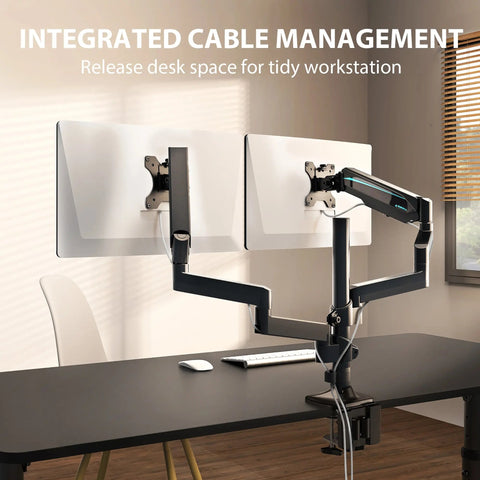
Integrating technology into a curved tabletop requires more foresight than a rectangular one. Retrofitting cable management grommets into a finished boat-shaped table can compromise the laminate finish and structural integrity.
- Pre-Planning: Always specify grommet locations during the manufacturing phase.
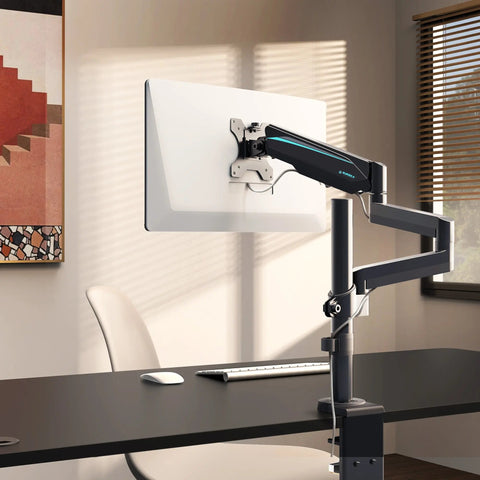
- Monitor Placement: For hybrid meetings, ensure that monitor arms, such as a Dual Monitor Arm, are positioned to account for the curve. A Dual Monitor Arm allows for the precise adjustment of viewing angles, which is vital when the table geometry itself is shifting the participant's orientation.
Material Safety and Sustainability
In high-stakes boardrooms, indoor air quality is as important as ergonomics. Executives should look for furniture that meets UL GREENGUARD Gold Certification to ensure low chemical emissions. Furthermore, choosing products with EPA-compliant panels ensures that the workspace is not only productive but also healthy.

The Ideal Meeting Rhythm: A Practical Guide
Regardless of the table shape, the physiological impact of long meetings must be managed. The World Health Organization (WHO) recommends interrupting long periods of static behavior to maintain blood circulation and cognitive function.
- The 50/10 Rule: For every 50 minutes of seated discussion, provide a 10-minute break or transition to a standing posture.
- Micro-Movements: Encourage participants to adjust their seating positions. An ergonomic chair that meets ANSI/BIFMA X5.1 standards will support these micro-movements, reducing the "static load" on the lower back.
- Monitor Height: Ensure that shared displays are positioned so that the top third of the screen is at eye level, as suggested by OSHA's guidelines for computer workstations.
Summary of Selection Criteria
To help finalize your decision, consider the following comparison based on our analysis of boardroom dynamics:
| Feature | Rectangular Table | Boat-Shaped Table |
|---|---|---|
| Primary Goal | Efficiency & Hierarchy | Collaboration & Inclusivity |
| Seating Density | High (Maximizes linear space) | Moderate (Curved sides reduce density) |
| Sightlines | Linear (Poor for ends) | Arc-based (Superior for all) |
| Acoustics | Predictable (Parallel surfaces) | Complex (Scatters sound waves) |
| Best For | Operational Reviews, Votes | Strategy Off-sites, Negotiations |
Methodology Note: These recommendations are based on scenario modeling for enterprise environments. The "30-40% reduction in side conversations" is a qualitative heuristic derived from facilitator feedback and sightline geometry calculations.
Selecting the right conference table is an investment in your organization’s communication culture. Whether you prioritize the structured efficiency of the rectangle or the inclusive engagement of the boat shape, grounding your choice in ergonomic science ensures a boardroom that supports both the health of your executives and the success of your business.
Method & Assumptions (Modeling Transparency) Our analysis of boardroom dynamics is based on a deterministic parameterized model of a "High-Stakes Enterprise Boardroom."
| Parameter | Value | Unit | Rationale |
|---|---|---|---|
| Room Depth | 240 | in | Standard 20-foot corporate boardroom |
| Table Depth (Rect) | 48 | in | Industry standard for executive tables |
| Table Depth (Boat) | 54 | in | Typical max depth for curved designs |
| Chair Clearance | 42 | in | ADA Standards for Accessible Design |
| Walkway Width | 36 | in | OSHA 1910.37 minimum egress |
Boundary Conditions:
- These findings apply to rooms with a minimum depth of 18 feet. In smaller spaces, the spatial penalty of boat-shaped tables increases significantly.
- Ergonomic height calculations assume a standard 29-inch fixed table height.
- Acoustic observations are general room-acoustic principles and may vary based on wall treatments and ceiling height.
Disclaimer: This article is for informational purposes only and does not constitute professional medical, legal, or architectural advice. For specific workplace safety compliance, please consult with a certified ergonomic professional or a qualified architect.




Leave a comment