

Is Standing the New Smoking? The Real Story on Calorie Burn
Switching from sitting to standing at work has gained significant attention, often accompanied by bold claims about health benefits. While it's a crucial step toward a less sedentary lifestyle, it's important to have realistic expectations. The core question for many is: how much of a difference does it actually make to my daily calorie burn?
The simple answer is that standing does burn more calories than sitting. When you stand, you engage more muscles in your legs, core, and back to maintain balance and posture. This increased muscle activation requires more energy. However, it's crucial to understand that standing is not a replacement for regular exercise. A systematic review from Cochrane confirmed that sit-stand desks effectively reduce sitting time, but the direct metabolic impact should be viewed as a supplement to, not a substitute for, active movement.
Think of it as moving from a state of metabolic "idle" to "low activity." The primary benefit comes from breaking up long periods of physical inactivity, a key recommendation from the World Health Organization to reduce health risks associated with a sedentary lifestyle.
Quantifying the Difference: Sitting vs. Standing
To understand the impact, we use Metabolic Equivalents (METs). One MET is defined as the energy used by a person at rest (roughly 1 kcal per kilogram of body weight per hour).
The Calculation Formula: To estimate your hourly burn, use this heuristic:
Calories/Hour ≈ MET value × Weight in kg
Based on the Compendium of Physical Activities, we use the following standard MET values for office work:
- Sitting at a desk (light work): 1.3 METs
- Standing at a desk (light work): 1.8 METs
For a 170-pound (approx. 77 kg) individual, the calculation looks like this:
- Sitting: 1.3 METs × 77 kg = ~100 calories/hour
- Standing: 1.8 METs × 77 kg = ~138 calories/hour
This results in a net gain of approximately 38 calories per hour. While individual results vary based on muscle mass and age, the following table provides a comparison across different body weights to help you estimate your own potential burn:
| Body Weight | Sitting (1.3 METs) | Standing (1.8 METs) | Hourly Difference |
|---|---|---|---|
| 130 lbs (59 kg) | 77 kcal | 106 kcal | +29 kcal |
| 170 lbs (77 kg) | 100 kcal | 139 kcal | +39 kcal |
| 210 lbs (95 kg) | 124 kcal | 171 kcal | +47 kcal |
| 250 lbs (113 kg) | 147 kcal | 203 kcal | +56 kcal |
Note: These figures represent total energy expenditure, including your basal metabolic rate (BMR).
As the data suggests, while standing is a step up from sitting, the difference is modest. The real value of a standing desk converter is that it facilitates active movement, which provides a much larger metabolic boost.

Maximizing Your Results: Beyond Just Standing
Simply swapping sitting for standing is just the beginning. The most significant benefits emerge when you use standing as a platform for more frequent, subtle movements. This is where the concept of an "active workstation" comes into play.
Debunking a Common Myth: Standing is Not Exercise
A frequent misconception is that accumulating hours of standing is equivalent to a workout. This is incorrect. Prolonged static standing can lead to its own set of musculoskeletal issues, including lower back pain and foot fatigue, as highlighted by OSHA-EU. The goal isn't to remain perfectly still; it's to encourage constant, low-intensity postural adjustments.
Based on common patterns observed in ergonomic assessments, meaningful gains come from "micro-movements." These are small shifts that keep muscles engaged and blood circulating.
Effective Micro-movement Heuristics:
- Heel-to-toe shifts: Gently rock your weight from your heels to the balls of your feet.
- Weight shifting: Alternate your primary standing leg every 5–10 minutes.
- Calf raises: Slowly raise and lower your heels while reading or on a call.
- Small steps: Take small steps in place or from side to side.
These actions prevent the static load on your muscles and joints, which is a primary risk factor for discomfort, and can modestly increase energy expenditure beyond passive standing.
The Role of Ergonomic Accessories
To make active standing sustainable, specific tools can help. Note: The products mentioned below are examples of ergonomic solutions; similar benefits can be achieved with various brands or setups that prioritize these functional goals.
An anti-fatigue mat is a common starting point, as its cushioned surface naturally prompts small adjustments in foot position. For additional support, an Adjustable Ergonomic Footrest can be highly effective. Using a footrest allows you to elevate one foot, changing the angle of your pelvis and relieving pressure on your lower back. The ability to rock or tilt the footrest further encourages the circulation-boosting movements that make standing effective. Many users find that these tools help them transition to longer standing intervals without the typical foot fatigue associated with hard floors.

Setting Up for Success: Your Ergonomic Foundation
A standing desk converter is only as good as its setup. Incorrect positioning can negate the benefits and introduce new risks like shoulder strain or wrist pain.
Achieving a Neutral Posture
Your primary goal is a "neutral" body position. According to OSHA, this means your joints are naturally aligned to minimize stress. Use this checklist for your standing setup:
- Monitor Height: The top line of text on your screen should be at or slightly below eye level. A common mistake is placing the monitor too low, forcing neck flexion.
- Elbow Angle: Your elbows should be bent at a 90- to 100-degree angle, with forearms parallel to the floor.
- Wrist Position: Your wrists should be straight (neutral), not bent up or down. Placing a keyboard directly on a thick converter surface often forces the wrists into an extended position.
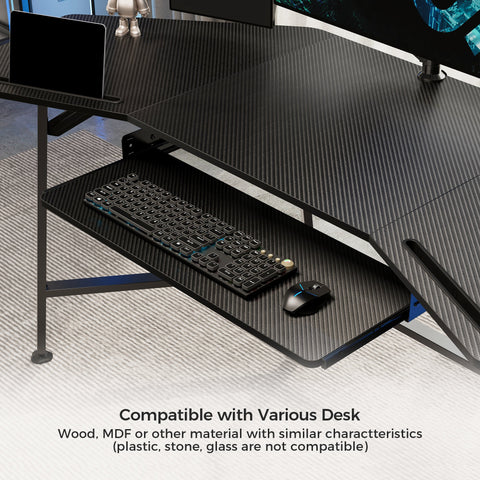
To solve this, a dedicated Pull-out Keyboard Tray can be an effective solution, allowing you to position your input devices lower than the main surface to maintain that neutral line.
For more detailed guidance, see our article on Finding Your Ideal Ergonomic Standing Desk Height.
Stability and Cable Management
- The Wobble Test (Practical Rule of Thumb): A stable converter should not wobble more than a centimeter during normal typing. If it does, check the load rating; you may need to move heavy monitors to a separate desk-mounted arm.
- Cable Strain: Ensure all cables have enough slack to move freely as the desk rises. Route them in a flexible loop to avoid snagging or damaging ports.
Properly Setting Up Your Standing Desk requires thoughtful configuration to ensure the tool actually improves your health.
Finding Your Rhythm: A Sustainable Sit-Stand Routine
Transitioning requires adaptation. The key is to build stamina gradually.
A Sample Schedule for Beginners
Cornell University's Ergonomics Web suggests a "20-8-2" rhythm: 20 minutes sitting, 8 minutes standing, and 2 minutes of moving/stretching. For a more flexible start, consider this progression:
- Week 1: 15–30 minutes of standing for every hour of sitting. Aim for 1–2 hours total per day.
- Week 2-3: Try a 45/15 or 40/20 sit-stand ratio.
- Week 4+: Work toward a 1:1 ratio (e.g., 30 mins sit / 30 mins stand). The ultimate goal for most is to accumulate 2–4 hours of standing per workday, broken into multiple sessions.
Our guide to the Optimal Sit-Stand Ratio explores different cadences to help you find your peak energy levels.
Key Takeaways
- Modest Calorie Burn: Standing burns roughly 30–40% more calories than sitting (about 20–50 kcal/hour depending on weight).
- Movement is Vital: The real metabolic advantage comes from micro-movements. Passive standing is not enough.
- Setup Matters: Maintain neutral posture—eye level monitors and straight wrists—to avoid injury.
- Adapt Gradually: Start small and aim for 2–4 hours of total standing time spread throughout the day.
Frequently Asked Questions (FAQ)
How many more calories do you burn standing vs. sitting?
On average, you burn about 20–50 more calories per hour standing than sitting, depending on your body weight and how much you move while standing.
Is standing all day better than sitting all day?
No. Prolonged static posture of any kind can cause musculoskeletal strain. The most effective approach is to alternate between sitting and standing.
How long should I stand at my desk each day?
A sustainable goal is 2 to 4 hours of standing per workday, broken into 15- to 30-minute intervals.
Disclaimer: This article is for informational purposes only and does not constitute professional medical advice. If you have pre-existing health conditions, such as back pain or cardiovascular issues, please consult with a qualified healthcare professional before making significant changes to your work routine.
References
- Cochrane: Workplace interventions for reducing sitting at work (2018)
- WHO 2020 Guidelines on Physical Activity & Sedentary Behaviour
- OSHwiki: Musculoskeletal disorders and prolonged static standing
- OSHA eTools: Computer Workstations - Neutral Working Postures
- Cornell University Ergonomics Web — Workstation Guides
Leave a comment