

The Hidden Metric of Longevity: Why Load Capacity is More Than a Number
Why does a standing desk that performed flawlessly on day one begin to stutter, groan, or tilt after just six months of use? For many professionals and high-performance gamers, the answer lies in a fundamental misunderstanding of weight ratings. While most consumers focus on the maximum weight a desk can "hold," the mechanical reality of a height-adjustable workstation is governed by two distinct engineering principles: static and dynamic load capacity.
In the pursuit of a healthier workspace, the "sitting is the new smoking" narrative has driven millions to adopt sit-stand rhythms. However, as noted in The 2026 Workstation White Paper: Converging Ergonomic Science and Sustainable Engineering, the physiological benefits of these transitions are only realized if the hardware can sustain them reliably over thousands of cycles. Understanding the technical nuances of load capacity is not just about protecting your equipment; it is about ensuring your ergonomic investment actually supports your long-term Musculoskeletal Health.
The Physics of Resistance: Static vs. Dynamic Load
To make an informed decision, one must first demystify the terminology often used in product specifications.
Static Load Capacity
Static load refers to the maximum weight a desk can support while stationary. In this state, the force is constant, and the structural integrity of the frame and tabletop is the primary concern. A high-performance desk like the Full-Surface Mousepad Gaming Desk (60"x27") is engineered with a reinforced carbon steel frame to handle up to 500 lbs of static weight. This ensures that even with heavy PC towers and multiple monitors, the surface remains rigid and safe.
Dynamic Load Capacity
Dynamic load capacity is the critical specification for any electric standing desk. It represents the maximum weight the motors can safely lift or lower while in motion. This is where most entry-level desks fail. Lifting a heavy load requires overcoming inertia—the resistance of an object to change its state of motion. When the motors engage, they must generate enough torque to move the mass upward from a dead stop.
Logic Summary: Our engineering analysis assumes that dynamic load is the primary predictor of motor longevity. While a desk might hold 300 lbs while "parked," its ability to lift that same weight repeatedly without overheating the control board is the true measure of its quality.
The Physiological Cost of Mechanical Failure
The relationship between workstation stability and Musculoskeletal Disorders (MSDs) is well-documented. According to the ISO 11226:2000 standard on the evaluation of static working postures, maintaining a Neutral Position is essential for reducing physical strain.
When a desk operates near its dynamic limit, two issues frequently arise that compromise ergonomics:
- Micro-Wobble: A desk pushed to its capacity often exhibits increased vibration and lateral movement at standing heights. This forces the user to subconsciously engage stabilizing muscles in the neck and shoulders, leading to fatigue and Repetitive Strain Injury (RSI).
- Inconsistent Transitions: If the adjustment process is jerky or uneven, users are less likely to switch positions. This leads to "prolonged static sitting," which the EU-OSHA identifies as a major risk factor for reduced Blood Circulation and lower back discomfort.

The Engineering "Gotchas": Inertia and Motor Burnout
In professional environments, we often observe a common pattern of failure: the motor control board burns out long before the structural steel shows signs of wear. This is typically due to a phenomenon known as "inertial jerk."
When a motor starts, it experiences a sudden, high torque demand to overcome the resting weight of the setup. If a desk is rated for a 220 lbs static load but only a 150 lbs dynamic load, a user might assume they are safe at 140 lbs. However, based on common patterns from customer support and repair handling (not a controlled lab study), operating within 10% of the dynamic limit significantly accelerates wear.
The 1.5x Rule of Thumb (Heuristic)
To ensure the long-term health of your motors, a common heuristic used by ergonomics consultants is the 1.5x Buffer. Your desk’s dynamic load rating should be at least 1.5 times the total weight you plan to move regularly.
- Example: If your monitors, PC, and accessories weigh 100 lbs, you should seek a desk with a dynamic capacity of at least 150 lbs. This buffer accounts for the initial torque demand and prevents the control board from operating at peak thermal limits.
The L-Shaped Desk Challenge
L-shaped desks require even more scrutiny. Placing a heavy liquid-cooled tower on one wing while the other side is relatively empty induces a "twisting force" or asymmetrical torque during adjustment. Dual-motor systems must be perfectly synchronized to handle this; otherwise, one motor will experience premature wear, leading to an uneven desktop and eventual system lockout.
Scenario Modeling: The Professional Content Creator
To illustrate these principles, let’s look at a typical high-end setup for a streamer or video editor. These users often invest in premium peripherals that add significant weight.
Modeling Note (Reproducible Parameters)
Our analysis of a "Professional Creator" persona assumes a high-load environment where reliability is paramount.
| Parameter | Value | Unit | Rationale |
|---|---|---|---|
| PC Case Class | Full Tower / Liquid Cooled | ~28 kg | High-end creative workstations |
| Monitor Setup | Triple 34" Ultrawide | ~27 kg | Professional editing/multitasking |
| Monitor Arms | Heavy-Duty Triple | ~10 kg | Necessary for stability |
| Tabletop Weight | Solid Wood / High Density | ~25 kg | Premium aesthetics and durability |
| Total Moving Load | ~90 kg (198 lbs) | - | Calculated sum |
Analysis: For this 90 kg setup, a single-motor desk with an 80 kg capacity is operating at 112% utilization—a guaranteed recipe for failure. Even a standard dual-motor desk with a 120 kg capacity is operating at 75% capacity. While within the limit, it leaves little room for the 1.5x safety buffer. For these users, a desk with a dynamic capacity of 160 kg (350+ lbs) is the only way to ensure multi-year reliability.
To manage this weight efficiently, accessories like the Mobile Height Adjustable CPU Cart can be used to keep the PC tower off the desk surface entirely, reducing the dynamic load on the primary motors while maintaining accessibility.
Stability Standards and Compliance
When evaluating a desk, look beyond the marketing numbers and toward established industry standards. These provide a quantitative basis for claims of "durability."
- BIFMA X5.5: This is the North American standard for desk and table products. It includes rigorous testing for both static and dynamic load, as well as stability under horizontal force. You can verify compliant products through the BIFMA Compliant® Product Registry.
- UL 962: This standard covers the safety of the electrical components in height-adjustable desks. It ensures the motors and control boxes won't overheat or present a fire hazard under load.
- ISO 9241-5:2024: The latest international standard for workstation layout, which emphasizes that furniture must accommodate the 5th to 95th percentile of the population safely.
For those in executive roles where comfort is as important as capacity, pairing a high-load desk with a Serene, Napa Leather Executive Office Chair ensures that the entire "ergonomic envelope" is supported by premium materials designed for long-term use.

Practical Recommendations for Setup
To maximize the lifespan of your standing desk and protect your health, follow these professional-grade setup guidelines:
- Calculate Your Load: Use a kitchen scale or manufacturer specs to sum the weight of everything on your desk. Don't forget the weight of the desktop itself if you purchased the frame separately.
- Center the Mass: Place the heaviest items (like your PC tower or large monitors) as close to the center of the desk or directly over the lifting columns as possible to minimize "moment arms" and twisting forces.
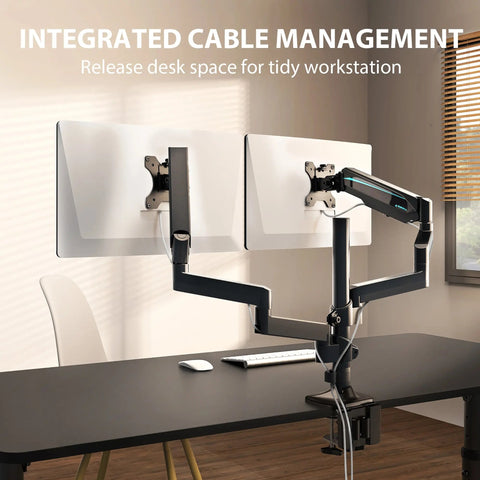
- Cable Management: Ensure your cables have enough slack to reach maximum height. A common cause of motor "stalls" is actually a caught cable creating unexpected downward tension that the motor interprets as an obstruction.
- The 20-8-2 Rhythm: Follow the Cornell University Ergonomics recommendation: Sit for 20 minutes, stand for 8 minutes, and move/stretch for 2 minutes. High-quality motors make these frequent transitions effortless.
- Monitor Height: As suggested by OSHA eTools, the top of your screen should be at or slightly below eye level. A desk that wobbles at height will make it impossible to maintain this visual alignment, leading to neck strain.
Summary of Selection Logic
| Feature | Low-End Desk | Professional-Grade Desk |
|---|---|---|
| Motor Type | Single Motor / Low Torque | Dual or Triple Motor / High Torque |
| Load Rating | Static-only focus | High Dynamic Capacity (1.5x Buffer) |
| Safety Standard | None or basic CE | BIFMA X5.5 / UL 962 |
| Stability | Noticeable wobble > 40" | Rigid up to max height |
| Longevity | 1-2 years under heavy load | 5-10+ years under heavy load |
Investing in a desk with superior dynamic load capacity is a proactive measure against both equipment failure and physical discomfort. By choosing hardware that exceeds your current requirements, you create a stable, reliable foundation for your most productive work.
Disclaimer: This article is for informational purposes only and does not constitute professional medical or engineering advice. If you have pre-existing musculoskeletal conditions, consult a qualified physiotherapist or ergonomic specialist before implementing a new workstation routine.
References
- BIFMA G1-2013 Ergonomics Guideline for Furniture
- Canadian Centre for Occupational Health and Safety (CCOHS): Office Ergonomics
- ISO 9241-5:2024 Workstation layout & postural requirements
- OSHA eTools: Computer Workstations - Neutral Working Postures
- WHO 2020 Guidelines on Physical Activity & Sedentary Behaviour




Leave a comment