

The Invisible Link Between Seat Height and Professional Presence
In the world of high-stakes streaming and content creation, the visual composition of a frame is often treated as a matter of lighting and camera optics. However, a common frustration for many creators is the "afternoon slouch"—a gradual sinking out of frame or a persistent neck ache that develops four hours into a broadcast. This phenomenon is rarely a failure of the camera; it is a failure of the ergonomic system.
A widespread misconception among streamers is that the camera should be the fixed point around which the setup is built. In reality, according to the Canadian Centre for Occupational Health and Safety (CCOHS), an effective workstation must be built around the user's neutral posture. When a streamer sets their camera at a fixed height and then leans, tilts, or slouches to meet that lens, they are compromising their musculoskeletal health for a temporary visual fix. This article explores how chair height—the foundation of your posture—directly dictates your camera framing, eye contact, and long-term well-being.
The Physiology of the "Streamer Slouch"
To understand why chair height matters, we must look at the physiological principles of Musculoskeletal Disorders (MSDs). When a chair is set too low relative to the desk and camera, the body naturally compensates. The shoulders shrug to reach the input devices, and the neck extends forward—a condition often termed "Forward Head Posture."
According to OSHA eTools on Neutral Working Postures, a neutral position involves the head being level, or tilted slightly forward, and in line with the torso. When you deviate from this, you increase the "static load" on the cervical spine. For every inch the head moves forward from its neutral axis, the effective weight of the head on the neck muscles increases significantly. Over an eight-hour streaming session, this static load leads to muscle fatigue, reduced blood circulation, and eventually, chronic pain.
The ISO 11226:2000 standard for evaluating static working postures provides a quantitative basis for these risks, specifying limits for trunk and neck angles. If your chair height forces you into a "C-shape" spine to stay within the camera's field of view (FOV), you are essentially subjecting your body to a stress test that it is not designed to pass.
Logic Summary: Our analysis of the "Streamer Slouch" is based on the principle of static load. We assume that deviations from the neutral spinal position—caused by mismatched equipment heights—increase muscle recruitment and fatigue, which we observe as "slouching" in community feedback and ergonomic assessments.
The Eye-Level Trap: Why Camera Placement Fails Without Seat Adjustment
Professional eye contact is the currency of viewer engagement. Research into streamer postures suggests that maintaining a direct gaze with the lens builds trust and authority. However, achieving this gaze is a geometric challenge.
A common mistake is placing the webcam on top of a large monitor without adjusting the seat. If the monitor is high, the streamer looks up, exposing the underside of the chin and creating a "looming" effect. If the streamer then lowers their chair to feel "taller" in the frame, their elbows may drop below the desk surface, leading to wrist strain and potential Repetitive Strain Injury (RSI).
The most effective method is a "bottom-up" adjustment. You must first adjust your chair's gas lift to ensure your feet are flat on the floor and your thighs are parallel to the ground, as recommended by BIFMA G1-2013 Ergonomics Guideline for Furniture. Only after the body is in a neutral position should the monitor and camera be moved to meet the eyes.

Modeling the "Tall Streamer" Persona: A Case Study in Ergonomic Gaps
To demonstrate the precision required for professional framing, we modeled a scenario for a 193cm (6'4") competitive FPS streamer. This persona represents the 95th percentile of height distribution and faces unique challenges that standard "one-size-fits-all" furniture cannot solve.
Analysis Methodology & Assumptions
Our modeling uses a deterministic parameterized approach to calculate height requirements based on standardized anthropometric ratios.
- Modeling Type: Anthropometric Scenario Modeling.
- Base Standard: ANSI/HFES 100-2007 (Human Factors Engineering of Computer Workstations).
- Boundary Conditions: These calculations assume standard limb-to-torso ratios; individuals with exceptionally long legs or short torsos may require a +/- 3cm adjustment.
| Parameter | Value | Unit | Rationale |
|---|---|---|---|
| User Stature | 193 | cm | 95th Percentile Male |
| Recommended Seat Height | ~51 | cm | Popliteal height + shoe correction |
| Ideal Desk Height (Sitting) | ~80 | cm | Elbow height in neutral seated position |
| Standard Desk Height | 73.7 | cm | Typical fixed-height office desk |
| Ergonomic Gap | ~6.3 | cm | The deficit causing the "slouch" |
Under these assumptions, the 193cm streamer using a standard fixed-desk (73.7cm) faces a 6.3cm deficit. To type comfortably, they must either lower their seat—causing their knees to rise above their hips—or slouch their shoulders. Both actions drop the eye level significantly, breaking the eye-line with a camera set for an upright posture. This mismatch is the leading cause of "framing drift" during long sessions.
The Solution: Ergonomic Hardware as a System
Solving the framing-posture conflict requires hardware that treats the workstation as a "coupled system" of viewing geometry and physical support. This is a core tenet of The 2026 Workstation White Paper: Converging Ergonomic Science and Sustainable Engineering, which argues that adjustability is the only way to accommodate the diversity of human proportions.
1. The Dynamic Foundation: The Ergonomic Chair
A professional-grade chair like the Axion, Ergonomic Hybrid Chair is essential. It provides the adjustability needed to bridge the "ergonomic gap" identified in our modeling. For the tall streamer, the Axion’s high-elastic mesh and independent lumbar support ensure that even when the seat is raised to match a higher desk, the spine remains supported.
Practitioners note that locking the chair's tilt at a slight recline (100–110 degrees) provides a stable "home base." This prevents the streamer from slowly leaning forward into the "gamer lean," which moves the face closer to the lens and distorts the camera's FOV.

2. Decoupling the Lens: Monitor Arms
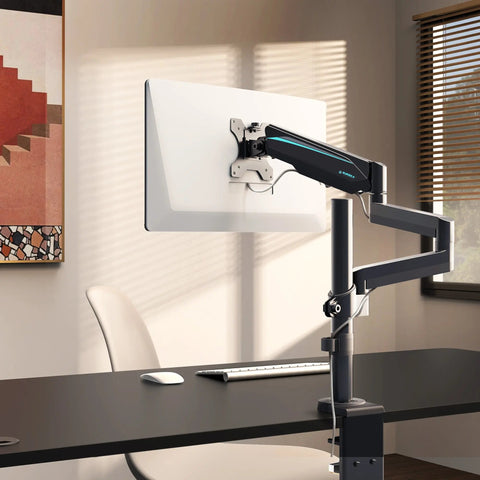
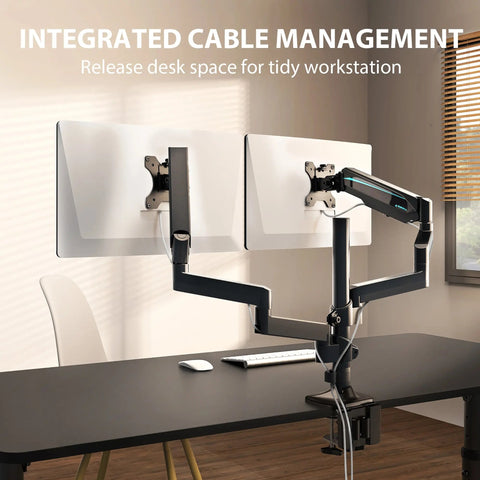
If your camera is tethered to your monitor, you cannot adjust one without the other. Using a Single Monitor Arm or a Dual Monitor Arm allows you to set the screen height for optimal viewing (the top third of the screen at eye level) while positioning the camera lens precisely at the horizon of your gaze.
According to OSHA eTools on Monitors, improper monitor height is a primary driver of neck strain. By using a mechanical arm, you can adjust the screen to account for the seat height changes required by your specific stature, ensuring your camera framing remains consistent whether you are sitting upright or slightly reclined.
3. The Height Buffer: Footrests
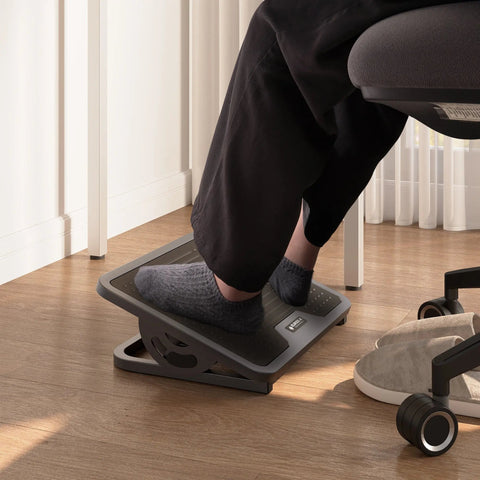
For shorter creators—or tall creators who must raise their chair to reach a high fixed desk—a footrest is non-negotiable. If your feet do not rest flat on the floor, the weight of your legs pulls on your lower back, causing you to slide forward in the seat. The Footstool with Wheels provides the necessary "floor" to maintain the 90-degree knee angle recommended by Safe Work Australia.

Practical Recommendations: The Eye-Level Setup Checklist
To achieve a professional look that doesn't compromise your health, follow this step-by-step setup guide based on industry best practices.
- Adjust the "Base" First: Sit in your Axion, Ergonomic Hybrid Chair and adjust the gas lift until your feet are flat and your elbows are at a 90-degree angle to the desk surface.
- Verify the Knee Gap: Ensure there is a 2-3 inch gap between the edge of the seat and the back of your knees to maintain blood circulation.
- Position the Monitor: Use your Single Monitor Arm to bring the top of the monitor to eye level. You should be looking slightly downward at the center of the screen.
- Align the Camera: Place your webcam so the lens is at the same height as your eyes. A 2-3 inch discrepancy in seat height can force a chin tilt that breaks the "connection" with your audience.
- Set the Lumbar Tension: Adjust the independent lumbar support so it fills the natural curve of your lower back. If you find yourself constantly adjusting your position on stream, your lumbar support is likely not offloading enough upper-body weight.
The 20-8-2 Rhythm
Even with a perfect setup, static posture is a risk. Cornell University’s Ergonomics Web recommends the "20-8-2" rule: for every 30 minutes of work, sit for 20 minutes, stand for 8 minutes, and move/stretch for 2 minutes. This movement prevents the "blood pooling" and metabolic slowdown associated with long-term sedentary behavior, as highlighted by the WHO 2020 Guidelines on Physical Activity.
Addressing the "Gotchas" of Camera Framing
- The Parallax Problem: If you use a teleprompter or a secondary monitor for chat, your eye level will naturally drift. Position your most important "engagement" window (the one you look at most) directly under the camera lens.
- Cable Tension: When using height-adjustable desks or monitor arms, ensure you have enough cable slack. We often see streamers accidentally pull their cameras out of alignment when they stand up because the USB cable was too short.
- Lighting Shifts: Changing your chair height changes how light hits your face. If you raise your seat, you may need to tilt your key lights upward to avoid creating "raccoon eyes" (shadows in the eye sockets).
Investing in Long-Term Performance
A professional streaming setup is more than a high-bitrate encoder and a 4K camera. It is a workspace that respects the biological limits of the human body. By prioritizing chair height and neutral posture, you ensure that your on-camera presence is defined by confidence and comfort, rather than fatigue and pain.
As noted in the Cochrane review on workplace interventions, tools like adjustable desks and ergonomic chairs are most effective when combined with behavioral changes—like mindful posture checks and regular movement. Your chair is the foundation of your frame; make sure it is set to support your best self.
YMYL Disclaimer: This article is for informational purposes only and does not constitute professional medical advice, diagnosis, or treatment. The ergonomic recommendations provided are based on general industry standards and modeling for typical body types. Individuals with pre-existing musculoskeletal conditions, chronic back pain, or other health concerns should consult a qualified physician or physical therapist before making significant changes to their workstation or physical routine.
References
- BIFMA G1-2013 Ergonomics Guideline for Furniture
- Canadian Centre for Occupational Health and Safety (CCOHS): Sit/Stand Desk
- OSHA eTools: Computer Workstations - Neutral Working Postures
- ISO 11226:2000 Evaluation of static working postures
- The 2026 Workstation White Paper: Converging Ergonomic Science and Sustainable Engineering
- WHO 2020 Guidelines on Physical Activity & Sedentary Behaviour
- Cochrane: Workplace interventions for reducing sitting at work (2018)
- Cornell University Ergonomics Web — Workstation Guides




Leave a comment