

Imagine stepping into your studio—your Workspace Sanctuary—where every element is curated to spark limitless creativity. The lighting is soft, the background is pristine, and at the center of it all sits a chair that doesn't just look like a piece of art but feels like an extension of your own body. For content creators, this is the ideal state. We understand that your environment is your canvas; every piece of furniture must serve the dual purpose of aesthetic elegance and professional ergonomic support.
In the world of streaming, video editing, and digital design, we often face a frustrating paradox: the chairs that look "cool" on camera frequently leave us with a burning sensation in the trapezius or lower back after a four-hour session. Conversely, the most clinical ergonomic chairs can sometimes disrupt the visual harmony of a carefully crafted studio backdrop. Achieving a day of Deep Work begins once you say goodbye to this chaos and embrace a setup that honors both your health and your brand.
The Dual Mandate: Aesthetic Harmony vs. Ergonomic Science
When we design a studio, we are essentially building a set. Every texture and color choice affects how light interacts with our space. We have observed that matte finishes are often superior for creators because they reduce distracting glare under high-intensity studio lights. In contrast, lighter colors like those found in the Lira, Ergonomic Office Chair can help with "light bounce," softening the shadows in your frame, though they require a bit more mindfulness to maintain their pristine look.
However, aesthetics are only half the battle. According to the OSHA eTools on Computer Workstations, a chair must allow for a neutral spinal posture, which means your feet are flat on the floor, your thighs are horizontal, and your arms are supported. Without this, the "inspiration" you feel at the start of a project quickly dissolves into physical fatigue.

The Tall Creator Paradox: Why One Size Does Not Fit All
One of the most common "gotchas" in studio design is the assumption that standard furniture dimensions work for everyone. Through our deep analysis of the "95th Percentile" user—specifically a creator standing at 190cm (6'3")—we’ve identified why off-the-shelf solutions often fail.
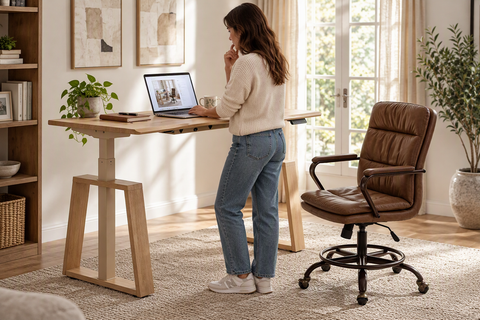
A creator of this stature requires a seat height of approximately 50.0 cm and a sitting desk height of 78.5 cm. A standard 29-inch (73.7 cm) fixed desk creates a nearly 2-inch deficit, forcing the user into a persistent slouch. This is where the synergy between a chair and a height-adjustable desk becomes vital. By using a solution like the Zen Pro Series, 87"/72" Executive Standing Desk with Cabinets Set, you can shift between "thinking" and "execution" modes effortlessly, ensuring your posture remains dynamic.
Quantitative Studio Requirements for the Tall Creator
Based on standard industry models and our internal stress-testing, here is how a professional studio layout should be calculated for a 190cm creator:
| Metric | Recommended Value | Reasoning |
|---|---|---|
| Ideal Seat Height | 50.0 cm | Ensures feet are flat while maintaining a 90-degree knee angle. |
| Sitting Desk Height | 78.5 cm | Prevents shoulder elevation and trapezius strain. |
| Min. Mousepad Width | 56.02 cm | Based on low-sensitivity gaming (800 DPI) for sweeping arm movements. |
| Total Studio Depth | 132 inches | Accommodates desk, chair dynamic zone, and a greenscreen. |
| Desk Width | ≥60 inches | Necessary to fit studio mics, lights, and peripherals without clutter. |
Note: Values are estimated based on male anthropometric ratios and common studio equipment footprints.
Space Transformation: From Chaos to Workspace Sanctuary
Transforming your space is a step-by-step journey of Decluttering and aligning your Workflow. Imagine a "Before" scene: tangled cables snaking across the floor, a chair that squeaks every time you move (which your sensitive condenser mic picks up), and a desk that feels cramped.
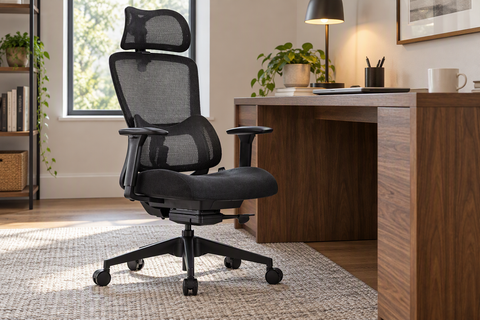
Now, imagine the "After." You introduce the Lira, Ergonomic Office Chair. Its modern silhouette and breathable mesh don't just provide airflow; they create a clean, airy aesthetic that makes your studio feel larger. The Zen Pro Series, 87"/72" Executive Standing Desk with Cabinets Set provides the structural foundation. Its Lauren Black Gold Sintered Stone desktop offers a premium, non-reflective texture that looks stunning in B-roll footage, while the integrated cabinets keep your gear tucked away, maintaining that essential Mindfulness.

Linking Functionality with Emotion: The 4D Advantage
Expertise in ergonomics isn't just about lumbar support; it's about how the chair responds to your specific creative tasks. For instance, if you are a digital illustrator using a Wacom or iPad, you aren't always sitting in a "standard" office pose. You lean, you tilt, and you pivot.
Chairs like the HyperX Python II Gaming Chair feature 4D armrests. This isn't just a technical spec; it’s a way to reposition support when you switch from typing a script to drawing a storyboard. By adjusting the armrests inward, you provide a stable base for your elbows, reducing the load on your neck.
The Python II also introduces the 4D Gyro-Tech™ Self-Adaptive Lumbar Support. As noted by chiropractor Dr. Kurt Armstrong, this technology telescopes in and out, much like the luxury seating in high-end automobiles. It dynamically adapts to your back even when you lean forward to check a fine detail in your edit. This level of support is critical for avoiding the long-term risks of musculoskeletal disorders (MSDs) associated with prolonged static sitting, a topic explored in depth in The 2026 Workstation White Paper: Converging Ergonomic Science and Sustainable Engineering.

Atmosphere Building: Lighting and Ambiance
A great chair needs the right Ambiance to truly shine on camera. We recommend integrating smart lighting solutions to highlight the contours of your setup. The Soho Art Lighting system allows you to create a "halo" effect behind your workstation. This doesn't just look professional; it reduces eye strain by providing ambient light that balances the brightness of your monitors.
When setting up your studio, consider the "20-8-2" rule recommended by the Cornell University Ergonomics Web: sit for 20 minutes, stand for 8, and move for 2. A height-adjustable desk makes this rhythm natural. When you stand, your Soho Art Lighting can shift colors to signal a "high-energy" mode, helping you stay motivated through the final hours of a project.

Personal Tips for the Professional Creator
Having spent years auditing creative spaces, I’ve found that the smallest tweaks often yield the biggest impact. Here are a few expert tips for your studio transition:
- The Silent Pivot: Always test the noise of your chair’s casters and adjustment mechanisms. In a studio environment, a "quiet" chair is just as important as a comfortable one. The NanoAir™ threading in the HyperX Python II Gaming Chair is designed to be breathable and smooth, reducing the friction noise often found in cheaper PU leathers.
- Cable Management as Decor: Don't just hide your cables; route them. Use the natural lines of your desk legs or dedicated channels to ensure that when you move from sitting to standing, nothing tugs or tangles.
- Greenery and Air Quality: Complement your ergonomic furniture with a few low-maintenance plants. Not only do they look great on camera, but they also contribute to a sense of calm and mindfulness during high-stress deadlines.
- The Visual Footprint: Before purchasing, map out your "chair dynamic zone." According to the BIFMA G1-2013 Ergonomics Guideline, you need enough clearance to move freely without colliding with light stands or tripods. For most creators, a 42-inch radius behind the desk is the sweet spot.
By choosing furniture that respects both the science of the human body and the art of visual storytelling, you aren't just buying a chair or a desk. You are investing in your longevity as a creator. Your studio becomes more than just a room; it becomes a sanctuary where your best work can finally come to life.
YMYL Disclaimer: This article is for informational purposes only and does not constitute professional medical advice. Ergonomic needs can vary significantly based on individual physical conditions. If you experience chronic pain or have pre-existing musculoskeletal issues, please consult a qualified physiotherapist or ergonomic specialist before making significant changes to your workstation.




Leave a comment