

Beating the Heat: Managing Temperature in 8-Hour Gaming Sessions
For many competitive gamers and streamers, the transition from the second to the eighth hour of a session is marked not just by mental fatigue, but by a tangible physical discomfort: heat buildup. This phenomenon, often colloquially dismissed as a minor annoyance, is a complex interplay of physiological mechanisms, material science, and the thermal output of high-performance hardware. When a gamer remains in a static seated position for extended periods, the microclimate between the body and the chair can reach temperatures that significantly impair focus and contribute to premature physical exhaustion.
Managing this thermal load requires a systemic approach that goes beyond simply turning up the air conditioning. It involves understanding how sedentary behavior affects core temperature regulation and how the physical environment—specifically the materials and geometry of the workstation—can either facilitate or hinder heat dissipation. This article explores the scientific principles of workstation thermoregulation and provides a blueprint for maintaining a neutral, cool environment during marathon sessions.
The Physiology of Sedentary Heat Accumulation
Human thermoregulation relies heavily on the ability of the skin to exchange heat with the surrounding environment through radiation, conduction, and evaporation. However, the act of sitting creates a "thermal trap." According to OSHwiki on Musculoskeletal disorders and prolonged static sitting, static postures lead to restricted blood circulation and increased localized muscle tension. From a thermal perspective, the large surface area of the back and thighs in constant contact with a chair surface eliminates the possibility of convective cooling in those regions.
When the body cannot effectively dump heat, it triggers a physiological response. Heart rate may slightly increase as the body attempts to pump more blood to the skin for cooling—a process known as vasodilation. In a high-stakes gaming environment where cognitive load is already high, this additional physiological stress can lead to a decline in reaction times and decision-making accuracy. Furthermore, moisture accumulation (sweat) against non-breathable materials like PU leather creates a humid microclimate that increases skin friction, potentially leading to discomfort or dermatological irritation over an 8-hour window.
Material Science: The Role of Mesh and Performance Fabrics
The most immediate solution to localized heat buildup lies in the selection of contact materials. Traditional gaming chairs often prioritize aesthetics and a "bucket seat" feel, frequently utilizing synthetic leathers that act as thermal insulators. In contrast, advanced ergonomic designs leverage high-elastic 3D mesh or moisture-wicking polyester blends to restore the body's natural cooling pathways.
High-elastic 3D mesh, such as that utilized in the Lira, Ergonomic Office Chair, provides a structural suspension system that allows for maximum airflow. Because the material is porous, it facilitates the evaporation of sweat, which is the body's primary mechanism for cooling. This prevents the "hot back" effect that typically manifests after 120 minutes of continuous play.

However, material choice is not a binary decision. While mesh offers superior ventilation, some users prefer the pressure distribution of padded surfaces. In these cases, performance fabrics with moisture-wicking treatments are used. These materials are engineered to pull moisture away from the skin to the outer layer of the fabric where it can evaporate more quickly. This is a critical distinction from standard upholstery, which tends to absorb and retain moisture, leading to a damp and uncomfortable seat.
The Battlestation as a Thermal System
A common oversight in workstation design is failing to account for the thermal energy generated by the hardware itself. A high-performance gaming PC, particularly one equipped with a flagship GPU like the RTX 4090, can generate significant ambient heat.
Logic Summary: Based on hardware power consumption data, a high-end gaming PC can dissipate approximately 600W to 800W of heat into the room. Over an 8-hour session, this contributes roughly 4.8 to 6.4 kWh of thermal energy directly into the user's immediate workspace.
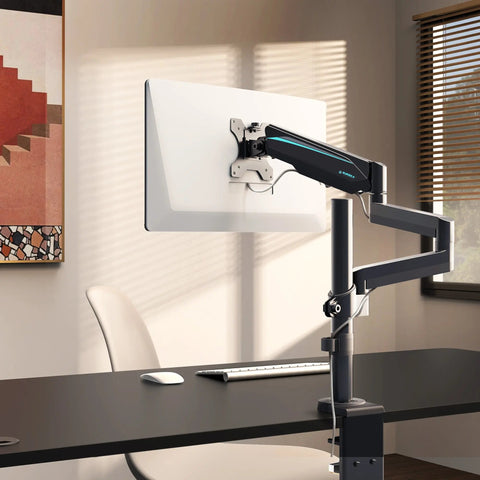
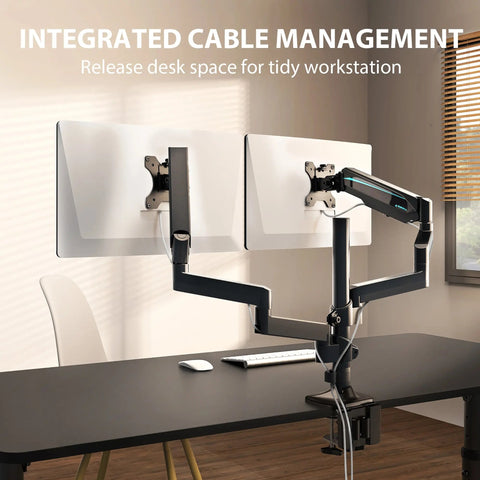
This "thermal wall" effect is exacerbated by multi-monitor setups. Triple-monitor configurations create a barrier that can trap hot air rising from the PC or the monitors themselves, recirculating it back toward the gamer. To mitigate this, using a Dual Monitor Arm or similar mounting solutions is highly effective. By elevating the screens and reducing the footprint of stands on the desk, users create larger "airflow gaps" that allow for better room-level circulation.

Systemic Modeling: The Tall Gamer Scenario
Thermal management challenges are not distributed equally across the population. Taller individuals, for instance, face unique ergonomic and thermal hurdles. Our scenario modeling for a 95th-percentile male (approx. 193cm / 6'4") reveals that standard desk heights often force a hunched posture, which increases the surface area of the back in contact with the chair, effectively "sealing" the airflow pathways that mesh chairs are designed to provide.
Modeling Note: Tall Gamer Thermal Dynamics
- Assumptions: User height 193cm; RTX 4090 PC; 8-hour session; 22°C ambient room temp.
- Parameter Table:
| Parameter | Value | Unit | Rationale |
|---|---|---|---|
| Recommended Desk Height | ~80 | cm | Based on ANSI/HFES 100-2007 ratios |
| Equipment Thermal Load | ~1,898 | kWh/yr | Estimated annual heat dissipation from high-end PC |
| Required Room Depth | 132 | in | Minimum for equipment + airflow circulation |
| Posture Contact Increase | ~15-20 | % | Estimated increase in back-to-chair contact when hunching |
| Airflow Gap Deficit | 2.5 | in | Height gap when using a standard 29" fixed desk |
For these users, a height-adjustable desk is essential to maintain a neutral spinal position, which in turn preserves the intended airflow gaps between the body and the chair's backrest. As noted in The 2026 Workstation White Paper: Converging Ergonomic Science and Sustainable Engineering, the integration of adjustable geometry is a prerequisite for both musculoskeletal health and thermal comfort.
Advanced Ergonomic Solutions for Heat Management
To address the dual needs of support and ventilation, ergonomic furniture has evolved to include dynamic support systems. The Flex, Dual-Backrests Ergonomic Office Chair represents this evolution. Its dual-backrest design does more than just support the lumbar region; it creates a central channel for airflow that is often absent in single-piece backrests. This design follows the principles outlined by ISO 9241-5:2024, which emphasizes postural flexibility and the reduction of static loads.

Furthermore, adjustability plays a non-obvious role in cooling. For example, 4D armrests allow a user to adjust the width and depth of their arm support. This ensures that the shoulders remain in a neutral position, preventing the user from "tucking" their arms against their torso—a common habit that traps heat in the axillary (underarm) region. Proper shoulder alignment, as recommended in the HSE guide for DSE safety, indirectly facilitates better body-wide thermoregulation by preventing heat-trapping postures.
For those who require targeted support during intense moments, the Exis, Ergonomic Office Chair features a 4-level adjustable lumbar support. Unlike static pillows that can slide and block airflow, an integrated, adjustable lumbar system allows the user to maintain the spine's natural curve while keeping the mesh backrest taut and functional for cooling.

Practical Recommendations for Thermal Control
Implementing a cooler gaming environment involves a combination of hardware placement, furniture selection, and behavioral changes. Below is a checklist for optimizing a workstation for 8-hour sessions:
- The 20-8-2 Rhythm: Adopt the Cornell University Ergonomics Web recommendation of sitting for 20 minutes, standing for 8, and moving for 2. This not only reduces Musculoskeletal Disorders (MSDs) but also allows the seat and backrest surfaces to "breathe" and dump accumulated heat.
- Strategic Fan Placement: According to experimental analysis on room ventilation, fans should be placed to create a straight-line airflow path. Ideally, one fan should pull cooler air into the room while another pushes hot air out near the PC exhaust. This can lower the local microclimate temperature by several degrees compared to random placement.
- Monitor Geometry: Set the top of the monitor at or slightly below eye level. This prevents the "hunch" that closes the airflow gap between your back and the chair. Using a Dual Monitor Arm facilitates this adjustment across multiple screens.
- Hydration and Core Temp: While moisture-wicking fabrics help on the outside, internal regulation is key. Cold water consumption helps conductively dump internal heat. For individuals with conditions like anhidrosis (inability to sweat), external cooling aids like pulsed air systems near the neck are recommended.
- Desk Height Calibration: Ensure your desk height allows your elbows to rest at a 90-degree angle without shrugging your shoulders. For a tall gamer (193cm), this typically requires a desk height of approximately 80cm (31.5"), which is significantly higher than the standard 29" office desk.
The Impact of Precision: Sensitivity and Height
There is a critical trade-off between seat cooling and gameplay precision that many gamers overlook. Low-sensitivity gamers (e.g., those using a 40 cm/360° sensitivity) require a stable, consistent arm-to-desk angle. Adding a thick gel or liquid cooling seat pad to a chair can raise the user's height by 1-2 inches. This change in geometry can force the gamer to lower their chair or raise their desk to maintain their mouse control precision. Without a height-adjustable desk, the user may be forced to choose between thermal comfort and optimal mouse movement area.
By utilizing highly adjustable chairs like the Lira, Ergonomic Office Chair, which features seat depth and height adjustments, gamers can fine-tune their position to accommodate cooling needs without sacrificing the mechanical consistency required for high-level play.
Summary of Strategies
| Strategy | Mechanism | Benefit |
|---|---|---|
| 3D Mesh Material | Evaporative Cooling | Prevents sweat buildup and "hot back" |
| Dual-Backrest Design | Convective Airflow Channel | Provides a path for heat to escape the spine area |
| Height-Adjustable Desk | Postural Airflow Gap | Prevents hunching that seals off chair ventilation |
| Monitor Arms | Workspace Airflow | Removes physical barriers to room-wide circulation |
| 20-8-2 Movement | Thermal Reset | Allows contact surfaces to cool down periodically |
Professional Insight: A Systemic Perspective
Thermal management in a gaming environment is a systemic challenge. A mesh chair is a powerful tool, but its effectiveness is capped by the surrounding environment. If a workstation is cramped, poorly ventilated, or ergonomically misaligned, heat will still accumulate. The goal is to create a "thermal equilibrium" where the heat generated by the body and the hardware is dissipated at the same rate it is produced. By combining the material science of products like the Flex, Dual-Backrests Ergonomic Office Chair with strategic hardware placement and behavioral adjustments, gamers can maintain peak performance and comfort through even the longest sessions.
Disclaimer: This article is for informational purposes only and does not constitute professional medical advice. Individuals with pre-existing musculoskeletal conditions or thermoregulation disorders (such as anhidrosis) should consult a qualified healthcare professional or occupational therapist before making significant changes to their workstation setup.
References
- BIFMA G1-2013 Ergonomics Guideline for Furniture
- ISO 9241-5:2024 Workstation layout & postural requirements
- Cochrane: Workplace interventions for reducing sitting at work (2018)
- Cornell University Ergonomics Web — Workstation Guides
- HSE: Working safely with display screen equipment (DSE)
- OSHwiki: Musculoskeletal disorders and prolonged static sitting
- The 2026 Workstation White Paper: Converging Ergonomic Science and Sustainable Engineering




Leave a comment