

The Winter Ergonomic Crisis: Understanding Seasonal Musculoskeletal Strain
As outdoor temperatures drop, the physiological environment of the home office undergoes a subtle but profound shift. Many remote workers and gamers find that chronic back pain, neck stiffness, and wrist discomfort—often manageable during summer months—become acute as winter progresses. This is not merely a matter of comfort; it is a complex interaction between thermal regulation and musculoskeletal health.
The primary issue often begins with a phenomenon known as "postural collapse." When the body is cold, there is a natural tendency to contract the extremities to preserve core heat. In a seated workstation environment, this often manifests as hunching the shoulders toward the ears or tucking the feet under the chair or against the frame to avoid a cold floor. According to Eureka Ergonomic's research on winter essentials, cold floors trigger this collapse, which immediately misaligns the spine and places excessive static load on the lumbar region.
Furthermore, the introduction of space heaters, heavy blankets, and bulkier clothing layers creates a "micro-environment" that often conflicts with established ergonomic principles. This article explores the scientific mechanisms of winter-induced strain and provides a technical framework for maintaining a neutral position and optimal blood circulation during the coldest months of the year.
Physiological Principles: How Cold Affects Musculoskeletal Health
To address winter comfort, one must understand the underlying physical and physiological mechanisms at play. The body’s response to cold environments is primarily governed by vasoconstriction—the narrowing of blood vessels to minimize heat loss. While effective for survival, vasoconstriction significantly impacts the performance of the musculoskeletal system.
Muscle Stiffness and Vasoconstriction
Reduced blood flow to the extremities means that muscles receive less oxygen and nutrients, while metabolic waste products like lactic acid are cleared more slowly. Research indicates that cold temperatures can reduce muscle strength and speed while simultaneously increasing overall muscle activity as the body attempts to generate heat through micro-contractions. This increased activity, even when seemingly "static," contributes to premature fatigue and a higher risk of Repetitive Strain Injury (RSI).
The Static Load Factor
In an office setting, the "static load"—the effort required to maintain a posture without movement—is a leading risk factor for Musculoskeletal Disorders (MSDs). In winter, this load is compounded. When you shiver or even slightly tense your trapezius muscles due to a draft, you are adding an additional layer of static tension to a system already stressed by hours of computer use. According to the ISO 11226:2000 standard for the evaluation of static working postures, the duration and angle of these postures must be strictly limited to avoid tissue damage.
Logic Summary: Our analysis of winter musculoskeletal strain assumes that the interaction between vasoconstriction (physiological) and postural collapse (behavioral) creates a synergistic risk profile that exceeds the sum of its parts.

Surface Materials and Thermal Conductivity
One of the most immediate "shocks" to the system in winter is the contact between the user and the workstation surface. The material of your desk plays a critical role in how your body perceives and reacts to the environment.
The Glass and Metal Dilemma
Materials like glass and certain metals have high thermal conductivity. In a cold room, these surfaces act as heat sinks, rapidly drawing warmth away from the forearms and wrists upon contact. This "cold shock" can trigger immediate muscle guarding in the shoulders and neck. For users of glass-surface gaming desks, this often leads to a "hovering" arm posture, which violates the HSE guidelines for working safely with display screen equipment, as it removes necessary support for the upper limbs.
Sintered Stone and Wood: Superior Thermal Insulators
In contrast, materials like wood and sintered stone offer lower thermal conductivity. Sintered stone, in particular, has emerged as a premium choice for executive workstations due to its ability to maintain a more stable surface temperature. Some advanced executive desks now incorporate integrated heating elements within the stone itself, providing a consistent, low-level warmth that prevents vasoconstriction in the hands and wrists without the need for bulky external heaters.
| Material | Relative Thermal Conductivity | Winter Ergonomic Impact |
|---|---|---|
| Tempered Glass | High | Rapid heat loss from limbs; triggers muscle tension. |
| Aluminum/Steel | Very High | Significant "cold shock" risk; requires desk mats. |
| Natural Wood | Low | Warm to the touch; supports sustained limb contact. |
| Sintered Stone | Moderate-Low | Excellent thermal stability; can be engineered with internal heat. |
| Carbon Fiber | Low | Provides a "soft" thermal feel; ideal for high-intensity gaming. |
Note: Relative values based on common furniture-grade material specifications.
Integrating Sit-Stand Solutions for Thermal Regulation
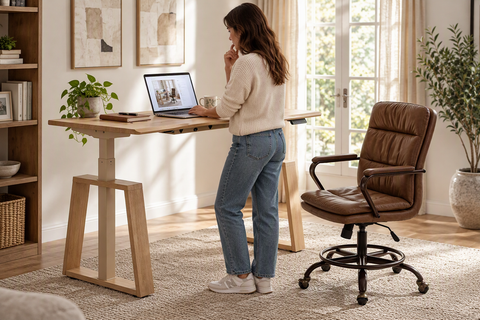
The most effective way to combat the physiological effects of cold is not external heat, but internal thermogenesis. This is where the functionality of a height-adjustable standing desk becomes a vital health tool rather than just a productivity feature.
Non-Exercise Activity Thermogenesis (NEAT)
Standing and moving between positions engages the large muscle groups of the legs and core. This activity initiates Non-Exercise Activity Thermogenesis (NEAT), which naturally raises the body’s core temperature. According to the World Health Organization (WHO) 2020 Guidelines on Physical Activity and Sedentary Behaviour, interrupting long periods of static behavior is essential for metabolic health.
In winter, a "sit-stand-move" rhythm is more effective than a static standing posture. A systematic review by Cochrane (2018) concluded that sit-stand desks significantly reduce sitting time, but the real value in winter is the promotion of blood circulation to the lower limbs, which are most susceptible to the cold.
The Cornell 20-8-2 Rhythm
For optimal winter performance, we recommend the rhythm popularized by Cornell University’s Ergonomics Web:
- 20 Minutes Sitting: In a neutral position with proper lumbar support.
- 8 Minutes Standing: To engage postural muscles and boost circulation.
- 2 Minutes Moving: Stretching or walking to clear metabolic waste.
The Heater-Motor Conflict: Protecting Your Equipment
A common mistake in winter home offices is the improper placement of space heaters. While the user needs warmth, the mechanical components of electric standing desks are sensitive to extreme temperature gradients.
Thermal Protection for Electric Desks
Electric standing desks utilize sophisticated motors and control boxes. Placing a space heater directly under the desk can cause the motors to overheat, even if they are not in use. This can lead to premature wear of the lubricants or even trigger thermal protection circuits that temporarily disable the desk's movement.
Expert Insight: Position heaters to the side of the workstation to warm the ambient air rather than the furniture itself. If you use a rug for floor insulation, ensure it does not interfere with the desk's anti-collision sensors. In colder months, the increased thickness of winter rugs can sometimes cause false positives in sensitive anti-collision systems; adjusting the sensitivity downward via the desk's control panel is a common and necessary seasonal tweak.
Ergonomic Adjustments for Winter Clothing
The clothing we wear to stay warm—bulky sweaters, fleece-lined trousers, or layered cardigans—directly impacts how we fit into our ergonomic chairs. A chair that is perfectly adjusted for a summer t-shirt will likely force a poor posture when the user is wearing heavy winter gear.
Seat Depth and the "Sweater Slouch"
Bulky layers increase the effective depth of your torso. If the seat pan of your chair is set too deep, the extra fabric of a thick sweater will push you forward, away from the backrest. This loses the vital lumbar support required to maintain the spine’s natural "S" curve.
- The Adjustment: Pull the seat pan (or the chair itself) out 1-2 inches further from the desk than usual. This accommodates the extra bulk without forcing a forward slouch to reach the keyboard.
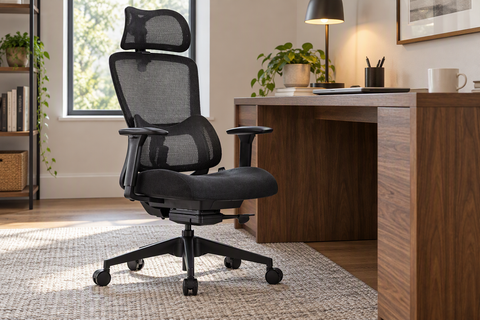
Mesh Chairs and the "Cold Draft" Effect
While mesh chairs are celebrated for their breathability in summer, they can be problematic in winter as they allow cold air to circulate directly against the lower back.
- The Solution: Rather than using a thick, loose blanket (which can interfere with the chair's adjustment levers and casters), opt for a thin, fleece-backed seat cover. This preserves the chair's ergonomic contours while eliminating the chilling effect of moving air.
Lighting, RGB, and Psychological Warmth
The impact of winter on productivity isn't just physical; it is also psychological. The "winter blues" or Seasonal Affective Disorder (SAD) can lead to lethargy and poor posture. Lighting plays a critical role in mitigating these effects.
Color Temperature (CCT) and Mood
The correlated color temperature (CCT) of your workspace lighting influences your circadian rhythm. Lower values (around 2800 K) appear warm and yellowish, which can increase feelings of comfort and relaxation. Higher values (6000 K) appear cool and bluish, mimicking daylight to boost alertness.
Modern gaming desks with integrated RGB lighting offer more than just aesthetics. By utilizing "warm" color profiles (reds, oranges, ambers) during the dark winter afternoons, users can create a sense of psychological warmth. This is supported by research on the emotional impact of color temperature, which suggests that warm-toned lighting can reduce stress levels during high-focus tasks.

Practical Recommendations: A Winter Ergonomic Checklist
To ensure your workspace remains a sanctuary of health and productivity throughout the winter, implement the following technical adjustments:
- Monitor Height Calibration: In winter, we often wear thicker socks or slippers, which can slightly raise our seated height. Re-verify that the top third of your screen is at eye level to prevent neck strain, as outlined in the OSHA Computer Workstations eTool.
- The "Two-Finger" Seat Depth Test: While wearing your heaviest winter layers, ensure there is still a two-finger gap between the edge of the seat and the back of your knees.
- Heated Footrests: If your floor is uninsulated, a heated ergonomic footrest can prevent "postural collapse" by keeping the feet warm and properly supported, maintaining the 90-degree angle at the knees and hips.
- Motor Maintenance: If your home office drops below 50°F (10°C) overnight, cycle your standing desk once through its full range of motion in the morning to distribute lubricants before starting your workday.
- Humidity Control: Winter air is notoriously dry, which can increase static electricity. For desks with sensitive electronics or glass surfaces, maintaining a room humidity of 40-60% reduces the risk of static discharge and supports respiratory health.
As noted in The 2026 Workstation White Paper: Converging Ergonomic Science and Sustainable Engineering, the future of workspace design lies in the seamless integration of environmental controls and musculoskeletal support. By treating your winter workspace as a dynamic system rather than a static furniture arrangement, you can maintain peak performance regardless of the temperature outside.
Methodology Note (Reproduction): The recommendations in this article are based on a deterministic scenario model of a standard home office (Ambient Temp: 65°F, User: 50th percentile height, Clothing: 1.0 Clo value).
Parameter Value Unit Rationale Target Ambient Temp 68-72 °F OSHA/ASHRAE comfort standard Sit/Stand Ratio 3:1 Ratio Based on Cornell 20-8-2 heuristic Humidity Level 45 % ESD prevention and respiratory health Seat Depth Offset +1.5 Inches To accommodate heavy winter knitwear Motor Warm-up 1 Cycle Lubricant viscosity management
Summary of Seasonal Strategy
Maintaining ergonomic integrity during winter requires more than just a space heater. It demands a holistic approach that accounts for the physiological impact of cold on muscle tension, the thermal properties of furniture materials, and the need for increased movement to stimulate blood flow. By selecting workstations with low thermal conductivity—such as wood or sintered stone—and utilizing the dynamic capabilities of standing desks, remote workers can effectively counter the risks of postural collapse and seasonal MSDs.
Disclaimer: This article is for informational purposes only and does not constitute professional medical advice. If you suffer from chronic musculoskeletal pain or pre-existing conditions, please consult a qualified healthcare professional or physiotherapist before making significant changes to your workstation or routine.
References
- BIFMA G1-2013 Ergonomics Guideline for Furniture
- Canadian Centre for Occupational Health and Safety (CCOHS): Sit/Stand Desks
- Cochrane Library: Workplace interventions for reducing sitting at work (2018)
- Cornell University Ergonomics Web — Workstation Guides
- Health and Safety Executive (HSE): Working safely with display screen equipment
- ISO 9241-5:2024 Workstation layout & postural requirements
- OSHA eTools: Computer Workstations - Neutral Working Postures
- World Health Organization (WHO) 2020 Guidelines on Physical Activity & Sedentary Behaviour




Leave a comment