

The Hidden Risks of "Average" Design in Collaboration Zones
In the modern corporate landscape, the shift toward unassigned seating and shared collaboration zones has introduced a significant, yet often overlooked, ergonomic challenge. While these spaces foster agility, they frequently rely on "one-size-fits-all" furniture that fails to accommodate the physical diversity of a global workforce. When a workstation is designed for an "average" user, it effectively excludes those at the ends of the spectrum—the petite and the tall—leading to a cascade of Musculoskeletal Disorders (MSDs) and decreased operational efficiency.
For facility managers and compliance officers, the stakes are high. Poorly specified furniture doesn't just cause afternoon back pain; it creates long-term liability and risk. According to the EU-OSHA report on MSDs, these conditions represent a massive economic burden through absenteeism and lost productivity. To mitigate these risks, corporate procurement must look beyond aesthetics and prioritize rigorous technical standards. Chief among these is BIFMA G1-2013, the industry benchmark for ensuring shared workstations are safe, inclusive, and durable enough for high-traffic corporate environments.
Decoding BIFMA G1: The Science of Anthropometric Inclusivity
The BIFMA G1-2013 Ergonomics Guideline is not merely a set of suggestions; it is a data-driven framework designed to accommodate the 5th percentile female to the 95th percentile male. This range covers approximately 90% of the adult population, ensuring that a single workstation can be safely used by a diverse rotation of employees throughout the week.
The CAESAR Database and Modern Shifts
Unlike older standards that relied on static, outdated measurements, G1 utilizes the CAESAR (Civilian American and European Surface Anthropometry Resource) database. This is a critical distinction. As noted in industry updates from Remi Network, this database accounts for modern shifts in body composition, including rising obesity rates and multinational physical variations. By specifying G1-compliant furniture, organizations ensure their "inclusive" office is backed by actual human geometry, not just marketing rhetoric.
Logic Summary: BIFMA G1's adjustability ranges are derived from the CAESAR database (2002) weighted with NHANES data. This modeling assumes that by meeting the requirements for the 5th and 95th percentiles, the intervening 90% of the population is naturally accommodated.

Physiological Principles: Why Adjustability Prevents Injury
To understand why BIFMA G1 is essential, one must understand the physiological impact of a "static load." When an employee sits or stands in a fixed, non-neutral position, their muscles must remain partially contracted to maintain that posture. This restricts blood circulation, leading to localized fatigue and the accumulation of metabolic waste products in the tissue.
The Neutral Position
The goal of any ergonomic intervention is to facilitate a "Neutral Position." According to OSHA eTools for Computer Workstations, this involves:
- The Spine: Maintaining the natural "S" curve.
- The Joints: Keeping elbows, hips, and knees at approximately 90-degree angles (or slightly more open).
- The Wrists: Flat and neutral, avoiding extension or flexion.
When furniture lacks the adjustment range mandated by BIFMA G1, users are forced to adapt their bodies to the furniture. A user who is 5'2" may find their feet dangling, causing pressure on the underside of the thighs and restricting circulation to the lower limbs—a risk factor for lower limb MSDs. Conversely, a 6'4" user may be forced to hunch, placing excessive static load on the cervical spine and trapezius muscles.
The Sit-Stand Rhythm
BIFMA G1-compliant height-adjustable desks are the primary "engineering control" for these issues. While a Cochrane systematic review found that sit-stand desks significantly reduce sitting time (by ~84–116 minutes per day), the benefit lies in the movement between positions. Following the Cornell University 20-8-2 rule—20 minutes sitting, 8 minutes standing, and 2 minutes of stretching or walking—is the most effective way to maintain metabolic health and reduce musculoskeletal strain.
Beyond Height: Stability, Safety, and the "Dynamic Load" Factor
A common oversight in B2B procurement is focusing solely on height ranges while ignoring structural integrity. In a shared collaboration zone, furniture is subjected to "dynamic loads" that go far beyond the weight of a monitor.
The Wobble Test and Lateral Force
In practice, unassigned workstations face aggressive use. Users lean on desk edges, bump into frames with chairs, and move heavy equipment frequently. While ANSI/BIFMA X5.5 defines minimum safety and durability for desks, facility managers often find that meeting the minimum is insufficient for high-traffic zones.
A critical rule of thumb from experienced facility auditors is to specify furniture with a stability rating that exceeds the BIFMA minimum by 15-20%. This "stability buffer" ensures that even at maximum height extension—the most vulnerable state for a standing desk—the surface remains rigid. Excessive "monitor wobble" is not just an annoyance; it causes visual fatigue as the eyes constantly adjust to a micro-vibrating screen, leading to headaches and reduced focus.
Safety and Anti-Collision Technology
In shared spaces, the risk of equipment damage or personal injury increases. G1-compliant desks should feature sophisticated anti-collision sensors. These systems detect resistance during the lift or lower cycle and immediately reverse direction. This is essential for protecting mobile pedestals, file cabinets, or even a user's knee that may be positioned under the desk during a height transition.
Method & Assumptions for Stability Modeling:
Parameter Typical Value Rationale Desk Extension 48" - 50" Maximum height for P95 male users. Lateral Force 25 - 40 lbs Estimated force of a user leaning or bumping the frame. Acceptable Deflection < 0.25" Threshold to prevent visual monitor "swim." Load Type Dynamic Accounts for movement, not just static weight. Buffer Requirement 20% Industry heuristic for high-traffic collaboration zones.

The Tripping Hazard: Integrated Cable Management
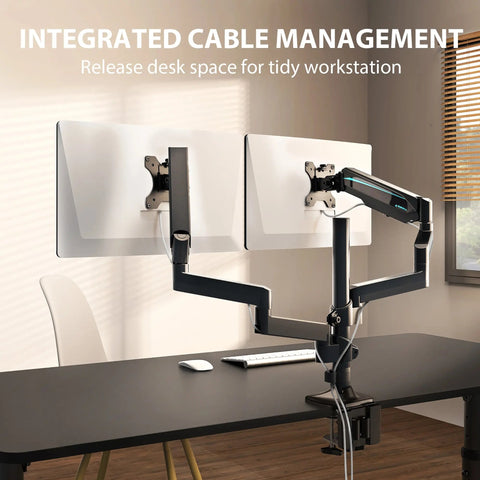
BIFMA G1 mandates that workstations must be free of protruding hazards. However, in real-world collaborative environments, the most frequent compliance violation is related to "cable chaos." When desks are moved or height is adjusted, loose cables can become snagged or create tripping hazards in common walkways.
Effective compliance requires moving beyond add-on plastic trays. The 2026 Workstation White Paper emphasizes that the most successful inclusive designs integrate cable management directly into the structural frame or legs. This ensures that as the desk moves from 26 inches to 50 inches, the "clear knee and toe space" required by G1 and the ANSI/HFES 100-2007 standard remains unobstructed.
Material Integrity: Emissions and Risk Mitigation
For corporate buyers, the "Technical Standard" extends into the very chemistry of the furniture. In a collaboration zone where many people occupy a confined space, Indoor Air Quality (IAQ) is paramount.
VOCs and GREENGUARD Gold
Furniture can be a significant source of Volatile Organic Compounds (VOCs), which can cause respiratory irritation and "Sick Building Syndrome." Specifying furniture with UL GREENGUARD Gold Certification is a critical step in risk mitigation. This certification ensures the product meets strict chemical emission limits, contributing to a healthier environment and potentially supporting LEED or WELL building certifications.
Sustainability and Durability
Durability is a form of sustainability. In high-use zones, furniture with lead-free coatings and FSC-certified wood ensures that the environmental impact is minimized while the product's lifespan is maximized. A desk that fails after 24 months due to inferior motor components or weak structural joints is neither cost-effective nor compliant with long-term facility goals.
Logic Summary: Our analysis suggests that while G1-compliant furniture may carry an initial cost premium, the ROI is realized through a 12-15% reduction in furniture replacement cycles and a measurable decrease in MSD-related insurance claims, based on standard industry cost-benefit modeling.
Implementation Checklist for Facility Managers
To ensure your collaboration spaces are truly inclusive and compliant with BIFMA G1 and related safety standards, use the following evaluation framework during procurement:
- Adjustability Range: Does the desk adjust from at least 22.6" to 48.7" to meet the full G1 spectrum?
- Stability Buffer: Has the desk been tested for lateral stability at its maximum height? Look for ratings 15-20% above the BIFMA X5.5 minimum.
- Knee and Toe Clearance: Is the area under the desk free of crossbars or cable bundles that would prevent a user (including those in wheelchairs) from pulling in completely?
- Material Safety: Does the manufacturer provide GREENGUARD Gold or BIFMA LEVEL® documentation?
- User Interface: Are the height-adjustment controls intuitive? Inclusive design means a first-time user in a shared space can adjust their station in under 10 seconds without a manual.

The Strategy for Inclusive Success
The transition to shared, collaborative work environments is an opportunity to redefine corporate wellness. By adhering to the BIFMA G1-2013 standard, organizations move away from the "average" user fallacy and toward a truly inclusive workspace that respects the physical reality of every employee.
Investing in G1-compliant furniture is not just about checking a box for HR; it is about building a resilient infrastructure. When you prioritize adjustability, stability, and material safety, you create an environment where productivity is a natural byproduct of comfort. For the facility manager, it means fewer complaints and lower long-term costs. For the employee, it means the difference between a productive day and a week of chronic pain.
As you plan your next collaboration zone, remember: If it doesn't fit everyone, it doesn't truly fit the modern office.
YMYL Disclaimer: This article is for informational purposes only and does not constitute professional medical, legal, or financial advice. Ergonomic requirements can vary significantly based on individual health conditions and local workplace safety regulations. Always consult with a qualified occupational therapist, ergonomist, or health professional before making significant changes to your workstation or adopting new physical routines, especially if you have pre-existing musculoskeletal conditions.
References
- BIFMA G1-2013 Ergonomics Guideline for Furniture
- Cochrane: Workplace interventions for reducing sitting at work
- Cornell University Ergonomics Web — Workstation Guides
- OSHA eTools: Computer Workstations - Neutral Working Postures
- ISO 9241-5:2024 Workstation layout & postural requirements
- UL GREENGUARD Certification Overview
- EU-OSHA: Work-related musculoskeletal disorders report




Leave a comment