

The Invisible Friction of Collaborative Spaces: Why Simple Math Fails
Why does a meeting intended for four people often feel cramped with only three? Why do participants in an eight-person strategy session find themselves constantly shifting their chairs or tucking their elbows? The answer rarely lies in the number of chairs, but in a fundamental misunderstanding of desktop surface dynamics.
In many corporate environments, planners calculate table sizes by simply multiplying a single user’s minimum width by the number of participants. However, this "multiplication myth" overlooks the compounded spatial conflicts that arise when multiple bodies, devices, and shared technologies converge. According to the Canadian Centre for Occupational Health and Safety (CCOHS), an improperly configured workstation is a primary contributor to musculoskeletal discomfort. When users are forced to adapt their posture to a limited surface, they abandon the "neutral position," leading to static load and reduced blood circulation.
To build a workspace that fosters genuine collaboration, decision-makers must move beyond generic estimates. This guide provides a rigorous, evidence-based framework for calculating desktop surface needs for groups of 4 to 8, grounded in international ergonomic standards and real-world spatial modeling.
The Physiology of Spatial Crowding: Musculoskeletal Implications
Before calculating dimensions, it is essential to understand the physiological cost of an undersized collaborative surface. When a desktop is too small, users instinctively engage in "protective posturing"—hunching shoulders, crossing arms, or leaning at awkward angles to avoid physical contact with neighbors or to view a shared screen.
Static Load and Neutral Posture
The human body is designed for movement, yet collaborative work often demands prolonged periods of sitting or standing. The ISO 11226:2000 standard for the evaluation of static working postures specifies that maintaining non-neutral positions for extended durations significantly increases the risk of Musculoskeletal Disorders (MSDs).
When a desk lacks sufficient depth, users often place their keyboards too close to the edge, depriving the forearms of support. This increases the load on the trapezius and deltoid muscles. Conversely, a desk that is too deep without proper organization leads to "over-reaching," straining the lower back and shoulders. As noted in The 2026 Workstation White Paper: Converging Ergonomic Science and Sustainable Engineering, the convergence of physical comfort and cognitive performance is the cornerstone of modern office design.
The "Elbow Interference" Phenomenon
In side-by-side seating, the primary conflict is the "Clearance Zone." Research insights suggest that simple per-person width allocations fail because they do not account for the bulk of swivel chair armrests or the natural range of motion during typing. To maintain a neutral spinal position, a user needs enough lateral space to keep their elbows close to their body without hitting a colleague.
Logic Summary: Our spatial modeling assumes that while a person’s torso may only be 18–20 inches wide, their "functional width" (including elbow flare and chair armrests) requires a minimum of 30 inches to avoid interpersonal friction.

The Three-Zone Framework for Surface Calculation
To calculate the precise surface area required, we must divide the desktop into three distinct functional zones: the Personal Zone, the Shared Technology Zone, and the Clearance Zone.
1. The Personal Zone (Workstation Core)
This is the area dedicated to an individual’s primary tools: laptop, mouse, and notebook.
- Width: Conventional wisdom suggests 24 inches is sufficient, but for intensive 4–8 person collaboration, a per-person width of 76–91 cm (30–36 inches) is required. This allows for the "Personal Device Area" plus a small buffer for peripherals.
- Depth: According to OSHA eTools for Computer Workstations, a depth of at least 24 inches is needed for task materials. However, in a shared environment, this depth must be balanced against the needs of those sitting opposite.
2. The Shared Technology Zone (Collaborative Equity)
A common mistake in meeting room design is placing technology at one end of the table, creating a "presenter vs. audience" dynamic. For true collaboration, technology must be centered.
- The 32-Inch Rule: For a central 32-inch shared monitor, planners should allocate at least 30 inches of width and 20 inches of depth on the table surface. This does not include the stand's footprint; it represents the "visual and physical reach" of the device.
- Impact on Depth: The total table depth must accommodate two Personal Zones (one for each side) plus the Shared Technology Zone. This often results in a required total depth of 42–48 inches.
3. The Clearance Zone (The "Buffer")
The Clearance Zone is the unused space between individuals that prevents "elbow interference."
- The 6-Inch Buffer: Experienced designers add a minimum of 6 inches to the calculated personal zone depth to accommodate the bulk of a swivel chair's armrests.
- Interpersonal Buffers: A buffer of 2–3 inches of unused table space is recommended between allocated personal widths to ensure participants do not feel physically encroached upon.
Modeling Surface Needs: 4, 6, and 8 Person Hubs
Using the principles outlined above, we can model the surface requirements for various team sizes. These calculations assume a "Double-Sided" (face-to-face) configuration, which is the most efficient for collaboration.
Modeling Note (Reproducible Parameters)
The following table is based on a deterministic parameterized model for high-traffic corporate environments.
| Parameter | Value/Range | Unit | Rationale |
|---|---|---|---|
| Personal Width (Min) | 76 | cm | BIFMA G1-2013 5th Percentile |
| Personal Width (Optimized) | 91 | cm | High-intensity task allowance |
| Personal Depth | 61 | cm | OSHA/CCOHS task material minimum |
| Shared Tech Depth | 51 | cm | 32-inch monitor/AV equipment zone |
| Interpersonal Buffer | 15 | cm | Elbow/Armrest clearance |
The 4-Person Collaboration Hub
For a small team of four sitting face-to-face (two on each side), the math is as follows:
- Total Length: (2 people x 76 cm) + 15 cm (center buffer) = ~167 cm (approx. 66 inches).
- Total Width (Depth): (2 people x 61 cm) + 30 cm (shared tech) = ~152 cm (approx. 60 inches).
- Recommendation: A 66" x 60" surface provides a balanced environment for 4-person deep work.
The 6-Person Project Hub
As the group grows, the "Shared Technology Zone" actually becomes more efficient. When a single large display replaces individual documents, the required personal surface depth can be reduced by approximately 6–12 inches per person.
- Total Length: (3 people x 76 cm) + 30 cm (two interpersonal buffers) = ~258 cm (approx. 102 inches).
- Total Width (Depth): 107–122 cm (42–48 inches).
- Insight: A 6-person hub often requires a table length of at least 8.5 feet to avoid "chair tangling" during ingress and egress.
The 8-Person Strategy Table
For eight people, the "Clearance Zone" becomes the most critical factor. For an 8-person table using the BIFMA G1-2013 30-inch minimum per person, the effective usable length is often reduced by 16–24 inches due to interpersonal buffers.
- Total Length: (4 people x 76 cm) + 45 cm (buffers) = ~349 cm (approx. 137 inches).
- Total Width (Depth): 122 cm (48 inches) minimum.
- Scenario B (The Power User): In high-stakes strategy rooms where multiple laptops and documents are used simultaneously, the length should extend to 160 inches (approx. 13 feet) to maintain professional decorum and physical comfort.

Beyond Dimensions: Durability and Integration
For B2B office planners and architects, the "best" surface isn't just about size; it’s about how that surface survives the rigors of a corporate environment.
Cable Management: The Silent Productivity Killer
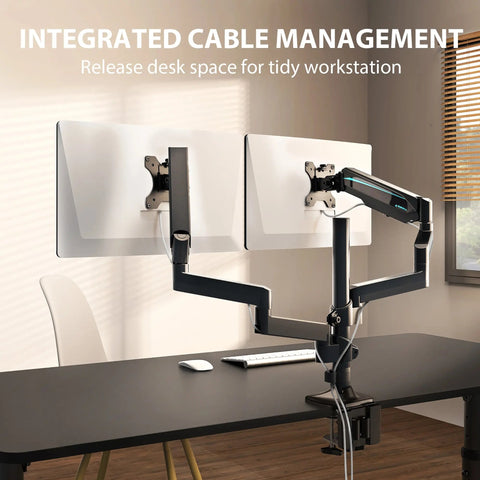
In meeting rooms, adhesive cable ties are a common point of failure, often peeling off during frequent reconfigurations. Professional-grade collaborative desks must feature integrated grommets or central troughs. These allow for "clean" cable runs that do not interfere with the usable surface area. According to HSE guidelines on working with display screen equipment, a cluttered workspace increases the risk of tripping and equipment damage, but it also creates visual "noise" that can impede focus.
Material Integrity and Certifications
When selecting furniture for 4–8 person zones, durability is paramount.
- BIFMA X5.5: Ensure the desk meets ANSI/BIFMA X5.5 standards for desk and table products, which cover safety, durability, and structural adequacy.
- Sustainability: Look for FSC Certification for wood components and UL GREENGUARD Gold for low chemical emissions. These certifications are not merely "green" badges; they are indicators of a product built to withstand a decade of corporate use without off-gassing or structural degradation.
The L-Shaped Hub Pitfall
When using L-shaped desks for 6–8 person hubs, a common mistake is choosing a design with an acute internal corner. Acute angles waste usable surface and create awkward sightlines that force users into twisted postures. Ensure the internal corner angle is exactly 90 degrees to maximize the "Shared Zone" and maintain ergonomic alignment.
Practical Recommendations for Implementation
To ensure your collaborative zones are truly optimized, follow this implementation checklist based on industry best practices:
- Audit Your Tech: Before buying a table, measure the footprint of your shared AV equipment. Does it require a dedicated central trough, or can it sit on the surface?
- The 20-8-2 Rhythm: Encourage teams to adopt the Cornell University Ergonomics Web recommendation: 20 minutes of sitting, 8 minutes of standing, and 2 minutes of moving. This is only possible if the collaborative surface is height-adjustable.
- Monitor Height and Distance: Ensure that shared screens are positioned so that the top of the screen is at or slightly below eye level, as recommended by OSHA's monitor guidelines.
- Clearance Check: Measure the distance from the table edge to the nearest wall. There should be at least 36–48 inches of clearance to allow chairs to roll back and people to pass behind them.
- Calculate for the "Max Case": Always plan for the maximum number of participants. It is easier to use a large table for a small group than to force a large group onto a small table.

Strategic Value of Ergonomic Investing
Calculating desktop surface needs is more than a logistical exercise; it is a strategic investment in human capital. By providing 76–91 cm of width per person and accounting for the Shared Technology Zone, organizations can significantly reduce the prevalence of work-related musculoskeletal discomfort.
As noted by EU-OSHA, early intervention through ergonomic design is far more cost-effective than managing chronic injuries or lost productivity. Whether you are an architect designing a new headquarters or a corporate planner optimizing a project room, the math of collaboration remains the same: prioritize the person, accommodate the technology, and never underestimate the need for a little extra elbow room.
Disclaimer: This article is for informational purposes only and does not constitute professional medical, legal, or occupational health advice. Ergonomic requirements can vary significantly based on individual physical characteristics and specific job tasks. Always consult with a certified professional ergonomist or healthcare provider before making significant changes to your workstation or office layout, especially if you have pre-existing musculoskeletal conditions.
References
- BIFMA G1-2013 Ergonomics Guideline for Furniture
- CCOHS: Office Ergonomics - Sit/Stand Desk
- ISO 9241-5:2024 Workstation layout & postural requirements
- OSHA eTools: Computer Workstations - Desks
- Cornell University Ergonomics Web — Workstation Guides
- EU-OSHA: Musculoskeletal disorders and prolonged static sitting




Leave a comment