

The Blueprint Factor: Deciding Desktop Size for Physical Drawings
Why does your lower back ache more on the days you review physical blueprints compared to the days you spend entirely in CAD? For engineers, architects, and designers, the transition between a high-resolution digital model and a large-format paper drawing is more than a workflow shift; it is a significant ergonomic challenge. While the industry has moved toward digital twins and BIM (Building Information Modeling), the physical blueprint remains a staple for on-site clarity and collaborative review. However, most standard office desks are designed for the "digital-only" worker, leaving technical professionals to compromise their posture and precision.
The "Blueprint Factor" refers to the specific spatial and structural requirements needed to accommodate both dual-monitor digital workstations and physical A0-sized drawings. Failing to account for this factor leads to a cluttered workspace, eye strain from improper viewing distances, and Musculoskeletal Disorders (MSDs) caused by repetitive reaching and leaning.
The Physiology of Technical Work: Static Load and MSDs
When an engineer leans over a desk to annotate a physical drawing, the spine leaves its neutral position. According to the U.S. Occupational Safety and Health Administration (OSHA), a neutral posture maintains the natural S-curve of the spine, reducing the risk of strain. When you hunch forward to view details on an A0 sheet—which measures approximately 33.1 by 46.8 inches—you increase the static load on your lumbar discs and trapezius muscles.
Static loading occurs when muscles are held in a constant state of tension to maintain a non-neutral posture. Over time, this restricts blood circulation, leading to fatigue and the development of chronic MSDs. As noted in the 2026 Workstation White Paper: Converging Ergonomic Science and Sustainable Engineering, the integration of ergonomic hardware is the primary "engineering control" used to mitigate these risks. By providing a surface that supports both digital and physical media at the correct heights and angles, we can reduce the physiological cost of technical precision.
The Spatial Conflict: A0 Drawings vs. Digital Command Centers
The core challenge for CAD professionals is the "swing space" required for physical media. An A0 sheet requires not just its own footprint, but an additional 12 to 18 inches of clearance for comfortable viewing and annotation.
A common mistake in workspace design is selecting a desk with sufficient surface area but insufficient depth. If a desk is less than 30 inches deep, the placement of large monitors forces the physical drawing to overlap with the keyboard or overhang the front edge. This forces the user to push their chair back, losing the support of the backrest, or to sit at an awkward angle.
The 70-Inch Heuristic for Dual-Monitor CAD
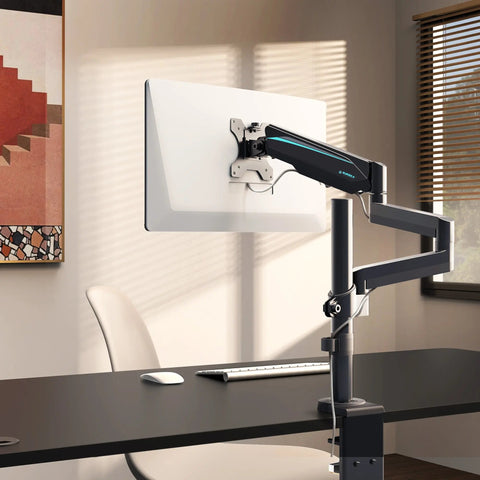
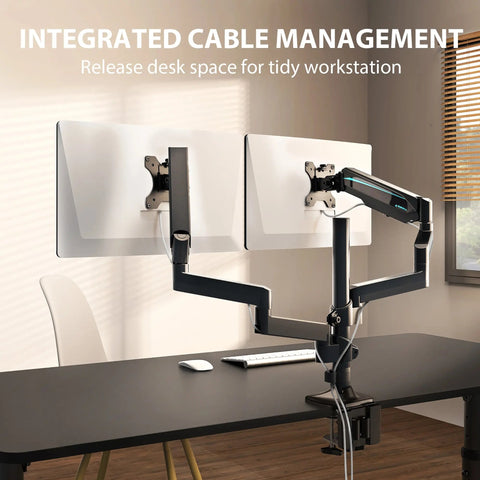
For engineers utilizing dual 32-inch monitors, we recommend a minimum desk width of 70 inches. This is a practical heuristic derived from the need to prevent monitor bezels from blocking peripheral sightlines while leaving a dedicated "blueprint zone" on the desktop. When monitors are mounted on a Single Monitor Arm, the desk surface is reclaimed, allowing the A0 sheet to slide partially under the screens for closer inspection without disrupting the hardware setup.
Logic Summary: This heuristic assumes a standard dual-monitor focal point and the minimum width required to allow an A0 sheet to be rotated 90 degrees without colliding with PC towers or peripheral equipment.
Modeling the Engineer’s Workspace: A Quantitative Analysis
To move beyond generic advice, we modeled a scenario for a Senior Mechanical Engineer (185cm / 6'1" tall) handling dual 32-inch 4K monitors and A0 blueprints. This analysis reveals how standard furniture often fails the 95th percentile user.
Method & Assumptions (Scenario Modeling)
This model represents a high-demand dual-media workspace. It is a deterministic scenario model, not a controlled lab study.
| Parameter | Value | Unit | Rationale / Source Category |
|---|---|---|---|
| User Stature | 185 | cm | 95th Percentile Male (Senior Engineer Persona) |
| Monitor Size | 32 | in | Industry standard for high-detail CAD work |
| Desk Depth | 30 | in | Minimum depth for A0 blueprint handling |
| Target FOV | 40 | deg | THX recommendation for immersive technical work |
| Keyboard Offset | 4 | in | Standard ergonomic tray extension |
Findings from the Analysis
- The Height Deficit: For a 185cm user, the ideal sitting desk height is approximately 75.5cm (29.7 inches). Standard fixed desks are often 29 inches high, creating a 0.7-inch deficit that causes shoulder shrugging and neck strain.
- The Viewing Distance Deficit: With 32-inch monitors, the optimal viewing distance for a 40° Field of View (FOV) is ~38.3 inches. On a 30-inch deep desk, even with a keyboard tray, the user is forced ~11% too close to the screen, increasing eye fatigue.
- The Mouse Precision Zone: For high-precision CAD work, a sensitivity of 46.7cm/360 requires a minimum 22-inch mousepad width. This further reinforces the need for a wide (70"+) desktop to avoid cramping the blueprint review area.
Stability and Load Capacity: The Non-Negotiables
Precision in CAD and architectural modeling requires a rock-solid surface. Even microscopic desk wobble can lead to "input jitter," where the mouse cursor moves unintentionally during fine-point selection. This is why practitioners prioritize heavy-duty frames and high-quality materials.
The Zen Pro Series, 87"/72" Executive Standing Desk with Cabinets Set addresses this through its integrated side cabinets and dual-motor system, providing a massive 87-inch surface that exceeds the 70-inch heuristic. The use of sintered stone and natural wood provides a high-density mass that dampens vibrations from typing or monitor arm adjustments.
According to BIFMA G1-2013 Ergonomics Guidelines, furniture must support the 5th to 95th percentile of the population. For engineers, "support" includes the weight of specialized hardware. We recommend a desk load capacity rated at least 50–100 lbs above your current hardware total to future-proof for additional plotters, VR sensors, or secondary workstations.

Implementing the Sit-Stand Rhythm in Technical Work
While a large desk provides the space, the behavior of the user determines the health outcome. The Cochrane Library's systematic review indicates that sit-stand desks can reduce sitting time by 84–116 minutes per day. However, standing is not a substitute for movement.
The Cornell University Ergonomics Web suggests the "20-8-2" rhythm: 20 minutes of sitting, 8 minutes of standing, and 2 minutes of moving/stretching. For engineers, the "8 minutes of standing" is the ideal window for physical blueprint review. Standing provides a better top-down perspective on large drawings and facilitates easier movement around the desk to reach different sections of the A0 sheet.
Practical Setup Checklist for Physical Drawings
- Monitor Height: Align the top of the screen at or slightly below eye level to minimize neck extension, as recommended by HSE UK.
- Blueprint Lighting: Ensure your workspace has task lighting that minimizes glare on both the monitors and the semi-glossy paper of blueprints.
- Document Holders: For smaller A3 or A4 reference sheets, use a document holder aligned with the monitor to reduce repetitive neck rotation.
- Cable Management: In a sit-stand setup, ensure cables for dual monitors have sufficient "service loops" to prevent tension at maximum height.
Addressing the Digital Transition
While physical blueprints remain critical, the Future of Large-Format Printing in AEC suggests a shift toward physical output being an "on-demand" function. This means your desk must be versatile. An L-shaped configuration, such as the GTG - L60, L-Shaped Glass LED Gaming Desk (60"x40"), can provide a dedicated digital wing and a separate physical review wing, though the depth must be verified against your specific drawing sizes.
For those interested in the stability of these larger setups, our guide on Desk Stability: Weight vs. Engineering explores how frame design impacts precision.
Summary of Technical Requirements
| Feature | Engineering Requirement | Ergonomic Rationale |
|---|---|---|
| Minimum Width | 70 - 87 inches | Accommodates dual 32" monitors + A0 "Swing Space" |
| Minimum Depth | 30 - 34 inches | Prevents monitor-to-user distance deficit |
| Adjustment Range | 22.6 - 48 inches | Meets ISO 9241-5:2024 for diverse heights |
| Load Capacity | 200+ lbs | Supports heavy CAD hardware and specialized peripherals |
Final Considerations for the Technical Workspace
The blueprint factor is not just about having a "big desk." It is about understanding the intersection of human anthropometrics and technical media requirements. By selecting furniture that aligns with ANSI/BIFMA X5.1 standards for durability and safety, and applying the spatial heuristics outlined here, technical professionals can create a workspace that enhances both their precision and their long-term well-being.
Whether you are designing a skyscraper or a mechanical assembly, your desk is the foundation of your productivity. Don't let a standard office layout dictate your physical health. Invest in a surface that respects the scale of your work.
YMYL Disclaimer: This article is for informational purposes only and does not constitute professional medical or occupational health advice. Individuals with pre-existing musculoskeletal conditions should consult a qualified physical therapist or ergonomist before implementing significant changes to their workstation or work routine.
References
- BIFMA G1-2013 Ergonomics Guideline for Furniture
- OSHA eTools: Computer Workstations - Neutral Working Postures
- ISO 9241-5:2024 Workstation layout & postural requirements
- Cochrane: Workplace interventions for reducing sitting at work (2018)
- Cornell University Ergonomics Web — Workstation Guides
- HSE: Working safely with display screen equipment (DSE)
- ANSI/BIFMA X5.1 General-Purpose Office Chairs
- The 2026 Workstation White Paper: Converging Ergonomic Science and Sustainable Engineering




Leave a comment