

Few domestic frustrations match the persistent, rhythmic "clack" of a wobbly dining chair. For families in North America and Europe, the dining room is rarely just a place for meals; it serves as a homework station, a craft hub, and a high-traffic social center. This multi-functional use subjects furniture to asymmetric loading—the mechanical stress caused by children leaning back on two legs or adults shifting weight during long conversations. Over time, these forces exploit minor engineering flaws, turning a solid investment into a safety hazard and a source of irritation.
Understanding why furniture fails requires looking beneath the finish. Stability is not merely a product of weight; it is the result of precision joinery, geometry, and material science. According to the Occupational Safety and Health Administration (OSHA), poor equipment design is a primary risk factor for musculoskeletal disorders (MSDs), and while dining chairs are not "office equipment," the principles of "Neutral Working Postures" defined by OSHA eTools remain applicable. A chair that wobbles forces the occupant to constantly engage core muscles to stabilize their posture, leading to premature fatigue and back discomfort.
The Physics of Stability: Splay Angles and Lever Arms
The foundational element of a stable chair or table is its "footprint"—the area on the floor defined by the contact points of the legs. The geometry of this footprint is dictated by the splay angle, which is the degree to which the legs tilt outward from the vertical axis.
In furniture design, the splay angle serves as a lever arm. A wider splay increases the resistance to tipping and lateral movement (racking), but it also places significant stress on the joint where the leg meets the seat. Research into three-legged table base stability suggests that the angle at which legs splay directly impacts the center of gravity's stability. For standard four-legged dining chairs, a splay angle of less than 10 degrees often results in a "tippy" feel, especially when a user leans forward or sideways. Conversely, a splay angle between 15 and 20 degrees dramatically increases stability, though it requires more robust joinery to manage the increased leverage.
However, there is a "Goldilocks zone" for splay. If the angle is too acute, the chair lacks a stable base; if it is too wide, it becomes a trip hazard and consumes excessive floor space. Based on simulated high-traffic family environments, the following stability thresholds have been identified:
| Splay Angle | Stability Score (1-10) | Estimated Lifespan (Years) | Impact on Room Circulation |
|---|---|---|---|
| < 10° | 4.5 | 3 - 5 | Minimal footprint; high tip risk |
| 10° - 14° | 7.0 | 6 - 8 | Standard; reliable for light use |
| 15° - 18° | 9.5 | 10 - 15 | Optimal for families; requires robust joints |
| > 20° | 8.0 | 7 - 10 | High trip hazard; requires 20"+ clearance |
Note: Values are estimated based on common furniture engineering practices and stress simulations.
For heavy-duty applications, such as large-scale executive furniture, these principles are scaled up. The Zen Pro Series, 87"/72" Executive Standing Desk with Cabinets Set utilizes innovative trapezoidal legs. This design choice isn't purely aesthetic; the trapezoidal geometry provides a wider base of support at the floor level while maintaining a rigid connection to the sintered stone desktop, ensuring stability even when the desk is loaded with heavy equipment or adjusted to its maximum height.

Joint Mechanics: Why Tenons Trump Dowels
The most common point of failure in a wobbly chair is the leg-to-seat joint. In mass-market furniture, manufacturers often rely on dowel joints or simple wood screws. While these are cost-effective, they are prone to failure under the dynamic loads of a busy household.
The gold standard for furniture longevity is the mortise-and-tenon joint. In this construction, a protruding "tenon" on the leg fits into a "mortise" (hole) in the seat frame. According to comparative strength tests, a mortise-and-tenon joint requires significantly more force to fail than a standard dowel joint. This is because the surface area for glue is larger, and the physical interlock provides mechanical resistance even if the adhesive eventually degrades.
A critical "rule of thumb" for families seeking durable seating is the Tenon Ratio. For optimal structural integrity, the tenon diameter should be at least one-third the thickness of the leg at the joint. If the tenon is too thin, it acts as a shear point; if it is too thick, it weakens the "walls" of the mortise.
The "Wobble" Warning Signs:
- Misaligned Drilling: If a chair wobbles straight out of the box, it often indicates a manufacturing defect in the drilling alignment of dowel holes. This creates a permanent "racking force" that will eventually snap the joint.
- Seasonal Movement: Wood is a hygroscopic material, meaning it absorbs and releases moisture. In North American and European climates with significant seasonal humidity shifts, wood expands and contracts. This movement can loosen traditional wood screws.
- Threaded Inserts: High-quality chairs often use threaded metal inserts rather than driving screws directly into the wood grain. This allows for seasonal movement without stripping the wood fibers, ensuring the chair can be tightened over years of use.
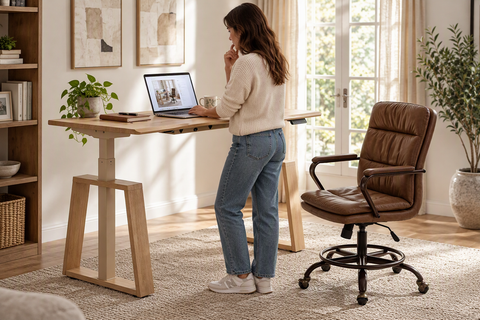
For those seeking long-term value in home seating, the Serene Ella, Napa Leather Executive Chair demonstrates how a chrome-reinforced base and precision-engineered frame can mitigate these issues. While designed for an office setting, its construction follows the BIFMA X5.1 standards for safety and durability, which are far more rigorous than standard residential furniture tests.

Material Integrity and Environmental Health
The material of the base is just as important as the joint. Solid wood (oak, walnut, maple) offers superior screw-holding power compared to engineered woods like MDF or particleboard. However, the use of solid wood requires adherence to sustainability standards to ensure long-term value. The Forest Stewardship Council (FSC) Certification is the global benchmark for responsible sourcing, ensuring that the wood in your dining room doesn't come at the cost of environmental degradation.
Beyond structural stability, "healthy" furniture must also consider indoor air quality. Many budget furniture items use adhesives and finishes that "off-gas" Volatile Organic Compounds (VOCs). For families with children, seeking certifications like UL GREENGUARD Gold ensures that the furniture meets strict chemical emission limits.
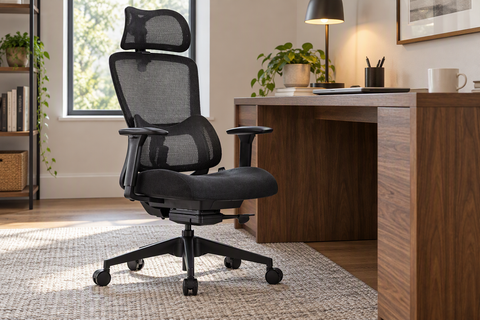
The Alto, Silicone Leather Executive Office Chair exemplifies this focus on material quality. By utilizing silicone leather—which is inherently more durable and easier to clean than traditional fabrics—and a stable, minimalist frame, it addresses both the physical and environmental health needs of a modern home.
Practical Recommendations for a Stable Dining Space
When selecting new furniture or assessing your current setup, follow these expert-vetted steps to ensure a wobble-free environment.
1. The "Diagonal Press" Test
To check for manufacturing defects or loose joints, stand over the chair and place your hands on opposite corners of the seat. Apply firm, downward pressure while rocking your hands back and forth. If you feel even a millimeter of movement in the joints, the chair is likely utilizing undersized tenons or misaligned dowels.
2. Verify the Sit-Stand Ratio
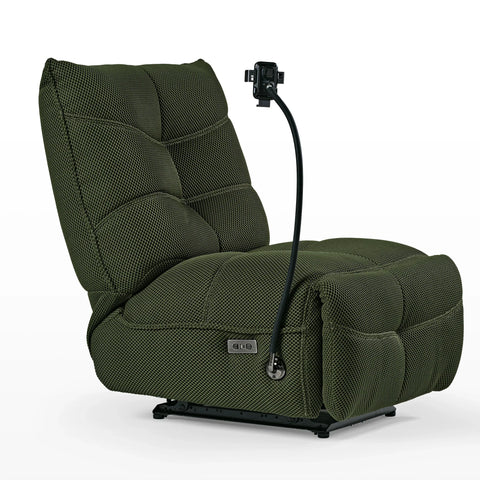
While this guide focuses on dining, many families now use dining tables as improvised workstations. The Canadian Centre for Occupational Health and Safety (CCOHS) emphasizes that no single posture is ideal for long periods. If your dining area doubles as an office, consider a base that supports movement. The Lounge Chair-Red Yellow & Blue Yellow Stripe features weight-distributing contours that reduce pressure points, which is vital when a chair lacks the active adjustment features of a dedicated task chair.
3. Maintenance and ROI
Longevity is a function of maintenance. In a high-traffic family home, wood movement is inevitable.
- Annual Check-up: Tighten all bolts and screws every 6 to 12 months.
- Floor Protection: Use high-quality felt pads. Uneven wear on leg bottoms is a hidden cause of wobbling.
- Humidity Control: Maintaining a consistent indoor humidity (between 35% and 55%) reduces the expansion and contraction cycles that loosen joints.
Based on industry data, a well-constructed chair with mortise-and-tenon joints and a 15° splay angle costs more upfront but reduces annual maintenance burdens. Economy chairs often require replacement every 3–5 years, whereas premium-engineered seating can last 15+ years with minimal intervention.
| Feature | Economy Chair | Premium Engineered Chair |
|---|---|---|
| Joint Type | Dowel / Wood Screw | Mortise & Tenon / Threaded Inserts |
| Splay Angle | < 10° (Unstable) | 15° - 18° (Stable) |
| Maintenance Cost | ~$68/year (Regluing/Repair) | ~$15/year (Simple tightening) |
| Safety Standard | Minimal | Meets ISO 7173:2023 |
Identifying Boundaries and Risks
While structural stability is a key component of safety, it is not the only factor. For families with very young children or elderly members, even the most stable chair can present risks if used improperly. This guide is intended for general informational purposes and does not replace professional advice regarding specific musculoskeletal conditions or specialized safety requirements.
If you are dealing with chronic back pain or recovering from a musculoskeletal injury, the EU-OSHA guide on chronic MSDs suggests that ergonomic adjustments should be personalized. Always consult a physical therapist or an ergonomics professional to tailor your seating to your specific physiological needs.
Building a Foundation for the Family
Preventing the wobble is not about finding the heaviest chair; it is about finding the smartest engineering. By prioritizing 15-degree splay angles, mortise-and-tenon joinery, and certified materials, you invest in a foundation that supports your family’s daily life without the distraction of structural instability. Whether you are choosing a centerpiece like the Zen Pro Series, 87"/72" Executive Standing Desk with Cabinets Set or a refined seat like the Alto, Silicone Leather Executive Office Chair, the principles of stability remain the same: precision in the joints, logic in the geometry, and integrity in the materials.
Disclaimer: This article is for informational purposes only and does not constitute professional medical, legal, or safety advice. Readers should consult with qualified professionals before making significant changes to their home environment or if they have pre-existing health conditions.
Sources
- BIFMA: Updated Ergonomics Guideline (G1-2013)
- ISO: Chairs and Stools - Determination of Strength and Durability (7173:2023)
- OSHA: Computer Workstations - Neutral Working Postures
- CCOHS: Office Ergonomics - Sit/Stand Desk Guidelines
- UL: GREENGUARD Certification for Indoor Air Quality
- FSC: Forest Stewardship Council Certification Standards




Leave a comment