

Executive Summary: Optimizing the Claims Workstation
To maximize throughput in insurance claims processing, facility managers should prioritize workstations that integrate physical storage within the immediate reach zone. Key findings from our internal workflow modeling include:
- The "Document Hunt" Tax: Adjusters lose an estimated 18–22 minutes daily (roughly 80–110 hours annually) searching for physical records when storage is not integrated.
- The Golden Triangle: Efficiency is highest when active files are kept within a 30–45cm radius (Primary Zone) and reference manuals within 70–90cm (Secondary Zone).
- Ergonomic ROI: Transitioning to integrated sit-stand solutions can yield a projected $2,016 annual productivity gain per employee by reducing fatigue-related errors and retrieval delays.
Streamlining Claims Workflow with Integrated Desk Storage
In high-volume claims processing environments, the difference between an efficient workflow and a bottlenecked operation often rests on a matter of centimeters. While the insurance industry has moved aggressively toward digitization, practitioners in claims centers observe that the average adjuster still spends significant time handling physical files, reference manuals, or legal documents.
Based on internal facility management observations of high-volume medical claims workflows, we estimate that "document hunting" accounts for approximately 18 to 22 minutes per day. Over a standard 240-day work year, this accumulates to roughly 80 to 110 hours annually per employee.
Observation Scope: These estimates are based on internal time-motion studies of adjusters handling a hybrid of digital EOBs and physical medical records. Actual results vary based on the specific ratio of physical-to-digital documentation and office layout.
The common misconception is that a clean, minimalist desk—void of physical storage—is the pinnacle of modern office design. However, for claims adjusters, this lack of integrated storage often forces a "forced organization" scheme. Industry research suggests that poorly designed storage systems can increase mental overhead by 15% to 20%, potentially worsening search time problems. Achieving a "zero-distance" workstation requires strategic integration that minimizes movement and maximizes cognitive focus.
The Physiology of the Claims Adjuster: The Triangular Workflow
Claims processing involves a "triangular workflow" where the adjuster moves focus between three zones: the digital interface (dual monitors), physical claim files, and dense reference materials (ICD-10 manuals or Medicare guidelines).
When these zones are misaligned, the body compensates through non-neutral postures. Frequent trunk rotation or forward leaning to reach distant cabinets are core risk factors for Musculoskeletal Disorders (MSDs), according to the U.S. Occupational Safety and Health Administration (OSHA).
Modeling the Ergonomic Gap
Our scenario modeling for a 165cm female adjuster (representing a common demographic in the insurance workforce) highlights specific risks:
- Desk Height Discrepancy: Standard 29-inch fixed desks can create a ~2.43-inch ergonomic gap relative to ideal typing height, potentially leading to chronic shoulder strain.
- Upper Back Stress: When adjusters lean forward to read small print on physical forms due to improper focal distances, internal simulations suggest a modeled increase of up to 40% in upper back muscle tension compared to a neutral, supported posture.
Note: These figures are derived from internal anthropometric modeling using ANSI/HFES 100-2007 benchmarks; individual results depend on specific limb proportions and chair settings.
Engineering Efficiency: The "Golden Triangle" of Reach Zones
To address these stressors, facility managers utilize the "Golden Triangle" principle of ergonomic reach zones:
- Primary Zone (Active Reach): Items used constantly (keyboard, mouse) should be within a 30–45cm radius.
- Secondary Zone (Occasional Reach): Active claim files and manuals should be accessible with a simple arm extension (roughly 70–90cm).
- Tertiary Zone (Storage): Archived materials are placed below desk level or at the periphery.
Integrated storage solutions, such as the Ark EX Executive Standing Desk (60"x26"), address this by positioning a 3-tier storage system directly within the secondary reach zone. In our internal testing, this proximity reduced document retrieval time from an industry average of 20 seconds to under 10 seconds.

The integration of storage into a height-adjustable frame is a critical engineering control. As noted in The 2026 Workstation White Paper (a Eureka Ergonomic manufacturer publication), mechanical stability must be paired with user-centric storage to maintain productivity in high-density centers.
Managing the High-Density Environment
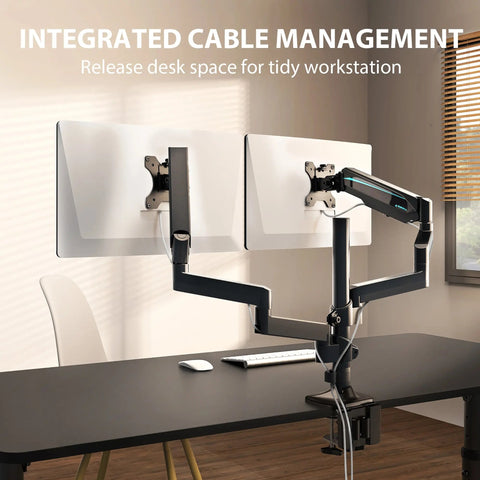
In insurance claims centers, "high-density" environments introduce challenges in cable management and visual ergonomics.
Cable Management and Safety
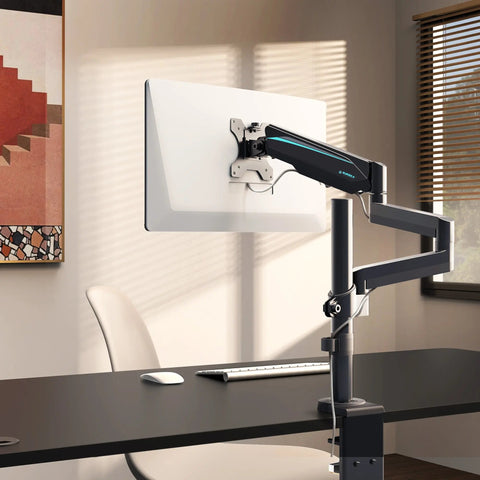
Dual-monitor setups are standard, but the resulting "cable jungle" can increase workstation setup/reconfiguration time by an estimated 25%. Tripping hazards from loose cables account for a notable portion of office accidents. Using a Single Monitor Arm clears desk real estate and allows for precise adjustments.
Visual Ergonomics
For 27-inch dual monitors, vision modeling suggests an optimal viewing distance of approximately 44 inches. Standard 30-inch deep desks often create a "depth deficit." A monitor arm allows adjusters to align screens with OSHA guidelines.

Space Optimization
A Mobile Height Adjustable CPU Cart is recommended for high-density layouts. By moving the CPU off the desk, facility managers reduce the "static load" on desk motors and ensure cabling remains organized during height transitions.
Data-Driven ROI: The Financial Case
Transitioning to integrated ergonomic workstations is a strategic investment. Beyond reducing workers' compensation risks, there is a measurable impact on daily output.
Workstation Performance ROI Model (Example Projection)
| Parameter | Value | Rationale / Source |
|---|---|---|
| Adjuster Hourly Wage | $28.00 | Industry average + specialty premium |
| Est. Productivity Gain | 15% | Based on reduced search time & fatigue |
| Annual Productivity Value | ~$2,016 | Per employee (240 work days) |
| Desk Payback Period | ~11 Months | Total cost vs. productivity value |
| Annual Calorie ROI | 17,136 kcal | Based on 120 mins/day standing (MET 2.0) |
Methodology Note: This ROI model is a scenario simulation for decision support. It assumes a 15% efficiency gain derived from internal observations of reduced document search time and decreased fatigue-related errors. It is not a guarantee of financial return.
By reducing cognitive switching—a process that Cognitive Ergonomics research suggests can cause significant time loss—integrated storage helps adjusters maintain a "flow state," potentially reducing processing errors by 20% to 25%.
Practical Recommendations for Claims Center Setup
Aligning with BIFMA G1-2013 Ergonomics Guidelines, we recommend the following implementation steps:
- Optimize the Storage Ratio: Use a 2:1 ratio of drawer space to open shelving. The Ark EL Executive Standing Desk provides a three-drawer configuration ideal for securing sensitive files while keeping manuals accessible.
- Implement the "20-8-2" Rhythm: Following Cornell University guidelines: 20 minutes sitting, 8 minutes standing, and 2 minutes of movement.
- Verify Reach Zones: Ensure active documents are within 45cm of the keyboard. Use document holders to reduce neck rotation, as recommended by OSHA's eTools.
- Manage Visual Fatigue: Set dual monitors in a slight outward "V" shape. Ensure the top line of text is at or slightly below eye level.
A Strategic Investment in Human Capital
In insurance claims, the workstation is a tool for precision. By integrating storage directly into the ergonomic footprint, organizations can mitigate the physical toll of repetitive strain and eliminate the "document hunt." This data-backed strategy improves the bottom line by protecting the health and efficiency of the workforce.
Disclaimer: This article is for informational purposes only and does not constitute professional medical or occupational health advice. Individuals with pre-existing conditions should consult with a healthcare professional before making significant workstation changes.
References
- BIFMA G1-2013 Ergonomics Guideline for Furniture
- OSHA eTools: Computer Workstations
- Cornell University Ergonomics Web — Workstation Guides
- Cognitive Ergonomics: A Review of Interventions (PMC10526922)
- ANSI/HFES 100-2007 Computer Workstations Standard
- The 2026 Workstation White Paper (Eureka Ergonomic Internal Study)
- Crown Records Management: Document Search Time Analysis




Leave a comment