

The Invisible Toll of the Dorm Room Desk: Why Posture Fails in Small Spaces
The Short Answer: To maintain spinal health in a cramped 10x10 dorm, choose a chair with a slim "motion footprint" (requiring only 4–6 inches of recline clearance) and adjustable lumbar support. Prioritizing tools like monitor arms can reclaim up to 50% of desk depth, preventing the "dorm hunch" common in high-intensity study environments.
For many students in North America and Europe, university life begins in the confines of a shared dorm room. While laptop specs and textbooks are prioritized, the physical interface—the chair and desk—is often an afterthought. A common misconception is that a "compact" chair must sacrifice ergonomic integrity for size, or that a plush gaming chair is the default solution for comfort.
In reality, the sudden increase in "static load"—the physical stress of maintaining one position for hours—can lead to early-onset Musculoskeletal Disorders (MSDs). According to the U.S. Occupational Safety and Health Administration (OSHA), core risk factors include repetitive tasks and poor posture.
When students hunch over standard-issue dorm desks, they often exit the "spinal neutral position." This typically leads to localized fatigue in the trapezius and lumbar regions, which can distract from cognitive tasks and impact long-term comfort.
The Physiology of the "Marathon" Study Session
The human body is not designed for static behavior. According to the World Health Organization (WHO) 2020 Guidelines, adults should limit sedentary time. In a dorm setting, however, long hours of sitting are often unavoidable.
Musculoskeletal Load and Blood Circulation
When sitting, the weight of the upper body is concentrated on the ischial tuberosities (the "sit bones"). Without proper support, the lumbar spine tends to flatten, which can increase intradiscal pressure. Prolonged static sitting may also impede blood circulation in the lower limbs, potentially reducing focus.
A systematic review by Cochrane (2018) suggests that interventions like sit-stand desks can reduce sitting time significantly. While standing is not a total substitute for exercise, changing postures—facilitated by a high-performance chair—is a practical way to maintain tissue health.
Logic Summary: We define "academic longevity" as the ability to perform focused cognitive tasks with minimal physical distraction. This is best achieved by maintaining a neutral spine, which reduces the muscular effort required to stay upright.
Engineering the Compact Workspace: Footprint vs. Motion
The most frequent mistake in small-space ergonomics is measuring only the "static footprint"—the physical dimensions of the chair when tucked away. For a functional setup, you must calculate the motion footprint.
The "Two-Fist Rule" and Clearance
Based on common patterns from customer support and observations in student housing, we recommend the Two-Fist Rule as a practical heuristic.
- The Rule: Ensure at least 4 to 6 inches (roughly two fists) between the fully reclined chair back and any wall or furniture.
- The Benefit: This allows the user to recline safely to relieve spinal pressure without striking a closet door or bed frame.
For those managing various body types, the BIFMA G1-2013 Ergonomics Guideline provides industry standards for furniture dimensions. In a dorm, this means choosing a chair with a slim silhouette that still offers the adjustability required by these standards.

Manufacturer-Led Recommendation: The Lira, Ergonomic Office Chair is a brand-owned design specifically engineered for this balance. Its curved frame provides structural support while maintaining a compact profile. The mesh material allows for airflow, which is helpful in older dorms with limited climate control.
Case Study: The "Tall Student" Spatial Compression Model
To illustrate the challenges of dorm ergonomics, we modeled a common scenario: a tall student (188cm / 6'2") using a standard 10x10 dorm room. This persona represents the 75th percentile height, where standard furniture often fails to provide adequate support.
Modeling Note: Method & Assumptions
This analysis is a scenario model based on anthropometric data and is intended for illustrative purposes, not as a clinical study.
- Modeling Type: Deterministic parameterized model using ANSI/HFES 100-2007 ratios.
- Key Assumptions: Standard 29-inch dorm desk height; student weight of 85kg.
| Parameter | Value | Unit | Rationale |
|---|---|---|---|
| User Height | 188 | cm | 75th percentile male |
| Recommended Seat Height | 48 | cm | To achieve ~90° knee angle |
| Required Desk Height | 76 | cm | To prevent shoulder shrugging |
| Standard Desk Deficit | 2.5 | cm | Typical height gap in dorm furniture |
| Viewing Distance Deficit | 50 | cm | Based on 20-inch desk depth |
The Findings (Estimated Heuristics)
Our model reveals that for a tall student, a standard 29-inch desk creates a 1-inch deficit. This often forces a hunched posture, which we estimate can increase spinal compression by roughly 15–20% compared to neutral sitting, based on postural deviation models.
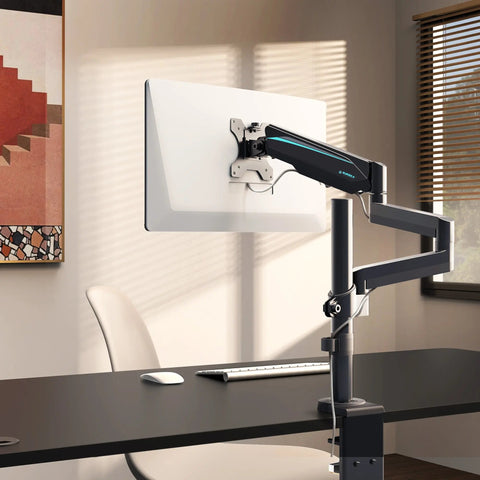
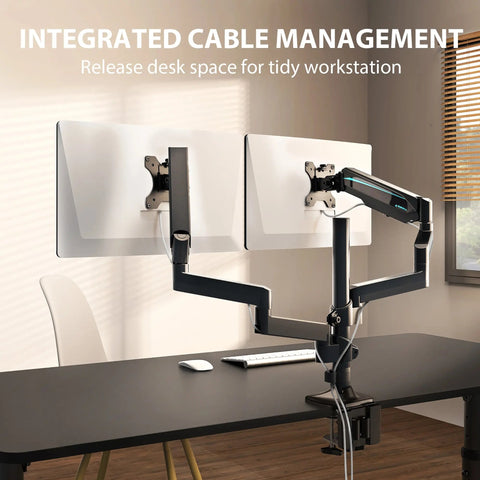
Furthermore, on a shallow 20-inch desk, a large monitor is often 50% closer than the SMPTE-recommended 30° field of view, which can increase eye strain. To mitigate this, a monitor arm is a highly effective ergonomic tool. By using the Single Monitor Arm, a student can reclaim desk depth and adjust the screen to the eye level recommended by the UK Health and Safety Executive (HSE).

Selecting the Right Tool: Comparative Analysis of Compact Seating
Note: The following products are part of the Eureka Ergonomic professional lineup, selected for their performance in small-footprint environments.
1. The Performance Mesh Approach
For students who prioritize breathability, mesh chairs like the Lira, Ergonomic Office Chair are ideal. They provide "smart adjustability"—including seat depth and 3D armrests—essential for aligning the body with the desk according to ISO 9241-5:2024 standards.
2. The Hybrid Ergonomic Approach
Some students need a chair that transitions from study to relaxation. The Axion, Ergonomic Hybrid Chair utilizes high-elastic mesh with a frame supporting up to 300 lbs. This is a critical durability factor; budget chairs often use thin mesh that can sag under daily high-use dorm settings.
3. The Self-Adaptive Support Approach
For those dealing with lower back discomfort, the HyperX Python II Gaming Chair features 4D Gyro-Tech™ self-adaptive lumbar support. This technology automatically adjusts to the user's position. As highlighted in our 2026 Workstation White Paper, adaptive support is a key frontier in preventing long-term MSDs.

Practical Recommendations for Dorm Setup
The Cornell 20-8-2 Rhythm
We recommend following the Cornell University Ergonomics Web "20-8-2" rule to maintain circulation:
- 20 Minutes Sitting: Maintain neutral posture in a supportive chair.
- 8 Minutes Standing: Use a riser or height-adjustable surface if available.
- 2 Minutes Moving: Stretch or walk to stimulate blood flow.
Monitor and Keyboard Alignment
According to OSHA eTools, the top of your monitor should be at or slightly below eye level. In a cramped dorm, a Single Monitor Arm achieves this without losing desk space to a bulky stand.
Stability and Safety Check
Dorm floors are often uneven. Based on our practitioner observations, a simple stability test is to sit and shift your weight diagonally. If the chair feels tippy, a chair mat is recommended for safety. For cable management, use adhesive-backed channels along the desk's rear edge to keep the area clear without adding depth.
Health ROI: The Long-Term Impact
Investing in ergonomic furniture as a student is an investment in future productivity.
Metabolic Estimate: Our modeling suggests that incorporating 90 minutes of standing breaks daily can burn an estimated extra ~67 calories per day (calculated for an 85kg individual using standard MET values for standing vs. sitting). Over a 300-day academic year, this can total approximately 20,000 calories—roughly equivalent to 5.7 pounds of potential fat loss.
More importantly, early intervention is the most effective way to prevent permanent musculoskeletal damage, as emphasized by the European Agency for Safety and Health at Work (EU-OSHA).
Summary Checklist for Dorm Chair Selection
- Verify the Motion Footprint: Ensure 4-6 inches of recline clearance (Two-Fist Rule).
- Check Adjustability: Look for seat height, seat depth, and lumbar support meeting ANSI/BIFMA X5.1 standards.
- Prioritize Durability: Choose high-density foam or reinforced mesh to avoid frequent replacements.
- Optimize Visuals: Use a monitor arm to correct viewing distance on shallow desks.
By treating your dorm room as a professional workstation, you align your environment with your academic goals. High-performance ergonomic tools are the foundation of a sustainable and healthy student lifestyle.
Disclaimer: This article is for informational purposes only and does not constitute professional medical advice. If you have pre-existing musculoskeletal conditions or chronic pain, please consult a qualified healthcare professional or physiotherapist before making significant changes to your workstation setup.
References
- BIFMA G1-2013 Ergonomics Guideline for Furniture
- Canadian Centre for Occupational Health and Safety (CCOHS): Sit/Stand Desks
- Cochrane Library: Workplace interventions for reducing sitting at work (2018)
- Cornell University Ergonomics Web — Workstation Guides
- ISO 9241-5:2024 Workstation layout & postural requirements
- OSHA eTools: Computer Workstations - Neutral Working Postures
- WHO 2020 Guidelines on Physical Activity & Sedentary Behaviour
- The 2026 Workstation White Paper: Converging Ergonomic Science and Sustainable Engineering




Leave a comment