

The Engineering of Stability: How Desk Frame Quality Dictates Real-World Load Capacity
In the landscape of professional workstations, the "load capacity" sticker on a standing desk is often viewed as a static, absolute limit. However, for users operating heavy-duty equipment—ranging from multi-monitor arrays to high-performance PC towers and professional audio gear—the gap between a manufacturer's advertised rating and real-world performance can be significant. Understanding the engineering behind desk frames helps ensure long-term structural integrity and protects expensive hardware.
The stability of a standing desk, particularly at its maximum height, involves a complex interplay of material science, structural geometry, and manufacturing precision. While many budget models focus on aesthetic minimalism, professional-grade frames are built to withstand the rigors of "dynamic loading"—the forces generated when a desk is in motion.
The Quick Takeaway: Standing Desk Buying Checklist If you are short on time, use this quick checklist to evaluate a standing desk frame for heavy-duty setups:
- [ ] Steel Gauge: Look for 14-gauge to 16-gauge steel for primary columns (lower numbers mean thicker steel).
- [ ] Load Rating Overhead: Choose a desk with a static weight rating that is at least 30% to 40% higher than your actual equipment weight to account for motor strain during movement.
- [ ] Leg Design: Opt for T-leg structures if you have heavy, centered equipment (like multiple monitors); use C-legs only if you need under-desk clearance and the frame features reinforced brackets.
- [ ] Welding: Prioritize continuous robotic welds over intermittent spot welds for better long-term durability.
- [ ] Certifications: Check for baseline industry benchmarks like ANSI/BIFMA X5.5 or UL 962.
Logic Summary: This analysis assumes a professional workstation environment where the total equipment load typically ranges from 120 lbs to 200 lbs. We distinguish between static weight (stationary) and dynamic weight (in motion), utilizing mechanical engineering heuristics to explain why structural overhead is recommended for stability.

Static vs. Dynamic Load: The "40% Impact" Heuristic
A common misconception in office ergonomics is that if a desk is rated for 200 lbs, it can smoothly lift 200 lbs of equipment indefinitely. In reality, most advertised capacities are "static" measurements—the amount of weight the frame can hold while stationary.
When the electric motors are engaged to raise or lower the desk, the system transitions into "dynamic loading." As the desk moves, it must overcome inertia and handle the vibrations of the motor. Based on common patterns from customer support and workshop testing, dynamic loads can create momentary stress concentrations roughly 30% to 50% higher than the static weight of the equipment. This is often referred to as the "40% Impact Rule," a practical rule of thumb used to estimate peak load. The exact impact depends on the motor's acceleration curve, braking system, and the desk's height.
For example, a dual-monitor setup with a gaming PC weighing 150 lbs can exert a momentary force equivalent to roughly 210 lbs (applying a 1.4x multiplier) during the start or stop of an adjustment cycle.
Furthermore, real-world use involves "off-center loading." According to the Occupational Safety and Health Administration (OSHA) eTools on Desks, proper desk layout is essential for maintaining a neutral posture. However, users often place heavy PC towers on one side or mount heavy monitor arms at the very back of the desk, creating torque (twisting force). A high-quality frame is engineered to resist this torque, reducing the "wobble" often seen in thinner designs.
Material Integrity: The Steel Gauge Factor
A major indicator of a frame's load-bearing potential is the thickness of the steel used in its construction. In the steel industry, thickness is measured by "gauge," where a lower number indicates thicker material.
Many standard consumer standing desks utilize 18-gauge to 20-gauge steel (approximately 0.9mm to 1.2mm thick). While usually sufficient for a laptop and a single monitor, these frames can experience vibration amplification when extended to standing heights. In contrast, heavy-duty frames often utilize 14-gauge to 16-gauge steel (1.5mm to 1.9mm) at critical stress points.
| Steel Gauge | Thickness (inches) | Thickness (mm) | Relative Rigidity | Typical Application |
|---|---|---|---|---|
| 14 Gauge | 0.0747 | ~1.90 | Highest | Commercial/Industrial Grade |
| 16 Gauge | 0.0598 | ~1.52 | High | Premium Professional Desks |
| 18 Gauge | 0.0478 | ~1.21 | Moderate | Standard Consumer Models |
| 20 Gauge | 0.0359 | ~0.91 | Low | Budget/Light-Duty Furniture |
Data derived from standard Steel Gauge Charts.
Moving from 20-gauge to 14-gauge steel more than doubles the material thickness (from ~0.91mm to ~1.90mm). In practical terms, this extra mass provides significantly higher resistance to bending and torsion, acting as a primary defense against the sideways sway that can occur when a user leans on the desk or types aggressively at standing height.
Welding Quality and Structural Reinforcements
Even thick steel can be compromised if the connection points are weak. In desk manufacturing, there are two primary methods of joining frame components: intermittent spot welding and continuous robotic welding.
- Intermittent Spot Welds: Common in mass-produced budget frames, these are small, isolated points of connection. While they hold the frame together, they can create stress concentration points that are more prone to wear under heavy, repeated loads.
- Continuous Robotic Welding: Premium frames often utilize robotic arms to create seamless, continuous welds along the entire length of a joint. This distributes the load more evenly across the connection, which can increase the frame's fatigue life.
Beyond welding, look for gusset plates and crossbar reinforcements. A gusset plate is a thick triangular piece of steel that reinforces the joint between the leg and the desktop support. In T-leg designs, these plates help prevent the leg from shifting under heavy longitudinal forces.
(Note: For a deeper dive into how these engineering choices impact daily use, refer to our internal company guide, The 2026 Workstation White Paper: Converging Ergonomic Science and Sustainable Engineering, which details the intersection of material durability and user setups.)
Frame Geometry: T-Leg vs. C-Leg Structures
The physical shape of the desk legs also plays a vital role in how load is distributed.
- T-Leg Frames: The lifting column is centered under the desk surface. This generally provides a balanced load distribution and is well-suited for heavy equipment setups. T-leg designs are often more stable against front-to-back wobbling because the center of gravity of the equipment is more likely to stay aligned with the support columns.
- C-Leg Frames: The lifting column is positioned toward the rear of the desk. This design offers more legroom and space for under-desk accessories like pedestals or CPU holders. However, C-legs can be more susceptible to "cantilever stress." Because the weight is often concentrated in front of the support, the frame typically requires thicker steel and robust brackets to prevent the front of the desk from sagging over time.
According to general ergonomic principles (such as those outlined in the BIFMA G1-2013 Ergonomics Guideline), furniture should accommodate a wide range of users. For larger setups or extensive gear, a T-leg frame with crossbar reinforcement is frequently the most reliable choice for maintaining stability.

Compliance with International Standards
To ensure a desk frame meets baseline professional requirements, it is helpful to look for alignment with established safety and performance standards. These standards provide a quantitative benchmark for durability.
- ANSI/BIFMA X5.5: This North American standard involves distinct tests, including stability under vertical loads, distributed load tests, and cyclic durability (raising and lowering the desk thousands of times). A desk that meets ANSI/BIFMA X5.5 has been verified to handle specific real-world stresses.
- ISO 9241-5:2024: This international standard specifies requirements for workstation layouts. It emphasizes that a desk should provide a stable platform to help minimize visual fatigue; if a desk vibrates while you type, your eyes must frequently refocus.
- UL 962: For electric standing desks, UL 962 safety certification indicates that the electrical components and lifting mechanisms have been tested for fire and mechanical safety risks.
Methodology Note: Our comparison of standards is based on BIFMA Compliant® Product Registry benchmarks. Products meeting X5.5 vertical load requirements (typically 200+ lbs static) are generally categorized as suitable for professional use.
Calculating Your Actual Load Requirements (The Load Audit)
Before selecting a frame, it is highly recommended to perform a "Load Audit" to avoid underestimating the cumulative weight of your setup.
How to Perform a Load Audit:
- Calculate Static Weight: Sum the weight of your monitors, PC, desktop surface, and accessories.
- Apply the Dynamic Multiplier: Multiply your static weight by 1.4 (the 40% heuristic) to estimate the peak force during motor acceleration.
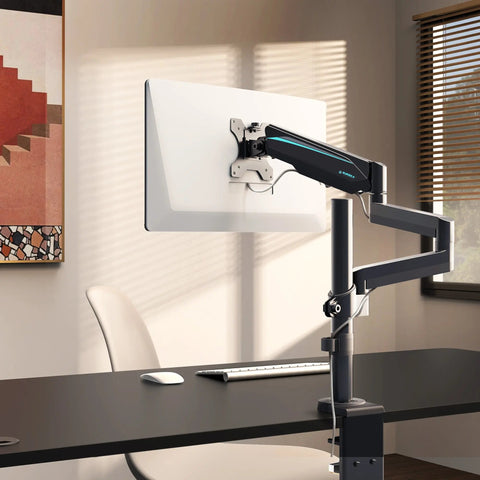
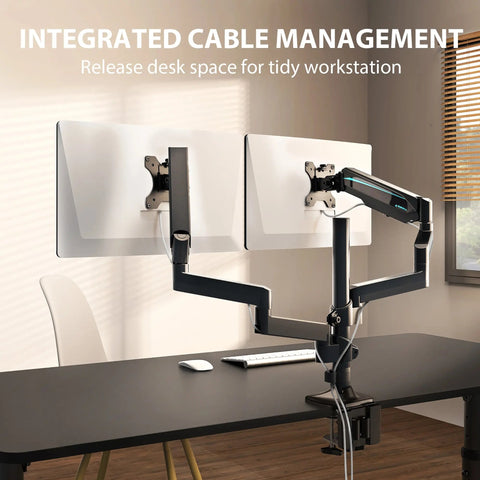
- Account for Leverage: If using heavy monitor arms clamped to the back edge, consider sizing up your capacity to handle the extra torque.
Scenario A: The Creative Professional (High Load)
- Large Format Desktop (Solid Wood/Stone): 70 lbs
- Dual 32-inch Monitors + Heavy Duty Arms: 45 lbs
- Full-Tower PC: 40 lbs
- Studio Monitors (Speakers) + Audio Interface: 20 lbs
- Total Static Load: ~175 lbs
- Estimated Dynamic Peak (1.4x): ~245 lbs
In this scenario, a frame rated for exactly 150 lbs would be operating beyond its intended limits, increasing the risk of accelerated motor wear or instability. A professional 14-gauge steel frame with a dual-motor system rated for 250+ lbs is recommended.
Scenario B: The Standard Executive (Moderate Load)
- Standard Desktop: 40 lbs
- Ultra-wide Monitor: 25 lbs
- Laptop + Docking Station: 10 lbs
- Misc (Lamp, Books, Tablet): 10 lbs
- Total Static Load: ~85 lbs
- Estimated Dynamic Peak (1.4x): ~119 lbs
While a standard consumer frame might suffice here, choosing a higher-capacity frame ensures that the motors operate well below their maximum threshold, which often leads to quieter operation and a longer lifespan.
The Biological Impact of Frame Quality
The health benefits of a standing desk are well-documented. A Cochrane Systematic Review found that sit-stand desks can help reduce daily sitting time. However, these benefits are best realized when the desk is stable and comfortable to use.
If a desk is unstable, users may avoid the standing position or lean heavily on the surface to "steady" it, which can contribute to poor posture. According to ISO 11226:2000, maintaining static working postures for extended periods is a risk factor for musculoskeletal discomfort. A stable frame encourages the "20-8-2" rhythm recommended by Cornell University Ergonomics—20 minutes of sitting, 8 minutes of standing, and 2 minutes of movement—without the mechanical friction that might discourage frequent adjustments.
Investment in Engineering Excellence
When evaluating a standing desk, viewing the frame as the foundation of your digital workspace is a practical approach. An under-specced lifting mechanism or inadequate steel gauge can lead to a wobbly surface and potential equipment risks over time.
By prioritizing thicker steel (14-16 gauge), continuous welding, and an adequate dynamic load overhead, you invest in a more reliable tool. As professional environments become increasingly hardware-intensive, the structural quality of the desk frame plays a critical role in a successful and comfortable ergonomic setup.
Disclaimer: This article is for informational purposes only and does not constitute professional medical, legal, or engineering advice. Load capacities and dynamic impacts are based on general heuristics and manufacturer benchmarks; actual performance may vary. Always consult with a qualified ergonomist or healthcare provider before making significant changes to your workstation, especially if you have pre-existing musculoskeletal conditions.
Sources
- BIFMA G1-2013 Ergonomics Guideline
- OSHA eTools: Computer Workstations - Desks
- Cochrane: Workplace interventions for reducing sitting at work
- Cornell University Ergonomics Web — Workstation Guides
- ISO 9241-5:2024 Workstation layout & postural requirements
- ANSI/BIFMA X5.5 Desk Standards Overview
- Steel Gauge Chart: Ryerson Metal Resources




Leave a comment