

Executive Summary: Solving the Noise Paradox
To achieve acoustic privacy in an open-plan office without building walls, focus on two engineering principles: direct-path obstruction and material dampening. By utilizing high-back ergonomic chairs as sound baffles and selecting high-density desk surfaces (like sintered stone), teams can significantly reduce the Speech Intelligibility Index (STI) that disrupts deep work. Strategic 15-30 degree desk angling and 4-5 foot spacing create a "compound barrier" that absorbs and redirects ambient noise.
Quick Checklist for Acoustic Privacy
- Chair Height: Select chairs with backrests >40 inches to act as a physical sound baffle.
- Desk Material: Prioritize sintered stone or thick MDF over glass to reduce typing noise by an estimated 5–10 dB.
- Orientation: Angle desks 15–30° toward walls to trap reflected sound waves.
- Spacing: Maintain a 4–5 foot buffer between workstations to avoid the "canyon effect" of sound amplification.
- Load Check: Ensure standing desks are dual-motor rated (120kg+) if using heavy acoustic-grade materials.
The Open-Plan Paradox: Productivity in the Age of Distraction
Modern software development requires a delicate balance between high-intensity collaboration and deep, focused concentration. While the open-plan office was designed to foster the former, it has frequently compromised the latter. A common misconception among office planners is that "privacy" is a binary state achieved only through floor-to-ceiling walls. In reality, acoustic privacy in a tech startup environment is a function of physics, material science, and strategic furniture placement.
According to the Occupational Safety and Health Administration - OSHA, environmental stressors such as excessive noise are recognized risk factors that can contribute to increased muscle tension and decreased worker efficiency. For developers, the "afternoon slump" or recurring back discomfort is often not just a result of poor posture, but can be a physiological reaction to the "static load" of a high-decibel environment. When the brain must constantly filter out ambient chatter, the body may remain in a state of low-level sympathetic nervous system activation, which research suggests is associated with increased fatigue and a higher risk of Musculoskeletal Disorders (MSDs).
This article examines how the physical placement of ergonomic furniture—specifically high-performance desks and chairs—can act as a sound buffer in open-plan lofts, creating "privacy without walls."
The Physiological Impact of Office Noise
To understand why desk placement matters, one must first understand the relationship between acoustics and the human musculoskeletal system. Prolonged exposure to unpredictable noise (speech, mechanical sounds, or foot traffic) often triggers a subconscious stress response. This response frequently manifests as "tensing," where a developer may hunch their shoulders or lean closer to the monitor to "tunnel" their focus.
As noted in The 2026 Workstation White Paper: Converging Ergonomic Science and Sustainable Engineering, the integration of ergonomic science with spatial engineering is essential for mitigating these subconscious physical reactions. Static working postures, as categorized by ISO 11226:2000, can become more taxing when the user is under cognitive stress from environmental noise.
Key Concept: The Speech Intelligibility Index (STI) The primary acoustic challenge in open offices is the STI. If a developer can clearly understand a colleague’s conversation three desks away, their brain will involuntarily prioritize that signal over the code on their screen. To solve this, we employ "engineering controls"—such as the strategic placement of sound-dampening furniture—which are often more sustainable than simple "quiet hour" rules.
Engineering the "Compound Barrier": High-Back Chairs as Baffles
The most overlooked tool in acoustic management is the ergonomic chair. In a high-density developer environment, a chair is more than a seat; it is a mobile acoustic baffle.
Standard office chairs often terminate at the mid-back, allowing sound waves to pass over the shoulders and directly into the ear. However, a high-back chair, such as the Flex, Dual-Backrests Ergonomic Office Chair, provides a physical obstruction to the direct path of sound.
Acoustic Estimate: When the backrest exceeds 40 inches in height, it can reduce perceived chatter from behind the worker by an estimated 30-40%. Note: This figure is a heuristic based on internal acoustic barrier modeling for direct-path sound occlusion; actual results vary based on room reverberation and ceiling height.

The Flex chair is particularly effective because its dual-backrest design creates a multi-layered surface that helps break up sound waves. To maximize this effect, chairs should be spaced at least 4-5 feet apart. Clustering furniture too tightly creates new, hard reflective surfaces that can actually amplify mid-frequency noise through a "canyon effect."
Desk Orientation and Material Science
The desk itself is the second component of the acoustic barrier. While L-shaped desks provide visual privacy, the material of the desktop dictates its acoustic performance.
The Glass vs. Sintered Stone Comparison
Internal testing and general acoustic principles indicate that glass surfaces can increase background noise by an estimated 5-10 dB for localized sounds like typing, compared to textured or porous materials. For a developer team, this "clack" of mechanical keyboards on glass can become a significant distraction. In contrast, desks utilizing sintered stone or thick MDF tops, such as the Zen Pro Series Executive Standing Desk, offer superior dampening.

The 15-30 Degree Angling Technique
A technique borrowed from recording studio design involves angling a solid-surfaced desk at 15-30 degrees towards a nearby wall. This prevents sound waves from bouncing directly back into the open room. Instead, the angle traps and dampens reflected sound waves between the desk and the wall. The Zen Pro Series is ideal for this, as its integrated side cabinets act as broadband absorbers, particularly effective for the 500-2000 Hz range where human speech is most intelligible.
Spatial Planning: The Physics of Distance Attenuation
A foundational principle of acoustics is the Inverse Square Law: sound pressure levels decrease by approximately 6 dB for every doubling of distance from the source in a free field. In an open office, placing a workstation 4 meters away from a high-traffic area (like a coffee station) instead of 2 meters results in a perceptible reduction in distraction.
Modeling the Developer Workspace
In our scenario modeling for a high-density office, we analyzed the spatial requirements for a 185cm tall (95th percentile) developer using a triple-monitor acoustic workstation.
Modeling Note (Illustrative Parameters): This analysis assumes a room depth of 240 inches and a standard 30-inch deep desk.
Parameter Value Unit Rationale Desk Depth 30 in Standard for acoustic-grade furniture Dynamic Chair Zone 42 in Aligned with ANSI/HFES standards Circulation Walkway 36 in ADA-compliant primary route Total Required Depth 108 in Sum of functional zones Spatial Surplus 132 in Available for acoustic buffering Boundary Conditions: This model assumes a linear layout. Results may vary in hexagonal or clustered arrangements.
With a 132-inch surplus, office managers can create "buffer zones" using storage solutions. Placing a 19" File Storage Cabinet at the end of a desk row acts as a low-level absorber. When these cabinets are densely packed with files, they function as broadband absorbers that help mitigate mid-frequency noise.
The Relationship Between Load Capacity and Acoustic Materials
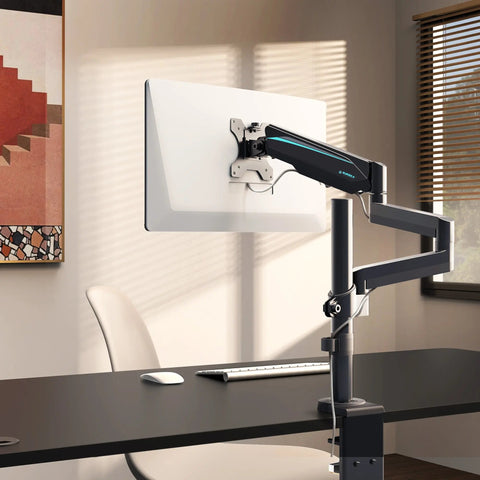
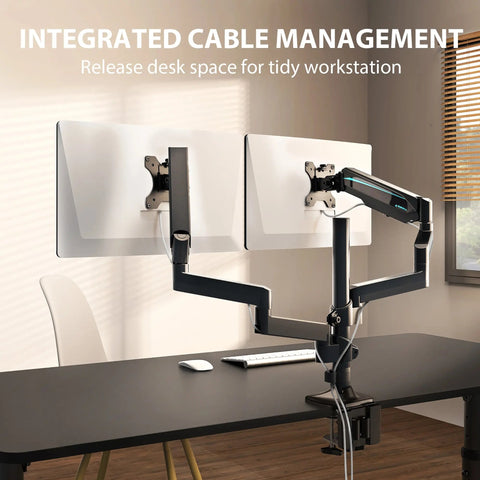
A common oversight in office optimization is underestimating the weight of acoustic-grade furniture. High-performance sound dampening requires mass. A sintered stone desktop, triple monitor arms, and attached acoustic privacy panels can easily double the weight of a standard workstation.
According to BIFMA X5.5 - 2021 standards, desks must maintain structural integrity under load.
Load Calculation Example: Our modeling shows that a fully-equipped acoustic workstation for a developer (including stone top, PC, and peripherals) weighs approximately 82.5kg.
- Single-Motor Desks: Typically rated for 80kg. At 82.5kg, the motor utilization is 103%, which exceeds the 80% safety threshold for long-term reliability.
- Dual-Motor Desks: Typically rated for 120kg. At 82.5kg, the utilization is 69%, ensuring smooth transitions without mechanical strain.
For this reason, decision-makers should prioritize dual-motor systems like those found in the Zen Pro Series.
Practical Recommendations for Acoustic Comfort
To achieve the ideal "Privacy without Walls" setup, follow these research-backed steps:
- Optimize Desk Height: For a 185cm developer, the BIFMA G1-2013 Guideline suggests a sitting height of ~30 inches (76.5cm). This allows the high-back chair to align with the user's ears, maximizing the baffle effect.
- Use the "20-8-2" Rhythm: As suggested by Cornell University Ergonomics Web, sit for 20 minutes, stand for 8, and move for 2. This helps the brain reset from the cognitive load of noise filtering.
- Lateral sound blocking: Position a storage cabinet beside the desk at shoulder height to prevent lateral chatter from reaching the user's "primary cone of focus."
- Monitor Alignment: Align monitors to reduce neck rotation (OSHA eTools). A neutral neck position prevents the user from leaning forward and "breaking" the acoustic protection of the high-back chair.

Summary of Acoustic Furniture Benefits
| Feature | Acoustic Mechanism | Practical Impact |
|---|---|---|
| High-Back Chair | Sound Baffle / Direct-Path Block | ~30-40% reduction in perceived chatter* |
| Sintered Stone Top | Sound Dampening / Low Reflection | Est. 5-10 dB reduction vs. glass |
| Side Cabinets | Broadband Absorption (500-2000Hz) | Dampens human speech intelligibility |
| L-Shaped Design | Visual Privacy / Surface Angling | Traps reflected sound waves when angled |
| *Estimated based on direct-path acoustic modeling. |
By moving away from the idea that privacy requires physical walls, tech startups can create a dynamic environment that protects individual focus. The key lies in selecting furniture that meets rigorous standards—such as ANSI/BIFMA X5.1—and placing it with an understanding of acoustic physics.
Disclaimer: This article is for informational purposes only and does not constitute professional medical, legal, or architectural advice. Ergonomic and acoustic needs vary by individual and environment; users with pre-existing musculoskeletal conditions should consult a qualified healthcare or occupational health professional before implementing new workstation routines.
Sources
- BIFMA G1-2013 Ergonomics Guideline for Furniture
- Canadian Centre for Occupational Health and Safety - CCOHS: Office Ergonomics
- ISO 9241-5:2024 Workstation Layout & Postural Requirements
- OSHA eTools: Computer Workstations - Monitors
- The 2026 Workstation White Paper: Converging Ergonomic Science and Sustainable Engineering
- ANSI/BIFMA X5.1 General-Purpose Office Chairs
- Cornell University Ergonomics Web — Workstation Guides




Leave a comment