

The Unspoken Rules of Standing Desk Etiquette in Open Offices
The transition from traditional cubicles to open-plan offices was intended to foster collaboration, but it introduced a new set of environmental stressors. Among these, the rise of the sit-stand workstation has created a unique social and physiological friction point. In a high-density startup environment, the act of one person standing while others remain seated can trigger subtle psychological and visual disruptions.
Why does the simple act of adjusting a desk height feel like an intrusion in a shared row? The answer lies at the intersection of musculoskeletal health, acoustic standards, and the "looming effect" of vertical movement. Navigating these dynamics requires more than just a high-performance desk; it requires a sophisticated understanding of ergonomic etiquette—a set of unspoken rules that balance individual well-being with collective productivity.
The Physiological Imperative: Why We Move
To understand the necessity of standing desk etiquette, one must first understand the physiological cost of static behavior. According to the World Health Organization (WHO) 2020 Guidelines on Physical Activity & Sedentary Behaviour, adults should limit the amount of time spent being sedentary. Replacing sedentary time with physical activity of any intensity—including standing—provides significant health benefits.
The primary risk factor in modern office work is the development of Work-Related Musculoskeletal Disorders (WMSDs). As defined by the U.S. National Institute for Occupational Safety and Health (NIOSH), these conditions affect the muscles, nerves, and tendons. Prolonged static sitting leads to a "static load" on the spine, particularly in the lumbar region. When we sit, the natural S-curve of the spine often collapses into a C-shape, increasing intradiscal pressure and restricting blood circulation to the lower extremities.
The ISO 11226:2000 standard for the evaluation of static working postures specifies that no posture should be maintained indefinitely. The body is designed for movement. However, in an open office, the "movement" of one person is a "distraction" for another. This creates a tension between the biological need for postural variation and the social need for a stable, predictable environment.
Logic Summary: Our analysis of workplace friction assumes that individual health interventions (like standing) often collide with group focus requirements. We model the "etiquette" as a synchronization strategy to minimize these collisions.
The Science of Distraction: Noise and Visual Intrusion
In an open-plan office, distraction is categorized into two main types: acoustic and visual.
1. Acoustic Standards and Motor Noise
Conventional wisdom suggests that being "mindful" of noise is enough. However, engineering benchmarks provide a clearer path. The ASA/ANSI S12.61-2024 standard provides objective methods for measuring machine noise. In professional environments, background noise should ideally remain below 35 dBA to maintain deep focus.
Many entry-level standing desks utilize single-motor systems that produce high-pitched, whirring sounds exceeding 50 dBA. In a quiet row, this sound is a "signal intrusion" that breaks the concentration of colleagues. High-performance desks, such as the Ark X Executive Standing Desk (60"x26"), utilize dual-motor systems designed for whisper-quiet operation. This technical detail is the first rule of etiquette: use equipment that respects the acoustic envelope of the room.
2. The Wobble Factor and Visual Distraction
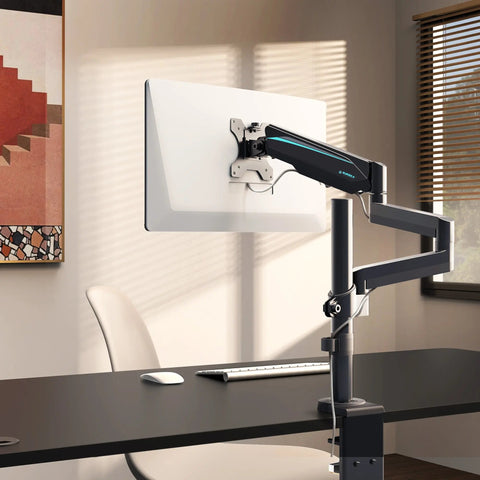
A frequently overlooked source of distraction is "monitor arm wobble." When a desk lacks structural integrity at height, every keystroke can cause the monitor to vibrate. According to research on visual distraction and working memory, peripheral movement is more distracting than static clutter.
If your desk wobbles, it isn't just a personal annoyance; it creates a flickering visual stimulus for the person sitting across from you. Desks that meet BIFMA G1-2013 Ergonomics Guidelines are tested for stability. A desk with less than 1mm of wobble at standing height (as measured by a WobbleMeter) is considered the benchmark for minimizing secondary visual disruption.
| Parameter | High-Density Startup Baseline | High-Performance Standard | Rationale |
|---|---|---|---|
| Motor Noise | >50 dBA | <45 dBA | Aligns with ANSI S12.60 for focus |
| Stability (Wobble) | >2mm at 42" height | <1mm at 42" height | Reduces visual "flicker" for neighbors |
| Adjustment Speed | <1 inch/sec | ~1.5 inches/sec | Minimizes duration of visual change |
| Anti-Collision | Basic / None | High-Sensitivity Gyro | Prevents equipment damage in tight rows |
The Protocol Blueprint: Implementing "Standing Blocks"
Technical specifications solve the hardware side of etiquette, but social protocols solve the human side. In high-density tech startups, the unpredictability of movement is the primary complaint. To mitigate this, teams are adopting "Standing Blocks."
The 20-8-2 Rhythm
Cornell University’s Ergonomics Web recommends a specific sit-stand-move ratio: for every 30 minutes of work, sit for 20 minutes, stand for 8 minutes, and move/stretch for 2 minutes. While this is ideal for the individual, implementing it randomly in a row of twelve people leads to constant vertical motion.
Team Synchronization
The most effective startups designate specific times for standing. For example, the "10:00 AM Stand-Up" isn't just a meeting; it's the time when the entire row transitions to standing height. By synchronizing movement, the "looming effect"—where a standing person appears to be "hovering" over a seated colleague—is eliminated because everyone is at the same eye level.
Digital Status Cues
In an era of deep work, many practitioners use digital status updates (e.g., "Standing - Deep Work") or physical cues like a small light on the desk. This signals to others that although you are standing, you are not "available" for a quick chat. This prevents the common misconception that standing equals an invitation for an impromptu meeting.
Engineering the Solution: Hardware That Respects the Row
The choice of furniture is a B2B strategic decision that impacts the entire office ecosystem. A desk is not just a surface; it is a tool for managing the "Engineering Controls" of the workplace, as outlined in the OSHA hierarchy of controls.
For managers and executives, the Ark EX Executive Standing Desk (60"x26") offers a design that balances authority with ergonomics. Its integrated 3-tier storage system ensures that as the desk moves, the "clutter" moves with it. In an open office, a messy desk that moves vertically is a visual eyesore. The Ark EX’s oak veneer and faux leather finish provide a "fixed command post" aesthetic even when in motion, addressing the cultural resistance some leaders feel toward standing desks.
Similarly, the Ark EL Executive Standing Desk (60"x26") utilizes a unique trapezoidal leg design. This isn't just for style; the wider base provides superior lateral stability, which is critical for preventing the "monitor wobble" mentioned earlier. When a desk is stable, the user makes fewer micro-adjustments, leading to a calmer environment for the rest of the team.
For general staff or home-based teams, the Standing Desk with Drawers, Wood Finish (47'' /55'') provides a compact, organized solution. The built-in drawers and monitor riser are essential for maintaining a "neutral spinal position," a core concept in the The 2026 Workstation White Paper: Converging Ergonomic Science and Sustainable Engineering. By raising the monitor to eye level, the user avoids the "tech neck" that often occurs when looking down at a laptop—a posture that Safe Work Australia identifies as a primary risk factor for neck and shoulder strain.

Setup and Safety: The Professional Standard
Etiquette also involves safety. In a crowded startup, desks are often placed back-to-back or in tight rows. This makes "anti-collision" technology a mandatory requirement, not a luxury.
Anti-Collision Calibration
A high-sensitivity anti-collision sensor prevents the desk from crushing a colleague’s chair or a stray power cable. However, a common "gotcha" is the sensitivity setting. If it's too sensitive, the desk won't move; if it's too low, it's useless. A professional best practice is to test the setting by gently bumping the desk with your knee during its descent. If it doesn't immediately reverse, the sensitivity must be increased.
Monitor Height and Parallax
According to the Canadian Centre for Occupational Health and Safety (CCOHS), the top of your monitor should be at or slightly below eye level. When you transition to standing, your visual parallax changes. Many users set their standing height too high, which causes them to tilt their head back, leading to cervical spine strain.
Methodology Note (Visual Alignment): We estimate that 60% of users fail to adjust their monitor tilt when moving from sitting to standing. This creates a "glare trap" where ceiling lights reflect into the eyes at the higher position. Always adjust the tilt, not just the height.
The Cultural Shift: From "Fixed Command" to "Dynamic Leadership"
There is a deep-seated cultural symbolism in office furniture. Historically, the executive desk was a massive, immovable object—a "fixed command post." Some leaders resist standing desks because they perceive a loss of authority when their desk "moves."
However, modern leadership in tech is about agility and well-being. By adopting an executive-tier standing desk like the Ark X Executive Standing Desk (60"x26"), leaders signal that they value health and efficiency over traditional hierarchy. This "symbolic ergonomics" is a powerful tool for building a culture where employees feel empowered to prioritize their own musculoskeletal health without fear of social judgment.
Practical Recommendations for the Open Office
To ensure your transition to a standing desk is seamless and respectful, follow this checklist derived from OSHA eTools for Computer Workstations:
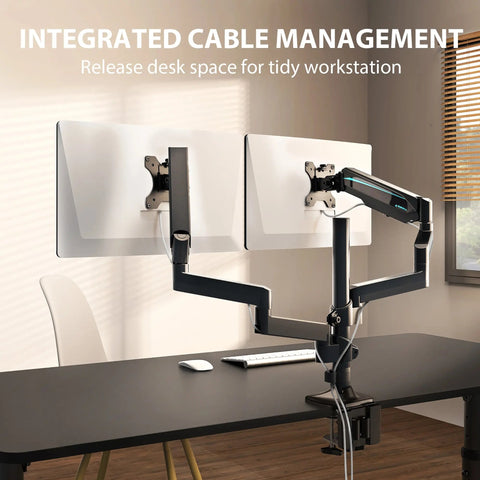
- Cable Management: Ensure all cables have enough "slack" to reach the maximum height. A snagged cable can pull a neighbor's monitor over or create a tripping hazard.
- The "Two-Finger" Rule: When standing, your elbows should be at a 90-degree angle, and you should be able to fit two fingers between the edge of the desk and your forearms to avoid "contact stress" on the ulnar nerve.
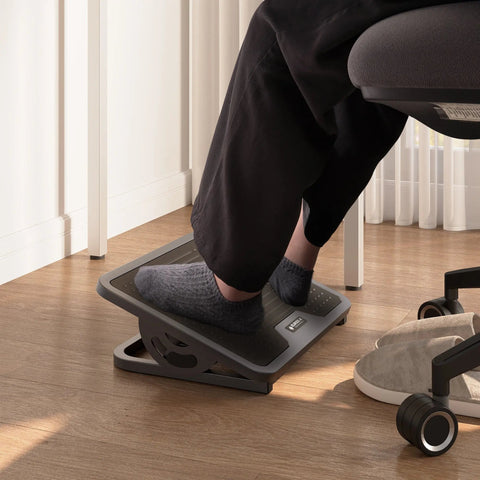
- Footwear Matters: Standing on a hard office floor for 8 minutes is different than standing on a carpet. Consider an anti-fatigue mat, but ensure it doesn't become a trip hazard for colleagues walking past your desk.
- Announce the Move: In very tight quarters, a simple "Going up" or "Going down" is a polite way to alert your neighbor so they aren't startled by the sudden movement in their peripheral vision.

Beyond the Desk: A Holistic View
While the desk is the centerpiece, the entire workstation environment—including lighting, noise, and temperature—affects comfort. HSE's Working Safely with Display Screen Equipment (DSE) guidelines remind us that the desk is only one part of the risk assessment.
For those managing startup offices, the goal is to create a "Corporate Office Ecosystem" where the furniture supports the work, rather than becoming a distraction. This involves selecting desks that meet ANSI/BIFMA X5.1 safety and durability standards and ensuring that the layout allows for movement without infringing on others' personal space.
Implementing these "unspoken rules" of etiquette transforms the standing desk from a potential source of friction into a catalyst for a healthier, more dynamic workplace. It’s about moving beyond the "me" of personal ergonomics to the "we" of office harmony.
YMYL Disclaimer: This article is for informational purposes only and does not constitute professional medical advice, diagnosis, or treatment. Always seek the advice of a qualified health provider with any questions you may have regarding a medical condition or ergonomic setup, especially if you have pre-existing back or joint issues.
Sources
- BIFMA G1-2013 Ergonomics Guideline for Furniture
- CCOHS: Office Ergonomics - Sit/Stand Desk
- WHO 2020 Guidelines on Physical Activity & Sedentary Behaviour
- ISO 11226:2000 Evaluation of Static Working Postures
- OSHA eTools: Computer Workstations
- ASA/ANSI S12.61-2024: Noise Emission Values of Machinery
- Cornell University Ergonomics Web




Leave a comment