

Quick Wins: Managing High-Density Rows
For facility managers and operations teams facing a "spaghetti monster" of wires, these three steps provide the highest immediate impact:
- Audit Power Loads: Apply the "80% Rule"—on a standard 15-amp circuit, keep the continuous load under 12 amps. In most tech setups, this limits you to 5–6 workstations per circuit.
- Standardize Tray Depth: Use cable trays with at least 3 inches of depth. This prevents "bend radius failure" and accommodates bulky power bricks.
- Label Both Ends: Use dual-end labeling for every cable (e.g., "Desk A1 - Monitor"). This simple heuristic can significantly reduce IT troubleshooting time.
The Hidden Infrastructure of Innovation: Solving the Row-Based Cable Crisis
In the high-velocity environment of a B2B tech startup, the "open-plan" office is often celebrated as a hub for collaboration. However, as teams scale and desk rows lengthen, a silent productivity killer often emerges: unmanaged cable clutter.
For facility managers, managing this is not merely an aesthetic preference; it is a requirement for operational safety and equipment longevity. While many attribute the "3 PM slump" to caffeine withdrawal, environmental factors like "clutter-induced cognitive load" can play a role. A workspace overwhelmed by visible wires creates visual noise, which the brain must actively filter, potentially depleting cognitive resources over the course of a workday.
The Physiology of Clutter: Static Load and Musculoskeletal Risks
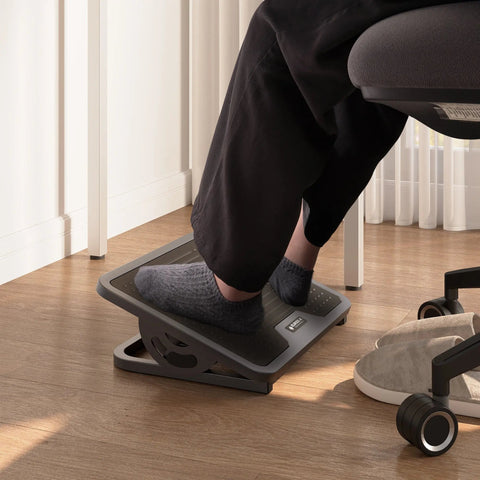
The impact of cable clutter extends beyond the psychological. Unmanaged cables under a desk often restrict "legroom," a critical factor in maintaining what the Occupational Safety and Health Administration (OSHA) defines as a neutral working posture.
Postural Constraints
When cables occupy the space where a user’s feet should rest, employees may be forced into awkward, static positions to avoid kicking sensitive equipment. According to ISO 11226:2000, which evaluates static working postures, prolonged deviations from neutral alignment can increase the risk of Musculoskeletal Disorders (MSDs).
The "20-8-2" Rhythm
Integrated solutions that clear floor space allow for the "20-8-2" rhythm—20 minutes of sitting, 8 minutes of standing, and 2 minutes of moving—recommended by the Cornell University Ergonomics Web. Without effective cable management, the transition between sitting and standing can become a liability, as tension in poorly routed cables may damage ports or hardware.
Heuristic Note: Based on ergonomic observations in high-density environments, restricted legroom is often associated with an increase in micro-postural shifts (fidgeting). While these shifts appear active, they can contribute to localized muscle fatigue when the user lacks a stable, neutral base.
The Engineering of Power: Safety in High-Density Rows
A common technical failure in shared rows is the improper daisy-chaining of power strips. Facility managers must calculate the total amperage draw when multiple workstations are linked to a single circuit.
The 80% Rule for Continuous Loads
To maintain a safe environment and comply with standards like UL 962 (covering height-adjustable desk safety), professional installers follow the "80% Rule." For a standard 15-amp circuit, the continuous load should not exceed 12 amps.
Example Calculation for Row Planning:
- Laptop Power Adapter: ~1.5 Amps
- 27" LED Monitor: ~0.5 Amps
- Total per Station: 2.0 Amps
- Safety Limit (15A Circuit): 12 Amps
- Maximum Stations: 12A / 2A = 6 Workstations
- Note: If users have dual monitors or high-performance GPUs, this limit may drop to 4 or 5 workstations. Always verify with a certified electrician.
| Component | Typical Amperage Draw (Estimated) | Unit | Rationale |
|---|---|---|---|
| Laptop Power Adapter | 1.5 - 2.0 | Amps | High-performance dev machines |
| 27" LED Monitor | 0.5 - 0.8 | Amps | Standard office display |
| Powered Sit-Stand Motor | 2.0 - 4.0 | Amps | Peak draw during adjustment |
| Peripheral Charging | 0.2 - 0.5 | Amps | Phones, tablets, etc. |

Strategic Cable Routing: Beyond Simple Clips
Cheap plastic clips or adhesive ties often have a higher Total Cost of Ownership (TCO) than integrated desk channels due to the labor required during team reconfigurations.
The J-Channel Advantage
We recommend J-channel raceways for "drop-in" cable management. This allows cables to be added or removed without disrupting the entire run—essential for startups where hardware is frequently upgraded.
Tray Depth and EMI
As noted in the 2026 Workstation White Paper (Manufacturer Source), a tray depth of at least 3 inches is recommended to prevent "cable crowding." Shallower trays can force cables into sharp bends, leading to "bend radius failure."
Additionally, professional setups prioritize separating high-voltage power lines from low-voltage data cables (HDMI, Ethernet) to reduce Electromagnetic Interference (EMI), which can cause flickering screens or dropped connections.
Implementing Professional Solutions: The Eureka Approach
Startups are increasingly moving toward integrated executive solutions that prioritize both aesthetics and engineering.
- For Managers: The Ark EL Executive Standing Desk (60"x26") (Manufacturer Product) offers trapezoidal legs for stability and built-in drawers to stow daily clutter.
- For Shared Rows: The Ark Executive Standing Desk (63"x29") (Manufacturer Product) provides the surface area needed for multi-monitor setups. By using desks that meet BIFMA G1-2013 dimensions, companies ensure the furniture fits a broad range of users (5th to 95th percentile).
- For Maximum Storage: The Opal Executive Standing Desk (66"x29") (Manufacturer Product) features integrated cabinets that can hide power bricks and docking stations while keeping them accessible for maintenance.

Practical Recommendations for Facility Managers
- Map the Power Load: Use the calculation example above to determine the maximum workstations per row.
- Standardize Tray Depth: Ensure a minimum 3-inch depth to accommodate large power bricks.
-
Implement Dual-End Labeling: Label both ends of every cable.
- Estimate: In a 50-person office, this can save an estimated 15–20 hours of IT troubleshooting per year (assuming a 50% reduction in time spent tracing unlabeled wires during "display not working" tickets).
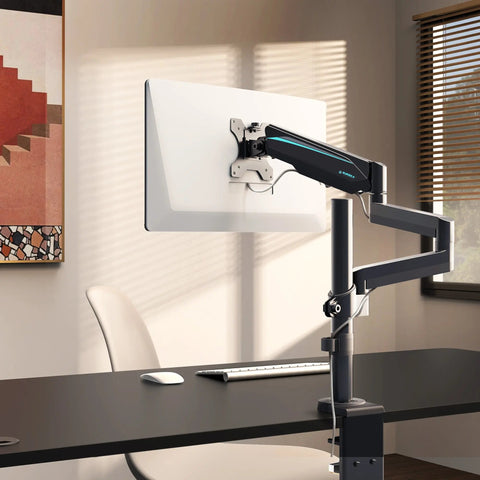
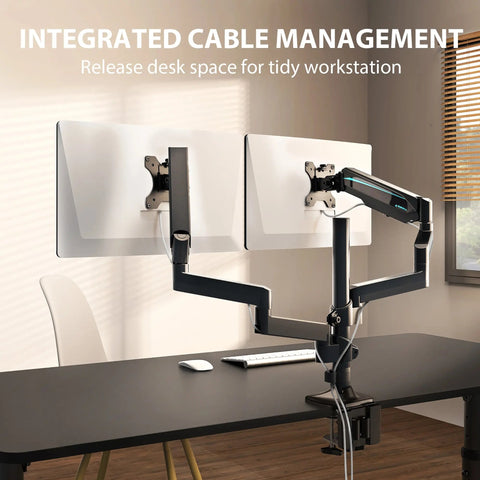
- Optimize Monitor Placement: Use arms like the Single Monitor Arm (Manufacturer Product) to clear desk space. According to the Canadian Centre for Occupational Health and Safety (CCOHS), proper monitor height is essential for preventing neck strain.
- Establish a "Clean Row" Policy: Focus on shared infrastructure. Ensure cables crossing between desks are secured in bridge raceways to prevent tripping hazards.
Creating a Sustainable Work Ecosystem
Effective cable management is about engineering a space where technology supports human movement rather than restricting it. By adhering to international standards such as ISO 9241-5:2024 for workstation layout, startups can create an environment that supports long-term health and peak performance.
Disclaimer: This article is for informational purposes only and does not constitute professional electrical, legal, or medical advice. Always consult with a certified electrician for office power installations and a qualified ergonomic specialist for specific health concerns.
References
- BIFMA G1-2013 Ergonomics Guideline for Furniture
- OSHA eTools: Computer Workstations - Neutral Working Postures
- ISO 9241-5:2024 Workstation layout & postural requirements
- CCOHS: Office Ergonomics - Sit/Stand Desk
- The 2026 Workstation White Paper (Manufacturer Source)
- UL 962 — Safety of Height-Adjustable Desks




Leave a comment