

The Open-Plan Paradox: Why Modern Hubs Struggle with Focus
The tech startup ecosystem has long championed the open-plan office as a catalyst for "spontaneous collision" and creative synergy. However, for many facility managers and HR professionals, the reality of these spaces is often characterized by a decline in employee well-being and a noticeable spike in afternoon fatigue. The primary culprit is not the lack of walls, but the lack of defined boundaries—a phenomenon known as the open-plan paradox. Without strategic zoning, these hubs become acoustic and visual "free-for-alls" that increase cognitive load and physical strain.
When employees lack a sense of "home base" or privacy, they often compensate by adopting guarded, static postures. This leads to what clinicians identify as Musculoskeletal Disorders (MSDs), triggered by prolonged static loads on the spine and reduced blood circulation. To address these challenges, premium workspace design is shifting away from rows of identical rectangular benches toward strategic arrays of L-shaped desks. These configurations serve as architectural anchors, creating functional "neighborhoods" that preserve openness while providing the physiological and psychological security necessary for deep work.
The Physiology of Spatial Zoning: Beyond Aesthetics
To understand why an L-shaped desk array is more effective than a standard benching system, we must examine the physical principles of the human-workstation interface. According to the ISO 9241-5:2024 standard on workstation layout and postural requirements, the layout must support frequent posture changes and provide sufficient space for varied tasks.
Static Load and Blood Circulation
In an unstructured open office, users often feel "exposed" from behind, leading to a subconscious tensing of the trapezius and neck muscles. This chronic tension contributes to tension-type headaches and upper-limb MSDs. By utilizing the L-shaped corner as a visual barrier, the user is physically "nested," which encourages a more relaxed, neutral spinal position.
Furthermore, the World Health Organization (WHO) 2020 Guidelines emphasize that adults should reduce sedentary time and interrupt long periods of static behavior. L-shaped desks, particularly height-adjustable models like the Ark Pro L-Shaped Standing Desk (Sintered Stone, 63"x23"), facilitate these interruptions more naturally than rectangular desks. The secondary "return" of the L-shape provides a dedicated space for non-computer tasks (like reviewing documents or taking a phone call), which naturally encourages the user to pivot and shift their weight, promoting better blood circulation.
Logic Summary: Our spatial analysis assumes that physical boundary definition reduces psychological "startle response" and muscle guarding, thereby lowering the risk of chronic tension-related MSDs.
The 60/40 Rule: Optimizing the L-Shaped Workspace
A common mistake in startup hubs is treating the entire desk surface as a single, undifferentiated zone. Professional space planners typically recommend a 60/40 zoning heuristic to maximize the utility of L-shaped furniture:
- The Primary Focus Zone (60%): This is the deeper section of the desk, typically facing a wall or a low-traffic area. This zone should house the primary monitor and input devices. It is designed for "heads-down" work where peripheral distractions must be minimized.
- The Collaborative/Secondary Zone (40%): The shorter "wing" of the L-shape. This area is reserved for impromptu side-by-side collaboration, document storage, or secondary devices.
By orienting the Ark Pro L-Shaped Standing Desk so the corner acts as a visual barrier to high-traffic aisles, managers can create a sense of privacy without the need for permanent partitions. This layout is further explored in The 2026 Workstation White Paper: Converging Ergonomic Science and Sustainable Engineering, which details how modular arrays can be reconfigured as teams scale.

Managing the "95th Percentile" User: A Case Study in Ergonomic Precision
One of the most significant challenges for HR professionals is ensuring that office furniture accommodates the entire workforce, from the 5th percentile petite user to the 95th percentile tall user. Standard fixed-height desks (usually 29 inches high) often fail the tallest members of a development team.
Modeling the Tall Developer Persona
Consider a 195cm (6'5") software developer. For this individual, a standard desk is approximately 2.7 inches too low for seated work, leading to a "turtle neck" posture that compresses the cervical spine. In a standing position, the deficit is even more pronounced.
| Parameter | Value | Unit | Rationale |
|---|---|---|---|
| User Height | 195 | cm | 95th Percentile Male |
| Calculated Sit Height | ~80.5 | cm | Based on ANSI/HFES 100-2007 |
| Calculated Stand Height | ~119.5 | cm | Based on ANSI/HFES 100-2007 |
| Ergonomic Gap | -6.8 | cm | Deficit vs. Standard 29" Desk |
Under these modeling assumptions, a height-adjustable executive desk is not a luxury but a physiological necessity. The BIFMA G1-2013 Ergonomics Guideline provides the dimensions required to fit such a broad population range. Using an adjustable solution like the Ark X Executive Standing Desk (60"x26") allows the user to fine-tune their workspace to the millimeter, ensuring a neutral joint angle at both the elbows and knees.
Methodology Note: These calculations utilize anthropometric ratios derived from the US Army Natick Survey. While these provide a robust baseline for 95% of the population, individual limb-to-torso ratios may require further adjustment.
Acoustic Zoning and the 1.2-Meter Buffer
Noise is the number one complaint in open-plan offices. While hard surfaces like desks can reflect sound, the way they are arranged can significantly mitigate "speech privacy" issues. Research suggests that a staggered layout—where L-shaped desks are "interlocked" or arranged in pinwheel clusters—can reduce direct line-of-sight noise transmission.
For optimal acoustic performance, teams should maintain at least 1.2 meters (approx. 4 feet) between desk clusters. When combined with fabric-backed chairs like the Flex, Dual-Backrests Ergonomic Office Chair, this distance helps dissipate conversational noise before it reaches the next "neighborhood." The Flex chair's dual backrest design doesn't just provide lumbar support; it acts as a small, personal acoustic baffle, absorbing sound that would otherwise bounce off a rigid plastic chair back.

Practical Recommendations for Startup Managers
To successfully zone a startup hub using L-shaped arrays, follow these implementable steps:
1. Orient for "Protected Backs"
Avoid layouts where employees sit with their backs to high-traffic corridors. This "Prospect-Refuge" theory in environmental psychology suggests that humans are most productive when they have a clear view of their surroundings (prospect) and a protected back (refuge). Use the L-shape to create that refuge.
2. Standardize the Sit-Stand Rhythm
Simply providing a standing desk is insufficient. According to a Cochrane systematic review, sit-stand desks can reduce sitting time by 84–116 minutes per day, but behavioral cues are needed to maximize this. Encourage a "20-8-2" rhythm: 20 minutes sitting, 8 minutes standing, and 2 minutes of movement.
3. Centralize Cable and Storage Management
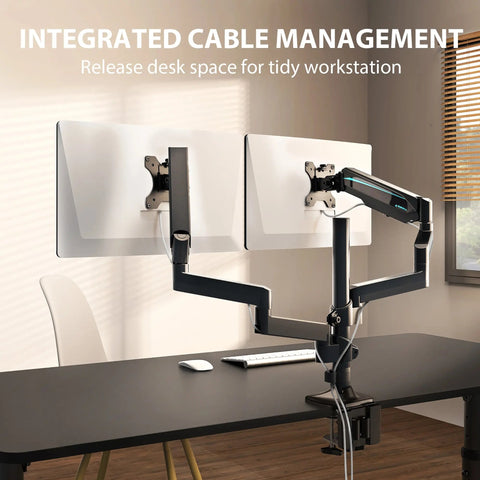
Clutter is a visual distraction that erodes the benefits of zoning. Use dedicated storage like the 19" File Storage Cabinet, Dark Walnut to keep the secondary zone of the L-shaped desk clear. For tech-heavy startups, running a centralized power trunk along the perimeter of the desk array prevents the "cable jungle" that often plagues open offices.

4. Monitor Height and Eye Strain
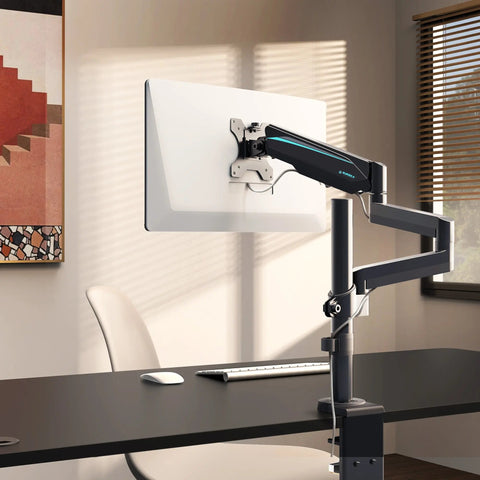
The HSE (UK) guidelines on Display Screen Equipment (DSE) recommend that the top of the monitor be roughly at eye level. For tall users, this often requires a monitor riser or arm. When zoning with L-shaped desks, ensure the monitor is placed in the corner or along the primary 60% axis to maintain a straight-ahead viewing angle, preventing chronic neck rotation.
The Economic Impact: ROI of Ergonomic Zoning
Investing in premium ergonomic furniture is often viewed as a high upfront cost, but the return on investment (ROI) for a high-growth startup is measurable.
Modeling the Productivity Gain:
- Assumptions: A senior developer earning $65/hour.
- Mechanism: Reducing "micro-fatigue" and musculoskeletal discomfort allows for an estimated 15% increase in cognitive focus and task completion efficiency.
- Result: This translates to a potential productivity value gain of ~$4,875 per year.
- Payback Period: A $1,200 investment in a premium desk like the Ark Pro L-Shaped Standing Desk pays for itself in approximately 3 months.
Logic Summary: This ROI model is based on conservative productivity uplift figures from ergonomic interventions (e.g., Santos et al., 2025). It assumes that removing environmental friction allows talent to operate at their peak capacity for longer intervals.
Building a Resilient Workspace
Zoning an open startup hub is an exercise in balancing the biological needs of the human body with the operational needs of a fast-paced business. By moving away from "one-size-fits-all" benched seating and toward strategic L-shaped arrays, office managers can provide the privacy, ergonomic support, and task-specific zones required for a modern workforce.
Whether it is accommodating a 95th percentile developer with the Ark X Executive Standing Desk (60"x26") or ensuring lumbar health with the Flex, Dual-Backrests Ergonomic Office Chair, the goal remains the same: creating a space where the furniture works as hard as the people using it.
Disclaimer: This article is for informational purposes only and does not constitute professional medical, legal, or facility safety advice. Ergonomic needs vary significantly by individual; users with pre-existing musculoskeletal conditions should consult an occupational therapist or medical professional before implementing new workstation layouts or routines.
Sources
- BIFMA G1-2013 Ergonomics Guideline for Furniture
- ISO 9241-5:2024 Workstation layout & postural requirements
- WHO 2020 Guidelines on Physical Activity & Sedentary Behaviour
- Cochrane: Workplace interventions for reducing sitting at work
- OSHA eTools: Computer Workstations - Neutral Working Postures
- HSE: Working safely with display screen equipment (DSE)
- The 2026 Workstation White Paper: Converging Ergonomic Science and Sustainable Engineering




Leave a comment