


An ergonomic chair can look residential if you judge it by silhouette, material, color, and verified adjustability instead of office-chair stereotypes. The best fit is usually the one that disappears into the room visually while still fitting your body and desk height. That trade-off matters most in living rooms, studios, and open-plan homes.

A Chair That Looks at Home
The main decision is simple: if the chair sits in the same sightline as your sofa or entertainment center, it has to behave like furniture first and equipment second. That usually means a lower-contrast shape, calmer materials, and fewer visual interruptions. If your workspace is tucked away, you can get away with a slightly more assertive profile.
For the support side, it helps to use a real fit check rather than a vibe check. BIFMA's chair test overview shows that general-purpose chairs are evaluated across seat height, seat depth, lumbar support, armrests, tilt, and weight capacity, which is why a pretty chair can still fail in everyday use if the fit is wrong. In practice, the best ergonomic chair for a home interior is the one you will keep using because it feels settled in the room and in your posture.
Two decision sentences matter here. If the chair will be visible all day, favor furniture-like lines over a heavy task-chair look. If you work long hours at the same desk, do not sacrifice fit just to make the chair look softer.
Match the Silhouette to the Room
When people say they want office chairs that don't look like office chairs, they usually mean they want less visual bulk, cleaner edges, and a profile that does not compete with the rest of the room. That makes silhouette the first style filter, because the same material can look calm or corporate depending on the frame shape.
A good rule is to match the chair's visual weight to the room's openness. In a small apartment, a compact backrest and restrained base usually read better because they leave more air around the piece. In a larger living area, you can use a more sculptural chair if the rest of the room is simple enough to balance it.
For browsing, start with the Ergonomic Office Chairs collection if you want to compare broader shapes before narrowing to a finish. That is especially useful when you are trying to separate "looks like a task chair" from "looks like part of the furniture plan."
If the chair will sit beside a sofa, I would usually avoid very tall, busy, or heavily segmented designs unless the room already has strong visual structure. If the workspace is in a corner or behind the main seating area, a slightly more substantial chair can work without dominating the room.

Choose Materials and Colors for 2026
Material choice changes how much the chair reads as a design object versus an office tool. Leather and faux-leather finishes usually feel warmer and more furniture-like, while mesh often looks lighter and more technical. Neither is automatically better; the right pick depends on what the room already has.
The table below summarizes safe starting points for modern home interiors.
| Look and feel | Room style match | Maintenance impression | Best use case | Caveat |
|---|---|---|---|---|
| Genuine leather or leather-like finish | Traditional, upscale, or mixed residential spaces | Usually reads polished and deliberate | Rooms that need a warmer, furniture-forward look | Can feel visually heavier in small or highly textured rooms |
| Mesh | Minimal, modern, or compact spaces | Reads airy and less bulky | Open-plan layouts where the chair should fade into the background | Can feel more clearly "office" if the rest of the room is already sparse |
| Fabric or suede-like upholstery | Soft, relaxed, lived-in interiors | Tends to feel more casual and residential | Rooms that already use textiles, rugs, and softer edges | Needs better color coordination to avoid looking mismatched |
| Neutral colors such as black, gray, beige, brown, navy blue, slate green, or off-white | Most 2026 home settings | Helps the chair sit quietly in the room | When the chair should blend instead of announce itself | A neutral color still looks out of place if the silhouette is too bulky |
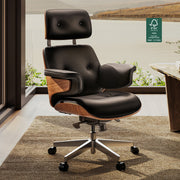
For a material-forward option, the Mathias, Napa Leather Executive Office Chair is a straightforward browsing starting point because its leather finish and color options fit the residential look this article is aiming for. For a lighter visual footprint, the Nico, Mesh Ergonomic Office Chair is the cleaner comparison point if you want the chair to recede more in a bright room. Streamlined designs with moderate scale and materials like leather or lighter mesh reduce contrast with living-room pieces, per tested recommendations.
The practical takeaway is that color matters less than most people think once the room is already coordinated. A black or gray chair can still feel soft enough in a home office if the shape is calm. A beige or off-white chair can still feel corporate if the frame looks too angular or overbuilt.
Verify Adjustability Before You Buy
A residential ergonomic chair has to fit two things at once: your body and the room. The room check is obvious, but the body-fit check is what usually prevents regret. A chair that looks great in the living room but forces awkward seating angles will quietly get used less.
Start with seat height and seat depth. Those two settings determine whether your feet can rest naturally and whether the seat pan supports you without pressing into the back of your knees. Then check lumbar support and armrests, because those are the adjustments that decide whether the chair feels adaptable during a long remote-work stretch or only looks adaptable on paper.
If a product page mentions standards, treat them as verification, not decoration. BIFMA's overview of X5.1 chair testing is useful here because it shows the same kinds of adjustments buyers should be checking themselves: height, depth, lumbar, armrests, tilt, and load capacity. In other words, the visual choice should come after the fit checks, not before them. See the full guide to ergonomic chair adjustments for step-by-step checks.
A good shortcut is this: if you cannot explain how the chair will fit your desk height, your torso, and your arm position in one sentence, keep comparing. If the chair has fixed features in places you move often, it may still work, but only if the rest of the dimensions are unusually well matched.
Place the Chair in Open Living Areas
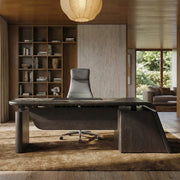
In open living areas, the chair has to coordinate with nearby surfaces instead of standing alone. The easiest way to do that is to repeat one cue already in the room, such as a wood tone, leather color, fabric family, or metal finish. You do not need a perfect match; you need a visual echo.
A second trick is balancing simple and sculptural pieces. If your sofa is soft and rounded, a cleaner chair shape can keep the room from feeling crowded. If your room is mostly straight-lined and minimal, a more refined chair profile can add warmth without adding clutter.
The chair also needs enough breathing room to look intentional. In a small apartment, if the chair blocks a walkway or sits half-stuffed into a corner, it tends to read as leftover equipment instead of a planned piece. That is why compact proportions matter just as much as color in home office chair ideas to match modern decor.
If you want more room-planning context, the shared-room styling guide helps when a workspace has to coexist with living space rather than sit in a separate office. For a related perspective on blending furniture styles, styling a modern ergonomic chair helps when you are trying to match a chair to visible wood, trim, or other home finishes.
Use a Final Selection Checklist
Before you add an ergonomic chair to cart, run this quick check:
- Confirm the chair's overall scale fits the room, not just the desk.
- Make sure the visible finish matches the room's main materials, not only the desktop.
- Check seat height, seat depth, lumbar support, and armrest movement for your body.
- Verify the weight capacity and return policy before you commit.
- Check shipping limits and warranty details if the chair has to move through a tight entryway or up stairs.
- Choose the option that minimizes visual clutter without giving up the support you actually need every day.
If you want to keep browsing, the Office Seatings collection is a practical place to compare chair types, while New Executive Chairs is better when you already know you want a more polished, residential-leaning look. For leather-forward browsing, the Leather Office Chair Series is the narrowest path.
FAQs
Can an Ergonomic Chair Work in a Small Living Room?
Yes, if the chair is visually light and proportionally smaller than a typical executive chair. In tight rooms, lower backs, slimmer arms, and simpler bases usually help the piece blend in. What matters most is whether it still clears walkways and fits the desk without crowding the seating area.
What Chair Materials Look Least Like Office Furniture?
Leather and suede-like upholstery usually feel the most residential because they resemble lounge furniture more than task seating. Mesh can also work, but it tends to look more technical unless the frame is restrained. If you want the chair to disappear visually, neutral upholstery plus a calm silhouette is the safest combination.
Can I Keep an Ergonomic Chair Looking Clean With Daily Use?
Yes, but the upkeep should match the material. Leather-like finishes generally benefit from regular dusting and occasional wipe-downs, while fabric and mesh need more attention around seams, armrests, and contact points. If the chair will sit in a main living area, choose a finish you will realistically maintain.
How Do I Match a Chair to Modern Decor Without Custom Ordering?
Start by repeating one existing finish in the room, such as black metal, warm brown, off-white, or gray. Then make sure the chair's shape is consistent with the room's style, because a good color match cannot fully fix a bulky silhouette. Most of the time, close coordination is enough; perfect matching is not necessary.
What Should I Check Before Buying for Long Remote Work Days?
Check seat height, seat depth, lumbar range, and armrest movement first, because those features affect how well the chair fits you over long sessions. Then verify the return policy and warranty in case the chair looks right but feels wrong after a few days at home. The best-looking chair is not the best buy if you avoid sitting in it.
The Best Home-Interior Fit Wins Twice
The strongest ergonomic chair for a home interior is the one that solves both parts of the problem: it supports your body and settles naturally into the room. Use silhouette, finish, and fit checks together, not one at a time. If a chair feels too corporate in the space or too fixed in the body, keep looking until both sides line up.

Leave a comment