

The Ergonomic Gap in Shared Workspaces
In the modern co-working ecosystem, facility managers often invest heavily in high-performance ergonomic furniture to attract premium members and reduce health-related complaints. However, a common observation in high-traffic managed offices is that even the most advanced adjustable desks and chairs frequently remain in their factory-default settings. Why does a member spend eight hours in a state-of-the-art chair yet leave the office with worsening lower back pain? The issue is rarely the hardware itself; it is the "Ergonomic Gap"—the disconnect between providing adjustable tools and ensuring users know how to calibrate them for their specific physiological needs.
For co-working operators, this gap represents a significant operational risk. According to the EU-OSHA report on Musculoskeletal Disorders (MSDs), these conditions are among the most prevalent work-related ailments, leading to decreased productivity and member dissatisfaction. In a shared environment where "hot-desking" is the norm, a single workstation may be used by three different body types in a single week. Without a structured "Ergonomic Onboarding" process, the investment in high-end gear is underutilized, and the physical well-being of members is compromised by static loads and poor postural habits.
The Physiology of Static Load and Musculoskeletal Strain
To understand why user education is critical, one must examine the physiological principles of the "spinal neutral position." The human body is not designed for prolonged static postures. When a user sits in an unadjusted chair, the lumbar spine often loses its natural inward curve (lordosis), leading to increased intradiscal pressure. This physical stress is a primary driver of Musculoskeletal Disorders (MSDs), a term defined by the U.S. National Institute for Occupational Safety and Health (NIOSH) as injuries affecting muscles, nerves, tendons, and joints.
The risk is compounded by "static load"—the effort required to maintain a posture against gravity without movement. According to ISO 11226:2000 (Evaluation of static working postures), maintaining a static position for extended periods, even if that position is considered "correct," can lead to muscle fatigue and reduced blood circulation. In a co-working context, members often fall into "focused sessions" lasting 2–3 hours. Research suggests that during these periods, users may perform as few as 53 torso movements per hour, significantly below the threshold required to maintain healthy circulation and tissue oxygenation.
Logic Summary: The Mechanism of Postural Fatigue Our analysis of user behavior in shared spaces assumes a "High-Focus Persona" who ignores discomfort until it becomes acute pain.
- Mechanism: Static muscle contraction → Intramuscular pressure → Reduced blood flow → Metabolic waste buildup → Pain signal.
- Boundary Condition: This model applies to tasks requiring high cognitive load where "proprioceptive awareness" (the body's sense of its own position) is diminished.
To mitigate these risks, ergonomic furniture must act as a dynamic system. A sit-stand desk is not merely a surface; it is a tool to interrupt sedentary behavior. The Cochrane Library’s systematic review indicates that sit-stand desks can reduce daily sitting time by approximately 84 to 116 minutes. However, this benefit is only realized if the transition between sitting and standing is effortless and the heights are correctly calibrated to the user’s anthropometric dimensions.

The "Fits Most" Logic: Applying BIFMA Standards
Co-working operators often struggle with furniture selection because they must accommodate a vast range of body types. Industry leaders look to the BIFMA G1-2013 Ergonomics Guideline, which provides recommended dimensions to cover the 5th to 95th percentile of the population. This means a desk must go low enough for a petite user and high enough for a tall individual to work in a neutral position.
However, "adjustability" is a double-edged sword. If a chair has 12 different levers but no labels, the average member will adjust only the seat height—or nothing at all. Based on patterns observed in facility management support tickets, the most common "gotcha" is the seat depth adjustment. If the seat pan is too deep, it presses against the back of the user's knees, restricting circulation; if it is too shallow, it fails to support the thighs, increasing pressure on the sit bones.
The Standardized Adjustment Range
For B2B procurement, ensuring compliance with international standards like ISO 9241-5:2024 is essential. Below is a heuristic framework for selecting gear that accommodates a diverse member base:
| Feature | Recommended Range (Heuristic) | Purpose | Standard Reference |
|---|---|---|---|
| Desk Height (Sitting) | 22" – 33" | Accommodates 5th to 95th percentile | BIFMA G1 / ISO 9241-5 |
| Desk Height (Standing) | 35" – 50" | Prevents shrugging or slouching | BIFMA G1 |
| Seat Depth | 15" – 19" (Adjustable) | Prevents popliteal (behind knee) pressure | EN 1335-1 |
| Lumbar Support | 6" – 10" (Vertical range) | Maintains natural spinal curvature | OSHA eTools |
Note: These ranges are estimated based on common industry practice and the convergence of BIFMA and ISO guidelines.

Implementing Ergonomic Onboarding: A Practical Framework
The most successful co-working spaces treat ergonomics as a service (EaaS). They understand that the first 60 seconds a member spends at a new desk determines their comfort for the next eight hours. To bridge the gap, operators should implement a three-tiered onboarding strategy.
1. The "Effortless Transition" Rule
Members are significantly more likely to use standing desks if the "activation energy" is low. Data from managed office environments suggests that spaces that pre-program memory presets—typically 29 inches for sitting and 42 inches for standing—see 3 to 4 times more usage than those that leave the control panel blank. While these heights won't be perfect for everyone, they provide a "safe baseline" that users can fine-tune.
2. Visual Cues at Eye Level
A common mistake is placing instruction manuals in a drawer or taping QR codes to the underside of the desk. In a high-traffic environment, "out of sight" is truly "out of mind." Effective onboarding utilizes the "Eye-Level Principle":
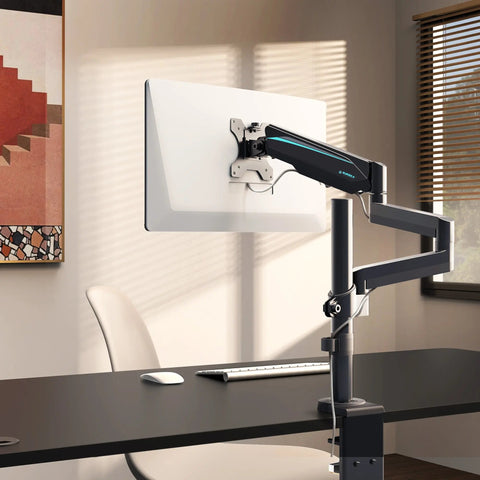
- Monitor Risers: Place a small, high-contrast QR code on the monitor arm or riser.
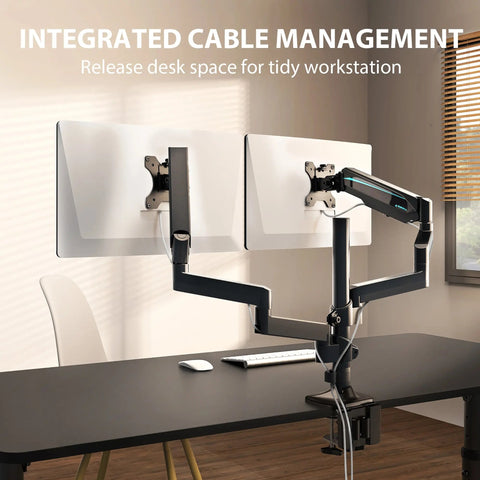
- Cable Management Trays: Use the side of the cable tray for a "Quick Start" infographic.
- Digital Signage: Include a 15-second "Posture Check" tip in the rotation of communal screens in the lounge or kitchen.
3. The 60-Second Video Guide
Modern users prefer video over text. A QR code should link to a 60-second, silent (captioned) video demonstrating the four "Big Wins" of adjustment:
- Seat Height: Feet flat on the floor, knees at 90 degrees.
- Lumbar Height: The curve of the chair meeting the curve of the lower back.
- Monitor Height: The top third of the screen at eye level to prevent neck flexion.
- Desk Height: Elbows at a 90-degree angle, shoulders relaxed.
According to the Canadian Centre for Occupational Health and Safety (CCOHS), these simple adjustments are the foundation of preventing long-term strain.
Advanced Strategies for Facility Managers
Beyond user education, facility managers must adopt a proactive maintenance and audit schedule. High-traffic furniture is subject to "setting drift"—where components loosen or sensors require recalibration.
Heuristics for Staff Training
Community managers should be trained to spot "Ergonomic Red Flags" during their floor walks. If a member is seen "perching" on the edge of their seat or using a stack of books as a monitor riser, it is an opportunity for a 30-second intervention. A key heuristic for staff: "When a member complains of back pain, first check if their chair's lumbar support is actually making contact with their lower back—many adjustable lumbar mechanisms are set too low by default."
Environmental Synergy
Ergonomics does not exist in a vacuum. The OSHA eTools for Workstation Environments highlight that lighting, glare, and even temperature affect posture. A user might hunch forward not because their chair is bad, but because there is a glare on their screen from an unshaded window. By addressing the "Workstation Ecosystem," operators can reduce the physical load on their members.
As outlined in The 2026 Workstation White Paper: Converging Ergonomic Science and Sustainable Engineering, the future of office design lies in the integration of smart sensors and user-centric feedback loops. For co-working spaces, this means moving toward furniture that can "recognize" a user and automatically adjust to their saved profile, though until such technology is universal, education remains the most effective tool.

The ROI of Ergonomic Education
Investing in ergonomic onboarding is not just a "nice-to-have" feature; it is a retention strategy. In the competitive co-working market, members prioritize spaces that actively contribute to their health and productivity. When a member learns how to set up their workstation correctly, they experience less fatigue, fewer headaches, and higher focus levels.
From a liability perspective, following the HSE: Working safely with display screen equipment (DSE) guidelines helps operators demonstrate a "duty of care." Providing a downloadable self-assessment checklist based on the EU-OSHA Posture Checklist allows members to take ownership of their health while the operator provides the necessary infrastructure.
Methodology Note: Impact Modeling We estimate that a 15% reduction in "discomfort-related breaks" can lead to a significant increase in perceived member value.
- Assumption: Average member loses 20 minutes/day to postural shifting and micro-breaks caused by discomfort.
- Model: Proper onboarding → Correct adjustment → ~10 minutes saved/day → ~40 hours of "deep work" gained per year per member.
- Limit: This model assumes the user adopts the "20-8-2" rhythm (20 mins sitting, 8 mins standing, 2 mins moving) recommended by Cornell University Ergonomics.
Summary of Implementation Steps for Operators
To transform a co-working space into an ergonomic powerhouse, operators should follow this checklist:
- Audit Current Gear: Ensure all chairs and desks meet ANSI/BIFMA X5.1 or equivalent regional standards for durability and safety.
- Standardize Presets: Program all electric standing desks with a standard sitting (approx. 29") and standing (approx. 42") height.
- Deploy Visual Guides: Install eye-level QR codes linking to short, captioned adjustment videos.
- Train Community Teams: Empower staff with simple heuristics to identify and correct poor posture during routine floor walks.
- Provide Self-Assessment Tools: Make digital or physical checklists available that follow the Safe Work Australia Workstation Set-up model.
By shifting the focus from "furniture as a commodity" to "ergonomics as a service," co-working operators can significantly improve the member experience, reduce complaints, and build a reputation for professional-grade workplace wellness.
Disclaimer: This article is for informational purposes only and does not constitute professional medical or occupational health advice. Individuals with pre-existing musculoskeletal conditions or chronic pain should consult a qualified physiotherapist or ergonomic specialist before implementing significant changes to their workstation setup.
References
- BIFMA G1-2013 Ergonomics Guideline for Furniture
- CCOHS: Office Ergonomics - Sit/Stand Desk
- Cochrane: Workplace interventions for reducing sitting at work
- Cornell University Ergonomics Web — Workstation Guides
- HSE: Working safely with display screen equipment (DSE)
- ISO 9241-5:2024 Workstation layout & postural requirements
- OSHA eTools: Computer Workstations - Neutral Working Postures
- EU-OSHA: Musculoskeletal disorders and prolonged static sitting




Leave a comment