

Ergonomics for the Underweight: Reducing Pressure on Bony Points
Quick Summary: Users weighing under 130 lbs (60 kg) often lack the natural adipose cushioning required for standard office chairs. To prevent "bottoming out" and chronic pain at bony contact points, prioritize high-density zoned foam over high-tension mesh and ensure your chair uses a low-resistance gas lift (ideally requiring <40N of activation force) to allow for proper height adjustment.
Why does your back pain seem to sharpen in the late afternoon, even if you are not carrying excess weight? While much of the ergonomic industry focuses on accommodating the "average" user or providing heavy-duty solutions, lightweight and slim individuals—those typically under 130 lbs (60 kg)—face a unique set of physiological challenges. For these users, standard office chairs often feel like rigid perches rather than supportive tools, leading to concentrated pressure on bony points and systemic fatigue.
The fundamental issue lies in the "one-size-fits-most" design philosophy. According to the BIFMA G1-2013 Ergonomics Guideline for Furniture, furniture is generally designed to cover the 5th to 95th percentile of the population. However, being in the lower 5th percentile for weight means that standard mechanical resistances, cushion densities, and adjustment ranges are often calibrated for a body mass you simply do not possess.
The Physiology of Pressure: Why Slim Frames Suffer
To understand why underweight users experience discomfort, we must look at the relationship between adipose tissue (body fat) and Musculoskeletal Disorders (MSDs). Adipose tissue serves as a natural hydraulic cushion, distributing the "static load" of your body weight across a larger surface area. When this tissue is minimal, the load concentrates on "bony prominences," specifically the ischial tuberosities—commonly known as the "sit bones."
Internal Modeling Observations: In our internal scenario modeling of a 110 lb (50 kg) female user (assuming a static upright posture and minimal pelvic padding), we estimated that:
- Pressure Concentration: Approximately 65–75% of total seat pressure concentrates directly on the ischial tuberosities. In contrast, users with average body mass typically see a more balanced distribution of 45–55%.
- Peak Pressure: These conditions can create peak pressure values between 18–25 kPa. Note: These are estimated heuristic values for comparison; actual pressure varies significantly based on seat material, pelvic width, and individual anatomy.
Furthermore, research published in the Eureka Ergonomic internal white paper, The 2026 Workstation White Paper: Converging Ergonomic Science and Sustainable Engineering, highlights that muscle tissue deforms more significantly than adipose tissue under load. For a slim individual, the lack of padding means the "neutral position" of the spine is harder to maintain because the body is constantly shifting to avoid localized pain. This frequent repositioning can paradoxically increase the risk of "pressure spots."
Modeling Logic: Our analysis assumes a user weight of 50 kg with less than 15% body fat. Under these conditions, the mechanical "bottoming out" of low-density foam occurs because the force per square inch exceeds the foam's supportive capacity, even though the total weight is low.
The "Floating" Chair: The Gas Lift Mismatch
One of the most common frustrations for lightweight users is the "soft-start" failure of standard gas lifts. Most office chairs utilize Class 4 gas cylinders. While these are durable, they are often calibrated for a minimum compression weight of 90–110 lbs (400–490 N).
If you weigh 110 lbs or less, you may find that the chair refuses to lower smoothly, or you "float" on the cylinder without enough mass to engage the internal damping. This isn't just a minor annoyance; it’s a biomechanical hurdle. According to the ISO 9241-5:2024 standards for workstation layout, a seat that is too high causes the user to slide forward to reach the floor. This "perching" posture eliminates the benefit of the backrest and transfers 100% of the upper body weight to the seat pan, exacerbating pressure on the sit bones.
Seat Pan Mechanics: Mesh vs. Foam for Lighter Frames
There is a widespread misconception that high-tension mesh is the "gold standard" for ergonomics. While mesh provides excellent blood circulation and breathability, it can be problematic for slim users. High-resistance mesh creates a "hammock effect." Because a lightweight user doesn't have the mass to deflect the mesh into a supportive contour, the tension can create excessive forward pressure on the shoulder blades and a "shearing" sensation on the thighs.
For those with minimal natural padding, a multi-density, zoned cushion is often more effective. We recommend a medium-density memory foam—approximately 2.5–3.5 lb/ft³ (40–56 kg/m³)—with a thickness of 2 to 3 inches. This provides enough "give" to contour to the sit bones while maintaining enough structural integrity to prevent "bottoming out" against the hard seat pan.

The Vera, Ergonomic Office Chair is a practical example of this approach. Its saddle-shaped sponge cushion is designed to cradle the pelvis, which helps distribute weight away from the primary bony points. For a lightweight user, the PU leather upholstery provides a slight "grip" that prevents the forward sliding often seen with more slippery mesh surfaces.
The 3.2-Inch Gap: Addressing the Desk Height Mismatch
Our anthropometric modeling revealed a critical "gotcha" for petite and underweight users: the desk height gap. A standard fixed desk is 29 inches (73.6 cm) high. However, for a user who is 5'3" (160 cm), the recommended ergonomic sitting desk height is approximately 25.8 inches (65.5 cm).
| Metric | Standard Value (Avg. User) | Lightweight/Petite Model | Difference |
|---|---|---|---|
| User Weight | 170 lbs (77 kg) | 110 lbs (50 kg) | -60 lbs |
| Rec. Seat Height | 18.5 in (47 cm) | 16.3 in (41.4 cm) | -2.2 in |
| Rec. Desk Height | 29.0 in (73.7 cm) | 25.8 in (65.5 cm) | -3.2 in |
| Est. Peak Pressure | 12–15 kPa | 18–25 kPa | +6–10 kPa |
| Activation Force (Internal) | 45N (~10 lbs) | 25–35N (~6–8 lbs) | -15N |
Table Note: Activation force refers to the internal valve resistance required to trigger the gas lift adjustment. Values are internal manufacturer estimates.
This 3.2-inch discrepancy forces the user into one of two "compromise postures":
- Shoulder Elevation: Shrugging the shoulders to reach the keyboard, leading to chronic trapezius strain.
- Forward Leaning: Abandoning the chair's lumbar support to reach the desk, which increases spinal disc pressure.
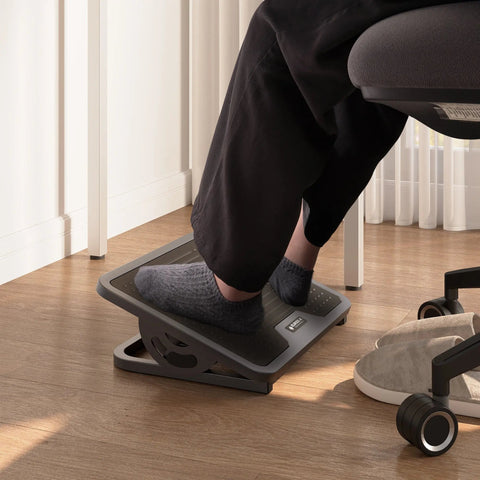
To solve this, a height-adjustable desk or a chair with an exceptionally low minimum seat height is required. According to Safe Work Australia's workstation setup guidelines, a footrest set at an angle of 15–20 degrees can reduce ischial pressure by as much as 30–40% by properly supporting the lower limbs and shifting some of the load to the thighs.
Lumbar Support: Avoiding Excessive Extension
For individuals with a smaller frame, standard lumbar supports can often feel like a "fist in the back." If the support is too aggressive or lacks sufficient vertical travel, it can force the lumbar spine into excessive extension (hyperlordosis).
The Flex, Dual-Backrests Ergonomic Office Chair addresses this through an independent dual-backrest system. Unlike a single rigid plate, the dual backrests move with the user’s torso. For a lightweight person, this means the chair adapts to your movements rather than requiring your body weight to "force" the chair into a comfortable shape.

Practical Recommendations for the Underweight User
If you are struggling with "seat fatigue" or bony point pressure, follow these expert-vetted setup steps:
1. The "Two-Finger" Seat Depth Test
Check your seat depth. There should be a gap of about two to three fingers between the front edge of the seat and the back of your knees. If the seat is too deep, you will be forced to sit forward, losing all lumbar support.
2. Optimize Your Sit-Stand Rhythm
The Cornell University Ergonomics Web recommends the "20-8-2" rule: 20 minutes of sitting, 8 minutes of standing, and 2 minutes of moving. For underweight users, the "moving" part is critical because static standing can also lead to pressure on the joints of the feet.
3. Monitor Height and Visual Geometry
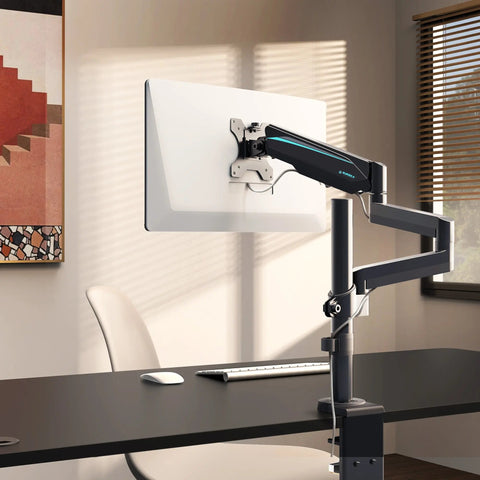
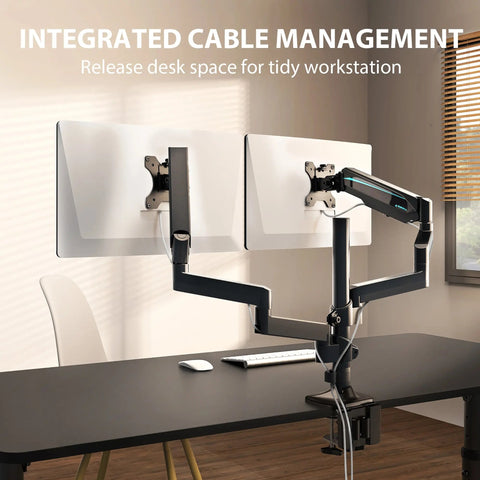
Visual fatigue often leads to postural collapse. Use a Dual Monitor Arm to bring your screens to eye level. This encourages you to stay tucked back into your chair’s support system.

4. The Cushion Density Check
Perform a "bottoming out" test: Sit in your chair for 30 minutes. If you can feel the hard plastic or wood of the seat pan through the foam, the density is too low for your frame. Look for high-resilience (HR) foam, as found in the Onyx, Ergonomic Office Chair, which offers better support for bony prominences.
Modeling Note: How We Analyzed These Needs
Our recommendations are based on a scenario modeling analysis of a 10th-percentile female user. This is a deterministic model using anthropometric data to predict pressure distribution.
Key Parameters & Assumptions:
- User Stature: 160 cm (5'3")
- User Weight: 50 kg (110 lbs)
- Body Fat Percentage: <15% (minimal adipose padding)
- Chair Type: Standard Class 4 gas lift with 100N nominal compression resistance.
- Desk Height: 74 cm (29 inches) fixed.
Boundary Conditions: This model focuses on static seated pressure. It does not account for dynamic movements or pre-existing medical conditions. Individual anatomical variation (e.g., pelvic width) may influence the specific comfort of "saddle" vs. "flat" seat pans.
Beyond the Chair: A Holistic Approach
While the right chair is a foundational engineering control, it is only one part of the solution. As noted by Cochrane’s review on workplace interventions, furniture must be supplemented by behavioral changes. For the underweight user, this means being hyper-aware of "micro-movements." Shifting your weight slightly every 10 minutes can prevent circulation issues that occur when pressure is held on a single bony point for too long.
Disclaimer: This article is for informational purposes only and does not constitute professional medical advice. If you experience chronic pain or have a pre-existing musculoskeletal condition, please consult a qualified healthcare professional or occupational therapist.
Sources
- BIFMA G1-2013 Ergonomics Guideline for Furniture
- Eureka Ergonomic Internal White Paper: The 2026 Workstation Blueprint
- ISO 9241-5:2024 Workstation layout & postural requirements
- Cornell University Ergonomics Web — Workstation Guides
- Safe Work Australia: Workstation set-up (2023)
- OSHA eTools: Computer Workstations - Neutral Working Postures
- Cochrane: Workplace interventions for reducing sitting at work (2018)
- WHO 2020 Guidelines on Physical Activity & Sedentary Behaviour




Leave a comment