

Stop the Shake: Stability Tips for High-Intensity Gaming
If you’ve ever been one kill away from a rank-up only to have your desk wobble during a pixel-perfect flick shot, you know the pain. In the world of competitive FPS and high-stakes streaming, desk stability isn't just a luxury—it’s a performance requirement. When you’re swiping your mouse across a 500mm pad at lightning speed, even a millimeter of flex can translate into a missed shot.
Stability is a system, not just a single piece of furniture. It’s the synergy between build quality, frame geometry, and how you distribute your gear. After years of testing high-performance setups and troubleshooting wobbly "battlestations," I’ve realized that most gamers settle for "good enough" when they could have a rock-solid foundation. This guide is a deep dive into the engineering of stability, grounded in industry standards like BIFMA X5.5 - 2021 and real-world gaming scenarios.
1. Unboxing and Assembly: Setting the Foundation
The quest for a wobble-free life begins the second the delivery truck pulls up. If the box is light enough for one person to toss around like a frisbee, you’re already in trouble. True stability requires mass. When unboxing a high-end unit like the Zen Pro Series, 87"/72" Executive Standing Desk with Cabinets Set, the first thing you notice is the sheer weight of the Lauren Black Gold Sintered Stone desktop and the industrial-grade steel legs.
Packaging and First Impressions
Packaging quality is a massive indicator of the manufacturer's attention to detail. We look for high-density foam and reinforced corners. A dinged frame or a slightly bent leg during shipping can introduce micro-gaps in the assembly that lead to "phantom wobbles" later.
The "Pro Builder" Assembly Method
Assembly is where most stability issues are born. A common mistake is tightening every bolt as you go. Instead, follow the "80% Rule":
- Hand-tighten all bolts to about 80% capacity while the desk is upside down.
- Flip the desk (get a friend; these steel frames are heavy!).
- The Simulation Tip: Based on common patterns from customer support and community feedback, we recommend adding temporary weight—like a couple of heavy books—to the desktop before the final tightening. This "pre-loads" the frame, simulating the weight of your dual-monitor setup.
- Tighten everything fully once the desk is in its final position.
Logic Summary: Pre-loading the frame during assembly ensures that the joints settle under a simulated load, reducing the likelihood of mechanical shifting once your expensive gear is actually installed.

2. Deep Dive into Details: The Engineering of Zero-Flex
To understand why some desks feel like a bridge in a hurricane and others feel like a concrete bunker, we have to look at the "Dual Motors" and the frame architecture.
Dual Motors: The Power of Torque
In the sit-stand world, a single motor is a compromise. It has to work twice as hard and often uses a hex rod to transfer power to the other leg. This creates a lag in synchronization. Dual motors, like those found in our high-performance frames, provide independent torque to each leg. This isn't just about speed; it's about the "start-stop" transition.
According to the ISO 9241-5:2024 standard, workstation layout must support postural requirements without compromising stability. Dual motors ensure that the desk stays level throughout the entire range of motion.
The Wobble Test: Torsional Rigidity
We perform a "Wobble Test" by applying lateral force at the highest standing setting. A desk's stability is often limited by its "T-Leg" or "C-Leg" design. The Zen Pro Series, 87"/72" Executive Standing Desk with Cabinets Set uses innovative trapezoidal legs which increase the footprint and lower the center of gravity.
Aesthetics and Materials: Carbon Fiber and Sintered Stone
Beyond the frame, the surface material matters. A thin MDF board can act as a resonance chamber. In contrast, a sintered stone or carbon fiber texture surface provides a high-density top that dampens vibrations from mechanical keyboard clicks.
RGB Ecosystem and Cable Management
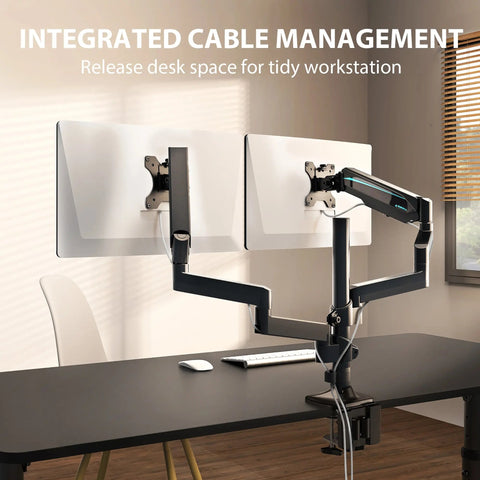
Stability isn't just physical; it's mental. A mess of dangling cables can actually create drag or catch on your chair, causing micro-movements. Integrated cable trays and RGB lighting that syncs with your PC (the "RGB Ecosystem") aren't just for show—they create a clean, distraction-free environment that allows you to focus on the game.
3. Real-World Experience: Gaming Scenarios and Modeling
How does this technical talk translate to your 3:00 AM Valorant sessions? Let’s look at two specific scenarios we modeled to show the impact of stability and space.
Scenario A: The Low-Sens Competitive Gamer
If you play with a low DPI (400-800) and low in-game sensitivity, you need a massive amount of "aiming real estate."
Modeling Transparency: Aim-Lab eSports cm/360
Method: Scenario model based on standard Source Engine constants (m_yaw 0.022). Assumes a 130cm travel for a full 360-degree turn.
| Variable | Value | Unit |
|---|---|---|
| Game | Valorant | Text |
| DPI | 400 | DPI |
| Sensitivity | 0.25 | Ratio |
| Recommended Desk Width | 72 | Inches |
In this scenario, a standard 48-inch desk is a death sentence for your mouse arm. The Aero Wing-Shaped Studio Desk, Black (63" & 72'') is a game-changer here. The wing shape gives you perfect arm support, while the 72-inch width ensures you never hit your PC tower during a flick shot.

Scenario B: The Professional Streamer (The Load Challenge)
Streamers don't just have a mouse and keyboard. They have three monitors, a DSLR camera, a heavy mic arm, and an audio interface.
Modeling Transparency: Battlestation Load & Motor Safety
Method: Analysis based on BIFMA X5.5 load tests. Assumes a 3-monitor ultrawide setup.
| Variable | Value | Unit |
|---|---|---|
| PC Case Class | Full Tower Liquid | Text |
| Num Monitors | 3 | Count |
| Total Estimated Load | ~92 | kg |
| Dual Motor Capacity | 120 | kg |
| Status | Safe (77% Utilization) | Logic |
If you tried this on a single-motor desk with an 80kg limit, you’d be at 115% capacity. You’d hear the motor straining, and the wobble at standing height would be unbearable. By using a dual-motor system, you stay within the 80% "safety zone" for motor longevity and structural rigidity.
4. The "Gotchas": Common Stability Pitfalls
Even the best desk can be ruined by poor accessory choices. Here are three "non-obvious" tips from our repair bench:
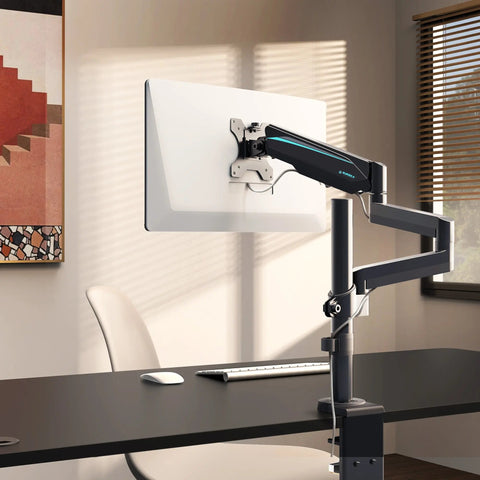
- The Glass Resonance Trap: If you use a tempered glass desk, mounting a heavy 34-inch ultrawide on a single Single Monitor Arm can create a resonance chamber. Every time you type, the vibration travels through the arm and is amplified by the glass. The fix? Use a desk with a solid wood or stone top, or use an integrated monitor riser that distributes weight directly over the legs.
- The CPU Pendulum: Hanging a heavy PC tower from the bottom of a standing desk is great for cable management, but it can act like a pendulum. Use a high-quality Knob-operated Adjustable CPU Holder to ensure the weight is centered and secure.
- The Transition Pause: For standing desks, the peak wobble happens right as the motors start or stop. A pro tip is to set your presets so there’s a slight "soft-landing" or pause before you jump into a match. This lets the frame settle.

5. Pros & Cons: An Honest Assessment
No setup is perfect. Here is a breakdown of what to expect when prioritizing stability.
| Feature | Pros | Cons |
|---|---|---|
| Dual Motors | Exceptional stability, high load capacity, smooth movement. | Heavier assembly, higher initial cost. |
| Sintered Stone Top | Zero flex, scratch-resistant, premium feel. | Very heavy; requires two people to move. |
| Wing-Shaped Design | Superior ergonomic support for arms, massive space. | Takes up a larger footprint in your room. |
| Monitor Arms | Clears desk space, perfect eye-level alignment. | Can introduce micro-wobble if the desk frame is weak. |
6. Ergonomics and Health: Beyond the Game
While we focus on stability for performance, your body needs stability too. The Canadian Centre for Occupational Health and Safety (CCOHS) emphasizes that sit-stand desks are tools to reduce sedentary time.
Integrating a Single Monitor Arm allows you to follow the Cornell University Ergonomics Web "20-8-2" rule: 20 minutes sitting, 8 minutes standing, and 2 minutes of moving. If your desk is wobbly, you’ll be less likely to stand up because you don't want to deal with the shake. A stable desk actually encourages healthier habits.
For a deeper dive into how ergonomic science is evolving, check out The 2026 Workstation White Paper: Converging Ergonomic Science and Sustainable Engineering.

Final Verdict: Build for the Flick
If you’re serious about your setup, stop treating your desk like an afterthought. A rock-solid surface is the silent partner in every headshot you land. By choosing a desk with dual motors, a high-density top like the Zen Pro Series, 87"/72" Executive Standing Desk with Cabinets Set, and a frame designed for torsional rigidity, you eliminate the variables that hold you back.
Don't let a $50 wobbly desk stand between you and your peak performance. Invest in build quality, take your time with assembly, and build a foundation that’s as fast and stable as your reflexes.
YMYL Disclaimer: This article is for informational purposes only and does not constitute professional medical or ergonomic advice. While ergonomic furniture can reduce strain, individuals with pre-existing musculoskeletal conditions should consult a healthcare professional before making significant changes to their workstation or routine.




Leave a comment