

Quick Summary: The 3-Step Hip Health Check
Before diving into the technical details, use this rapid self-assessment to determine if your current chair is supporting your hip health or hindering it:
- The Two-Inch Clearance: While seated, ensure there is at least a 1-inch gap between your thighs and any side bolsters or frame edges on both sides (2 inches total clearance).
- The Popliteal Gap: Check for a 2-to-3 finger gap between the front of the seat pan and the back of your knees to ensure unobstructed blood flow.
- The Freedom Test: Can you comfortably shift your leg angle or cross your ankles without hitting a rigid barrier? If not, the chair may be too restrictive for long-term use.
The Impact of Lateral Compression in Modern Seating
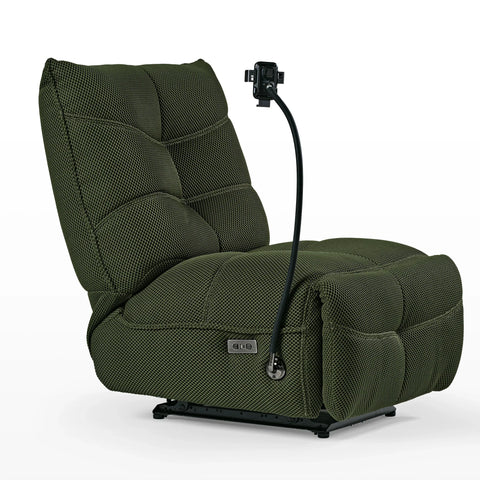
Why does hip discomfort often peak in the mid-afternoon, even when using a chair marketed for "high performance"? For many users, the answer may lie not in a lack of support, but in an excess of restriction. The trend of "racing-style" chairs has popularized aggressive side bolsters—those raised, angled wings on the sides of the seat pan and backrest. While these designs are intended to secure professional drivers against high lateral G-forces on a track, they can become a physiological burden in a stationary office or gaming environment.
The primary concern involves a potential mismatch between automotive-inspired aesthetics and human anthropometry. When a seat is too narrow or features rigid side bolsters, it can create lateral pressure on the hips and thighs. Over time, this restriction may disrupt the body’s ability to maintain a neutral spinal position and can limit the micro-movements necessary for healthy blood circulation. This guide explores the musculoskeletal principles of hip health and provides a framework for selecting seating that prioritizes physiological freedom over restrictive "bucket" designs.
The Physiological Principles of Hip Health and Seating
To understand why side bolsters can be problematic, one must examine the anatomy of the seated pelvis. The weight of the upper body is primarily supported by the Ischial Tuberosities, commonly known as the "sit bones." According to research on the anatomy of the ischial tuberosity, these structures are designed to bear load, but they generally function best on a stable, flat, or slightly contoured surface that allows for effective pressure distribution.
The Mechanism of Potential Discomfort in Seating
When a user with a wider pelvic structure sits in a bolstered "racing" chair, the lateral wings may pinch the greater trochanter (the bony protrusion at the top of the femur). This can lead to several physiological issues:
- Static Load and Ischial Pressure: High bolsters may force the legs into a fixed, "closed" posture. This can increase the static load on the ischial tuberosities. Unlike dynamic sitting, where a user can shift weight, restrictive bolsters may lock the pelvis into a single position, potentially leading to localized tissue ischemia (temporarily reduced blood flow) in sensitive areas.
- Popliteal Compression: A common oversight in chair selection is focusing solely on the backrest. However, as noted by Cornell University’s Ergonomics Web, if a seat pan is too deep or the side bolsters prevent the user from sitting fully back, the front edge of the seat can compress the popliteal area (the space behind the knees). This compression is associated with impaired blood circulation and may lead to swelling or numbness in the lower limbs.
- Restriction of Micro-movements: The ISO 11226:2000 standard for evaluating static working postures emphasizes that prolonged static positions are a recognized risk factor for Musculoskeletal Disorders (MSDs). Healthy sitting is inherently dynamic. Subtle shifts in leg angle, lateral hip movement, and pelvic tilting are the body's natural defense against fatigue. Rigid bolsters can physically block these essential movements.
Heuristic Note: The Compression Model Based on internal design modeling of common racing-style frames, aggressive bolsters can reduce the "effective" usable seat width by approximately 15–20%. This estimate is a heuristic based on the angle of the wings; this reduction often increases the pressure on the lateral thighs for users whose hip breadth exceeds the flat portion of the seat pan.
Engineering Solutions: Why Seat Design Matters
The transition from restrictive "bucket" seats to ergonomic office chairs represents a shift from "holding the user in place" to "supporting the user's movement." Ergonomic furniture is designed to facilitate a Spinal Neutral Position, where the natural S-curve of the spine is supported to reduce active muscular effort.
The Advantage of Non-Restrictive Seat Pans
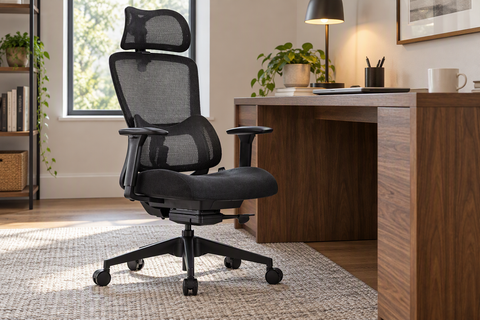
Modern ergonomic chairs, such as the Exis, Ergonomic Office Chair (Manufacturer Example), utilize a design philosophy centered on freedom of movement. Instead of lateral bolsters, they employ a wide, contoured seat pan. The Exis features a spring-foam seat cushion designed to combine resilience with softness, providing a support system that adapts to the user's weight without pinching the hips.

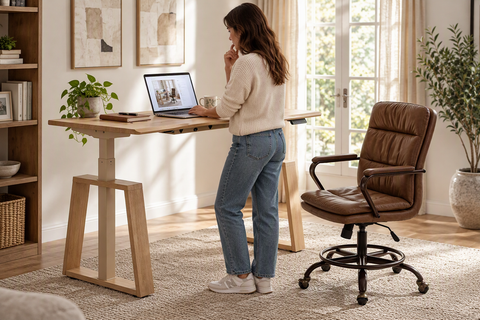
For executive environments, the Serene Ella, Napa Leather Executive Chair (Manufacturer Example) demonstrates how luxury materials can serve ergonomic ends. Its gentle curves and upholstered frame avoid the sharp angles of racing bolsters, allowing for a "knees-apart" posture often recommended for better pelvic alignment and reduced pressure on the sciatic nerve path. Similar design principles are found in industry benchmarks like the Steelcase Gesture, which features a flexible seat edge to accommodate various leg positions.
Material Science and Pressure Distribution
The choice between mesh and foam also impacts hip health. While mesh is praised for breathability, it can sometimes create a "hammock effect" that increases lateral pressure if the frame is too narrow for the user. High-density foam cushions, like those found in the Vera, Ergonomic Office Chair (Manufacturer Example), often use a "saddle-shaped" design. This targets the ischial tuberosities for support while tapering at the edges to help prevent thigh compression.

Methodology Note: Seat Width Heuristics To ensure a "fit range" that accommodates a broad population (referencing general BIFMA G1-2013 goals), we use the following practical rules of thumb for seat selection:
Parameter Practical Target Unit Rationale Hip Breadth Clearance +2.0 (approx.) Inches Recommended heuristic to prevent bolster contact Seat Pan Tilt 0 to 15 Degrees Facilitates pelvic movement and postural shifts Popliteal Gap 2 to 3 Fingers Practical measure to help prevent circulatory restriction Foam Density 50-60 kg/m³ Common industry range for long-term support Mesh Tension Variable N/m Must be calibrated to avoid "hammocking" for wider users
Practical Recommendations for Hip Health
Selecting a chair is only the first step. Proper configuration is essential to ensure the chair functions as intended. According to OSHA guidelines for Computer Workstations, a chair is most effective when adjusted to the specific dimensions of the individual user.
1. The "Two-Inch Rule" for Seat Width
Before purchasing, consider measuring your hip breadth at its widest point while seated. A reliable rule of thumb is to ensure the seat pan is at least 2 inches wider than your hips. This "clearance zone" helps ensure that your thighs do not press against the frame or bolsters, which can otherwise lead to discomfort or, in some cases, lateral femoral cutaneous nerve entrapment (a potential cause of thigh numbness).
2. Assessing Seat Depth (The Popliteal Test)
Sit as far back as possible so your back is firmly against the lumbar support. There should be a gap of approximately 2 to 3 fingers (about 2 inches) between the front edge of the seat and the back of your knees.
- If the gap is too small: You may risk compressing the popliteal veins.
- If the gap is too large: Your thighs may not be properly supported, potentially increasing the load on your sit bones.
The Exis, Ergonomic Office Chair (Manufacturer Example) addresses this with adjustable components, allowing users of different heights to find an appropriate depth.
3. Implementing the "20-8-2" Rhythm
Even an advanced ergonomic chair cannot fully mitigate the risks of static sitting. The 2026 Workstation White Paper (Manufacturer Resource) emphasizes the importance of movement. Following common ergonomic recommendations:
- 20 Minutes Sitting: In a neutral, supported posture.
- 8 Minutes Standing: Using a height-adjustable desk to change the load on the hips.
- 2 Minutes Moving: Walking or stretching to stimulate blood circulation.
4. Utilizing Seat Tilt for Pelvic Mobility
For "active sitters," a chair that allows for independent seat tilt can be beneficial. This feature, found in models like the Serene Ella (Manufacturer Example), allows the pelvis to rotate forward slightly. This mimics a more natural standing posture for the spine and can help reduce the "tucking" of the tailbone that is often associated with lower back strain.

Identifying Potential Pitfalls in Chair Marketing
When browsing for seating, aesthetic features may sometimes hinder long-term comfort. Proactively identifying these points is key to a successful investment:
- The "One-Size-Fits-All" Claim: While many manufacturers claim their chairs fit everyone from 5'0" to 6'5", BIFMA G1-2013 standards highlight the vast range of human dimensions. It is often more effective to check specific seat width and depth measurements rather than relying on weight capacity alone.
- The Over-Bolstered Backrest: Some chairs have bolsters that curve inward at the shoulders. For users with broader frames, this may cause "shoulder rounding," potentially leading to tension in the neck and upper back. A flat or gently curved backrest, such as that on the Royal Slim, Executive Office Chair (Manufacturer Example), is often a more versatile choice for maintaining stable shoulder posture.

- Stability and Casters: A chair that wobbles or is difficult to roll may force the user to use hip muscles to stabilize themselves, leading to premature fatigue. Look for chairs that meet ANSI/BIFMA X5.1 standards for safety and durability.
Summary of Ergonomic Alignment Targets
To achieve a setup that supports hip health, aim for these targets based on Safe Work Australia's workstation guidelines:
| Feature | Ergonomic Target (Heuristic) | Primary Purpose |
|---|---|---|
| Seat Width | Hip Breadth + 2" | Helps prevent lateral pressure |
| Seat Depth | ~2" gap from knee | Designed to protect popliteal circulation |
| Seat Height | Feet flat, knees at ~90° | Distributes weight to feet and floor |
| Lumbar Support | Matches spinal curve | Helps maintain neutral posture |
| Armrest Height | Shoulders relaxed, elbows at ~90° | Reduces upper body strain |
Towards a More Dynamic Workspace
The shift away from restrictive seating is a move toward respecting human physiology. By choosing chairs like the Exis or the Vera (Manufacturer Examples), which prioritize a "fit range" and freedom of movement, users can take proactive steps to reduce the risk of developing chronic musculoskeletal discomfort.
As highlighted in the WHO 2020 Guidelines on Physical Activity and Sedentary Behaviour, reducing sedentary time and interrupting long periods of sitting are essential for long-term health. Your chair should be a tool that facilitates this healthy rhythm, not a barrier that restricts it.
YMYL Disclaimer: This article is for informational purposes only and does not constitute professional medical advice, diagnosis, or treatment. Always seek the advice of your physician or other qualified health provider with any questions you may have regarding a medical condition or musculoskeletal pain. Ergonomic recommendations are based on general industry heuristics and may not be suitable for individuals with specific pre-existing health conditions or injuries.
Sources
- BIFMA G1-2013 Ergonomics Guideline for Furniture
- OSHA eTools: Computer Workstations - Neutral Working Postures
- Cornell University Ergonomics Web — Workstation Guides
- ISO 11226:2000 Evaluation of static working postures
- WHO 2020 Guidelines on Physical Activity & Sedentary Behaviour
- Safe Work Australia: Workstation set-up (2023)
- The 2026 Workstation White Paper: Converging Ergonomic Science and Sustainable Engineering




Leave a comment