

The Hybrid Manager’s Guide to Assessing Remote Employee Wellness
Why does remote employee productivity often dip six to twelve months after a transition to hybrid work? While initial discussions usually focus on "zoom fatigue" or "digital isolation," a more tangible, physiological culprit is often at play: the silent erosion of musculoskeletal health. For many organizations, the "home office" remains a patchwork of kitchen chairs and dining tables—setups that fundamentally lack the structural support required for high-intensity knowledge work.
For HR leaders and office managers, the challenge is bridging the gap between corporate safety standards and the uncontrolled home environment. A common managerial oversight is providing a one-time stipend without accompanying guidance. This often leads employees to prioritize aesthetics over engineering, resulting in the purchase of furniture that looks professional but fails to meet the ergonomic requirements defined by the BIFMA G1-2013 Ergonomics Guideline.
This guide provides a structured framework for assessing remote wellness, moving beyond "wellness stipends" toward a data-driven, health-focused infrastructure.
The Physiology of the "Afternoon Slump"
To manage remote wellness, one must first understand the physical stressors of sedentary work. The primary concern is not just "sitting," but static load. According to the ISO 11226:2000 standard on static working postures, maintaining any single position for an extended period—even a "perfect" one—leads to muscle fatigue and reduced blood circulation.
When an employee sits in a non-ergonomic chair, the natural "S-curve" of the spine flattens. This creates excessive pressure on the intervertebral discs and restricts blood flow to the lower extremities. The result is more than just discomfort; it is a direct cognitive drain. Reduced circulation leads to lower oxygenation of the blood, which manifests as the dreaded "afternoon slump"—a period of diminished focus and increased error rates.
Furthermore, poor workstation layout often leads to Work-Related Musculoskeletal Disorders (MSDs). The U.S. National Institute for Occupational Safety and Health (NIOSH) identifies excessive force, repetitive tasks, and awkward postures as core risk factors. In a remote setting, the most frequent assessment failure is overlooking monitor height, which forces chronic neck flexion—a condition that significantly contributes to the 20.2% prevalence of neck disorders observed in modern industrial and knowledge workers.
Logic Summary: Our analysis of the "afternoon slump" assumes that cognitive performance is intrinsically linked to physiological comfort. We model the "slump" as a consequence of static load and reduced blood circulation, which are quantifiable through the duration of static posture and the degree of spinal deviation from a neutral position.
The ROI of Ergonomic Investment
Investing in professional-grade equipment is not a "perk"; it is a strategic move to protect a company's most valuable asset. Research published in The 2026 Workstation White Paper: Converging Ergonomic Science and Sustainable Engineering suggests that successful corporate wellness programs couple equipment subsidies with mandated assessment checklists.
From a financial perspective, the ROI of ergonomics is found in the reduction of "lost time." Companies tracking absenteeism often find significant reductions in MSD-related short-term leave within 6-12 months of implementing a structured equipment program.
Hypothetical ROI Modeling for a 100-Person Remote Team
| Parameter | Value | Unit | Rationale |
|---|---|---|---|
| Average Hourly Wage | $45 | USD | Mid-level knowledge worker |
| MSD-Related Productivity Loss | 15% | % | Estimated based on chronic pain impact |
| Annual Work Days | 250 | Days | Standard work year |
| Equipment Cost per Employee | $800 | USD | High-quality desk and chair |
| Estimated Payback Period | 8-14 | Months | Based on reduced absenteeism and retention |
Modeling Note: This is a scenario model, not a controlled lab study. It assumes that ergonomic interventions can mitigate ~50% of productivity loss caused by poor posture and discomfort. Actual results may vary based on employee adherence to "micro-break" protocols.
Engineering the Solution: Professional-Grade Infrastructure
To achieve the "Standardized Remote Office," managers should steer procurement toward solutions that satisfy international standards like ISO 9241-5:2024.
1. Dynamic Seating: The Foundation of Neutral Posture
A standard office chair is insufficient for the 8-10 hour shifts common in remote work. The Flex, Dual-Backrests Ergonomic Office Chair addresses the "static load" problem through its dual backrest design. Unlike rigid frames, these backrests move independently, providing targeted support to both sides of the lower back as the user shifts. This is critical because, as noted by OSHA's eTools on Computer Workstations, the lumbar support must actually contact the lower back curve to be effective.

2. Active Workstations: Sit-Stand Integration
The Canadian Centre for Occupational Health and Safety (CCOHS) emphasizes that sit-stand desks are highly effective tools for reducing sedentary time. However, for executive-level remote roles, the desk must also function as a professional command center.
The Opal Executive Standing Desk (66"x29") and the Ark EX Executive Standing Desk (60"x26") bridge the gap between office standards and home aesthetics. These desks provide the smooth, dual-motor lifting required for frequent height adjustments, encouraging the "20-8-2" rhythm (20 minutes sitting, 8 minutes standing, 2 minutes moving) recommended by Cornell University's Ergonomics Web.
3. Visual Alignment: The Monitor Arm
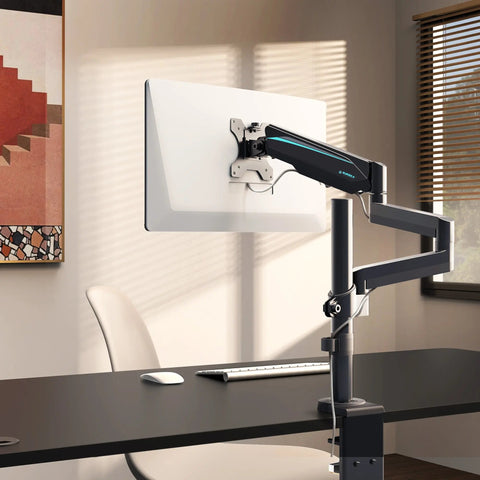
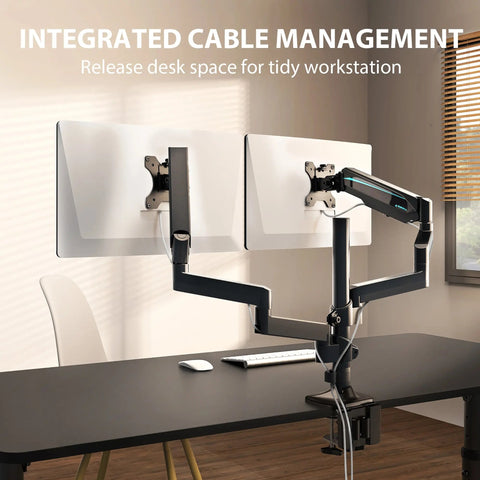
The most common mistake in home setups is placing a monitor directly on the desk surface. This almost always results in the top of the screen being below eye level, causing neck strain. Using a Single Monitor Arm allows for precise adjustment of height, tilt, and depth. This alignment is vital for maintaining a "Neutral Position," where the neck is straight and the shoulders are relaxed.
The Remote Manager’s Ergonomic Assessment Checklist
To ensure that equipment is being used correctly, managers should implement a periodic self-assessment for their teams. This checklist is derived from OSHA’s Evaluation Checklist and field-tested heuristics.
The "Quick Field Rules" for Managers:
- The Monitor Eye-Level Rule: When the employee is seated upright, is the top of the monitor at or slightly below eye level? If they are looking down, they are at risk for chronic neck flexion.
- The Lumbar Contact Check: Does the chair's lumbar support actually touch the curve of the lower back? Many adjustable supports are set too high, leaving the lower spine unsupported.
- The 90-Degree Angle Rule: Are the elbows, hips, and knees bent at approximately 90 degrees?
- The "Parallax" Check: Is the screen positioned at a distance that allows the user to read text without leaning forward? Typically, this is 20-30 inches (about one arm's length).
- The Cable Snag Test: For standing desks, are the cables long enough to accommodate the desk at its maximum height without tension?
Recommended Sit-Stand Schedule (Heuristic)
Based on the WHO 2020 Guidelines on Physical Activity & Sedentary Behaviour, standing is not "exercise," but an interruption of static behavior.
| Time Block | Activity | Ergonomic Goal |
|---|---|---|
| 0-20 min | Seated Work | Focus on lumbar support and 90-degree angles |
| 20-28 min | Standing Work | Engage core, improve blood circulation |
| 28-30 min | Micro-break | Walking or stretching to reset muscle tension |
Heuristic Note: This "20-8-2" ratio is a general baseline. Individuals with pre-existing back conditions or circulatory issues should consult a physiotherapist to customize their specific sit-stand intervals.
Bridging the Gap: Implementation Strategy for HR
Transitioning a hybrid workforce to a standardized ergonomic model requires a three-step approach:
- Standardization: Define a "Menu of Excellence." Instead of a raw stipend, provide a curated list of approved equipment, such as the Ark EX Executive Standing Desk (60"x26") for those needing storage, or the Opal Executive Standing Desk (66"x29") for larger workspaces.
- Education: Provide a brief "Ergonomics 101" session. Use resources like the Safe Work Australia Workstation Set-up Infographic to visualize the correct posture.
- Verification: Require a simple photo-based self-assessment or a manager-led brief using the checklist provided above. This ensures the investment actually translates into health outcomes.

For further reading on optimizing these setups, managers can refer to our guides on Setting Up Your Standing Desk for Peak Productivity and How to Choose an Executive Desk for Better Health.
By moving from a passive stipend model to an active assessment model, organizations can transform the home office from a liability into a high-performance environment. The goal is simple: ensure that the "office of the future" is as healthy as it is flexible.
Disclaimer: This article is for informational purposes only and does not constitute professional medical or legal advice. Ergonomic needs vary significantly based on individual physical health and pre-existing conditions. Always consult with a qualified healthcare professional or a certified ergonomics specialist before making significant changes to your workstation or work habits.
Sources
- BIFMA G1-2013 Ergonomics Guideline for Furniture
- CCOHS: Office Ergonomics - Sit/Stand Desk
- ISO 9241-5:2024 Workstation layout & postural requirements
- OSHA eTools: Computer Workstations - Evaluation Checklist
- Cornell University Ergonomics Web — Workstation Guides
- WHO 2020 Guidelines on Physical Activity & Sedentary Behaviour
- The 2026 Workstation White Paper: Converging Ergonomic Science and Sustainable Engineering




Leave a comment