

Before you drop serious money on an L-shaped desk for streaming, you need to answer a brutal but simple question:
Will all your gear actually fit, and still be ergonomic on camera?
This guide walks through a practical, measurements-first way to size an L-shaped desk for multi-monitor, mic, camera, and PC-heavy setups. We’ll translate ergonomic standards into streamer language, point out the traps that make “paper fits” fail in real life, and show where smart accessories turn a good L into a killer command center.
1. Start With the Right Question: Fit and Function
“Will my streaming gear fit?” isn’t just about surface area. You’re really asking three things:
- Will everything physically fit without collisions or overhangs?
- Can you keep an ergonomic posture for hours?
- Will the desk stay stable on stream (no camera shake, no wobble)?
According to the OSHA Computer Workstations guidance on desks, a proper workstation needs enough depth and height adjustment to let your shoulders stay relaxed, wrists neutral, and eyes level with the top of the screen. That’s written for office work, but the same rules apply when you’re locked into ranked matches or long recording sessions.
For streamers, an L-shaped desk adds two extra layers:
- The corner triangle and clamp setbacks eat into depth. Research from setup guides shows that 6–10 inches of apparent depth vanish once you add monitor and boom arm bases. One expert breakdown notes that this “dead zone” is the main reason so many L-desk layouts that look fine on paper fail once gear arrives.
- Heavy gear piled on one wing can cause wobble that shows up as subtle camera shake. Multiple reviewers have seen dual 27–32" monitors, arms, and a big PC on the short side exceed the wing’s practical load, creating flex that’s immediately visible on stream.
In other words: don’t just check the spec sheet. You need a layout plan.
2. Map Your Gear and Desk: The 10-Minute Measurement Drill
Before you commit to a desk, do a quick measurement session. You only need a tape measure and your current gear.
2.1 List your streaming gear by footprint
Separate desktop and under-desk items.
Typical desktop gear for streamers/gamers:
- Main keyboard + mouse / pad
- 2–3 monitors (sometimes a vertical chat or tools monitor)
- Mic on a boom arm
- Stream deck / control pad
- Speakers or audio interface
- Webcam or mirrorless camera on a mount
- Maybe a console or handheld dock
Typical under-desk gear:
- PC tower (ATX or bigger)
- UPS or power strip
- Cable tray, raceways
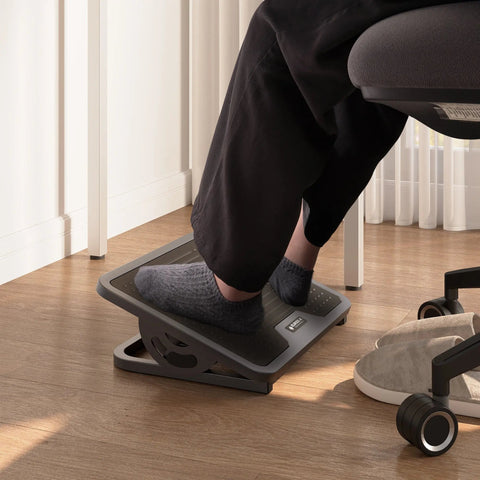
- Footrest
Now measure each item’s width × depth, and for monitors note diagonal size and whether you’ll use stands or arms.
2.2 Understand true usable depth on an L-shaped desk
The number one mistake with L-shaped streaming desks is trusting the published depth from wall to edge.
Two realities chew that up:
- Clamp setback: Monitor arms and mic arms usually need 2–3" of flat space from the desk edge to the clamp center.
- Corner radius & dead zone: Many L-desks have a rounded corner or a cutout. Plus, arms mounted near the corner collide if you try to stack them too close.
Practitioners who build multi-monitor streaming layouts daily report that this combination can remove 15–25% of the nominal depth for large curved monitors. In many setups, 6–10" of what looked like usable space becomes off-limits once the clamps and arm joints are in play.
Rule of thumb:
- For 27" monitors on their own stands, aim for ≥ 24" (60 cm) of real depth.
- For 32" or ultrawides on arms, aim for ≥ 28–30" (70–76 cm) along your main wing.
At the same time, ergonomics research, including the OSHA guidance on neutral working postures, suggests a viewing distance of about 20–40". Industry experts point out that pushing desk depth beyond ~32" can shove your monitors past this range. One in-depth ergonomic streaming guide notes that once your monitors sit further than roughly 30", you start leaning forward and losing stability and on-camera presence. So bigger isn’t always better.
2.3 Use a quick fit-check table
Here’s a practical asset you can apply directly to your own setup.
| Setup type | Monitors | Recommended main wing depth | Notes |
|---|---|---|---|
| Starter streaming | 1× 24–27" on stand | 23–24" (58–60 cm) | Fits keyboard, mouse, single light stand. Use corner wing for console or laptop. |
| Standard streaming | 2× 27" (one main, one chat/tools) on stands | 24–28" (60–71 cm) | Ensure at least 60 cm depth so the stands don’t force the keyboard to the edge. |
| Arm-based dual | 2× 27–32" on monitor arms | 28–30" (71–76 cm) | Reserve 2–3" for clamp setback; beware corner collision between arms. |
| Power user | 2× 27–32" + 1 vertical 24–27" | 28–32" (71–81 cm) | Third monitor should be offset to avoid extreme neck rotation; consider a dual stand + separate vertical arm. |
These depth ranges align with the viewing-distance guidelines described in ISO 9241-5:2024 and workstation guides from Cornell University’s Ergonomics Web, which recommend placing the screen roughly an arm’s length away for most adults.
3. Ergonomic Benchmarks: Using Standards to Size Your L-Desk
You don’t need to read full ergonomic standards cover-to-cover, but you can absolutely steal their best bits to avoid neck and back pain.
3.1 Height and posture: sit/stand logic for streamers
The Canadian Centre for Occupational Health and Safety (CCOHS) sit/stand guide advises that when standing, your desk height should place your forearms roughly horizontal, with elbows at about 90°, shoulders relaxed, and wrists straight. The top of the screen should sit at or slightly below eye level.
Cornell’s ergonomics group goes further and suggests a “20-8-2” rhythm: for every 30 minutes, sit for 20, stand for 8, move for 2. They emphasize that the goal is to avoid long static postures—exactly the trap long streams create.
For a streaming L-desk, this translates to:
- Check that the height range fits your body: BIFMA and ISO data typically aim to cover roughly the 5th to 95th percentile adult. If you’re very tall or very short, verify both seated and standing heights.
- If you use a sit-stand L, remember the CPU and cables must travel safely. A common pro mistake is mounting the tower on the floor or desktop; when the desk rises, cables snag. The safer play is:
- A knob-operated adjustable CPU holder under the desktop, so the PC moves with the desk.
- Or a mobile height adjustable CPU cart with extra cable slack.
Both options keep the tower ventilated and free to move, which directly fixes one of the common streaming errors: tight cables becoming the hard limit on how far you can raise your desk.
3.2 Viewing angles & neck health
The OSHA monitor positioning guide recommends placing the screen so the top line of text is at or slightly below eye level, with a viewing distance of about 20–40". It’s designed for office workers, but it maps perfectly to a main game monitor.
On an L-shaped desk with multiple displays:
- Put your primary gameplay monitor directly in front of you, centered with your torso.
- Place the chat/secondary monitor slightly off to the side but within roughly 30° of your straight-ahead line.
- Avoid building “monitor wings” at a 90° angle that force you into constant neck rotation—this is a major myth with L-desks.
Myth to debunk: “More monitors always improve a streaming layout.”
In reality, once you go beyond two primary screens and one vertical auxiliary, bezels and angles on an L-desk push screens into extreme peripheral positions. Streamers often underuse those outer panels while sacrificing central mouse and keyboard space.
3.3 Standing isn’t exercise
The World Health Organization’s 2020 physical activity guidelines recommend 150–300 minutes of moderate-intensity activity per week and emphasize reducing sedentary time and breaking up long periods of sitting. They explicitly warn that “reducing sedentary time” doesn’t automatically meet activity targets.
So a sit-stand L-shaped desk is a tool to reduce static sitting, not a replacement for movement. A 5-hour streaming block still needs micro-breaks, hydration, and off-desk movement.
4. Layout Patterns That Actually Work on L-Shaped Desks
Let’s get tactical. Here are layout archetypes that work well for streamers, plus where L-desks shine versus straight desks.
4.1 The “Main Wing = Game, Side Wing = Control” layout
This is the most stable pattern for dual-PC or heavy streaming rigs.
-
Main wing (front-facing):
- Keyboard, mouse, primary monitor(s) on stands or arms.
- Enough depth (see table above) so your forearms can rest on the desk without crowding.
-
Side wing:
- Audio interface, stream deck, extra controller, charging dock.
- Maybe a laptop or console, angled so you can glance without twisting.
This layout keeps your spine and camera angle neutral while letting your hands rest naturally on controls. It also balances weight: heavy devices like speakers or a secondary PC can sit on the side wing, avoiding overloading one section. Practitioners recommend avoiding more than about 60% of your total gear weight on a single wing to prevent flex and wobble.
4.2 The “Corner Command” layout
Here you sit diagonally facing the corner, with your primary monitor centered on that diagonal.
Pros:
- Super immersive feel.
- Symmetrical camera angle when the webcam is centered.
- Easy to mount a boom mic off either wing.
Cons:
- That corner radius and clamp spacing become critical. Two monitor arms and a boom arm can easily collide.
- The triangular dead zone behind the monitors becomes unreachable.
A practical trick from seasoned builders: mount your mic boom on the side wing edge, not right in the corner. Most mic arms need a 20–35 mm clamp throat and 40–70 cm reach. Clamping to the rear or side edge reduces visual clutter and keeps the arm out of frame until you swing it in.
4.3 Expert warning: “Reversible” L-desks aren’t always layout-flexible
Marketing often implies that a reversible L can do anything. Reality check: leg placement, crossbars, and under-desk trays can block ideal positions for mic arms, CPU mounts, or pedal boards in one orientation.
A lot of streamers discover this after assembly, when they realize:
- That crossbar sits exactly where their boom arm clamp needs to go.
- The CPU holder can’t fit on the side they want because a bracket occupies the area.
Use product photos and assembly diagrams to check where crossbars and support legs land before you commit to an orientation.
5. Under-Desk Strategy: CPU, Cables, and Wobble Control
A clean-looking L-shaped streaming setup almost always has one thing in common: the owner respected under-desk space as much as the desktop.
5.1 CPU placement: airflow vs. movement
A popular but risky habit is to shove the PC tower into the inside corner under the L, right against the walls or panels. Experienced builders have measured 5–10°C higher internal temps when an ATX case has poor rear and side clearance. That extra heat accelerates wear and cranks fan noise, which your mic will happily pick up.
Better options:
-
Adjustable CPU hanger under the desktop:
- Keeps the tower off the floor, away from dust and pet hair.
- Moves with the desk if you’re using a sit-stand frame.
- Frees floor space for footrests or pedals.
-
Mobile CPU cart:
- Lets the tower roll with you within a limited range.
- Easy access to front I/O and side panels.
- Works even if your desk isn’t designed for under-mounting.
With height-adjustable L-desks, pro builders recommend adding ~30% extra cable length to power and data leads so they stay slack throughout the entire travel. That single move solves most “desk won’t go higher” problems.
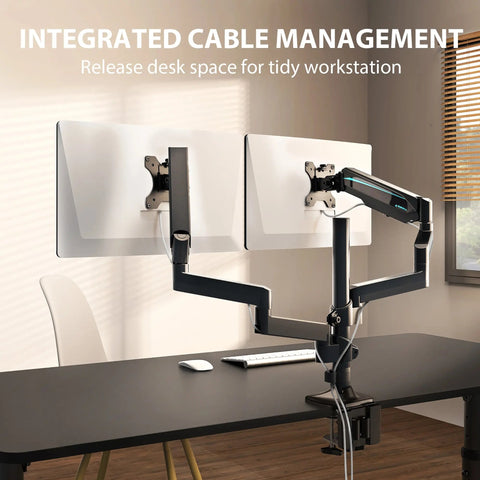
5.2 Cable management: not just cosmetic
A lot of people treat cable management as a visual choice. For L-shaped streaming rigs, it’s a functional requirement.
A common mistake is draping cables across the inner corner between wings. Those wires then act as a hard stop for your chair, mic arm, or legs. Real-world testing shows this can effectively shrink your usable desk span by a foot or more.
A practical cable strategy that works well:
- Route power cables from both wings into a central under-desk tray at the corner.
- Create a dedicated outfeed path for streaming-critical cables (audio, capture, camera) so they’re bundled and separated from high-voltage lines.
- Leave a service loop of slack near devices that move (mic arms, cameras, sit-stand portions).
OSHA’s work process guidance highlights that unnecessary reaching and constrained postures increase musculoskeletal risk. Clean cable paths are a simple engineering control to reduce those awkward reaches.
5.3 Stability and wobble: protect your camera
Desk wobble is more than a minor annoyance when your camera sits on a monitor or arm.
Key stability tips:
- Distribute load across both wings. Avoid stacking all your heaviest gear (dual monitors, tower, speakers) on the short wing.
- Keep heavy items close to legs or frame junctions. This reduces flex and sway at the edges.
- If you use a glass-topped L-desk, note that many common clamp-on arms need extra pads and can shift under heavy mouse use. That “cheap and big” choice can turn into extra spending on stands and still leave you with micro-movements during clutch plays.
For more on how frame design impacts wobble on standing vs fixed desks, you can cross-check the analysis in Desk Stability: Standing vs. Fixed-Height Desks.
6. Accessories That Unlock Space on an L-Shaped Streaming Desk
Once the base desk dimensions are right, smart accessories multiply your usable space without expanding your footprint.
6.1 Pull-out keyboard tray: reclaim depth for monitors
If your L-desk depth is borderline for dual monitors, a pull-out keyboard tray can be a quiet game-changer.
By moving the keyboard and mouse onto a tray, you:
- Free 4–6" of desktop depth for monitor stands or arms.
- Keep wrists in a more neutral position, closer to your body.
- Open up the main surface for stream decks, mixers, or notes.
A tray with two height options and adjustable pull-out length lets you tune it so your elbows stay near 90° in both sitting and standing positions. That lines up with the neutral posture described in OSHA’s neutral working posture guide.
6.2 Raised monitor stand: fix neck angle and storage
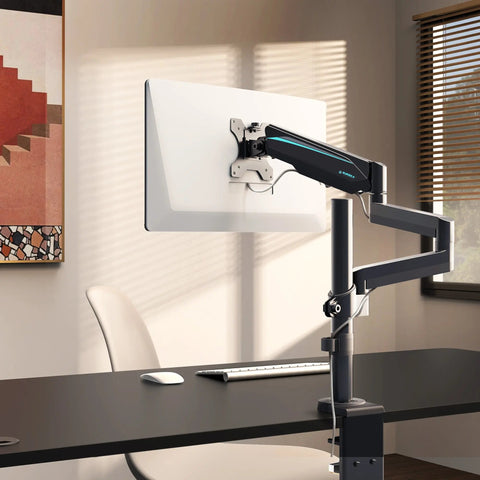
A dual monitor stand riser with a carbon fiber texture doesn’t just look clean; it serves three functional roles:
- Elevates monitors so the top line sits at or just below eye level.
- Creates storage underneath for your keyboard, notebook, or console controller.
- Adds a visual “tier” that reads well on camera.
Monitor stands also solve one silent problem: glass or thin desktops that can’t safely accept clamps. When you can’t use arms, a sturdy riser is often the most practical way to reach a healthy height.
6.3 Mic boom and light placement on L-desks
For mics and lights on an L-shaped desk:
- Clamp the mic boom along the rear edge of the side wing, not right at the corner. This avoids collisions with monitor arms and keeps the arm’s knuckles away from the camera.
- Glass-top L-desks with RGB look incredible on camera but can cause intense reflections. Experienced creators get around this by placing key lights 30–45° off-axis and using diffusion or flags to cut direct bounce into the lens.
6.4 When accessories cost more than upgrading the desk
Another reality: once you add a strong dual monitor arm, an under-desk mount, and multiple cable channels, you often spend 30–60% of the desk’s price again just to reach a “pro” fit.
That’s why it’s smart to design the layout and accessory plan before you buy. In some cases, stepping up to a slightly deeper or more stable L-desk saves more money (and headache) than trying to band-aid a cramped surface with hardware.
For additional ideas on combining desk design with productivity, you can pull concepts from Setting Up Your Standing Desk for Peak Productivity.
7. Quick Checklist: Will Your Streaming Gear Fit on This L-Shaped Desk?
Use this as a pre-purchase checklist before you hit checkout.
7.1 Desktop & monitor fit
- Measure desk main wing depth (D_main). Is it at least:
- 23–24" for 1× 24–27" on a stand?
- 24–28" for 2× 27" on stands?
- 28–30" for dual 27–32" on arms?
- Subtract 2–3" for clamp setback. Does your keyboard still have at least 8" of space in front of the monitor base?
- Check the corner radius. Will two arm bases fit without touching when placed near the corner?
- Count monitors: try to cap at 2 primary + 1 auxiliary vertical unless you have a very wide main wing.
7.2 Posture and height
- Confirm the desk height range lets your elbows stay around 90° in both sitting and standing.
- Ensure your main monitor can sit so the top of the screen is at or slightly below eye level, following OSHA’s monitor guide.
- If you plan a sit-stand L, plan CPU mounting (hanger or mobile cart) so all cables move freely.
7.3 Weight, wobble, and stability
- Estimate total load: tower, monitors, arms, speakers. Avoid more than about 60% of that mass sitting on one wing.
- Place heavy items near legs or frame junctions, not at the far corners.
- If your camera mounts to the monitor, tap-wobble test the desk and watch how much the monitor shakes.
7.4 Under-desk & cable management
- Plan a central under-desk power tray at the corner to collect power bricks.
- Separate signal cables (audio, capture, camera) into their own bundled path.
- Add ~30% slack to all cables that cross moving sections or support arms.
7.5 Lighting and camera
- Identify where you’ll mount or place key and fill lights without hitting monitor bezels.
- If you have a glass or glossy top, plan lights at 30–45° off-axis to avoid reflections.
If you can check off most of this list, your streaming gear is very likely to fit and perform well on the L-shaped desk you’re eyeing.
8. Wrapping Up: When an L-Shaped Desk Is the Right Call
An L-shaped desk can absolutely be a powerhouse for streaming and multitasking—if you treat it as a 3D puzzle, not just a surface.
Key takeaways:
- Don’t trust surface area alone. Corner dead zones and clamp setbacks can eat 6–10" of depth.
- Use ergonomic standards as guardrails. Guidance from sources such as OSHA, CCOHS, and WHO ensure your layout fits your body, not just your gear.
- Balance the whole system. CPU placement, cable slack, load distribution, and accessory choice all decide whether your L-desk feels rock-solid or finicky on stream.
- Plan once, tweak forever. Take 10–15 minutes to measure and sketch your layout before you buy. It saves hours of frustration and extra accessory costs later.
If you want to go deeper on optimizing a height-adjustable L setup, you can pair this guide with the posture and workflow tips in Setting Up Your Standing Desk for Peak Productivity and the broader wellness context from The Business Case for Standing Desks: A Boost to Employee Wellness.
FAQ: L-Shaped Desks for Streaming & Multitasking
Q1: Is an L-shaped desk better than a straight desk for streaming?
An L-shaped desk often helps when you need separate zones for gaming and controls, or when you run dual PCs. It lets you keep your main gameplay directly in front of you while parking audio interfaces, stream decks, and secondary devices on the side wing. For minimal setups with one or two monitors and a single PC, a well-sized straight desk can be just as effective.
Q2: How many monitors are practical on an L-shaped streaming desk?
For most people, two primary monitors plus one auxiliary vertical screen is the sweet spot. Beyond that, bezels and extreme angles force you to twist your neck or sacrifice central mouse space. This aligns with ergonomic recommendations to limit neck rotation and keep key displays within 30° of your natural line of sight.
Q3: Can I put my PC tower on the desktop of an L-desk?
You can, but it eats valuable surface area and raises the center of gravity on that wing. Many streamers prefer under-desk CPU hangers or mobile carts to keep the tower ventilated, out of the way, and moving safely with the desk if it’s height-adjustable.
Q4: Are sit-stand L-shaped desks worth it for streaming?
Evidence summarized in a Cochrane review on sit-stand desks shows that sit-stand workstations reduce sitting time by roughly 84–116 minutes per day, but long-term health outcomes are less clear. For streamers, a sit-stand L is most valuable as a way to break up static sitting and adjust posture throughout long sessions, especially when combined with micro-breaks and short walks.
Q5: What’s the fastest way to know if a specific L-shaped desk will fit my rig?
Measure your current layout, then sketch the desk top-down with real dimensions. Place outlines for each monitor, keyboard, and tower on that drawing. Don’t forget to subtract 2–3" along clamp edges and leave clearance around the corner. If anything ends up on the very edge of the desk or forces your keyboard to dangle off the front, you need a deeper main wing or better accessories.
Disclaimer: This article is for informational purposes only and does not constitute medical, ergonomic, or occupational health advice. Workspace needs vary widely by individual. If you have existing musculoskeletal pain, chronic conditions, or other health concerns, consult a qualified healthcare or ergonomics professional before making significant changes to your workstation or activity patterns.




Leave a comment