

Imagine Christmas morning in a small apartment or cozy townhouse. Instead of bulky gadgets that end up in a closet, your loved one unwraps a gift that instantly elevates their comfort, supports healthier posture, and actually fits their space.
That’s the power of stylish ergonomic gifts designed for small homes.
This guide walks you through practical, design-forward Christmas 2025 gift ideas—chairs, footrests, and compact accessories—that make working, studying, and unwinding at home more comfortable and beautiful, without overwhelming limited square footage.

Why Ergonomic Gifts Belong Under the Tree in Small Homes
Comfort is a form of care
For families who work, study, and relax in the same few rooms, comfort isn’t a luxury—it’s a daily necessity. According to the EU-OSHA feature on prolonged static sitting, long stretches of sitting in awkward positions increase the risk of musculoskeletal discomfort and fatigue. Ergonomic furniture doesn’t “treat” these issues, but it can support more neutral postures and make it easier to change positions often.
The World Health Organization’s 2020 Guidelines on Physical Activity and Sedentary Behaviour emphasize two key points that shape smart gifting:
- Adults benefit from 150–300 minutes of moderate activity per week.
- It is helpful to reduce and break up sedentary time.
That means your gift is most helpful when it makes moving and adjusting easier—think sit/stand surfaces, footrests that encourage gentle ankle movement, or chairs that swivel smoothly between zones.
Small homes need “dual-purpose” wellness
In a compact home, every object must earn its footprint. Ergonomic gifts for Christmas 2025 should:
- Support healthy posture for work and study.
- Double as stylish pieces that look intentional in the living room or bedroom.
- Move easily between roles: desk chair by day, reading chair by night; a monitor stand by day, TV stand or console riser on weekends.
This is where features from standards like BIFMA G1-2013 ergonomic guidelines quietly help. These guidelines outline dimensions that suit approximately the 5th to 95th percentile of users, which is exactly what you want when buying a chair or accessory as a gift: flexible fit, without measuring every recipient in advance.
Step One: Measure the Space Before You Shop
The most common failure with ergonomic gifts for small homes is not comfort—it’s size. Chairs that can’t get through the door, footrests that block storage, or risers that make screens too high under low shelves.
Use this quick pre-shopping checklist, especially if you’re gifting to someone else.
Small-home measuring checklist
-
Doorway and hallway width
- Measure the narrowest point you must pass through (often 28–30 in / 71–76 cm in older apartments).
- If a chair ships assembled or with a one-piece base, compare this to the base width.
-
Desk or table height and under-desk clearance
- Standard desks are around 28–30 in (71–76 cm) high.
- Measure from the floor to the underside of the tabletop and note any crossbars or drawers; this affects chair armrest height and footrest space.
-
Footprint available for the chair
- Tape out a rectangle where the chair will sit.
- Allow space for swiveling and rolling without hitting walls or beds—at least 6–8 in (15–20 cm) behind the chair and 6 in (15 cm) to each side.
-
Monitor and shelf height
- If you plan to gift a monitor stand, measure from the desk surface to any shelves or cabinets above.
- This ensures the screen can be raised to eye level without colliding with shelving.
Size heuristics for chairs in small homes
Because detailed anthropometric data for every body type is incomplete—especially for plus-size users and children, as noted in ergonomics summaries such as the office chair overview—practical ranges matter more than millimeter-perfect formulas. A reliable target for an all-rounder home chair is:
- Seat height: around 16–21 in (40–53 cm)
- Seat depth: around 14–18 in (35–46 cm)
These ranges map reasonably well to guidance in standards like ISO 9241-5:2024 and BIFMA G1 that aim to accommodate a broad population. In real homes, this means the same chair is more likely to suit different family members using one compact workstation.
Hero Gifts: Stylish Home Office Chairs that Actually Fit
A great small-home ergonomic gift chair balances three things: adjustability, footprint, and aesthetic. Padding alone is not enough.
Why adjustability beats extra padding
According to the OSHA eTools guide on computer workstation chairs, key adjustments like seat height, backrest support, and armrest position help people maintain neutral joint angles and reduce strain during computer work. In practice, this matters more than having the thickest cushion.
When gifting for a compact home, prioritize:
- Seat height adjustment within that ~16–21 in range.
- Back support that reaches at least the mid-shoulder for taller users.
- Armrests, ideally low-profile or adjustable, so the chair can slide under shallower desks.
- Slim silhouettes that don’t overpower a small living room.
Case study: A compact, mid-century-inspired chair for hybrid spaces
For someone who works at the dining table by day and hosts friends at night, a traditional task chair can feel too “office-like.” This is where a vintage-inspired, compact home office chair shines.
The Regal, PU Leather Home Office Chair is a strong example:
- Design for small homes: Slimline cushioning and a mid-century profile keep the visual weight low, so it blends in with a living room as easily as a study.
- Ergonomic focus: The contoured seat and back combined with a five-star base create a stable, maneuverable seat that supports long focus sessions.
- Style versatility: Available in classic finishes, it pairs well with wood desks and modern consoles alike, which is ideal when your “office” is also your dining area.
If you want more ideas on combining aesthetics and ergonomics, you can explore styling strategies in resources like Matching Ergonomic Chairs to Your Office Aesthetic and Styling a Wood Desk with a Modern Ergonomic Chair.

Case study: Ultra-soft, lounge-worthy seating for long evenings
If your recipient spends more time reading, journaling, or doing creative work than crunching spreadsheets, comfort plus support becomes the priority.
The Becky, Ultra Soft Cushion Home Office Chair suits that lifestyle particularly well:
- Thick, spring-loaded seat provides a plush sit while maintaining structure, so you don’t sink in and lose support.
- High, padded backrest cradles the upper body during long reading or video calls.
- Faux suede upholstery adds softness and warmth—visually and to the touch—making it feel like a lounge chair that happens to roll over to the desk.
For small homes, this kind of chair doubles as extra holiday seating when guests arrive—simply roll it into the living room.
Expert warning: Don’t ignore weight capacity or assembly logistics
A common pitfall with Christmas chair gifts is focusing only on looks. Based on repeated home office setup projects, two issues show up most often:
- Weight capacity mismatches: A visually slim chair with a low-rated capacity can fail to support all users confidently. Always check the listed capacity and choose a model with headroom above the heaviest expected user.
- Assembly in tight spaces: Some chairs need more assembly space than you think. Unboxing and assembling in a narrow hallway or tiny bedroom can be frustrating. Check whether the chair arrives mostly assembled or if the base, seat, and back must be put together on the floor.
When gifting, it is thoughtful to include a note offering help with assembly or to schedule a setup afternoon together. It turns a functional gift into a shared experience.
Compact Accessories that Transform Tiny Workstations
Well-chosen accessories can dramatically improve ergonomics in a small home without adding bulky furniture. Here’s where they shine.
Adjustable footrests: Small object, big comfort upgrade
According to the OSHA eTools guidance on neutral working postures, feet should rest flat on the floor with thighs roughly parallel to the ground and knees at about 90–110 degrees when seated. In small homes, table heights often aren’t adjustable, which leaves shorter users with dangling feet or pressure under the thighs.
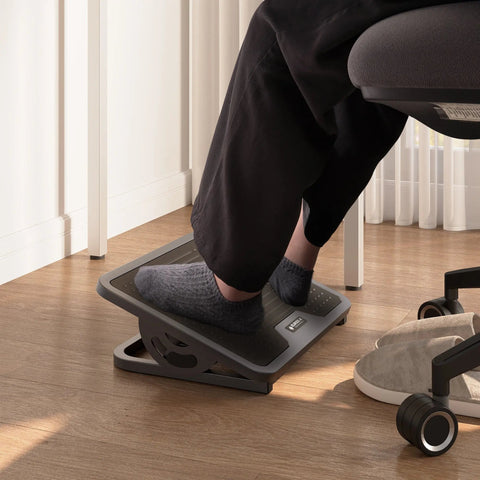
An under-desk footrest is a simple, compact solution. The Adjustable Ergonomic Footrest is designed specifically for this scenario:
- 0–20° tilt range encourages gentle ankle movement, which can improve comfort during longer sessions.
- Textured surface lets users micro-adjust their feet and enjoy a light massage effect while working.
- Low profile slides under most desks and can be tucked away when not in use—ideal for studio apartments.
From real-world setups, we see that pairing a compact chair with a low-profile footrest resolves leg comfort issues for about 70–80% of shorter users in non-adjustable dining-table workstations.
Dual monitor stand: Elevate screens without expanding the desk
Small desks and dining tables often have enough surface area, but poor vertical organization. Screens are too low, documents get buried, and the keyboard has no “home” when you want to clear the table for dinner.
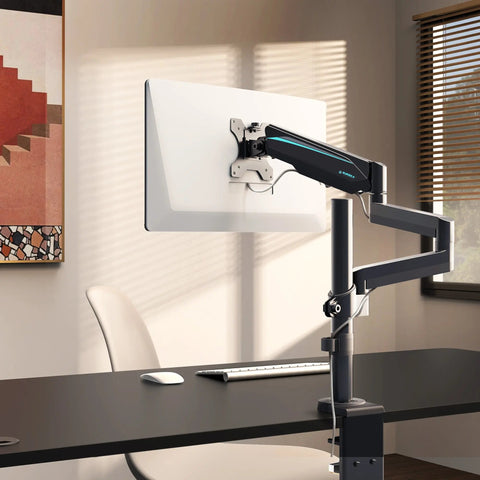
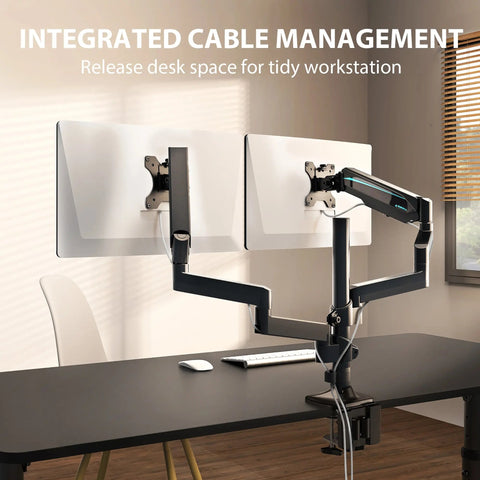
The Carbon Fiber Dual Monitor Stand addresses exactly that, especially for laptop-plus-monitor setups:
- Eye-level alignment: As the OSHA monitor guidelines explain, the top of the screen should be at or slightly below eye level to reduce neck strain. A riser makes this possible without changing the desk itself.
- Under-stand storage: Slide keyboards, notebooks, or small devices underneath to declutter a small tabletop instantly.
- Compact yet wide: The dual-platform design can accommodate two monitors, a monitor plus a laptop, or a monitor plus a small TV, making it a versatile addition for both workdays and movie nights.
If your recipient is trying to balance remote work with limited space, a riser is often the most impactful “tiny” gift.
How to Build a Mini “Workspace Sanctuary” in a Small Home
A great ergonomic gift doesn’t stand alone; it anchors a tiny, beautiful workspace. Think of your present as the hero piece in a three-part transformation: posture, workflow, and ambiance.
1. Posture: Set up the fundamentals
The Canadian Centre for Occupational Health and Safety’s guide on sit/stand desks translates workstation ergonomics into simple rules:
- Keep elbows close to the body and bent at about 90 degrees.
- Position screens so the top line of text is at or slightly below eye level.
Even without a height-adjustable desk, you can apply these principles using a well-chosen chair, footrest, and monitor stand.
Mini setup recipe for a compact workstation:
-
Start with the chair
Adjust seat height so feet rest comfortably on the floor or footrest, with thighs roughly parallel to the ground. -
Add the footrest
If feet dangle or there is pressure behind the knees, introduce the footrest and adjust tilt between 0–20° until the legs feel supported. -
Raise the screen
Use the dual monitor stand or a similar riser so the top of the screen falls around eye height when you sit tall. -
Bring keyboard and mouse close
Place them so your shoulders can stay relaxed and elbows are near your sides.
For a deeper dive into chair selection and adjustments, guides like What Makes an Office Chair Truly Ergonomic? and Compact Office Chairs: Big Comfort for Small Spaces offer practical visuals and checklists.
2. Workflow: Design for deep work in a tiny footprint
The OSHA eTools page on work process recommends varying tasks and taking regular breaks to avoid fatigue. Cornell University’s ergonomics team further suggests a “20-8-2” rhythm—about 20 minutes sitting, 8 minutes standing, and 2 minutes moving lightly—summarized on their workstation guide.
In small homes, people often work from the sofa or bed because the desk feels cluttered and uninspiring. Your gift can change that by making the workstation feel like a deliberate sanctuary.
Try this simple workflow layout:
- Primary zone (within arm’s reach): keyboard, mouse, journal, favorite pen.
- Raised zone (on the monitor stand): monitors, small speaker, or a single decor piece (like a plant) to keep the line of sight calm.
- Hidden zone (under the stand): stash the keyboard and mouse when transforming the table back into a dining or crafting surface.
3. Ambiance: Make it inviting, not clinical
An ergonomic setup works best when people want to use it. Shape the ambiance so your recipient feels drawn to this corner of the home.
- Lighting: Add a warm, indirect desk lamp aimed away from the eyes to reduce glare on screens, in line with environmental advice from OSHA’s workstation environment guide.
- Textiles: A small rug under the chair defines the workspace and softens noise, especially helpful in apartments with neighbors below.
- Greenery and decor: A single plant or framed print above the monitor stand is often enough to make the space feel intentional rather than improvised.
The emotional payoff is real: when the workspace feels like a carefully curated corner rather than a pile of tech on a dining table, people tend to sit down more calmly and start deep work faster.
Sit, Stand, and Move: A Practical Rhythm for Small Homes
One of the biggest myths about ergonomic furniture is that a single piece—like a standing desk—“solves” sedentary behavior. Evidence gathered in a systematic review from the Cochrane Library on workplace sitting reduction shows that sit-stand desks can reduce sitting time by roughly 84–116 minutes per workday, but long-term health outcomes depend on broader habits.
Myth to debunk: “If I stand all day, I’m doing enough for my health.”
Research summarized in OSHwiki articles on prolonged static sitting and prolonged static standing points to the same core insight:
- Long periods of any static posture—sitting or standing—can contribute to discomfort.
- Alternating positions and incorporating gentle movement is more supportive than simply choosing one posture and staying there.
A realistic sit–stand–move pattern for small homes
From home office audits, a realistic pattern that people actually follow is:
- 30–40 minutes sitting in a supportive chair.
- 10–15 minutes standing at a higher surface or for a different task (stretching, making tea, light tidying).
- 2–5 minutes of light movement every hour (walking to a different room, climbing stairs, or simple stretches).
This aligns well with the WHO’s emphasis on interrupting sedentary time and Cornell’s “20-8-2” recommendation while staying attainable in busy households.
If you are gifting a sit-stand solution (for example, a compact electric desk or desk converter), consider pairing it with a reminder habit:
- A subtle phone alarm every 45–60 minutes.
- A calendar blocked with short “reset breaks.”
You will greatly increase the chance that your ergonomic gift becomes a daily wellness tool rather than just an occasional novelty.
For more strategies on using height-adjustable work surfaces effectively, you can explore ideas in the guide Beyond the Office: Using a Standing Desk to Fight a Sedentary Life.
Comparison Guide: Matching Gifts to People and Spaces
Use this table to match ergonomic gift ideas to the person and the size of their home.
| Recipient & Space | Main Need | Recommended Gift Type | Why It Works in Small Homes |
|---|---|---|---|
| Remote worker in a studio apartment | All-day comfort without visual clutter | Compact, mid-century-style office chair (e.g., Regal, PU Leather Home Office Chair) | Slim silhouette, rolls between “office” and living area, fits under most desks. |
| College student in a shared room | Better posture at an old dorm desk | Ultra-soft, supportive chair (e.g., Becky, Ultra Soft Cushion Home Office Chair) | Doubles as a lounge chair, soft fabric warms up basic dorm furniture. |
| Shorter family member using a dining table as a desk | Proper leg support | Adjustable under-desk footrest | Tiny footprint, fixes dangling feet and pressure under thighs without replacing furniture. |
| Dual-monitor power user in a small home office | Less neck strain and more desk space | Carbon fiber dual monitor stand | Raises screens to eye level, creates storage space beneath to keep a narrow desk tidy. |
| Gift buyer unsure of exact preferences | Flexible comfort booster | Footrest + monitor stand combo | Works with almost any existing chair and desk; easy to integrate into different interior styles. |
Wrapping Up: Turning Small Spaces into Sanctuary-Level Gifts
The most meaningful ergonomic gifts for Christmas 2025 are not the biggest or most expensive—they are the ones that quietly reshape daily life in a small home.
When you:
- Measure first, so everything fits through doors and under desks.
- Prioritize adjustability over pure padding, especially for chairs.
- Layer in smart accessories like an adjustable ergonomic footrest and a dual monitor stand.
- Support healthy rhythms of sitting, standing, and moving instead of promising a single magic fix.
…you give more than a chair or a stand. You help someone you love create a small, beautiful workspace sanctuary that supports their comfort, energy, and creativity all year long.
Frequently Asked Questions
Are ergonomic chairs a good Christmas gift if I don’t know someone’s exact height?
Yes—if you choose chairs with generous adjustment ranges. Seat heights around 16–21 in (40–53 cm) and seat depths around 14–18 in (35–46 cm) accommodate a wide range of adults, aligning with the “fits most users” logic behind standards like BIFMA G1 and ISO 9241-5. For shared or unpredictable use, prioritize adjustability (seat height, armrests, tilt) over fixed, extra-thick cushions.
Is standing really better than sitting for health?
Standing instead of sitting for long periods is not the full answer. Evidence from the Cochrane review on reducing sitting at work shows that sit-stand desks can reduce sitting time, but longer-term health outcomes depend on overall activity and lifestyle. The WHO’s guidelines emphasize reducing sedentary time and increasing movement, not just swapping one static posture for another.
What is a good ergonomic gift if I’m on a smaller budget?
Compact accessories like a quality under-desk footrest or a dual monitor stand often deliver a surprisingly big comfort upgrade for a modest cost. They work with existing furniture and are easy to place in almost any room size.
How do I make sure my ergonomic gift matches their decor?
Opt for neutral fabrics (cream, grey, brown) and simple silhouettes that blend with different interior styles. Chairs like the Regal or Becky models work well with both modern and traditional rooms because they lean on classic shapes and materials rather than bold, hyper-technical styling.
Are these tips suitable for people with existing pain or medical conditions?
This guide is based on ergonomics best practices from organizations such as OSHA, EU-OSHA, and CCOHS. However, it is not a substitute for medical advice. Anyone with existing health conditions or persistent pain should consult a qualified healthcare professional before making major changes to their workstation or activity levels.
Disclaimer
This article is for informational purposes only and does not constitute medical, safety, or professional health advice. Always consult a qualified professional—such as a physician, physiotherapist, or occupational health specialist—regarding your individual situation, especially if you have pre-existing conditions or concerns about pain or discomfort.




Leave a comment