

Gifting Spinal Relief: Why Lumbar Support is a Wellness Essential
The mid-afternoon "slump" is rarely just a matter of mental fatigue. For millions of professionals and remote workers, it is a physiological response to the cumulative strain of static loading. As the workday progresses, the dull ache in the lower back often intensifies, leading to a frantic search for a more comfortable position that simply does not exist in a standard chair. This widespread health concern has transformed ergonomic equipment from office utility into a high-value wellness gift.
While traditional "comfort" gifts like blankets or candles provide temporary sensory relief, gifting lumbar support addresses the biological root of work-related discomfort. This article explores the physical principles of spinal health, the scientific mechanisms behind effective lumbar support, and why personalized ergonomic solutions are the most thoughtful investment for long-term well-being.
The Physiological Reality of the "Sitting Disease"
The human spine is not designed for the sustained, static postures required by modern computer work. When seated, the natural inward curve of the lower spine—known as lumbar lordosis—tends to flatten or even reverse into a "C-shape" (kyphosis). This postural shift increases the internal pressure on the intervertebral discs by up to 40% compared to standing.
According to the World Health Organization (WHO) 2020 Guidelines on Physical Activity and Sedentary Behaviour, reducing sedentary time and interrupting long periods of static behavior are critical for reducing risks of cardiovascular disease and musculoskeletal disorders (MSDs). Prolonged sitting without adequate support leads to "static load," where muscles remain in a state of constant, low-level contraction. This restricts blood circulation, leading to the accumulation of metabolic waste products and the eventual onset of chronic pain.
The Lumbar Mechanism: L2 to L4
The most critical area for support is the region between the second and fourth lumbar vertebrae (L2-L4). In clinical observations, it has been noted that most generic cushions fail because they are static and do not accommodate individual spinal curves. Effective support must create approximately 20-30mm of anterior displacement at the lumbar spine to maintain natural lordosis. Without this specific mechanical intervention, the pelvis tends to tilt backward, causing the spine to slump and the neck to crane forward to compensate—a phenomenon often called "tech neck."

The "One-Size-Fits-All" Myth in Ergonomic Gifting
A common misconception in the gift market is that a single, fixed lumbar support will work for everyone. However, research indicates that lumbar curvature varies by 30-50% between individuals. A fixed support that feels "perfect" for a 185cm tall user will likely hit a 150cm tall user in the mid-back (thoracic region), potentially causing more harm than good.
Scenario Modeling: The Petite Remote Worker
To demonstrate the necessity of adjustability, we modeled the ergonomic requirements for a petite female remote worker (150cm height). Standard office furniture is typically designed for the 50th percentile male, creating a significant "ergonomic gap."
Modeling Note (Reproducible Parameters): This analysis uses a deterministic model based on ANSI/HFES 100-2007 5th percentile female data.
Parameter Value Unit Rationale User Stature 150 cm 5th percentile female Standard Desk Height 73.7 cm Typical fixed office desk (29 inches) Ideal Desk Height 62.0 cm Calculated ergonomic height for 150cm stature Ergonomic Gap 11.7 cm The mismatch forcing poor posture Ideal Lumbar Target 20-25 cm Height from seat surface to L2-L4 vertebrae
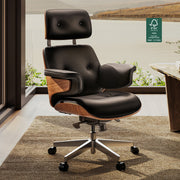
For this user, a standard chair forces a "Chair Height Paradox": she must raise the chair to reach the desk, causing her feet to dangle and increasing pressure on the thighs, which further destabilizes the lumbar spine. This is why a gift like the Flex, Dual-Backrests Ergonomic Office Chair is transformative. Its dual-backrest design moves independently to adapt to the user's specific shape, providing targeted support even for those who fall outside the "standard" height range.
The Solution: Dynamic Support Ecosystems
Gifting spinal relief requires a shift from static objects to dynamic systems. As detailed in The 2026 Workstation White Paper: Converging Ergonomic Science and Sustainable Engineering, the future of office wellness lies in equipment that responds to human movement rather than forcing the human to adapt to the furniture.
1. The Dynamic Chair
The Flex, Dual-Backrests Ergonomic Office Chair represents a departure from traditional rigid backrests. By utilizing two independent sections, the chair maintains contact with the lumbar region even during recline or lateral movement. This aligns with the Canadian Centre for Occupational Health and Safety (CCOHS) recommendations for frequent posture changes to prevent static muscle fatigue.
2. The Foundation: Footrests
For many, back pain starts at the feet. If the feet are not firmly planted, the pelvis cannot remain in a neutral position. The Adjustable Ergonomic Footrest or the Footstool with Wheels allows users—especially those on the shorter end of the spectrum—to maintain a 90-degree knee angle without sacrificing desk height. This "grounding" of the lower body is a prerequisite for any lumbar support to function correctly.

3. Visual Alignment: Monitor Arms
Lumbar support is often compromised by poor screen placement. If a monitor is too low, the user will naturally lean forward, pulling their back away from the chair's support. Using a Single Monitor Arm ensures the screen is at eye level, encouraging the user to stay "locked in" to the ergonomic backrest.
The ROI of Ergonomics: Health as an Investment
Gifting ergonomic equipment is not just a gesture of care; it is a gift of productivity and economic value. When we modeled the impact of ergonomic interventions for a remote professional, the results suggest that "comfort" pays for itself.
Analysis: Estimated Productivity & Health ROI Based on a professional earning $30/hour with a 12% productivity uplift derived from Texas A&M research on ergonomic workstations.
- Annual Productivity Gain: ~$2,700 (based on 250 work days).
- Metabolic Benefit: Switching to a sit-stand rhythm can burn an extra ~21,000 kcal/year—the equivalent of roughly 6 lbs of fat loss.
- Investment Payback: A high-quality ergonomic chair typically pays for itself in under 4 months through gained efficiency and reduced downtime from pain.
Practical Recommendations: How to Set Up for Relief
If you are gifting (or receiving) ergonomic support, follow these professional heuristics to ensure the equipment is used effectively.
The "Finger Test" for Lumbar Depth
Many users make the mistake of over-adjusting lumbar supports, creating excessive pressure that can actually worsen disc compression.
- The Rule: Sit upright with your back against the support.
- The Test: Try to slide two fingers between the lumbar support and your lower back.
- The Result: If two fingers fit snugly but comfortably, the depth is appropriate. If you cannot fit your fingers, the support is too aggressive; if there is a large gap, the support is insufficient.
The 20-8-2 Rhythm
According to Cornell University Ergonomics Web, the ideal work rhythm is not standing all day, but a balanced cycle:
- 20 Minutes Sitting: In a neutral position with active lumbar support.
- 8 Minutes Standing: To encourage blood circulation and change muscle engagement.
- 2 Minutes Moving: A micro-break to stretch and reset the visual system.
Proper Chair Adjustment Checklist
Aligned with OSHA eTools for Computer Workstations, ensure these four points are met:
- Seat Height: Thighs should be horizontal, and feet flat on the floor (or footrest).
- Backrest: Should support the natural curve of the lower back (L2-L4).
- Armrests: Should allow shoulders to remain relaxed while elbows are at a 90-degree angle.
- Seat Depth: Leave a 2-3 finger gap between the edge of the seat and the back of your knees to prevent circulation cutoff.

A Legacy of Wellness
Gifting a high-performance chair or an adjustable footrest is more than a seasonal gesture; it is an intervention in the recipient's daily quality of life. By choosing products that adhere to BIFMA G1-2013 Ergonomics Guidelines, you ensure the gift provides a fit for a wide range of body types, from the 5th to the 95th percentile.
In a world where work-from-home burnout and chronic back pain are reaching record levels, the most thoughtful gift is the one that removes the physical barriers to focus. When the spine is supported, the mind is free to work.
YMYL Disclaimer: This article is for informational purposes only and does not constitute professional medical advice, diagnosis, or treatment. Always seek the advice of your physician or other qualified health provider with any questions you may have regarding a medical condition or back pain.
References
- WHO 2020 Guidelines on Physical Activity & Sedentary Behaviour
- CCOHS: Office Ergonomics - Sit/Stand Desk
- BIFMA G1-2013 Ergonomics Guideline for Furniture
- OSHA eTools: Computer Workstations - Neutral Working Postures
- Cornell University Ergonomics Web — Workstation Guides
- The 2026 Workstation White Paper: Converging Ergonomic Science and Sustainable Engineering
- Cochrane: Workplace interventions for reducing sitting at work (2018)

Leave a comment