

Manual recliner vs power lift recliner comes down to one question: do you mainly want a simpler lounging chair, or do you need help getting up? In a manual vs power recliner comparison, manual models usually win on simplicity and placement flexibility. Power lift recliners make more sense when sit-to-stand effort is the real problem and the added cost is justified by convenience.

Manual vs Power Lift Recliners at a Glance
| Factor | Manual Recliner | Power Lift Recliner | Who It Tends To Suit |
|---|---|---|---|
| Effort to use | You recline with a lever, handle, or body pressure | You use a button and motorized movement | Manual for buyers who want a simple chair; power lift for users who want less physical effort |
| Mobility assistance | No lift assistance | Can help reduce sit-to-stand effort | Power lift for people who struggle standing up from a chair |
| Outlet dependence | No outlet needed | Needs a nearby outlet | Manual for flexible placement; power lift for a fixed spot near power |
| Noise | Usually quieter because there is no motor | May add motor noise | Manual for quieter rooms or minimal hardware |
| Maintenance complexity | Fewer powered parts to think about | More components because of the motor and controls | Manual for buyers who want fewer dependencies |
| Budget fit | Usually the simpler value choice | Usually costs more because of the powered mechanism | Manual for budget-first shoppers; power lift when assistance matters more than price |
Model features still vary, so the chair type is only the starting point. The best fit also depends on seat height, room layout, and whether the person using it wants lounging comfort or real stand-up help.

If you are comparing a manual vs power recliner for the first time, the cleanest shorthand is this: manual is usually the simpler chair, while power lift is the one that adds stand-up help. That difference matters most when the chair has to fit a specific room and a specific routine.
How the Two Recliner Types Work
A manual recliner works through a lever, handle, or body-pressure mechanism. In practical terms, that means you provide the movement yourself. The upside is easy placement, because the chair does not need to sit near an outlet to function Consumer Reports' manual recliner overview.
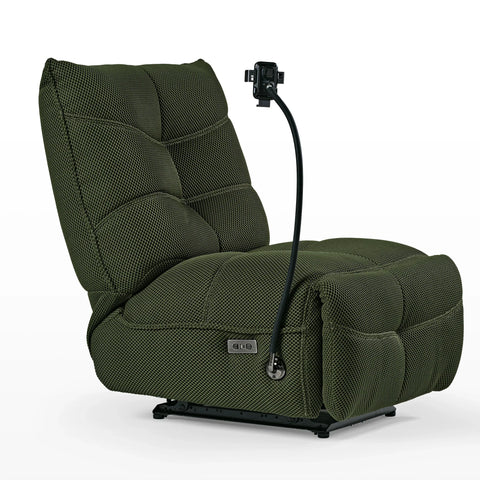
A power lift recliner uses a motor and button controls to change position. That makes the chair easier to operate for users who want less effort when standing, sitting back, or moving between positions. Research on assistive seats shows that lifting help can reduce the torque demanded at the knee and hip during sit-to-stand transitions assistive seat research.
What that means for shoppers is simple: if you mostly want a chair for TV, reading, or occasional reclining, manual may be enough. If standing up is the hardest part of the routine, the power lift mechanism is the feature that changes the buying decision.
Tradeoffs in Cost, Noise, and Maintenance
The biggest budget difference is usually not subtle. Manual recliners are often easier on the wallet because the mechanism is simpler, while power lift recliners add a motor, controls, and electrical dependence. For shoppers comparing value, that extra complexity should be tied to a real need, not just the appeal of more features.
Noise is another practical split. Manual chairs are generally quieter because they do not use a motor. Powered chairs may be quiet enough for most homes, but they can still add a small layer of motor sound during movement. If you are choosing for a bedroom, nursery-adjacent space, or a household that notices mechanical noise easily, that difference can matter.
Maintenance and power dependence are the other tradeoff. A powered chair has more to think about because it depends on cords, controls, and a motorized system. A manual chair avoids that electrical dependency, which can make placement and day-to-day use simpler. As a budget checkpoint, Medicare guidance draws a clear boundary here: when coverage applies, it is generally for the lift mechanism as durable medical equipment, not the full furniture portion Medicare lift chair coverage. If the chair is being bought as furniture first, do not assume the powered version will be partly covered.
For most shoppers, the practical comparison is straightforward. A manual vs power recliner choice usually comes down to how much you value simplicity versus how much you need standing help.
Which Chair Fits Your Mobility and Routine
For limited mobility, a power lift recliner is usually the stronger candidate when the main issue is getting up from a seated position. That is the boundary that matters. Coverage guidance for lift mechanisms is narrow and tied to severe mobility limitations, not ordinary convenience seat lift mechanism criteria. In other words, the question is not whether a lift chair feels nice, but whether stand-up assistance is genuinely needed.
For budget-first shoppers, a manual recliner often makes more sense. If the goal is a comfortable place to sit, recline, and relax without paying for powered assistance, manual usually gives the cleaner value path. This is especially true when the chair will be used for casual TV time, reading, or occasional lounging rather than repeated standing support.
For placement and routine, outlet access is a real filter, not an afterthought. Manual chairs can go almost anywhere the footprint fits. Power lift chairs work best when you already know where the power cord will reach and the chair will stay put. If the chair will move between rooms or sit far from an outlet, that alone can tip the decision toward manual.
A useful decision rule is this: choose manual when simplicity, cost, and placement flexibility matter most; choose power lift when stand-up help is the main reason you are shopping.
What to Check Before You Buy
Before you buy a manual recliner vs power lift recliner, run this quick check:
- Do you mainly want lounging comfort, or do you need help standing up?
- Is there a nearby outlet where the chair will actually live?
- Will the user be comfortable with button controls, or do they prefer a lever?
- Is the chair going into a living room, bedroom, or another fixed spot?
- Does the seat height feel manageable for the person who will use it most?
- Is the listed weight capacity right for the intended user?
- Do delivery, returns, and support feel clear before checkout?
- Are you buying furniture value, or paying for a mobility feature you truly need?
If the answer to the first question is mostly "lounging," manual is probably the smarter route. If the answer is "standing up is hard," then power lift deserves a closer look. The best choice is the one that matches the daily routine, not the one with the most features.
If you are narrowing the field, the manual vs power recliner decision is easiest when you compare the chair against one real day in your home, not just a product page.
Final Takeaway
Manual recliner vs power lift recliner is really a choice between simplicity and assistance. Manual is the better fit for buyers who want easier placement, fewer parts, and a lower-cost lounging chair. Power lift is worth the extra spend when standing up is the main challenge and the chair will stay near an outlet. If you are still deciding, browse recliner sofas or compare a power recliner example against your room layout and mobility needs before you buy.
FAQs
Manual Recliner vs Power Lift Recliner: Which Is Better?
Neither is better in every case. Manual is usually the better value when you want a simple chair for lounging and do not need help standing up. Power lift is the better fit when reducing sit-to-stand effort is the main goal. The useful check is whether the powered feature solves a daily problem or just adds convenience.
Are Power Recliners Worth It for Everyday Use?
They are worth it when the motorized function gets used often enough to justify the added cost and outlet dependence. If the chair will mostly stay in one place and the user benefits from easier position changes, the value case gets stronger. If not, manual often stays the cleaner buy.
What Is the Main Difference Between a Lift Chair and a Manual Recliner?
A lift chair adds powered assistance for position changes, especially standing up. A manual recliner relies on a lever, handle, or body movement. The practical difference is not just how the chair looks, but whether the user wants self-powered reclining or extra stand-up help.
Can a Manual Recliner Work for Someone With Limited Mobility?
It can, if the person can still manage the effort required to sit back and stand up safely and comfortably. The key signal is how much force the user needs on an average day. If getting up is consistently difficult, the manual option may become tiring or frustrating.
What Should I Check Before Buying a Power Lift Recliner?
Check outlet access, room layout, control comfort, seat height, and the listed weight capacity. If the chair is for a specific person, match those details to their routine rather than to the product description alone. That keeps you from buying power features that are present but not genuinely useful.




Leave a comment