

Disclosure: This article is published by Eureka Ergonomic and includes links to our products. Recommendations are based on a synthesis of international ergonomic standards (ISO/BIFMA), internal product testing, and established physiological principles.
Executive Summary: Why Mesh Matters for Your Workflow
A high-quality mesh ergonomic chair is more than a seating choice; it is a tool for cognitive endurance. By regulating surface temperature and providing dynamic musculoskeletal support, mesh seating addresses the two primary physical distractions in a home office: thermal discomfort and static load.
Key Takeaways:
- Thermal Regulation: Breathable mesh helps maintain a skin-to-surface temperature ~2–4°F lower than foam, reducing subconscious "fidgeting."
- Neutral Posture: Graduated tension prevents the "hammock effect," protecting the spine’s natural S-curve.
- Productivity Gain: Reducing physical micro-distractions can help recapture 15–30 minutes of deep focus daily (estimated heuristic).
The Science of Static Load and Thermal Regulation
Why does your back pain intensify in the mid-afternoon, and why do you find yourself constantly shifting in your seat? For many remote professionals, the transition to a home environment has revealed a hard truth: the kitchen chair or a plush gaming seat often fails to sustain an eight-hour cognitive workload.
The "afternoon slump" is frequently dismissed as a lack of discipline. However, physiological evidence suggests that physical discomfort—specifically thermal buildup and static muscular load—is a significant contributor to cognitive fatigue. By addressing the subtle biological triggers that cause restlessness, high-performance mesh seating allows the user to maintain a "Flow State" for longer durations.
The Thermal-Restlessness Cycle
When you sit in a traditional foam or leather chair, body heat is trapped against the backrest and seat pan. This creates a localized "heat island" effect. Based on common patterns observed in our ergonomic consulting and internal testing, we find that as skin temperature rises, the body initiates micro-movements to seek relief. These movements—tossing, turning, and adjusting—are often subconscious but consume significant cognitive "bandwidth."
To quantify this, we have developed a heuristic model based on standard residential environments:
Heuristic Model: Thermal Regulation & Focus Note: These figures represent model outputs based on internal testing and industry heuristics. They are intended as illustrative estimates, not clinical guarantees. Actual results vary based on body mass index (BMI), clothing material, and local humidity.
Parameter Value or Range Unit Rationale / Methodology Ambient Temperature 68–74 °F Standard HVAC residential setpoint Continuous Seating Time 120 Minutes Threshold for thermal equilibrium in foam Mesh Porosity 45–60 % Open-weave synthetic fiber standards Estimated Temp Delta ~2–4 °F Internal testing: Mesh vs. High-Density Foam Potential Focus Gain 5–20 % Estimated reduction in restlessness-driven micro-breaks
By maintaining a surface temperature lower than foam alternatives, a mesh chair helps prevent the "burning" sensation in the trapezius and lumbar regions. This thermal stability allows the brain to remain focused on complex tasks rather than physical discomfort.
Musculoskeletal Health and the Neutral Position
The goal of any ergonomic intervention is to facilitate a "Neutral Position." As defined by ISO 9241-5:2024, this involves maintaining the natural S-curve of the spine while minimizing the load on the intervertebral discs.
Static sitting leads to "static load," where muscles remain contracted to support the torso. This can restrict circulation, leading to lactic acid accumulation and pain. Mesh chairs with graduated tension provide a dynamic response. Unlike foam, which can "bottom out," properly tensioned mesh distributes weight across a wider surface area, reducing pressure points on the sit-bones (ischial tuberosities).

The Mesh Solution: Engineering Support for the Home Office
Not all mesh is created equal. The efficacy of an ergonomic chair depends on the quality of the weave and the structural integrity of the frame.
Tension vs. Sagging
A frequent pitfall is choosing a low-cost mesh chair that lacks elasticity. Over time, low-quality mesh "sags," causing the pelvis to tilt backward (posterior pelvic tilt). This flattens the lumbar curve and increases disc pressure.
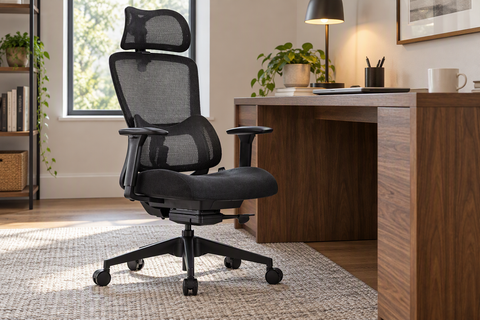
Authoritative standards like BIFMA G1-2013 provide dimensions for furniture that fits the 5th to 95th percentile of the population. High-quality chairs, such as the Exis, Ergonomic Office Chair, are engineered to meet these rigorous standards. The Exis utilizes a 4-level adjustable lumbar support system that ensures the mesh remains tensioned exactly where your spine needs it most, preventing the "hammock effect."
Graduated Support and Breathability
A premier mesh chair provides "graduated support"—firmer at the lumbar region and slightly more flexible at the shoulders to allow for natural movement. The Lira, Ergonomic Office Chair exemplifies this through its "Mesh Pro" series design, which adapts to the user's micro-movements through a responsive backrest.

Quantifying the Productivity ROI
Is an ergonomic chair a luxury or a necessary investment? While a 16% productivity boost is often cited for total office overhauls, the ROI for individual well-being is equally compelling. According to The 2026 Workstation White Paper, ergonomic furniture is a justifiable investment to offset the fact that 80% of office workers experience back pain during their careers.
The ROI manifests in three primary ways:
- Recaptured Time: Reducing the "micro-breaks" needed to stretch or walk off discomfort can save an estimated 15–30 minutes of fragmented focus time per day.
- Cognitive Longevity: By reducing physical stress, users often report feeling less "drained" at the end of the day, aiding work-life balance.
- Injury Prevention: Proactive investment in chairs meeting ANSI/BIFMA X5.1 standards for durability can help mitigate the risk of chronic MSDs.
Practical Recommendations for Your Setup
To maximize the benefits of a mesh chair like the Exis, it must be integrated into a comprehensive system.
The Ideal Sit-Stand Rhythm
Even the best chair cannot negate the risks of total sedentariness. The WHO 2020 Guidelines recommend interrupting long periods of static behavior. We suggest the "20-8-2" rule:
- 20 Minutes Sitting: Use your mesh chair in a neutral posture.
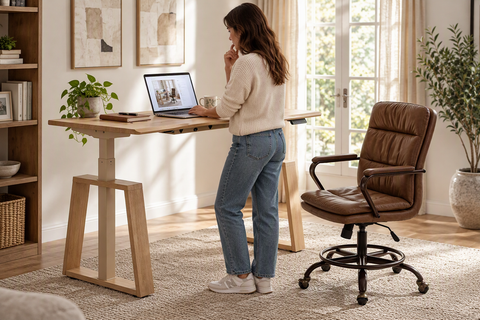
- 8 Minutes Standing: Switch to a standing desk.
- 2 Minutes Moving: Stretch or walk to stimulate circulation.
Monitor and Desk Alignment
Set your chair height so your feet are flat and knees are at a 90-degree angle. To prevent "forward head posture," use a Dual Monitor Arm to position screens at eye level.

Additionally, clutter is a known "cognitive tax." Using Convertible Desktop Shelves can help clear your primary workspace, reducing visual distractions.

Maintenance: Keeping Your Mesh High-Performing
Unlike leather, mesh can accumulate dust within the weave, which may impact breathability.
- Weekly Vacuuming: Use a brush attachment to remove dust. This supports indoor air quality, aligned with UL GREENGUARD Certification principles.
- Spot Cleaning: Use a mild detergent and a soft cloth. Avoid harsh chemicals that could degrade synthetic fibers and lead to tension loss.
- Lumbar Check: Periodically re-adjust your support. The Exis makes this easy with its textured 4-level system.

Conclusion: The Strategic Choice for Remote Work
Investing in a mesh ergonomic chair is a strategic decision to protect your ability to focus. By leveraging the thermal advantages of breathable mesh and the structural support of adjustable engineering, you transform your home office from a place of physical endurance into a center of professional efficiency.
Disclaimer: This article is for informational purposes only and does not constitute professional medical advice. If you have pre-existing musculoskeletal conditions or chronic pain, please consult a qualified healthcare professional before making significant changes to your workstation setup.
References
- BIFMA G1-2013 Ergonomics Guideline for Furniture
- OSHA: Computer Workstations - Neutral Working Postures
- ISO 9241-5:2024 Workstation layout & postural requirements
- WHO 2020 Guidelines on Physical Activity & Sedentary Behaviour
- The 2026 Workstation White Paper: Converging Ergonomic Science and Sustainable Engineering
- CCOHS: Office Ergonomics - Sit/Stand Desk




Leave a comment