

Mesh vs leather office chair is mostly a choice between cooler airflow and a plusher first feel. Mesh tends to be the safer first-pass pick for warmer rooms and long workdays, while leather often makes more sense if you want a cushier, more enclosed seat and a stronger visual finish. The real winner depends on how long you sit, how warm your room runs, and how much upkeep you are willing to do.

How Mesh and Leather Feel During Long Workdays
For all-day sitting, the main question is not which material feels better for ten minutes. It is which one still feels tolerable after several hours, when heat, pressure, and posture start to matter more. Cornell's ergonomics guidance frames the choice as a trade-off between breathability versus contoured support, which is a useful way to think about mesh vs leather office chair shopping.
Breathability Versus Heat Buildup
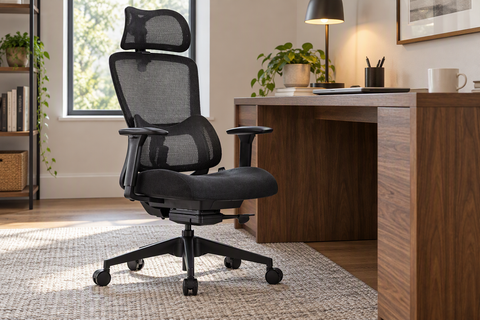
Mesh usually has the edge when airflow is the priority. If your office runs warm, you sit for long stretches, or you tend to feel hot in the back and thighs, mesh is often the more comfortable first choice. In a cooler room, leather can feel more contained and warmer, which some buyers like and others notice as fatigue builds.
That is why the same chair can feel great in a climate-controlled office and less comfortable in a room with little airflow. For long sessions, the material is only part of the comfort story; the room temperature around it matters too.

Cushion Feel and Pressure Relief
Leather-style chairs often feel plusher at first touch because the surface and padding create a softer, more cushioned impression. Research on prolonged computer-based sitting shows that long-session comfort and pressure distribution depend on more than the cover material alone. Foam quality, contouring, and seat shape can change the result as much as the upholstery.
Mesh can feel firmer and more structured, which many buyers like for a stable seated posture. If you want a soft first sit, leather often wins that first impression. If you want a more responsive, less sink-in feel, mesh can be the better match.
Support Feel Over a Full Day
Over a full day, support matters as much as surface feel. OSHA's chair guidance emphasizes neutral posture and chair fit, which means the best material still loses if the seat depth, lumbar support, or recline does not fit your body.
Here is the practical rule: if you sit six to eight hours or more, do not choose only by upholstery. Mesh may feel more breathable, but a poorly shaped mesh chair still feels wrong. Leather may feel more padded, but without the right dimensions it can still create pressure buildup.
Mesh Versus Leather at a Glance
| Factor | Mesh | Leather | Best Fit | Buyer Takeaway |
|---|---|---|---|---|
| Breathability | Usually better airflow | Usually warmer and more enclosed | Warm rooms, hot-running sitters | Choose mesh if heat is your first complaint. |
| First-touch comfort | Often firmer | Often plusher | Buyers who want a softer first sit | Choose leather if cushioned feel matters most. |
| Long-session support feel | Can feel structured and stable | Can feel more enveloping | Long desk days with the right foam and fit | Support depends on chair design, not material alone. |
| Cleaning | Usually simple light cleaning | Often wipes down easily | Busy home offices and quick cleanup | Both are manageable, but neither is maintenance-free. |
| Visible wear | Surface wear can be less obvious, but dust may show | Can keep a polished look, but finish changes may show | Buyers who care about appearance retention | Look at finish quality and use patterns, not just the material name. |
| Climate suitability | Better for warmer or less ventilated rooms | Better in stable, cooler rooms | Room temperature decides this row | Climate is often the clearest tie-breaker. |
| Style / premium look | More technical and light | More formal and executive | Buyers who want a polished look | Leather usually wins on presentation. |
| Maintenance tolerance | Good for low-fuss use | Good if you prefer wipe-down cleanup | Buyers who want a simpler routine | Pick the surface you will actually keep up with. |
A quick scan like this helps because the best material changes with the use case. The Chairs collection is a useful place to compare styles once you know which side of the trade-off matters most.
Durability, Cleaning, and Wear Over Time
Durability is where shoppers often overgeneralize. BIFMA's durability test standards remind buyers that office chair longevity should be judged through construction and testing, not by assuming one upholstery material is automatically tougher than the other. A well-built mesh chair can outlast a poorly made leather-look chair, and the reverse can also be true.
What Cleaning Usually Looks Like
Mesh usually needs light dusting or vacuuming, especially if the weave catches lint, pet hair, or crumbs. Leather-style surfaces are often easier to wipe after a spill or smudge. That does not make either one maintenance-free. It only changes the kind of upkeep you will notice most often.
If you like a chair that stays visually consistent with minimal effort, mesh can be easier to live with day to day. If you prefer a surface that wipes clean fast after coffee or hand marks, leather can feel more convenient.
Does Leather Peel Over Time?
It can, but not in the simplistic way many shoppers fear. The concern is usually tied to synthetic leather breakdown rather than every leather-style chair universally failing. The hydrolysis process that can cause peeling is linked to heat, moisture, material construction, and care.
That means the right question is not "Does all leather peel?" The better question is whether the chair uses a finish and construction that fit your climate and usage. If you are very sensitive to surface breakdown, verify the material build before you buy, especially for a chair that will get heavy daily use.
Which Material Hides Daily Wear Better
Mesh can hide some kinds of wear because it does not rely on a glossy finish, but it can show dust or lint depending on color and use. Leather can keep a polished, executive look for longer if you maintain it well, but scuffs, shine changes, and finish wear may become more obvious in a busy office.
That is the ownership trade-off: mesh leans toward visual consistency, while leather leans toward a more premium presentation. Neither option is maintenance-free, so the better choice is the one whose wear pattern you will tolerate more easily.
How to Choose the Right Material for Your Setup
- Start with temperature. If your room runs warm, you sit near windows, or you tend to get hot quickly, mesh is usually the better first filter.
- Check sitting duration. For six to ten hours a day, comfort depends heavily on support, recline, and seat depth, not just the material cover.
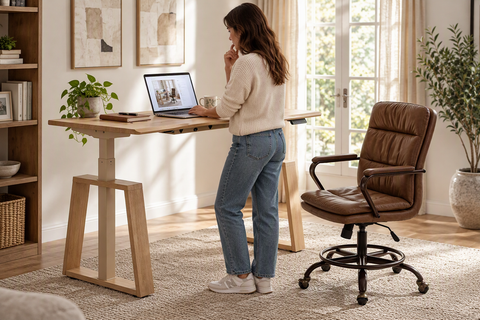
- Decide how much upkeep you want. If you want quick wipe-down cleanup and a more formal look, leather may fit better.
- Weigh appearance against airflow. If the chair has to look executive in a cooler room, leather has an edge. If comfort drops when heat builds, mesh usually wins.
- Confirm the fit before you buy. Adjustability still matters more than upholstery, so check lumbar range, seat depth, and armrest movement before you commit.
That sequence keeps the choice practical. A mesh chair can still be a bad pick if the seat is too shallow or the lumbar support does not match your back. A leather chair can still be a strong buy if the room stays cool and you want a softer first sit.
If you are narrowing options, compare mesh chair choices against leather chair options only after you know your temperature, sitting hours, and cleanup tolerance. For a deeper leather-only browse path, the Leather Office Chair Series is the fastest way to check current styles.
Final Buying Checks Before You Decide
Before you add a chair to cart, verify the fit details first: seat depth, lumbar adjustment, and armrest range. Then check the weight capacity, warranty, and return policy so you are comparing more than just upholstery. If two models still look similar, use your room temperature and daily sitting hours as the final tie-breaker. The best mesh vs leather office chair is the one that matches your body, your workspace, and the amount of upkeep you will actually do.
FAQs
How Do I Know Whether Mesh or Leather Will Be More Comfortable for Me?
If you run hot or sit in a warm room, mesh usually has the edge. If you prefer a softer first feel and your room stays cooler, leather may be more comfortable. The quick test is simple: ask whether heat or cushion is more likely to bother you after a few hours, because that answer usually points to the better material.
Can a Leather Office Chair Feel Hot During Long Workdays?
Yes, it can feel warmer than mesh in some setups, especially in rooms with little airflow or during long, uninterrupted sitting. If you want leather but worry about heat, check whether the room is climate-controlled and whether the chair has enough padding and support to stay comfortable without relying on airflow.
What Should I Look for Besides the Material Label?
Look at seat depth, lumbar adjustment, armrest range, and recline before you judge the upholstery. Those details often decide whether a chair feels good after an hour versus after a full workday. Material sets the feel, but fit and adjustability usually decide whether the chair works for your body.
Does Leather Office Chair Peel Over Time?
Not always. Peeling is usually a material-and-care issue, especially with synthetic leather finishes, and it depends on heat, moisture, construction quality, and use. If surface breakdown worries you, look for clearer material details and think about how much wiping, sun exposure, or daily wear the chair will get.
Which Material Is Easier to Keep Clean in a Home Office?
Leather is often easier to wipe after spills or smudges, while mesh can take a little more attention if dust or lint gets caught in the weave. If your home office sees pets, snacks, or frequent cleanup, choose the surface you are more likely to maintain regularly rather than the one that sounds easiest on paper.
What If I Sit All Day but Want a More Premium Look?
Leather usually fits that brief better, but only if your room does not run hot. If you want the executive look and you work in a cooler, climate-controlled space, leather is a reasonable choice. If the room gets warm by midafternoon, mesh is often the safer comfort pick even if it looks less formal.




Leave a comment