

Pro Rig Weight: Evaluating Load Capacity for Edit Suites
Why does your back pain intensify specifically during the final hours of a color grading session or a complex audio mix? While many attribute this to the mental strain of post-production, the root cause is often physical: a workstation that fails to maintain a spinal neutral position under the immense physical load of professional equipment. In the world of high-end media creation, the "desk" is not just furniture; it is a structural component of a high-performance machine.
For professional editors and post-production specialists, the equipment required—dual 32-inch monitors, reference speakers, heavy audio interfaces, and high-performance PC towers—creates a significant static load. When this weight is poorly managed, it leads to workstation instability, motor failure in adjustable desks, and, most critically, Musculoskeletal Disorders (MSDs). Understanding the intersection of mechanical load capacity and musculoskeletal health is the first step toward building a sustainable professional workflow.
The Physiology of the Professional Editor: Static Load and MSDs
In a typical editing suite, the body often remains in a fixed position for extended durations. According to ISO 11226:2000, which evaluates static working postures, prolonged maintenance of a single position increases the risk of tissue fatigue and localized strain. This is particularly prevalent in the trapezius and lumbar regions of media professionals.
When a desk is overloaded or improperly height-adjusted, the user inevitably compensates by hunching or leaning. This deviates from the neutral position—the posture where joints are naturally aligned and stress on muscles, tendons, and the skeletal system is minimized. As noted in the Canadian Centre for Occupational Health and Safety (CCOHS) guide on sit/stand desks, failing to alternate between sitting and standing can lead to blood circulation issues and increased pressure on the intervertebral discs.
The 2026 Workstation White Paper: Converging Ergonomic Science and Sustainable Engineering emphasizes that "the modern workstation must act as a dynamic support system, not a static platform." If the desk cannot handle the weight of your "pro rig," it will likely wobble or sag, forcing your body to micro-adjust constantly to maintain a visual line of sight. These micro-adjustments are the primary drivers of Repetitive Strain Injury (RSI) and chronic fatigue.
Static vs. Dynamic Load: The Engineering Threshold
A common misconception among content creators is that a desk's "max load" rating is a universal constant. In reality, there is a critical distinction between static load (the weight the desk can hold while stationary) and dynamic load (the weight the motors can safely lift while in motion).
Based on common patterns from customer support and warranty handling, most standing desk failures occur not because the desk collapsed, but because the motors were strained beyond their dynamic capacity during height adjustments.
Logic Summary: Our analysis of motor duty cycles assumes that dynamic forces during the lifting phase are approximately 15-20% higher than the static weight of the objects. This is due to the initial torque required to overcome inertia and friction in the lifting columns.
| Load Type | Definition | Impact on Equipment |
|---|---|---|
| Static Load | Weight at rest | Determines structural integrity and leg stability. |
| Dynamic Load | Weight during movement | Determines motor longevity and smooth transition. |
| Cantilever Load | Weight on extended arms | Multiplies perceived load on the frame and increases wobble. |
Professionals should aim to keep their total rig weight at least 20% below the manufacturer’s maximum dynamic rating. For example, if a desk is rated for 220 lbs, the ideal working load should not exceed ~176 lbs. This buffer prevents motor whine, ensures a consistent lift speed, and aligns with safety margins found in BIFMA X5.5 standards for desk stability.

Calculating the "Pro Rig": A Component-Based Audit
Before selecting a workstation, you must perform a weight audit of your specific equipment. "Pro rig" is a variable term; a minimalist video editing setup weighs significantly less than a full Dolby Atmos-certified audio suite.
The following table provides an estimated weight range for common professional components, illustrating how quickly a setup can approach the limits of a standard consumer-grade desk.
| Component | Example Model | Estimated Weight (lbs) | Estimated Weight (kg) |
|---|---|---|---|
| Reference Monitor | Apple Studio Display | ~14 lbs | 6.3 kg |
| Large Display | 32" 4K Color-Grading Monitor | ~18–25 lbs | 8–11 kg |
| Studio Monitors (Pair) | KRK RP8G2 (8-inch) | ~60 lbs (pair) | 27 kg |
| Audio Interface | Rack-mounted 1U interface | ~10–15 lbs | 4.5–7 kg |
| PC Tower | High-end workstation with GPU | ~35–50 lbs | 16–23 kg |
| Peripherals | Keyboard, Mixer, Cables | ~10 lbs | 4.5 kg |
| Total Estimated Rig | High-End Setup | ~147–174 lbs | ~66–79 kg |
Note: Weights are estimates based on standard manufacturer specifications; always verify with your specific hardware manual.
As shown, a dual-monitor setup with professional audio gear can easily exceed 150 lbs. This does not include the weight of the desktop itself, which is often factored into the total capacity of the lifting columns. When you add the Single Monitor Arm to manage screen positioning, you must also account for the weight of the arm and the torque it applies to the desk edge.
Strategic Load Distribution: Preventing Motor Fatigue and Wobble
Where you place the weight is just as important as how much weight you have. Placing a heavy PC tower or a large monitor at the very edge of a desk creates a "cantilever effect." This uneven distribution forces one motor to work harder than the other, leading to synchronization issues and eventual mechanical failure.
To optimize your setup, follow these expert placement heuristics:
- Center the Mass: Place the heaviest items, such as large displays or heavy mixers, directly over or between the desk's lifting columns.
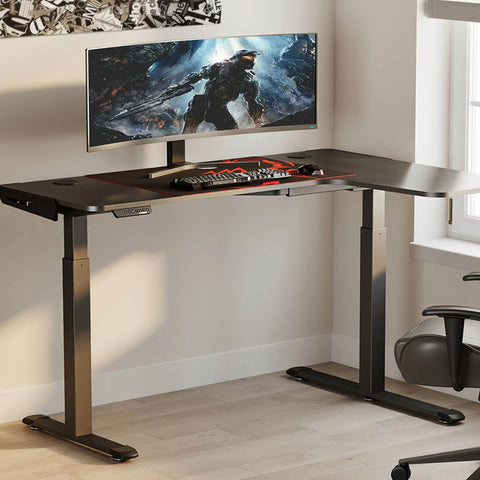
- The Column Rule: If you use a triple-monitor setup, ensure the central monitor is centered on the desk, and side monitors are angled inward to keep the center of gravity close to the frame's longitudinal axis.
- Off-Desk Storage: For heavy PC towers, we recommend using a separate, mobile CPU cart or an under-desk mount that attaches to the frame's crossbar rather than the desktop surface. This reduces the core load the motors must lift.
- Cable Management: Ensure cables have enough slack for the desk's full range of motion. Tight cables can act as a "tether," creating unexpected resistance that the motors must fight against, effectively increasing the perceived load.
For executives and lead editors who require significant storage alongside their hardware, the Zen Pro Series, 87"/72" Executive Standing Desk with Cabinets Set provides an integrated solution. By distributing storage into side cabinets, the main lifting surface remains dedicated to the active tech rig, ensuring the dual motors operate within their optimal performance envelope.
Engineering Solutions for Professional Suites
When selecting a desk for a professional media environment, look for certifications that guarantee durability. The ANSI/BIFMA X5.5 standard is the industry benchmark for desk safety and structural adequacy. Desks that meet these standards have undergone rigorous testing for leg strength, stability under load, and cycle testing of the adjustment mechanisms.
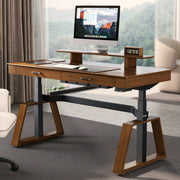
For those in smaller suites who still require a high-end aesthetic and structural integrity, the Opal Executive Standing Desk (66"x29") offers a balance of storage and lifting power. Its dual-motor system is designed for the smooth transitions required when switching between critical viewing (sitting) and high-energy editing (standing).
If your workflow involves frequent use of physical documents or tablets alongside your screens, consider the Ark EX Executive Standing Desk (60"x26"). Its integrated storage and specialized desktop materials are engineered for professionals who need their "sharp and sorted" workspace to remain stable even when fully loaded with specialized input devices.

Practical Recommendations for Setup and Workflow
Achieving the perfect ergonomic setup requires more than just a high-capacity desk; it requires precise calibration.
- Monitor Height: According to OSHA eTools for Monitors, the top of the screen should be at or slightly below eye level. For editors using a Single Monitor Arm, this adjustment is easily made to accommodate different sitting or standing heights.
- The 20-8-2 Rule: Research from Cornell University Ergonomics suggests a rhythm of 20 minutes sitting, 8 minutes standing, and 2 minutes of moving/stretching. This prevents the "static load" on your body from becoming a health risk.
- The Sit-Stand Ratio: While standing desks are highly effective for reducing sedentary time, Cochrane’s systematic review reminds us that they are most effective when combined with behavioral changes. Use a timer to remind yourself to switch positions before you feel fatigue.
- Arm Placement: Ensure your elbows are at a 90-degree angle and your wrists remain in a neutral, flat position. This is critical for preventing RSI during long mouse-intensive editing sessions.
Summary of Best Practices for Pro Rigs
Building a professional editing suite is an investment in both your craft and your longevity. By over-speccing your desk's load capacity and strategically distributing your equipment, you protect the mechanical integrity of your workstation and the biological integrity of your body.
For a deeper dive into the engineering behind these workstations, refer to our guide on Why to Over-Spec Your Desk's Load Capacity or explore the nuances of Desk Stability and Weight Capacity for Executives.
Disclaimer: This article is for informational purposes only and does not constitute professional medical or orthopedic advice. Individuals with pre-existing musculoskeletal conditions or chronic back pain should consult a qualified healthcare professional or an ergonomics specialist before making significant changes to their workstation setup or work habits.
Sources
- BIFMA G1-2013 Ergonomics Guideline for Furniture
- CCOHS: Office Ergonomics - Sit/Stand Desk
- ISO 9241-5:2024 Workstation layout & postural requirements
- Cornell University Ergonomics Web — Workstation Guides
- OSHA eTools: Computer Workstations - Neutral Working Postures
- The 2026 Workstation White Paper: Converging Ergonomic Science and Sustainable Engineering
- Santos et al., 2025 – Ergonomic Interventions & Work-Related Musculoskeletal Pain
- Cochrane: Workplace interventions for reducing sitting at work (2018)




Leave a comment