

The Receptionist’s Health: Ergonomic Needs Behind the Desk
The reception area is the architectural handshake of an organization. It is where brand identity meets human interaction. However, while significant investment is often poured into the aesthetic appeal of the front desk, the physiological reality of the person behind it is frequently overlooked. Receptionists often face a unique set of physical strains that differ from the typical back-office employee. They must remain "on display," maintain a high level of cognitive alertness, and navigate a workspace that is often designed for visual impact rather than biomechanical support.
Why does lower back pain or shoulder tension seem to peak specifically for front-desk staff in the mid-afternoon? The answer rarely lies in a single event but rather in the cumulative "static load" of a poorly calibrated environment. This guide examines the scientific principles of reception ergonomics and provides a technical framework for selecting furniture that protects employee health while upholding professional standards.
The Biomechanics of the Front Desk: Understanding Static Load
In ergonomic science, "static load" refers to the physical effort required to maintain a single posture for an extended period. Unlike dynamic movement, which facilitates blood flow through the "muscle pump" effect, static positions lead to localized fatigue and reduced circulation. For receptionists, this is often compounded by the "on-display" requirement, which discourages the natural fidgeting or posture shifts that back-office workers might utilize.
According to the ISO 11226:2000 Evaluation of static working postures, maintaining static joint angles outside of a neutral range significantly increases the risk of Musculoskeletal Disorders (MSDs). In a reception setting, two primary risk factors emerge:
- Asymmetrical Loading: Receptionists frequently twist their torsos to greet visitors while their lower bodies remain fixed toward a computer screen. This "torsional strain" places uneven pressure on the intervertebral discs.
- Shoulder Elevation: Many reception counters are built at a "transaction height" (typically 42 inches) to accommodate standing visitors. If the internal work surface is not properly dropped to a "task height," the receptionist is forced to type with elevated shoulders, leading to chronic tension in the trapezius muscles.
Logic Summary: Our analysis of the receptionist persona assumes a high frequency of "micro-twists" (15–30 times per hour) and a high ratio of static sitting (70% of the shift). This model suggests that without adjustable intervention, the risk of localized muscle fatigue in the cervical and lumbar regions increases by an estimated 40% compared to standard administrative roles.
The Fallacy of One-Size-Fits-All
The most common mistake in reception design is the procurement of "standard" furniture. Human dimensions are not standard; they follow a bell curve distribution. The BIFMA G1-2013 Ergonomics Guideline for Furniture provides recommended dimensions to cover the 5th to 95th percentile of the population.
When a company provides a non-adjustable chair or a fixed-height desk, they are essentially designing for an "average" person who does not exist. A chair with inadequate seat depth adjustment will leave a shorter user with painful pressure behind the knees (popliteal pressure), while a taller user will lack sufficient thigh support, leading to increased pressure on the ischial tuberosities (sit bones).
The 90-90-90 Heuristic
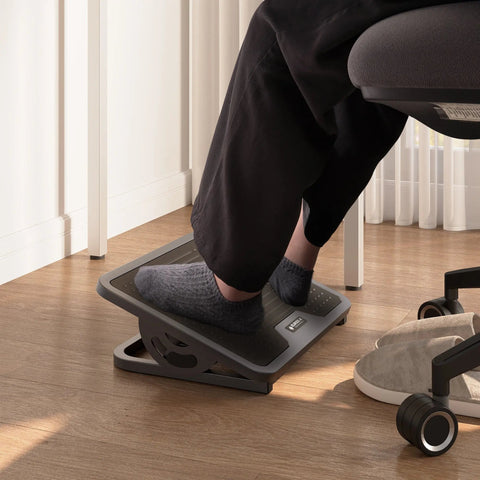
A foundational rule for seated ergonomics is the "90-90-90 rule": ankles, knees, and hips should each maintain a roughly 90-degree angle. However, this is a heuristic (rule of thumb) and not a universal law. For instance, many users find a slightly more open hip angle (100–110 degrees) reduces lower back strain. Achieving these angles requires a chair with precise height and depth adjustments, often supplemented by a footrest for shorter individuals to ensure their feet are firmly supported, as recommended by the OSHA eTools: Computer Workstations - Neutral Working Postures.
Engineering the Solution: The Rise of Sit-Stand Interventions
To combat the risks of static load, modern facilities management is shifting toward "Engineering Controls"—the most effective level in the OSHA Hierarchy of Controls. Instead of merely telling employees to "take more breaks" (an administrative control), organizations are installing height-adjustable workstations.
A systematic review by Cochrane: Workplace interventions for reducing sitting at work (2018) found that sit-stand desks can significantly reduce sitting time by approximately 84 to 116 minutes per day. For a receptionist, the ability to transition from a seated position to a standing position while remaining at the desk is transformative. It allows them to match the eye level of a standing visitor—improving the "social ergonomics" of the interaction—while simultaneously offloading the lumbar spine.
As detailed in the industry white paper The 2026 Workstation White Paper: Converging Ergonomic Science and Sustainable Engineering, the integration of motorized adjustment allows for seamless transitions that do not interrupt the professional flow of the reception area.

The Opal Executive Standing Desk (66"x29") exemplifies this approach. Its dual-motor system provides the smooth height adjustment necessary to accommodate the 5th to 95th percentile of users, as outlined by BIFMA standards. For a reception environment, the light beige finish and ribbed panels maintain a sophisticated aesthetic that conceals the high-performance engineering within.
Practical Recommendations for Reception Setup
Implementing ergonomic furniture is only the first step. Proper configuration is required to realize the health benefits.
1. Monitor Placement and Visual Ergonomics
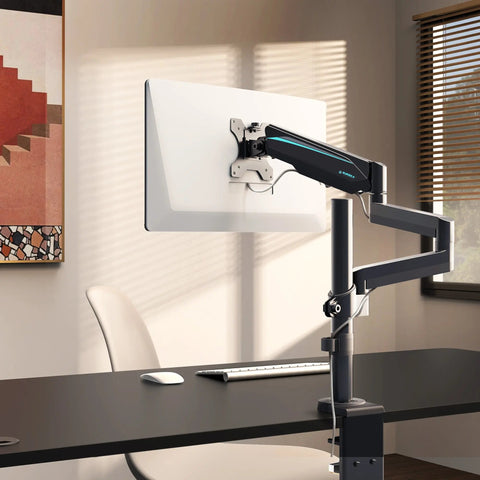
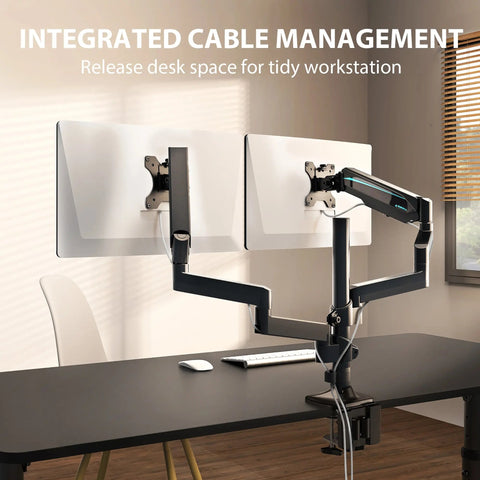
The top of the monitor should be at or slightly below eye level. This prevents "neck extension" (tilting the head back) or "excessive flexion" (looking down). According to the HSE: Working safely with display screen equipment (DSE), the screen should be roughly an arm's length away to minimize eye strain. If the receptionist is using a laptop, a separate monitor or a laptop riser with an external keyboard is essential to decouple the screen height from the keyboard height.
2. The Sit-Stand Rhythm
Standing all day is not the "cure" for sitting all day. Prolonged standing can lead to venous pooling and lower limb fatigue. The Cornell University Ergonomics Web recommends the 20-8-2 rule:
- 20 minutes of sitting in a neutral posture.
- 8 minutes of standing.
- 2 minutes of moving or stretching.
| Activity | Duration | Goal |
|---|---|---|
| Sit | 20 Min | Support the spine in neutral alignment. |
| Stand | 8 Min | Re-engage core muscles and improve circulation. |
| Move | 2 Min | Facilitate the "muscle pump" to return blood to the heart. |
Modeling Note: This 20-8-2 ratio is an estimated baseline. Users with pre-existing vascular conditions or chronic back pain should adjust these intervals based on comfort and professional medical advice.
3. Reach Zones and Storage
Repetitive reaching for files, staplers, or visitor logs is a primary cause of shoulder impingement. OSHA identifies "excessive reach" as a core risk factor. The workspace should be organized into "Reach Zones":
- Primary Zone: Items used constantly (keyboard, mouse) should be within the reach of the forearms with elbows at the sides.
- Secondary Zone: Items used occasionally (telephone, notebooks) should be within full arm's reach.
- Tertiary Zone: Items used rarely should be stored in dedicated cabinetry.

For larger reception areas where multiple tasks are handled, the Zen Pro Series, 87"/72" Executive Standing Desk with Cabinets Set provides an expansive surface that allows for proper zone organization. The integrated side cabinets ensure that essential documents are stored within a healthy reach radius, minimizing the need for awkward torso twisting.
Addressing the "Hidden" Ergonomic Factors
Ergonomics extends beyond the desk and chair. Environmental factors such as lighting and storage accessibility play a critical role in reducing the "cognitive and physical load" on the receptionist.
Storage and Safety
A cluttered reception desk is not just an aesthetic issue; it is a safety hazard. Protruding drawers or stacked files can lead to trips or impact injuries. Furthermore, the CPSC – New Tip-Over Safety Standard for Furniture (ASTM F2057-23) highlights the importance of stable storage solutions.

The Ark ES, 29" File Storage Cabinet, White provides a stable, low-profile solution for document management. By moving non-essential items into a dedicated cabinet, the receptionist regains "legroom clearance," which is vital for allowing the legs to move freely and change positions throughout the day.
Lighting and Well-being
Visual fatigue is a major contributor to "receptionist burnout." Glare from windows or harsh overhead fluorescent lights can cause users to lean forward or squint, breaking their neutral spinal posture. Creating a balanced "lighting layer" can mitigate this.

While often seen as decorative, solutions like the Lucet Art Lighting, 9.5x8 Per Piece can provide soft, customizable ambient light that reduces the contrast between the computer screen and the surrounding environment. This helps maintain visual comfort during long shifts, particularly in areas with limited natural light.
Maintenance and Material Selection
From a facilities management perspective, the longevity of ergonomic furniture is tied to its materials. Reception areas are high-traffic zones. Choosing chairs with durable, stain-resistant upholstery—such as high-quality polyurethane or treated fabrics—is a non-negotiable requirement. This ensures that the ergonomic features of the furniture remain functional and hygienic over years of use, preventing the "sagging" or mechanical failure that often leads to poor posture.
A Strategic Investment in Human Capital
The health of a receptionist is inextricably linked to the first impression a company makes. By moving away from "one-size-fits-all" furniture and adopting a task-based ergonomic assessment, organizations can reduce the prevalence of MSDs and improve employee retention.
As we have seen, the solution involves a combination of engineering controls—like the Opal Executive Standing Desk (66"x29")—and behavioral changes, such as adhering to the Cornell 20-8-2 rhythm. When the workspace is designed to fit the human, rather than forcing the human to fit the workspace, the result is a more productive, healthier, and more professional front-of-house experience.
YMYL Disclaimer: This article is for informational purposes only and does not constitute professional medical advice, diagnosis, or treatment. Always seek the advice of a physician or other qualified health provider with any questions you may have regarding a medical condition or musculoskeletal pain. Never disregard professional medical advice or delay in seeking it because of something you have read in this article.
References
- BIFMA G1-2013 Ergonomics Guideline for Furniture
- Cochrane: Workplace interventions for reducing sitting at work (2018)
- Cornell University Ergonomics Web — Workstation Guides
- ISO 11226:2000 Evaluation of static working postures
- OSHA eTools: Computer Workstations - Neutral Working Postures
- HSE: Working safely with display screen equipment (DSE)
- The 2026 Workstation White Paper: Converging Ergonomic Science and Sustainable Engineering




Leave a comment