

The Physical Architecture of Code: Engineering Productivity Through Ergonomics
The modern software engineering workflow is often characterized by "Flow State"—a period of intense cognitive immersion where the physical world recedes. However, for many developers and DevOps professionals, this mental peak is frequently interrupted by a localized, dull ache in the lumbar region or a persistent tightness in the trapezius. While the tech industry focuses heavily on software-based productivity hubs, the physical hub—the workstation—remains the most critical, yet often overlooked, component of the developer's stack.
The "AI Productivity Paradox" suggests that while AI-driven tools can accelerate code generation, they may also increase the complexity of bugs and the cognitive load required for system understanding. According to research cited in The 2026 Workstation White Paper: Converging Ergonomic Science and Sustainable Engineering, the efficiency gained from software can be completely negated by the physical fatigue of a poorly designed environment. For a high-performance engineering team, the goal is not just faster code, but sustainable output through deep-work ergonomics.
The Physiology of the "Static Load"
In software development, the primary physical risk is not excessive force, but "static load." This occurs when muscles are held in a fixed position for extended periods, leading to restricted blood circulation and the accumulation of metabolic waste.
Musculoskeletal Disorders (MSDs) and Tissue Adaptation
According to the U.S. National Institute for Occupational Safety and Health (NIOSH), musculoskeletal disorders are injuries or disorders of the muscles, nerves, tendons, joints, and cartilage. In a coding context, this often manifests as Repetitive Strain Injury (RSI) from keyboard use or chronic back pain from improper lumbar support.
The European Agency for Safety and Health at Work (EU-OSHA) explains that prolonged static sitting leads to increased intradiscal pressure. When you sit, the pelvis rotates backward, flattening the natural inward curve of the lower back (lordosis). This puts uneven pressure on the spinal discs, which can lead to long-term degeneration.
Logic Summary: The Static Load Mechanism
- Input: 4+ hours of continuous seated coding.
- Mechanism: Pelvic tilt -> Spinal disc compression -> Reduced nutrient exchange in disc cartilage.
- Outcome: Increased risk of chronic MSDs and reduced cognitive endurance due to physical discomfort.

Engineering the Sit-Stand Transition
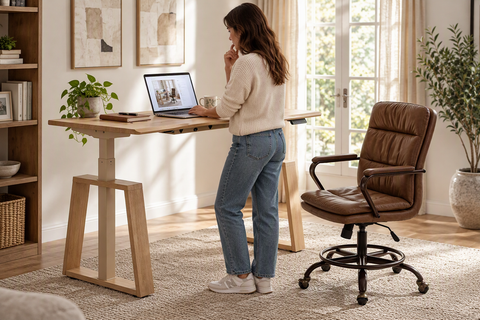
The most effective "engineering control" for sedentary risk is the implementation of height-adjustable workstations. A systematic review by Cochrane (2018) concluded that sit-stand desks can significantly reduce sitting time by approximately 84 to 116 minutes per day.
The 20-8-2 Rule: A Practical Heuristic
While standing is beneficial, prolonged static standing can lead to lower limb disorders and venous pooling. Cornell University Ergonomics Web recommends the "20-8-2" rhythm for maximum productivity:
- 20 Minutes Sitting: Use a neutral posture with full lumbar support.
- 8 Minutes Standing: Transition to a standing position to re-engage the core and improve blood circulation.
- 2 Minutes Moving: A brief walk or stretch to reset the musculoskeletal system.
For software engineers, we recommend using the desk's height memory presets as a "natural break timer." Transitioning the desk height every 45-60 minutes of deep work serves as a non-intrusive prompt to change posture without breaking the mental flow of a complex debugging session.
Technical Standards: BIFMA vs. ISO
When selecting a high-performance desk, engineers should look for compliance with BIFMA G1-2013 Ergonomics Guidelines. This standard ensures the desk accommodates the 5th to 95th percentile of the population, providing a height range that typically spans from 22 inches to 48 inches. This allows for a "Neutral Position" where the elbows are at a 90-degree angle and the wrists remain flat, regardless of the user's height.
DevOps Dashboard Ergonomics: Optimizing the Visual Field
DevOps and SRE (Site Reliability Engineering) professionals often manage complex multi-monitor setups. Improper monitor placement is the leading cause of neck flexion and "tech neck."
The Eye-Level Rule
According to OSHA's Computer Workstation Guidelines, the top of the monitor screen should be at or slightly below eye level. This allows the eyes to look slightly downward, which is the most natural resting position for the ocular muscles.
For DevOps setups involving 3 or more monitors, we recommend a "Primary/Secondary" wing strategy:
- Primary Wing: A large, central monitor dedicated to the main coding environment or terminal.
- Secondary Wing: Side monitors angled at roughly 15-30 degrees for dashboards (Grafana, Datadog) and communication tools (Slack).
Using a professional-grade monitor arm is essential for this. It allows for precise calibration of gas spring tension, ensuring that monitors do not "drift" when the desk moves from a seated to a standing position.

Reducing Context-Switching Fatigue
A common mistake in DevOps is placing monitors too far apart, requiring excessive neck rotation. ISO 9241-5:2024 specifies that the viewing distance should typically be between 50cm and 100cm. By using monitor arms to bring screens closer and minimize the "gap" between bezels, engineers can reduce the time and cognitive cost of eye refocusing during incident response.
The Hardware Ecosystem: Cooling and Lower Limb Health
A high-performance hub is not just a desk and a chair; it is a managed ecosystem. For engineers running local servers or high-powered workstations, thermal management and peripheral placement are critical.
Under-Desk CPU Management
Many home-lab setups suffer from hardware overheating because CPUs are placed directly on carpet or pushed against walls. We recommend using a mobile CPU cart.
- Airflow Heuristic: Ensure a minimum of 2 inches of clearance from the floor and walls.
- Standing Desk Integration: A mobile cart allows the CPU to move with the desk or sit safely below it, preventing cable tension issues during height transitions.

Lower Limb Support and Circulation
Even in a standing position, foot comfort is paramount. For seated intervals, a height-adjustable footrest can assist users whose feet do not rest flat on the floor, which is common when the desk height is set to accommodate proper arm angles. According to Safe Work Australia, a footrest helps maintain the "Neutral Position" of the ankles and reduces pressure on the back of the thighs, improving blood circulation.

ROI Analysis: Hardware vs. Software Productivity
Tech companies often spend thousands on AI coding assistants but neglect the physical infrastructure. Based on our scenario modeling for a mid-level software engineer, the ROI of ergonomic intervention is measurable.
| Parameter | Software Intervention (AI Tools) | Ergonomic Intervention (Sit-Stand Hub) |
|---|---|---|
| Primary Goal | Increase code generation speed | Extend "Deep Work" duration |
| Estimated Gain | ~15-20% in boilerplate tasks | ~10-15% reduction in fatigue-related downtime |
| Hidden Cost | Increased debugging complexity | Initial setup and behavioral adjustment |
| Long-Term Impact | Skill atrophy (potential) | Reduced medical leave and burnout |
| Source/Logic | InfoQ/Anthropic Study | Santos et al., 2025 Meta-analysis |
Methodology Note: This comparison assumes a standard 40-hour work week and uses qualitative meta-analysis data to estimate efficiency gains. Individual results vary based on existing health conditions and work intensity.
Scenario Analysis: Tailoring the Hub
Scenario A: The Frontend/Full-Stack Developer
- Constraint: High mouse and keyboard interaction.
- Recommendation: Prioritize "Armrest Pivot" settings. Armrests should be level with the desk surface to prevent "Ulnar Deviation" (bending the wrist toward the pinky finger), which is a major contributor to carpal tunnel syndrome.
- Key Tool: A desk with a large, flat surface area to allow for wide mouse movements without hitting peripherals.
Scenario B: The DevOps/SRE "Command Center"
- Constraint: Monitoring multiple high-density dashboards.
- Recommendation: Use L-shaped or irregular-shaped desks to maximize the "reach zone." Place the most critical monitoring tools in the "Primary Reach Zone" (within 30-40cm of the body) and less frequent tools in the "Secondary Reach Zone."
- Key Tool: A 70-inch irregular-shaped standing desk that provides the depth needed for multi-monitor focal lengths.
Strategic Checklist for Engineering Hubs
To build a benchmark-level engineering environment, follow this technical checklist derived from OSHA eTools:
- [ ] Monitor Height: Top of the screen is at eye level; distance is roughly one arm's length.
- [ ] Keyboard/Mouse: Shoulders relaxed, elbows at 90 degrees, wrists in a neutral (flat) position.
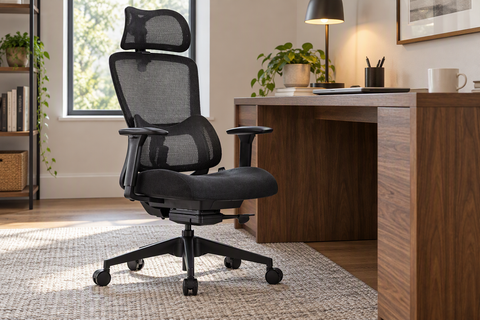
- [ ] Seating: Lumbar support fits the curve of the lower back; feet are flat on the floor or a footrest.
- [ ] Desk Height: Adjusted so the "Neutral Position" is maintained in both sitting and standing modes.
- [ ] Lighting: Supplement ambient light with a task lamp to reduce glare and eye strain (aligned with Sleep/PMC 10424162).
- [ ] Cable Management: Ensure sufficient slack for all cables to reach the desk's maximum height without tension.
Summary
The transition from a "standard office" to a "high-performance productivity hub" is an engineering challenge. By applying the principles of musculoskeletal health and adhering to international standards like BIFMA and ISO, tech professionals can mitigate the risks of sedentary work. While software tools provide the "speed," a properly engineered ergonomic environment provides the "stamina" required for a long and healthy career in technology.
YMYL Disclaimer: This article is for informational purposes only and does not constitute professional medical advice. The ergonomic recommendations provided are based on general industry standards and research. Individuals with pre-existing musculoskeletal conditions, chronic back pain, or other health concerns should consult a qualified physician or physical therapist before making significant changes to their workstation or work habits.
References
- BIFMA G1-2013 Ergonomics Guideline for Furniture
- CCOHS: Office Ergonomics - Sit/Stand Desk
- Cochrane Library: Workplace interventions for reducing sitting at work (2018)
- Cornell University Ergonomics Web — Workstation Guides
- OSHA eTools: Computer Workstations
- WHO 2020 Guidelines on Physical Activity & Sedentary Behaviour
- Santos et al., 2025 – Ergonomic Interventions & Work-Related Musculoskeletal Pain
- The 2026 Workstation White Paper: Converging Ergonomic Science and Sustainable Engineering




Leave a comment