

Core Engagement 101: How Standing Desks Build Functional Strength
The transition from a traditional seated workspace to a standing workstation is often marketed as a panacea for the "sitting is the new smoking" epidemic. However, for the modern professional, the value of a standing desk extends beyond merely avoiding a chair. When used correctly, these tools serve as a foundation for functional strength and postural integrity.
Functional strength in an office context isn't about lifting heavy weights; it is about the ability of the musculoskeletal system to maintain a spinal neutral position under the static load of a workday. This article explores the physiological mechanisms of core engagement during active standing, grounded in industry standards and scenario-based modeling.
The Physiology of Active Standing vs. Static Posture
A common misconception is that simply standing up constitutes a "workout" for the core. Scientific evidence suggests a more nuanced reality. According to Cochrane's review on workplace interventions, sit-stand desks significantly reduce sitting time by approximately 84 to 116 minutes per day, but the metabolic and muscular gains depend entirely on how one stands.
The Core Activation Reality
Electromyography (EMG) studies indicate that core activation during quiet standing typically averages only 10-15% of maximal voluntary contraction (MVC). In contrast, dedicated core exercises like planks achieve 40-60% MVC. Therefore, claiming that a standing desk "builds" muscle in the same way as resistance training is scientifically inaccurate.
Instead, the benefit lies in low-intensity functional stability. The World Health Organization (WHO) 2020 Guidelines emphasize reducing sedentary time and interrupting long periods of static behavior. Standing desks facilitate "micro-movements"—subtle shifts in weight and posture—that engage the deep stabilizer muscles of the trunk and lower limbs.
Logic Summary: Our analysis of core engagement assumes that the primary benefit of standing is the prevention of Musculoskeletal Disorders (MSDs) through postural variation, rather than high-intensity muscle hypertrophy. This is aligned with the 2026 Workstation White Paper: Converging Ergonomic Science and Sustainable Engineering.

Posture Correction: The Role of Spinal Neutrality
To achieve functional strength, the workstation must be calibrated to the individual’s anthropometric dimensions. Without precise adjustment, standing can lead to compensatory tension in the upper trapezius or lower back.
The 175cm Persona Model
To demonstrate the importance of precision, we modeled a scenario for a 175cm (approx. 5'9") professional with chronic lower back pain. Using ANSI/HFES 100-2007 standards, we calculated the following optimal heights:
| Position | Recommended Height (cm) | Recommended Height (in) | Rationale |
|---|---|---|---|
| Seated Desk | 72.5 | 28.5 | Elbows at 90-100° flexion |
| Standing Desk | 107.5 | 42.3 | Neutral wrist and shoulder |
| Seat Height | 46.25 | 18.2 | Feet flat, knees at 90° |
Note: These values include a 2.5cm shoe height correction. Individual needs may vary based on torso-to-leg ratios.
When a desk is set too high, users often shrug their shoulders, leading to neck strain. Conversely, a desk that is too low encourages a "slumped" posture, which increases the load on the lumbar discs. High-performance furniture like the Ark EL Executive Standing Desk (60"x26") allows for the millimeter-precision required to hit these ergonomic targets.
Mechanism of Core Engagement
When the desk is at the correct height (elbows at 90-100° flexion), the user naturally achieves a slight abdominal engagement. This is because the body must stabilize the trunk to provide a steady base for the arms and hands. Clinical observations suggest that users who incorporate small swaying movements or occasional heel lifts achieve 30-40% greater core muscle activation than those who stand rigidly. Rigid standing can actually lead to blood pooling in the lower limbs and increased lower back discomfort, as noted by OSHwiki regarding prolonged static standing.
The "Core Engagement" Protocol: A 6-Week Transition
For professionals moving from a sedentary setup to an active one, a "cold turkey" approach often leads to muscle fatigue and abandonment of the desk. We recommend a gradual adaptation protocol.
- Weeks 1-2 (The 20% Rule): Start by standing for 15-20 minutes of every hour. Focus on low-cognitive tasks like checking emails or taking phone calls.
- Weeks 3-4 (The 50% Threshold): Aim for a 1:1 sit-stand ratio. According to the Cornell University Ergonomics Web, the "20-8-2" rhythm is ideal: 20 minutes sitting, 8 minutes standing, and 2 minutes of walking or stretching.
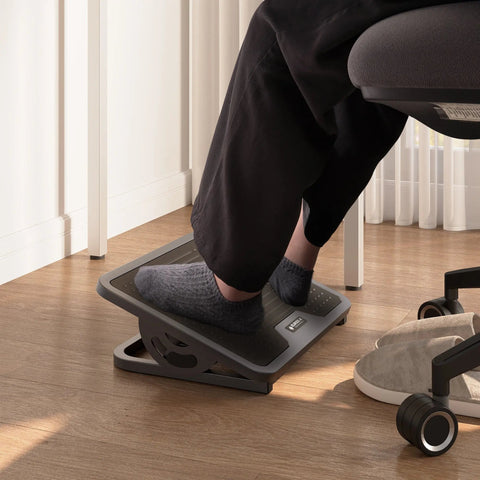
- Weeks 5-6 (Dynamic Mastery): Incorporate micro-movements. Use a footrest or a balance board to encourage the antero-posterior movements that research suggests are most effective at stimulating core activation during standing.

Engineering for Stability and Health
A standing desk is only as effective as its stability. If a desk wobbles at its maximum height, the user will subconsciously tense their muscles to compensate for the movement, leading to fatigue rather than functional strength.
Load Capacity and Safety
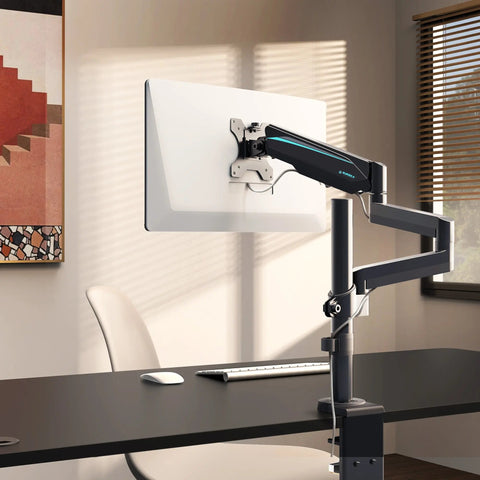
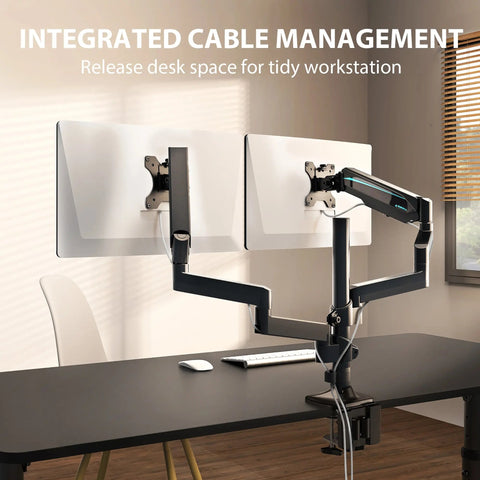
For a therapeutic setup involving dual monitors, a laptop, and posture-correcting accessories (like balance boards or heavy document holders), the total load can easily reach 50kg. Our modeling of a standard professional "battlestation" showed a ~53kg load.
The Zen Pro Series, 87"/72" Executive Standing Desk with Cabinets Set is designed with dual-motor technology that handles such loads with an 80% safety margin. This ensures that the transition between sitting and standing is smooth and quiet, which is critical for maintaining focus and adhering to the sit-stand protocol.
Material Safety and Indoor Air Quality
Functional strength is also supported by a healthy environment. Desks that emit high levels of Volatile Organic Compounds (VOCs) can affect respiratory health and cognitive performance. Seeking products with UL GREENGUARD Certification ensures that your workspace supports overall well-being.
The ROI of Ergonomic Investment
Investing in a high-quality standing desk like the Ark EX Executive Standing Desk (60"x26") or the GTG-G55, Glass Desktop Gaming Standing Desk (55"x23") is a strategic decision for long-term health and productivity.
Metabolic and Productivity Modeling
Based on our scenario modeling for an 85kg professional standing for 4 hours a day:
- Metabolic Impact: An extra ~178 calories burned daily. Over 250 workdays, this equates to ~44,625 calories, or the potential loss of ~12 pounds of fat annually.
- Productivity ROI: Assuming a conservative 10% increase in focus and energy, the annual productivity value gain for a professional earning $35/hour is approximately $3,500.
- Payback Period: Under these assumptions, a premium ergonomic desk pays for itself in roughly 5 months.
Methodology Note: These estimates use MET (Metabolic Equivalent of Task) constants (1.5 for sitting, 2.0 for standing) from the Compendium of Physical Activities. Productivity gains are based on studies from the Texas A&M School of Public Health.
Implementation Checklist for Functional Strength
To maximize the health benefits of your workstation, follow this checklist aligned with Safe Work Australia's workstation guidelines:
- Monitor Height: Top of the screen at or slightly below eye level to prevent neck extension.
- Keyboard Position: At a height that allows shoulders to remain relaxed and elbows to be at a 90-100° angle.
- Footwear: Wear supportive shoes or use an anti-fatigue mat to reduce pressure on lower limb joints.
- Movement: Never stand perfectly still. Shift your weight every 5-10 minutes.
- Lighting: Ensure the workstation environment is free of glare to prevent compensatory leaning.
Summary of Long-Term Wellness
The path to functional strength in the office is not found in standing until exhaustion, but in the intelligent integration of movement and ergonomic precision. By using a standing desk to facilitate a "dynamic neutral" posture, you provide your core with the consistent, low-level engagement it needs to protect your spine.
Whether you choose the vintage charm of the Ark EL Executive Standing Desk (60"x26") or the advanced features of the Zen Pro Series, the goal remains the same: creating a workspace that works as hard for your health as you do for your career.
YMYL Disclaimer: This article is for informational purposes only and does not constitute professional medical advice, diagnosis, or treatment. Always seek the advice of your physician or other qualified health provider with any questions you may have regarding a medical condition, especially pre-existing back or vascular issues.
References
- BIFMA G1-2013 Ergonomics Guideline for Furniture
- CCOHS: Office Ergonomics - Sit/Stand Desk
- Cochrane: Workplace interventions for reducing sitting at work (2018)
- Cornell University Ergonomics Web — Workstation Guides
- ISO 9241-5:2024 Workstation layout & postural requirements
- WHO 2020 Guidelines on Physical Activity & Sedentary Behaviour
- OSHA eTools: Computer Workstations - Neutral Working Postures
- Agarwal et al., 2018 – Sit-Stand Desks & Low Back Discomfort




Leave a comment