

The Afternoon Ache: Why Your Posture Fails by 3 PM
It is a common pattern observed across modern workplaces: the workday begins with upright intentions, but by mid-afternoon, the "computer hunch" often takes over. You might notice a nagging tension in your lower back, a tightness in your hips, or a subtle forward protrusion of the abdomen. This is frequently the physical manifestation of Anterior Pelvic Tilt (APT)—a musculoskeletal misalignment where the front of the pelvis rotates forward and the back of the pelvis rises.
For remote professionals and gamers spending upwards of eight hours at a desk, APT can be a precursor to chronic Musculoskeletal Disorders (MSDs). When the pelvis tilts, it can trigger a kinetic chain reaction: the lumbar spine may over-arch (hyperlordosis), the hip flexors often shorten, and the gluteal muscles—the body's primary stabilizers—can become "inhibited" or weakened.
Quick Fix: Your 3-Step Pelvic Alignment Checklist
Before diving into the science, use this checklist to immediately improve your workstation ergonomics:
- Check Your Elbows: Set your desk height so your elbows maintain a 90–100° angle while typing.
- Level Your Sight: Adjust your monitor so the top third of the screen is at eye level, preventing "neck crane."
- The 20-8-2 Rule: Aim to sit for 20 minutes, stand for 8 minutes, and move for 2 minutes every half hour.
Understanding how to interrupt this cycle is a key focus of the The 2026 Workstation White Paper: Converging Ergonomic Science and Sustainable Engineering. By integrating furniture solutions like height-adjustable desks, users can transition from a static seated position to a dynamic "neutral" posture that encourages hip extension.
The Science of the Curve: Understanding Anterior Pelvic Tilt
Anterior Pelvic Tilt is fundamentally an adaptation to prolonged static load. According to the U.S. Occupational Safety and Health Administration (OSHA), poor posture and repetitive tasks are core risk factors for MSDs. In the case of APT, the "repetitive task" is the maintenance of a seated position for extended periods.
The Biomechanical Chain
When you sit, your hip flexors (psoas and iliacus) are in a contracted state. Over time, these muscles can adapt by shortening. Simultaneously, the glutes and hamstrings are often stretched and inactive. When standing up, the shortened hip flexors may pull down on the front of the pelvis, while the weak glutes may fail to pull it back into a neutral position.
Research published in The Bone & Joint Journal indicates that even minor posture changes can influence hip socket alignment. Specifically, 1° of anterior pelvic tilt has been shown in radiographic studies to correlate with a 1.02° increase in cranial retroversion. This suggests that a curve in your lower back can change how your hip joints function, which may lead to long-term joint wear in some individuals.
Individual Variation in Pelvic Response
It is a misconception that everyone reacts to sitting in the same way. A study of 1,447 individuals published in MDPI Diagnostics revealed that spinopelvic parameters—including pelvic tilt—change differently based on age, BMI, and gender. For instance, older adults often show more significant shifts in lumbar lordosis when moving from sitting to standing. This underscores the need for adjustable furniture that can accommodate individual biomechanical differences.

Standing Desks as an Engineering Control
In the "Hierarchy of Controls" used by safety professionals, "Engineering Controls" are often more effective than "Administrative Controls" (like simple breaks). As outlined by OSHA's Solutions to Control Hazards, a standing desk serves as an engineering control by physically changing the workstation to fit the user.
A solution like the Opal Executive Standing Desk (66"x29") allows for transitions between sitting and standing. This movement is helpful because it introduces "micro-breaks" for the musculoskeletal system. According to the Canadian Centre for Occupational Health and Safety (CCOHS), alternating positions can reduce the static load on the spine and improve blood circulation.
Motor Performance and Stability (Internal Testing)
For professionals with heavy equipment, the stability of the desk during height transitions is important. Based on our internal engineering models, a single-motor system often operates near its maximum capacity (~80-90%) when loaded with a full executive setup (approx. 150 lbs).
In contrast, our dual-motor systems, such as those in the L-Shaped Standing Desk (60"x23"), are designed to operate at a more conservative 60-65% load capacity under the same conditions. In internal lab tests, this configuration maintained noise levels below 50 dB (measured at 1 meter) and ensured a level desktop, which helps minimize the "monitor wobble" that can contribute to visual fatigue.
Modeling the Tall Professional: A Case Study
To demonstrate the impact of ergonomic intervention, we modeled a scenario for a tall professional (190cm / 6'3") experiencing pelvic tilt issues. Standard 29-inch fixed desks are often incompatible with this stature, frequently leading to a "hunched" seated position.
Method & Assumptions
This analysis uses a parameterized model based on ANSI/HFES 100-2007 anthropometric ratios.
| Parameter | Value | Unit | Rationale |
|---|---|---|---|
| User Stature | 190 | cm | Tall professional persona |
| Footwear Correction | 2.5 | cm | Standard office shoe height |
| Recommended Stand Height | 116.5 | cm | Calibrated to mid-forearm level (Heuristic) |
| Daily Standing Duration | 240 | min | Recommended 4-hour total interval |
| Monitor Viewing Distance | 42.9 | in | Based on 34" Ultrawide THX FOV |
Note on Calculation: The 116.5 cm height is a heuristic calculated to ensure the elbows maintain a 90-degree angle for a 190 cm user. Actual needs may vary based on torso-to-leg ratios.
The "Triple Mismatch" Findings
For tall users, three common failures often occur:
- Desk Height Mismatch: Standard desks are often too low and may not reach the 116.5 cm required for standing, which can force hip flexion.
- Monitor Distance Mismatch: Large monitors often require a depth of ~43 inches. On a standard 24-inch desk, this creates a "depth deficit," often forcing the user to tilt their head forward.
-
Metabolic Estimate: By standing for 4 hours a day, this professional could burn an estimated 178 extra calories daily.
- Calculation Basis: Assumes a 180 lb individual using MET values (1.3 for sitting vs. 2.3 for standing) from the Compendium of Physical Activities. Results are estimates and vary by metabolism.

Practical Recommendations: Setting Up for Success
Precise setup is required to support pelvic alignment. Observations from ergonomic practitioners suggest that users may worsen their posture by "locking" their knees or leaning into the desk while standing.
1. The Mid-Forearm Rule
The ideal standing desk height should position the desktop at mid-forearm level when you are standing straight with your shoulders relaxed. This allows your elbows to rest at approximately a 90 to 100-degree angle.
2. Monitor Alignment
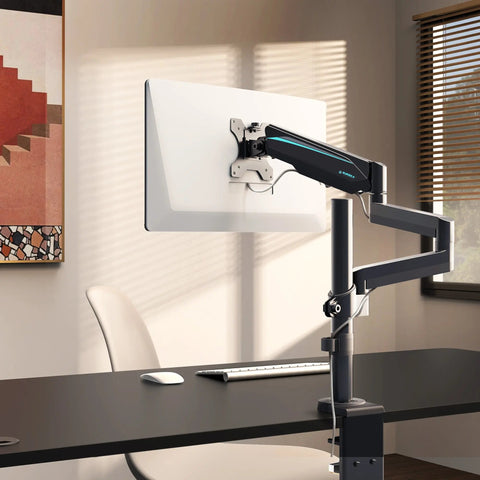
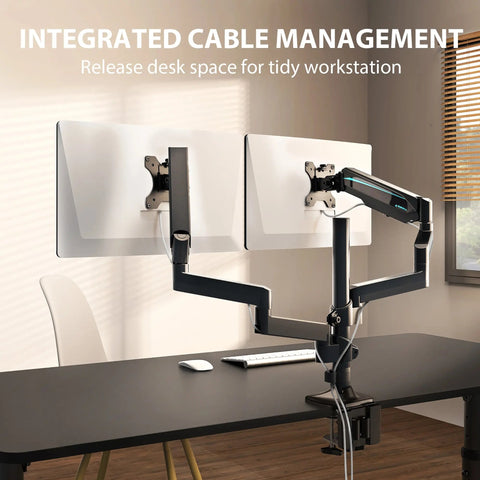
A common mistake is placing monitors too low at standing height. This can cause neck flexion, which may pull the upper spine forward. Ensure the top third of your screen is at eye level. For executive setups, the Faux Saddle Leather Standing Desk (55"x23") includes a monitor riser designed to maintain this line of sight.
3. The 20-8-2 Rhythm (Heuristic)
We suggest following the "20-8-2" rule developed by Cornell University's Ergonomics Web:
- 20 Minutes Sitting: In a neutral, supported position.
- 8 Minutes Standing: Focusing on conscious hip alignment.
- 2 Minutes Moving: Walking or stretching to promote blood flow.
4. Weight Distribution and Footrests
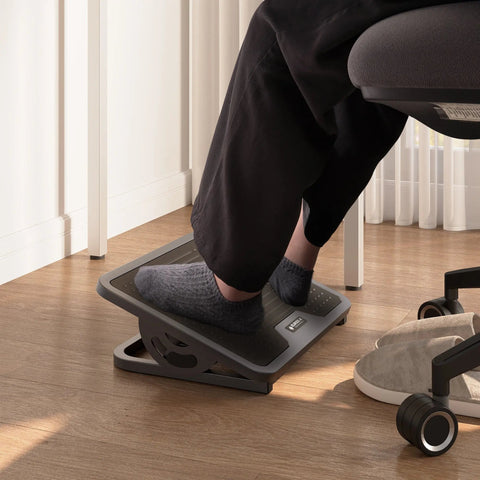
Using an Adjustable Ergonomic Footrest even while standing can be a helpful tool. By placing one foot on a slightly elevated surface, you may encourage the pelvis to tuck back into a more neutral position.
Risk Warning & When to See a Doctor: While ergonomic adjustments can help manage discomfort, they are not a substitute for medical treatment. If you experience persistent or radiating pain, numbness, tingling in the legs (sciatica), or any neurological symptoms, please consult a healthcare professional. Stop self-adjusting your workstation as a sole treatment if symptoms worsen.
The Role of Safety and Quality Standards
When choosing an ergonomic workstation, certifications can serve as a guide for reliability:
- BIFMA G1-2013: Ensures furniture dimensions accommodate the 5th to 95th percentile of the population.
- UL 962: Covers mechanical and electrical safety for electric standing desks.
- ISO 9241-5: Specifies postural requirements for office work, emphasizing the need for frequent posture changes.
By selecting products that meet these benchmarks, such as the Opal Executive Standing Desk, you are utilizing tools designed around established postural requirements.
Achieving Long-Term Postural Health
Improving pelvic alignment is a gradual process. It requires a combination of behavioral changes—like the 20-8-2 rhythm—and engineering solutions that support the body's natural biomechanics. By transitioning to a height-adjustable workspace, you can help reduce the static load that often contributes to hip flexor shortening.
Whether you are a tall professional or a remote worker looking to reduce afternoon discomfort, the goal remains a neutral spine and a balanced pelvis. With the right equipment and a commitment to movement, you can work toward a more comfortable and productive daily routine.

YMYL Disclaimer: This article is for informational purposes only and does not constitute professional medical advice, diagnosis, or treatment. Always seek the advice of your physician or other qualified health provider with any questions you may have regarding a medical condition or musculoskeletal pain.
References
- CCOHS: Office Ergonomics - Sit/Stand Desk
- OSHA eTools: Computer Workstations - Neutral Working Postures
- The Bone & Joint Journal: Pelvic Tilt and Acetabular Retroversion
- MDPI: Evaluating Variations in Spinopelvic Parameters
- EU-OSHA: Musculoskeletal Disorders and Prolonged Static Sitting
- BIFMA G1-2013 Ergonomics Guideline for Furniture
- Cornell University Ergonomics Web — Workstation Guides




Leave a comment