

Are tempered glass desks safe for gaming and family use? Sometimes, yes, but only when the desk is well built, the edges are clean, and the setup matches the room. Tempered glass is not break-proof, and family traffic, monitor-arm pressure, and rough handling can change the risk quickly. The right way to judge a glass desk is to separate shatter risk from load and stability risk, then check the desk against your actual gear and daily use.

The Short Answer on Tempered Glass Desk Safety
A tempered glass desk can be a practical choice for a gaming room or home office, but it is not the safest option for every household. In the U.S., the relevant safety context includes 16 CFR Part 1201 and the desk-surface standard ASTM F2813, which are useful verification points when you are comparing surfaces. Tempered glass is designed to break differently from ordinary glass, but that does not make it harmless around children or heavy gear. The real question is whether the desk's build quality, edge finishing, and support match your setup.
If you want a quick rule: tempered glass is a reasonable fit for careful use, stable placement, and moderate loads; it is a poorer fit when the room has frequent bumps, climbing, leaning, or repeated gear changes.

What Makes Tempered Glass Safer or Riskier
What matters most is not the word "tempered," but how the desk is built and used. 16 CFR Part 1201 is useful context for glazing safety, and the desk-surface standard gives a more specific reference point for horizontal glass surfaces. Tempered glass is made to fail in a safer pattern than standard glass, and a technical explanation of that break behavior shows why the risk is different from ordinary plate glass when tempered glass breaks. If it fails, it tends to fracture into smaller blunt pieces rather than large jagged shards. That is a safety advantage, but it is still a breakage event, not a no-risk outcome.
How Tempered Glass Behaves Under Stress
For most buyers, the key point is simple: tempered glass can handle everyday use, but chips, hidden damage, and abnormal stress still matter. A desk top may look fine and still be vulnerable if it has been struck, flexed, or poorly supported. That is why a "glass desk" should be judged as a system, not just a material.
The safer choice is the one that stays within normal use. If a desk is likely to take repeated impacts, leaning, or hard pressure at one point, the safety margin gets narrower.
Why Edge Finishing Matters
Edges and corners are the parts to inspect first. A technical breakdown of tempered-glass failure notes that edge damage is a leading cause of breakage, because those areas are the most vulnerable part of the sheet edge damage is a leading cause. For a family room, that matters more than it does in a quiet private office.
Look for smooth finishing, protected corners, and no visible chips or rough spots. If the edge feels imperfect, treat that as a caution sign. In child-adjacent rooms, the edge check is not optional; it is part of the buying decision.
How Frame Support Changes Risk
A glass top is only one part of the desk. The frame, mounting points, and overall structure carry the real load and reduce flex. That is why material stability factors matter even before you think about the surface finish. A stable frame helps the desk feel safer during normal movement, while a weak support structure can create stress even if the top itself is tempered.
That distinction matters for families and gamers alike. One problem is breakage risk from impact or edge damage. Another is wobble, shifting, or poor support under daily use. They are related, but they are not the same question.
| Factor | Why It Changes Everyday Safety | What To Look For | Practical Takeaway |
|---|---|---|---|
| Impact exposure | Hard bumps, leaning, and dropped items increase the chance of damage | Room traffic, corner placement, frequent contact | Safer in low-bump spaces |
| Edge and corner condition | These are the most vulnerable parts of tempered glass | Smooth finish, no chips, protected corners | Inspect before setup and over time |
| Frame support | Support structure affects flex, wobble, and stress points | Rigid frame, secure mounting, solid joints | A better frame improves real-world confidence |
| Family traffic | More people usually means more contact risk | Walk paths, play areas, child access | More traffic usually means more caution |
Load Limits for Gaming Gear and Daily Use
A desk can be strong enough for a setup and still not be a great glass desk choice if pressure is concentrated in one spot. For gaming, the total setup weight matters more than any single device. A monitor arm, for example, can create point pressure on glass, which is why reinforcement pads or plates are a meaningful safety check monitor arm point pressure. That is different from simply asking whether the top can hold a monitor on a stand.
In practical terms, compare the desk to your heaviest normal setup, not to an empty surface. If you use a tower, one or two monitors, a clamp-mounted arm, speakers, and a dense accessory cluster, the load and pressure pattern changes. A desk that feels fine with a laptop may feel wrong once the full gaming setup is in place.
If the desk's published capacity is the only number you have, treat it as a starting point, not the full answer. Static weight and clamped or shifting load are not the same thing.
Monitor Arms, Clamps, and Reinforcement
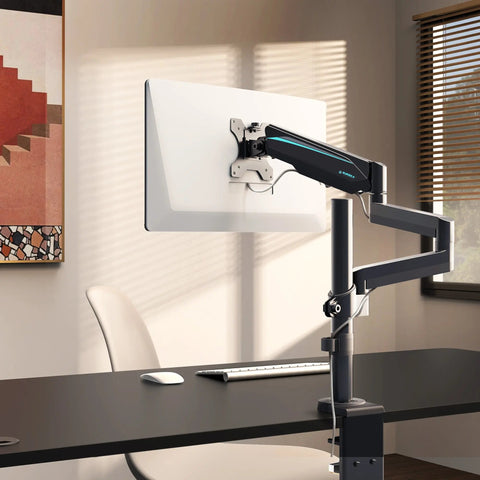
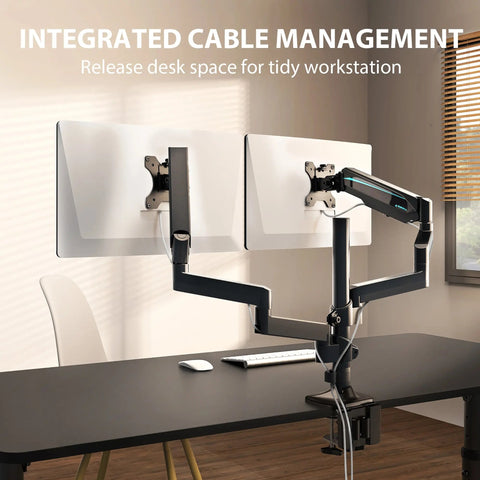
This is where many buyers misjudge glass desks. A monitor arm does not just add weight; it concentrates force at the clamp point. If the desk is not designed for that pressure, the risk is higher than the headline weight number suggests. A wider pad or reinforcement plate spreads the force and makes the setup more forgiving.
A monitor on a stand is usually easier to assess. A clamp-mounted arm needs more caution. If your gaming rig depends on a clamp, check whether the desk design explicitly supports it before you buy.
Heavy Gear Placement
Heavier devices should sit where the desk stays most stable, with less overhang and less edge loading. That usually means placing the PC tower, large monitor, or docked peripherals so weight is spread out instead of stacked at one corner. Cable clutter also matters because snags can tug on gear and create accidental movement.
For a clean setup, leave room near the front edge and keep the load balanced. That reduces the chance of knocking gear when you reach for a mouse, controller, or drink.
Are Glass Desks Safe for Gaming Setups?
For many gamers, the bigger question is not whether glass looks premium. It is whether the desk feels stable under real use. A lighter console setup is easier to fit safely than a dense PC build with dual monitors, a clamp arm, and frequent accessory swaps. In a gaming room, the desk has to handle motion, vibration, and repeated contact, not just a static display.
What usually tips the decision is not the game itself, but the hardware pattern. If you run a compact setup, keep the gear on stands, and avoid hard clamps, a tempered glass desk can work well. If your setup relies on multiple clamps, frequent repositioning, and heavy peripherals, the safer choice is often a more forgiving material.
Monitor and Peripheral Placement
Monitor feet, arms, and docks create different pressure patterns. Feet spread load more gently, while clamps can concentrate it. That is why the same desk can feel fine with one setup and risky with another. Leave enough open surface to place gear without crowding the edges, and avoid stacking accessories where the glass is already taking the most pressure.
PC Towers, Consoles, and Cable Clutter
Heavier gear should not be parked wherever it is convenient. Put the tower or console where the frame carries the load cleanly, and plan cable routing before you fill the desk with extras. A tidy route matters because loose cables can snag and pull gear during routine movement.
Motion, Vibration, and Everyday Wear
Gaming often includes quick movements, leaning in, and bumping the desk with a chair or forearms. A desk that stays steady under that normal motion is a better fit than one that only seems solid when empty. If the surface flexes or the frame shifts too easily, that is a sign to keep shopping.
Family Use Checks Before You Buy
For family spaces, the question changes from "Will it hold my gear?" to "What happens when a room gets busy?" That is where tempered glass deserves extra caution. Tempered glass is designed to break into smaller blunt pieces rather than large sharp shards, but the goal is still to avoid a break in the first place.
Use this checklist before you buy:
- Check where the desk sits. If it is in a main traffic path, near play space, or beside a spot where kids lean or climb, risk goes up.
- Inspect the edges and corners. Chips, rough spots, or exposed corners are red flags.
- Think about cleanup. If breakage happens, would you have a safe way to clear the area quickly?
- Decide how the desk will be used. Adult-only rooms are easier to justify than shared rooms with frequent bumping.
- Be more cautious with very young children around the desk. The room matters as much as the material.
A glass desk can still work in a family home, but the room setup has to be disciplined. If the desk is going into a busy shared area, the margin for error is smaller.
How to Judge Whether a Glass Desk Is the Right Choice
Start with the room, not the product photo. If the desk will live in a quiet office or controlled gaming room, tempered glass may be a sensible option. If it will sit in a high-traffic family area, the trade-off gets less attractive fast.
Use this decision path:
- Identify the room use. Calm adult office, light gaming room, or busy family space?
- Compare the full setup weight and pressure points. That includes monitor arms, towers, and accessories.
- Inspect the build details. Look for smooth edges, protected corners, and a stable frame.
- Check how often the desk will be bumped, leaned on, or moved around.
- Decide based on the worst normal day, not the best-case setup.
If the desk is for careful use and balanced gear, tempered glass can be a reasonable buy. If the room is rough-use, high-traffic, or child-heavy, choose a more forgiving material instead.
If you are still comparing options, browse glass desk options and verify the load, edge finish, and room fit before you add one to cart. For a closer look at stability differences between materials, how desk material affects long-term stability can help you narrow the trade-offs.
Common Glass Desk Mistakes to Avoid
The biggest mistakes are usually practical, not dramatic. Buyers ignore the real setup weight, place heavy gear unevenly, or assume every glass desk behaves the same. Chips, rough edges, and a weak frame can turn a premium-looking desk into a poor fit. The safest choice is the one that matches the room, the hardware, and the amount of everyday contact the desk will take.
Wrap-Up
A tempered glass desk can work for gaming and family use, but only when the room is calm, the edges are clean, and the setup stays within the desk's real limits. If your glass desk will face heavy clamping, constant bumps, or busy child traffic, keep shopping for a more forgiving surface.
Before you buy, compare the desk's edge finish, support frame, and clamp compatibility against your actual room. That quick check usually tells you whether the glass desk is a fit or a skip.
FAQs
Can Tempered Glass Desks Shatter During Normal Use?
They can fail if they are damaged, struck hard, or exposed to stress at the wrong point, but normal use is mainly about managing risk. Check the edges, avoid hard impacts, and watch for hidden chips or clamp pressure. If the desk will take frequent bumps, the safer move is usually a different surface material.
Are Tempered Glass Desks Good for Heavy Gaming Setups?
They can be, but only if the full setup fits the desk's load and pressure pattern. A monitor arm, PC tower, and accessory cluster matter more than a single device. If your setup depends on heavy clamping or a lot of motion, a sturdier non-glass surface is often the better fit.
What Should Parents Look for in a Safe Glass Desk?
Look closely at the edges, corners, and room placement. A desk is a better family fit when it sits away from play traffic, has clean finishing, and is unlikely to be bumped or climbed on. If very young children will be near it often, choose a setup with more forgiveness and less exposed glass.
How Do I Check a Glass Desk's Weight Limit?
Add up the full setup, including monitors, towers, arms, and accessories, then compare that to the published capacity. Leave some margin for real-world movement because a static number does not cover clamp pressure or leaning. If the desk is close to the limit, treat that as a reason to keep looking.
When Should I Choose a Different Desk Material?
Choose something else if the room is high-traffic, the desk will get frequent bumps, or you want the most forgiving surface for family use. Glass is easier to justify in controlled rooms than in rough-use spaces. If your main goal is low worry rather than premium looks, another material is usually the safer trade-off.




Leave a comment