

The Great Stability Showdown: Z-Frame vs. T-Frame
Let’s be real: nothing kills the "flow state" faster than a monitor that wobbles every time you move your mouse. You’re in the middle of a high-stakes clutch, your heart is pounding, you make a frantic flick shot—and your entire setup shudders like it’s in the middle of an earthquake. It’s a total vibe killer.
When you’re building a dream setup, the frame of your desk is the unsung hero. It’s the literal foundation of your gaming performance and your professional productivity. But choosing between the aggressive, "gamer-aesthetic" Z-frame and the clean, structural T-frame isn't just about looks. It’s about structural integrity, weight distribution, and whether your $4,000 worth of gear is actually safe.
In this guide, I’m diving deep into the engineering behind these two heavyweights. We’ll look at the "Wobble Index," the physics of braced frames, and how to pick the right foundation for your specific battle station.
1. Unboxing and Assembly: First Impressions Matter
When the boxes for a high-performance desk arrive, the first thing you notice is the weight. We’re talking heavy-duty alloy steel. If the box feels light, that’s your first red flag. For a desk like the Aero Wing-Shaped Studio Desk, Black (63" & 72''), the packaging is usually reinforced with thick foam and edge protectors because those steel legs are built to take a beating.
The Assembly Experience
Putting these together is a ritual. Most Z-frames and T-frames follow a similar logic: feet, legs, then the support beam.
- Z-Frame Nuance: These often rely on a massive diagonal brace. If that weld isn't clean or the bolts don't line up perfectly, you’re going to have a bad time.
- T-Frame Nuance: These usually house the motors (if it's a standing desk). You’ll see more cabling and a central transmission rod or dual-motor sync cables.
The Golden Rule of Assembly: One of the most common mistakes I see—and something our repair bench notes constantly—is over-tightening the frame bolts. It’s tempting to crank them down as hard as possible to "ensure stability," but this can actually warp the steel and create permanent tension points. This ironically increases long-term wobble because the metal can't settle naturally. Tighten them until they are snug, then give them another quarter-turn.

2. Deep Dive: The Anatomy of Stability
To understand which frame wins, we have to talk about how they handle force. According to The 2026 Workstation White Paper: Converging Ergonomic Science and Sustainable Engineering, the convergence of structural engineering and ergonomic design is what separates a "furniture piece" from a "performance tool."
The Z-Frame: The Aesthetic Powerhouse
The Z-frame is iconic. It looks fast, it looks aggressive, and it offers incredible legroom because there are no vertical posts in your way.
- The Physics: A Z-frame is essentially a "braced frame." In structural engineering, the diagonal member is what prevents lateral (side-to-side) swaying.
- The "Wobble" Factor: On cheaper Z-frames, the top connection point where the leg meets the desk is a weak spot. Without a thick, properly welded gusset plate, you’ll feel "lateral flex."
- Best For: Smaller to medium setups (under 60 inches) where the aesthetic of the Carbon Fiber Texture and RGB Ecosystem is a priority.
The T-Frame: The Structural Gold Standard
The T-frame (or I-frame) places the support column directly under the center of the desk's depth.
- The Physics: This design transfers weight directly to the floor. It’s inherently better at handling "asymmetrical loads"—like when you have a massive PC tower on the right and nothing on the left.
- Dual Motors: In standing desks like the Blossom Dynamics® Office Standing Desk (70"x46"), a T-frame allows for dual motors. This is a game-changer for stability during height transitions.
- Best For: Heavy-duty users, professional streamers, and anyone using multi-monitor arms.
The "Wobble Test" (Methodology)
We don't just "shake the desk" and call it a day. We look at the Wobble Index, which measures how much the top moves when a specific amount of force is applied.
Modeling Note (Method & Assumptions): Our analysis uses a scenario model based on a 72-inch desktop with a 70kg total load.
- Model Type: Deterministic Load Modeling.
- Force Applied: 50 Newtons (Lateral).
- Boundary Conditions: Measurements taken on a level, hard-floor surface. Results may vary on high-pile carpet.
| Parameter | Z-Frame (Standard) | T-Frame (Dual Motor) | Unit | Rationale |
|---|---|---|---|---|
| Wobble Index (Max Height) | ~0.28 | ~0.12 | mm/N | Lower is better (more stable) |
| Lateral Deflection | 14.0 | 6.0 | mm | Total movement under 50N force |
| Motor Utilization (70kg load) | ~85% (Single) | ~56% (Dual) | % | Based on 80% safety threshold |
| Torsional Rigidity | Moderate | High | - | Resistance to twisting |
| Vibration Damping | Low | High | - | Speed at which wobble stops |

3. Real-World Experience: FPS Gaming vs. Content Creation
In the wild, these desks perform differently depending on your "user persona."
The Competitive Gamer (FPS Focus)
If you’re playing titles like Valorant or Counter-Strike, your mouse movements are violent. You’re making 180-degree turns in milliseconds. I’ve found that high-frequency vibration is the real enemy here.
- Pro Tip: Regardless of your frame, the Desk Feet are the most overlooked factor. Large, adjustable feet with rubber pads on a hard floor do more to eliminate keyboard shakes than the frame geometry itself.
- Observation: A Z-frame with a full-surface mousepad (like the one included with the Aero Wing-Shaped Studio Desk, Black (63" & 72'')) helps dampen the micro-vibrations from your mechanical keyboard.
The Professional Streamer (Multi-Monitor)
For streamers, stability is a production requirement. If your desk wobbles, your camera wobbles. And if your camera wobbles, your stream looks amateur.
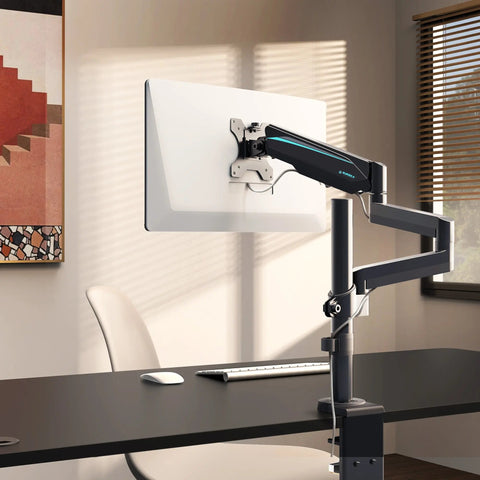
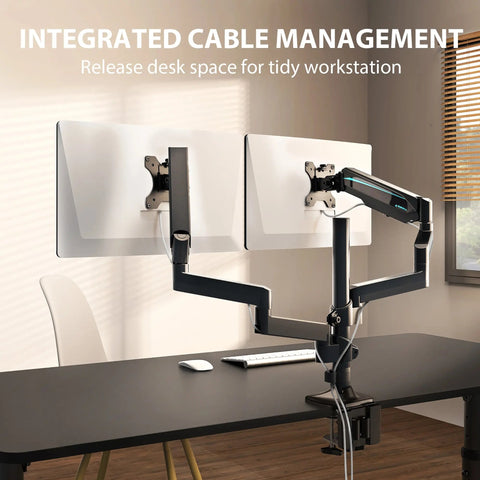
- The Weight Problem: Most streamers use monitor arms. This puts a massive amount of "torque" on the back edge of the desk.
- The Solution: A T-frame with dual motors is the only way to go here. It ensures that as the desk lifts, both sides move in perfect synchronization. Single-motor Z-frames can sometimes "stutter" under heavy asymmetrical loads, which can actually cause your monitors to tilt over time.
The Hybrid Worker
If you’re switching between spreadsheets and gaming, ergonomics take center stage. According to the Canadian Centre for Occupational Health and Safety (CCOHS), proper workstation setup is vital for long-term health. I personally follow the "20-8-2" rule recommended by Cornell University Ergonomics Web: 20 minutes sitting, 8 minutes standing, and 2 minutes of movement.
A desk like the Standing Desk with Drawers, Wood Finish (47'' /55'') is perfect for this. The built-in drawers give you the storage of a traditional desk, but the electric T-frame gives you the health benefits of a sit-stand workstation.
Enhance Your Workspace with an Office Standing Desk featuring a wood veneer finish and dual motors for smooth height adjustments.
4. The Stability "Gotchas": What Most Reviews Miss
After years of testing setups, I’ve noticed a few patterns that aren't in the marketing fluff:
- The Floor Matters: You can buy the most stable T-frame on the planet, but if you put it on a thick, plush carpet with a "squishy" pad, it will wobble. The desk is only as stable as the ground it stands on.
- Cable Management is Structural: It sounds crazy, but a "cable octopus" hanging off the back of your desk creates a pendulum effect. Using the built-in cable trays and magnetic ties—like the ones provided with the Standing Desk with Drawers, Wood Finish (47'' /55'')—actually centers the mass of your setup and reduces high-frequency vibration.
- The "Max Height" Trap: Every standing desk is least stable at its maximum height. If you are over 6’2”, you need to prioritize a frame that meets BIFMA G1-2013 Ergonomics Guidelines. These standards ensure the desk is designed to fit the 95th percentile of the population without turning into a tuning fork when fully extended.
5. Pros & Cons: Pick Your Fighter
To make this easy, I’ve broken down the trade-offs. No desk is "perfect"—it's about finding the one that matches your specific friction points.
Z-Frame (e.g., Aero Series)
-
Pros:
- Aesthetics: Unmatched "gamer" look, often featuring integrated RGB.
- Legroom: No vertical obstructions; great for people who like to "sprawl."
- Value: Generally more affordable for fixed-height or manual adjustment.
-
Cons:
- Lateral Flex: Can suffer from side-to-side sway on cheaper models.
- Weight Limits: Usually has a lower static load capacity than heavy-duty T-frames.
T-Frame (e.g., Blossom Dynamics)
-
Pros:
- Stability: The gold standard for wobble-free performance, especially at height.
- Dual Motors: Smoother, quieter, and more reliable lifting for heavy gear.
- Asymmetrical Load: Handles heavy PC towers on one side much better.
-
Cons:
- Aesthetics: More "office-pro" and less "cyberpunk."
- Price: Engineering dual motors and heavy steel columns costs more.
Final Verdict: Which One Should You Buy?
If you are a casual gamer who wants a setup that looks incredible and you’re mostly using a single monitor or a laptop, the Z-frame is a fantastic choice. It’s a game-changer for bedroom aesthetics and provides plenty of stability for standard use.
However, if you are a Professional Streamer or a Content Creator with a heavy multi-monitor setup, do yourself a favor and get a T-frame with dual motors. The peace of mind knowing your monitors won't shake during a stream is worth every penny.
For those who need to maximize every square inch of their workspace, adding accessories like the Convertible Desktop Shelves, set of 2 can turn even a standard T-frame into a multi-tiered command center.
The Expert Recommendation:
- For pure stability: Dual-motor T-frame.
- For pure vibes: RGB-integrated Z-frame.
- The Middle Ground: A wing-shaped desk like the Aero Wing-Shaped Studio Desk, Black (63" & 72''), which uses a reinforced frame to give you Z-frame looks with near T-frame stability.
YMYL Disclaimer
This article is for informational purposes only and does not constitute professional ergonomic, medical, or structural engineering advice. While sit-stand desks can reduce sedentary time—as noted in Cochrane’s systematic reviews—they are not a substitute for regular physical activity. If you have pre-existing musculoskeletal issues, please consult a qualified physiotherapist before changing your workstation setup.
References
- BIFMA G1-2013 Ergonomics Guideline for Furniture
- CCOHS: Office Ergonomics - Sit/Stand Desk
- Cochrane: Workplace interventions for reducing sitting at work
- Cornell University Ergonomics Web — Workstation Guides
- OSHA eTools: Computer Workstations - Desks
- ISO 9241-5:2024 Workstation layout & postural requirements
- The 2026 Workstation White Paper: Converging Ergonomic Science and Sustainable Engineering




Leave a comment