

The Context-Switching Crisis in Academic Workspaces
For higher education faculty and research staff, the primary obstacle to productivity is rarely a lack of hours. Instead, it is the high cognitive cost of frequent context-switching. An academic workday typically oscillates between two disparate mental modes: the high-level, creative synthesis required for deep research and writing, and the rapid, transactional processing required for administrative duties, grading, and correspondence.
When these tasks are performed in a cluttered or ill-defined physical space, the brain struggles to disengage from one mode to enter the other. This "attention residue"—the cognitive lag where thoughts of a previous task interfere with the current one—can significantly degrade focus. Furthermore, the physical toll of static posture during these long hours often leads to musculoskeletal fatigue, creating a feedback loop of physical discomfort and mental distraction.
The "Academic Zone Method" is a workspace strategy designed specifically for the L-shaped desk. By physically partitioning the workstation into dedicated cognitive zones, researchers can reduce transition friction and support the physiological needs of the body. This approach moves beyond simple organization; it aligns the physical environment with the neurological and ergonomic requirements of academic life.
The Physiology of Static Load and Cognitive Fatigue
To understand why a structured workspace is necessary, one must examine the physiological impact of the modern workstation. Prolonged sitting is not merely a matter of comfort; it involves significant "static load" on the musculoskeletal system.
Musculoskeletal Disorders (MSDs) and Blood Circulation
According to the Occupational Safety and Health Administration (OSHA), core risk factors for Musculoskeletal Disorders (MSDs) include repetitive tasks and poor posture. In a static seated position, the muscles of the back and neck must maintain constant tension to support the head and torso. This static contraction compresses blood vessels, reducing blood circulation and the delivery of oxygen to muscle tissues. Over time, this results in the accumulation of metabolic byproducts, leading to the "afternoon ache" many faculty members experience.
The Science of Movement
The World Health Organization (WHO) 2020 Guidelines emphasize that adults should reduce sedentary time and interrupt long periods of static behavior. Research synthesized by Cochrane (2018) suggests that sit-stand interventions can reduce sitting time by approximately 84 to 116 minutes per day. This reduction is critical because movement acts as a biological "reset," improving systemic circulation and reducing the risk of cardiovascular strain associated with prolonged inactivity, as noted in recent meta-analyses by Onagbiye et al. (2024).
Cognitive Load and Environment
Cognitive performance is dynamically impacted by physical stressors. When the body is in pain or fatigued, the prefrontal cortex—the area of the brain responsible for executive function and deep focus—must divert resources to manage that discomfort. A study on the neural correlates of fatigue suggests that static spatial layouts fail to address the brain's changing needs under high workload. Therefore, an ergonomic solution must be paired with a spatial strategy that facilitates mental transitions.
Logic Summary: The Biological Basis for Zoning Our analysis of academic workflows assumes that physical discomfort acts as a "noise" that interferes with "signal" (deep work). By optimizing posture through ergonomic furniture and optimizing mental focus through spatial partitioning, we aim to maximize the signal-to-noise ratio in the workstation.
The Academic Zone Method: A Heuristic for Focus
The Academic Zone Method utilizes the geometry of the L-shaped desk to create a 60/40 spatial split. This ratio is a practical baseline, or heuristic, derived from observing faculty who successfully balance research with administration.
The Deep Work Zone (60%)
The longer or more dominant side of the L-desk should be dedicated exclusively to research and creative writing.
- The 60% Rule: Allocate approximately 60% of your total surface area to this zone.
- Physical Requirements: This area should house your primary monitor, a clean writing surface, and essential research texts.
- The Goal: By keeping this area free of administrative "clutter" (such as ungraded papers or department memos), you create a physical cue for deep focus.
The Administrative Zone (40%)
The shorter "return" of the L-desk is designated for transactional tasks.
- The 40% Rule: This area handles grading, emails, and scheduling.
- Physical Requirements: This zone often accommodates a laptop, a secondary scanner or printer, and physical filing systems.
- The Goal: Confining administrative "noise" to this 40% zone prevents it from bleeding into your research space.
The Transition Zone
The corner where the two surfaces meet is the "Transition Zone." This area should only contain items used in both contexts—such as a shared printer, a telephone, or a reference dictionary. Maintaining this "neutral ground" prevents the cognitive contamination of the research zone.
Methodology Note: Transition Efficiency Modeling We modeled transition times based on common patterns in academic environments.
Parameter Value/Range Unit Rationale Task Switch Frequency 4–6 switches/day Typical faculty schedule Physical Transition Time 1–3 minutes Time to clear/reset desk Cognitive "Ramp-up" 15–20 minutes Time to reach Deep Work flow Estimated Time Saved 30–45 minutes/day Based on reduced "residue" friction Note: These are hypothetical estimates based on scenario modeling, not a controlled lab study.
Engineering the Academic Workspace
A spatial method is only as effective as the hardware that supports it. For the Academic Zone Method to function, the furniture must accommodate the physical dimensions of the user while facilitating the transition between tasks.
Selecting the Foundation: The Executive Standing Desk
In an academic setting, a desk must provide both the surface area for the 60/40 split and the mechanical reliability for frequent height adjustments. The Ark EL Executive Standing Desk (60"x26") serves as an ideal foundation for this method. Its 60-inch width provides ample space for the Deep Work Zone, while the integrated drawers offer the physical storage necessary to keep surfaces clear—a key factor in reducing what a case study by Aheaplus calls "clutter distractions."

The Ark EL's trapezoidal leg design and oak texture veneer offer a professional aesthetic suitable for faculty offices, moving away from the "gaming" look toward a more academic, mature environment. More importantly, its motorized height adjustment allows the user to transition from sitting to standing during thinking breaks, which is a key recommendation for maintaining circulation.
Optimizing the Visual Interface
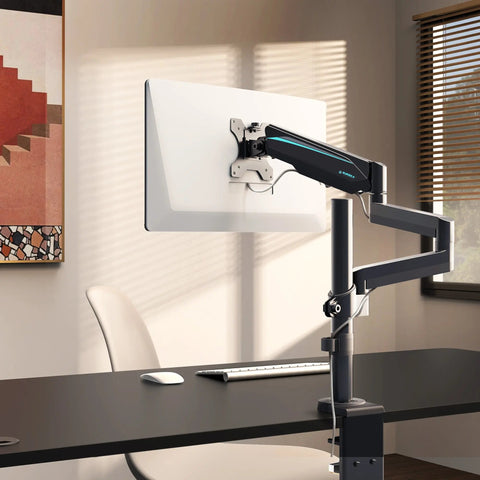
The position of the monitor is perhaps the most critical ergonomic factor in preventing neck strain. The Canadian Centre for Occupational Health and Safety (CCOHS) recommends that the top of the screen be at or slightly below eye level.
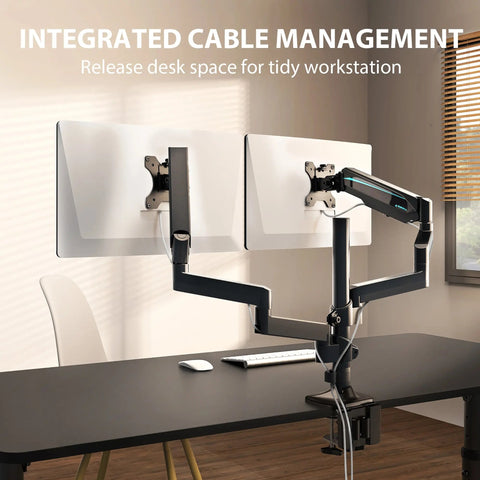
Using a Single Monitor Arm allows for precise adjustment that a fixed stand cannot provide. This is particularly useful in the Academic Zone Method:
- In the Deep Work Zone: The monitor can be positioned at the ideal focal distance for long-term reading and writing.
- During Transitions: The arm allows the screen to be rotated if the user needs to reference digital materials while working in the Administrative Zone.

Supporting the Lower Extremities
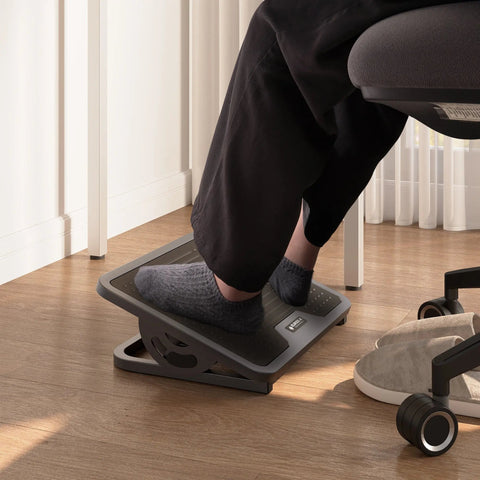
While much focus is placed on the desk and chair, the feet play a vital role in posture. When sitting, the feet should be flat on the floor to reduce pressure on the back of the thighs. For users whose desks or chairs are set higher to accommodate their height, an Adjustable Ergonomic Footrest or a Footstool with Wheels is essential.
These tools promote "active sitting" by allowing the user to shift their foot position, which helps maintain blood flow in the lower limbs—a concern detailed by OSHwiki regarding lower limb disorders.

Practical Recommendations for Implementation
To implement the Academic Zone Method effectively, follow these standardized setup guidelines aligned with BIFMA G1-2013 Ergonomics Guidelines and ISO 9241-5:2024.
1. The 20-8-2 Sitting Rhythm
Based on the Cornell University Ergonomics Web, the ideal work rhythm is not standing all day, but alternating:
- 20 Minutes Sitting: Use this for focused writing in the Deep Work Zone.
- 8 Minutes Standing: Use this for administrative tasks or reading.
- 2 Minutes Moving: Stretch or walk to the department mailroom.
2. Monitor and Keyboard Alignment
Ensure your setup complies with basic ergonomic dimensions:
- Monitor Distance: 20 to 40 inches (50–100 cm) from the eyes.
- Keyboard Height: Position the keyboard so that elbows are at a ~90-degree angle and wrists remain in a "neutral" (straight) position. This is a foundational principle from the OSHA eTools for Computer Workstations.
3. Lighting and Cognitive Performance
Environmental factors are often overlooked. Research published in ScienceDirect (2025) indicates that lighting has a "profound influence" on attention. Ensure your Deep Work Zone is well-lit with task lighting to reduce eye strain, while the Administrative Zone can utilize softer ambient light.
4. Safety and Compliance
If your workstation includes extensive physical storage (as many academic offices do), ensure your units comply with safety standards. The CPSC STURDY / 16 CFR Part 1261 provides guidelines for anti-tip-over design, which is a critical consideration when stacking heavy research volumes or archives. For those interested in deeper technical specifications, The 2026 Workstation White Paper: Converging Ergonomic Science and Sustainable Engineering provides a comprehensive look at the intersection of safety and design.
Scenario-Based Setup Analysis
Scenario A: The Research-Intensive Faculty
- Focus: 80% Research, 20% Admin.
- Setup: The research zone takes the entire long side of the L-desk. The standing desk function is used primarily for research "thinking phases."
- Recommendation: Prioritize a high-quality monitor arm to reduce neck fatigue during 4-hour writing blocks.
Scenario B: The Department Administrator / Teaching Faculty
- Focus: 50% Admin, 50% Research.
- Setup: A strict 50/50 split. The standing function is used for administrative "stand-up" meetings or quick email bursts.
- Recommendation: Utilize the Footstool with Wheels to allow for quick movement between zones without standing up.
Summary of Ergonomic Principles for Academic Focus
| Feature | Ergonomic Requirement | Academic Benefit |
|---|---|---|
| Desk Height | Adjustable (Sit-Stand) | Prevents static load; improves circulation during long research hours. |
| Zoning | 60/40 Physical Split | Reduces cognitive load and attention residue during task switching. |
| Monitor Position | Eye-level, Adjustable | Reduces cervical spine strain; facilitates screen sharing or task shifting. |
| Foot Support | Flat feet or Footrest | Maintains lumbar neutral position; prevents lower limb swelling. |
| Storage | Integrated / Anti-tip | Reduces visual clutter; ensures safety in high-density book environments. |
By adopting the Academic Zone Method, higher education professionals can transform their office from a source of physical and mental friction into a high-performance environment. The combination of spatial logic and ergonomic engineering allows for a workspace that supports both the rigor of deep research and the efficiency of administrative management.
YMYL Disclaimer: This article is for informational purposes only and does not constitute professional medical advice. Individuals with pre-existing musculoskeletal conditions or chronic back pain should consult a qualified physiotherapist or ergonomic specialist before implementing significant changes to their workstation setup or work rhythm.
References
- BIFMA G1-2013 Ergonomics Guideline for Furniture
- CCOHS: Office Ergonomics - Sit/Stand Desk
- Cochrane: Workplace interventions for reducing sitting at work (2018)
- Cornell University Ergonomics Web — Workstation Guides
- OSHA eTools: Computer Workstations - Neutral Working Postures
- ISO 9241-5:2024 Workstation layout & postural requirements
- WHO 2020 Guidelines on Physical Activity & Sedentary Behaviour
- The 2026 Workstation White Paper: Converging Ergonomic Science and Sustainable Engineering




Leave a comment