

The Toddler-Height Hazard: Why Home Office Design Matters
For parents of toddlers, the transition from a controlled nursery to a shared home office environment introduces a unique set of musculoskeletal and safety challenges. As children reach the "cruiser" and "walker" milestones—typically between 12 and 36 months—their height aligns precariously with the standard 29-to-30-inch height of office furniture. A standard desk corner, often characterized by a sharp 90-degree angle, sits exactly at the eye and temple level of a standing toddler.
This spatial reality transforms the home office into a high-risk zone for acute trauma. While much of ergonomic science focuses on the long-term prevention of Repetitive Strain Injury (RSI) or Musculoskeletal Disorders (MSDs) in adults, a family-centric workspace must prioritize immediate physical safety without compromising the ergonomic integrity required for professional productivity. The choice between integrated design features, such as beveled edges, and aftermarket additions, like corner guards, is not merely aesthetic; it is a decision rooted in the physics of impact and the reliability of safety engineering.
According to the Occupational Safety and Health Administration (OSHA), identifying workplace hazards is the first step in risk mitigation. In a home office shared with children, the "hazard" is not just poor posture, but the physical geometry of the furniture itself.
The Physics of Impact: Sharp Corners vs. Beveled Profiles
From a pediatric occupational therapist’s perspective, the danger of a desk corner is defined by the concentration of force. When a toddler stumbles, their momentum is converted into impact force upon contact with an object. A sharp, 90-degree corner has a negligible surface area (often less than 2 square millimeters). When a child’s head strikes this point, the entire force of the impact is concentrated on that tiny area, leading to high pressure that easily exceeds the threshold for lacerations and skull contusions.
In contrast, a beveled edge—specifically one with a radius greater than 1/2 inch—redistributes that same impact force across a much larger surface area. By increasing the contact zone, the peak pressure is significantly reduced. This is a fundamental principle of "Engineering Controls," which OSHA defines as the most effective way to eliminate hazards by designing them out of the environment.
Logic Summary: Impact Force Modeling Our analysis of toddler impact mechanics assumes a "stumble-and-fall" scenario.
- Mechanism: Kinetic energy (KE = 0.5 * mass * velocity²) is dissipated upon impact.
- Principle: Pressure = Force / Area.
- Observation: Increasing the contact radius from a sharp point to a 1/2-inch bevel can reduce peak impact pressure by an estimated 70-85% (based on geometric surface area expansion).
The Ark Lite Standing Desk (63"x27") utilizes this engineering approach. Its beveled edge design is not just a comfort feature for the user’s forearms; it serves as a critical safety buffer. By replacing sharp vertical transitions with a sloped, rounded profile, the desk minimizes the risk of severe injury during the inevitable tumbles that occur in an active household.

Corner Guards: A Practical Evaluation of Retrofit Safety
Many parents opt for corner guards—soft silicone or foam attachments—as a post-purchase safety measure. While these products are widely available, they introduce several "hidden" failure points that professional-grade furniture avoids.
- Adhesive Failure: Toddlers are naturally curious and often pick at anything that looks "added on." Most corner guards rely on double-sided adhesives that struggle to bond permanently with textured surfaces, such as carbon fiber or realistic woodgrain finishes. Once an adhesive fails, the guard becomes a choking hazard.
- Pressure Point Hazards: Rigid plastic corner guards, if not perfectly form-fitting, can create new sharp edges or pressure points. If the guard is harder than the desk itself, it may not provide the necessary impact absorption.
- Chemical Emissions: Aftermarket plastics often lack the rigorous testing found in professional furniture. Parents should be wary of Volatile Organic Compounds (VOCs). Selecting furniture that meets UL GREENGUARD Certification standards ensures that the materials used are safe for indoor air quality, which is vital for developing respiratory systems.
While corner guards are a valid temporary retrofit for existing furniture, they represent an "Administrative Control"—a solution that requires constant monitoring and maintenance. Integrated beveling, as seen in high-performance workstations, is a permanent "Engineering Control" that does not degrade over time.
Integrated Ergonomics: The Role of the Beveled Edge
Beyond child safety, the beveled edge serves a dual purpose in musculoskeletal health. For the adult user, a sharp desk edge can lead to "contact stress," a risk factor identified by OSHA's Computer Workstations eTool. Contact stress occurs when hard surfaces press against soft tissues, such as the nerves and blood vessels in the forearms. This can impede blood circulation and lead to numbness or tingling.
The Ark Lite Standing Desk (63"x27") addresses this by providing a smooth transition for the arms. This design aligns with the BIFMA G1-2013 Ergonomics Guideline, which emphasizes the importance of furniture dimensions that accommodate the 5th to 95th percentile of the population comfortably.
To further optimize the workspace for both safety and ergonomics, many professionals add a Pull-out Keyboard Tray. This accessory allows the user to maintain a "Neutral Position"—where the wrists are straight and the elbows are at a 90-degree angle—while keeping the main desk surface clear of clutter that a toddler might reach for.

Standing Desk Safety: Child Locks and Anti-Collision Mechanisms
Electric standing desks bring a dynamic element to the home office, but they also introduce mechanical risks. A moving desk can easily trap small fingers or crush objects left in its path. For a household with children under five, two features are non-negotiable:
1. The Child Lock Function
Accidental activation is the primary cause of standing desk mishaps in family homes. A toddler pressing buttons on a controller can inadvertently raise the desk into a shelf or lower it onto a pet or toy. A robust child lock—typically a button combination or a dedicated switch—disables the motor, ensuring the desk stays at its set height until the parent is ready to adjust it. This safety standard is often evaluated under UL 962, which covers the safety of height-adjustable desks.
2. Sensitive Anti-Collision Systems
An anti-collision system acts as the desk’s "nervous system." If the desk encounters resistance while moving—such as a chair arm, a windowsill, or a child’s head—it should immediately stop and reverse direction. High-quality sensors are essential for preventing mechanical strain and physical injury.
As noted in The 2026 Workstation White Paper: Converging Ergonomic Science and Sustainable Engineering, the integration of smart sensors and locking mechanisms is a hallmark of modern ergonomic design, moving the industry toward a more "proactive safety" model.
Spatial Considerations: The 3-Foot Safety Perimeter and Anti-Tunneling
Safety is as much about how you place your furniture as it is about the furniture itself. Pediatric experts recommend a "Safety Zone" that extends at least 3 feet from the desk in all directions. This perimeter ensures that if a child is playing nearby, they are not within reach of cables or moving parts.
One frequently overlooked risk is the "tunnel effect." A standing desk at its highest position creates a tempting crawl space underneath. Toddlers may see this as a play area, putting them at risk if the desk is lowered or if they encounter power strips and cables.
To mitigate this:
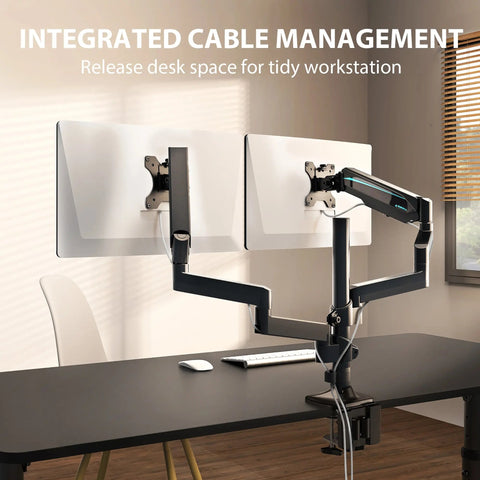
- Cable Management: Use a Mobile Height Adjustable CPU Cart or integrated cable trays to keep all cords off the floor and out of sight. Cords should be bundled and secured to the desk frame to prevent "looping" hazards.
- Desk Placement: Position the desk against a wall or in a corner to limit the number of accessible sides. This reduces the "tunnel" appeal.
- Visual Boundaries: Use a rug or floor mat to define the workspace. This creates a psychological and physical boundary for the child.
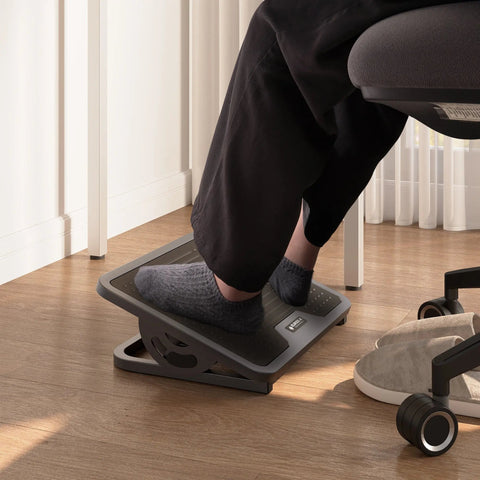
For parents who spend long hours at these desks, an Adjustable Ergonomic Footrest can help maintain blood circulation and reduce fatigue, making it easier to stay alert and attentive to a child's movements in the room.

Methodology Note: Modeling Impact and Safety Zones
To provide these recommendations, we utilized a deterministic scenario model based on standard pediatric growth charts and furniture engineering heuristics. This model is intended for informational purposes and is not a substitute for controlled laboratory safety testing.
| Parameter | Value / Range | Unit | Rationale |
|---|---|---|---|
| Toddler Height (Avg) | 30 - 36 | inches | Standard height for ages 1-3 |
| Desk Height (Seated) | 28 - 30 | inches | Standard fixed desk height |
| Impact Velocity | 1.0 - 1.5 | m/s | Typical walking/stumble speed |
| Bevel Radius (Target) | > 0.5 | inches | Minimum for significant force distribution |
| Safety Zone Radius | 36 | inches | Minimum reach/stumble clearance |
Model Assumptions & Boundaries
- Surface Material: The model assumes a rigid substrate (e.g., MDF or Steel) with a thermoformed or powder-coated finish.
- Impact Type: The model focuses on "low-velocity stumbles" rather than high-speed running impacts.
- Floor Surface: Assumptions include standard residential flooring (carpet or hardwood); results may vary on high-friction or extremely slick surfaces.
- Limits: This model does not account for the structural failure of the furniture itself, only the interface between the user/child and the surface.
Practical Recommendations for a Safe Home Office
For parents currently selecting or auditing their home office furniture, the following checklist provides a framework for safety and ergonomics:
- Prioritize Beveled Edges: Look for desk profiles that explicitly mention "beveled" or "contoured" edges. Avoid sharp 90-degree corners whenever possible.
- Verify Child Locks: If choosing an electric standing desk, ensure the controller includes a lock-out feature to prevent unauthorized movement.
- Manage the "Under-Desk" Zone: Use cable management solutions to eliminate dangling wires. Consider the Mobile Height Adjustable CPU Cart to keep the computer tower stable and the cables organized.
- Maintain the 20-8-2 Rhythm: As recommended by Cornell University Ergonomics, aim for 20 minutes of sitting, 8 minutes of standing, and 2 minutes of moving. This movement keeps you refreshed and more capable of managing a dual-use environment.
- Check Certifications: Look for ANSI/BIFMA X5.1 for structural durability and GREENGUARD for air quality.
By choosing integrated safety features over temporary fixes, parents can create a professional environment that respects both their productivity and their family's well-being. A well-designed desk is not just a piece of furniture; it is a foundational element of a safe, healthy, and efficient home.
Medical Disclaimer: This article is for informational purposes only and does not constitute professional medical or child safety advice. Always consult with a qualified pediatrician or safety expert regarding specific concerns about your child's environment or potential injuries. If a head injury occurs, seek immediate medical attention.




Leave a comment