

Quick Compliance Snapshot: The Tech Office Essentials
For procurement officers and HR leads, navigating office safety is a balance between hardware durability and regulatory liability. Use this 30-second checklist to assess your current setup:
- The Hardware Rule: Ensure all seating meets ANSI/BIFMA X5.1 (durability) and desks meet BIFMA G1-2013 (ergonomic dimensions).
- The Regulatory Rule: OSHA does not certify furniture; they enforce the General Duty Clause. Compliance is measured by how well equipment prevents injury in practice.
- The Documentation Rule: Maintain a "Workstation Compliance Folder" for every hire, including training acknowledgments and ergonomic self-assessments.
- The Setup Rule: Aim for the 20-8-2 sit-stand rhythm (20 mins sitting, 8 mins standing, 2 mins moving) to minimize static load.
The Compliance Gap in Modern Tech Workspaces
In the procurement of office furniture for high-growth tech environments, a recurring oversight often creates avoidable legal and physical risk: the conflation of mechanical durability with regulatory safety compliance. Many office managers assume that purchasing high-end furniture automatically fulfills their "duty of care" to employees. However, workplace data suggests that the hardware is only one component of a compliant safety ecosystem.
According to the Bureau of Labor Statistics (BLS) and OSHA, musculoskeletal disorders (MSDs) remain a primary driver of workplace injury. In recent reporting cycles, MSDs have accounted for approximately 30% of all non-fatal workplace injuries and illnesses involving days away from work. For tech companies, where employees spend upwards of 8 to 10 hours in static or repetitive postures, the risk is a matter of liability and operational continuity.
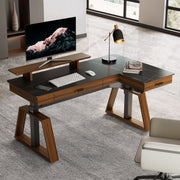
The distinction between BIFMA (Business and Institutional Furniture Manufacturers Association) and OSHA is the foundation of a compliant workspace. While BIFMA focuses on whether a chair will break under pressure, OSHA focuses on whether the user is at risk of injury under the conditions of the work. Navigating this landscape requires understanding how engineering controls, such as the Ark Executive Standing Desk (63"x29"), serve as a primary defense in a comprehensive safety program.
BIFMA vs. OSHA: Standards vs. Regulations
To build a compliant office, one must first distinguish between a voluntary industry standard and a mandatory federal regulation.
BIFMA: The Mechanical Benchmark
BIFMA develops voluntary standards that define the safety, durability, and structural adequacy of furniture. For example, the ANSI/BIFMA X5.1 standard outlines rigorous tests for office chairs, specifically focusing on back strength, base stability, and seat durability.
When a product is BIFMA-certified, it means the hardware has been stress-tested to survive the rigors of a professional environment. However, BIFMA certification is not a guarantee that an employee will be protected from an MSD. A chair can be structurally "safe" (it won't collapse) but ergonomically "hazardous" if it lacks the adjustability required to support a neutral spinal position for a specific user.
OSHA: The Regulatory Enforcer
Unlike BIFMA, OSHA does not "certify" furniture. Instead, OSHA enforces the General Duty Clause (Section 5(a)(1)) of the OSH Act. This clause requires employers to provide a workplace "free from recognized hazards that are causing or are likely to cause death or serious physical harm."
In the context of ergonomics, OSHA uses this clause to cite companies that fail to address known ergonomic risks. Historical enforcement data indicates that OSHA has issued numerous citations for ergonomic hazards under the General Duty Clause over the last decade. Notably, since 2022, there has been a visible shift in enforcement focus toward high-repetition and high-static-load environments—including major tech and logistics firms—where ergonomic hazards were deemed "recognized" but unaddressed.
Expert Insight: BIFMA certification serves as evidence of "due diligence" in equipment selection, while OSHA compliance is measured by the application of that equipment to prevent injury.
The Physiological Cost of Static Load
The tech industry is uniquely susceptible to "static load"—the physical strain caused by maintaining a single posture for extended periods. When an employee sits in a non-adjustable chair, the musculoskeletal system is forced to adapt to the furniture, rather than the furniture adapting to the user.
As detailed in The 2026 Workstation White Paper: Converging Ergonomic Science and Sustainable Engineering, the mechanism of MSDs often begins with micro-trauma to soft tissues caused by reduced blood circulation and sustained muscle contraction.
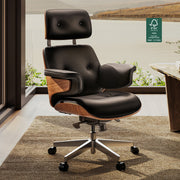
To help mitigate this, the Flex, Dual-Backrests Ergonomic Office Chair utilizes a dual-backrest design. Unlike traditional single-back chairs, this system is designed to respond to micro-movements in real-time. By providing targeted support to both sides of the lower back, it helps reduce the static load on the lumbar spine, facilitating a neutral working posture as defined by OSHA eTools.

Engineering Controls: The Standing Desk as a Risk Mitigator
Under the OSHA "Hierarchy of Controls," Engineering Controls are preferred over Administrative Controls because they aim to remove the hazard from the environment at the source.
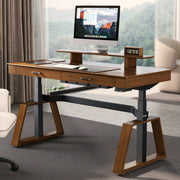
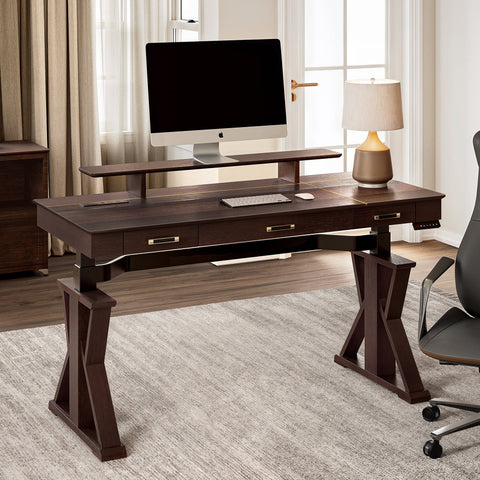
A height-adjustable workstation, such as the Ark EX Executive Standing Desk (60"x26"), is a primary engineering control. According to a systematic review by Cochrane (2018), sit-stand desks can significantly reduce sitting time—with observed reductions ranging from 84 to 116 minutes per day in various study groups.
However, the efficacy of these desks depends on their adherence to dimensional standards. The BIFMA G1-2013 Ergonomics Guideline provides recommended dimensions to cover the 5th to 95th percentile of the population. When specifying desks, procurement should ensure the adjustment range accommodates both the shortest and tallest employees to avoid "keyboard reach" or "postural neck" hazards.
The Problem of Monitor Placement
Even with a BIFMA-compliant desk, neck strain (cervical strain) remains a common complaint if the visual plane is incorrect. Using a Dual Monitor Arm allows for independent adjustment of screen height and depth. This is a practical step toward preventing the "turtling" effect—where a user leans forward and down to see a low monitor—which can place excessive force on the upper trapezius and cervical vertebrae.

Modeling the ROI of Ergonomic Compliance
For B2B decision-makers, the investment in ergonomic furniture is often scrutinized for its Return on Investment (ROI). While the primary goal is risk mitigation, the potential productivity benefits can be modeled based on industry benchmarks.
| Parameter | Estimated Value | Unit | Rationale/Source |
|---|---|---|---|
| Average MSD Claim Cost | ~$30,000 | USD | Based on National Safety Council (NSC) averages for medical + indemnity costs |
| Productivity Loss (Chronic Pain) | ~15% | Efficiency | Common heuristic for "presenteeism" in office environments |
| Equipment Lifecycle (BIFMA) | 10+ | Years | Minimum durability expectation for professional-grade hardware |
| Training Onboarding Time | 20 | Minutes | Practice-based recommendation for individual workstation setup |
| Employee Retention Impact | High | Qualitative | Correlated with workplace wellness and "Duty of Care" perception |
ROI Calculation Basis & Assumptions
- Claim Frequency: This model assumes a baseline risk of 1–2 MSD claims per 100 employees per year in non-optimized environments.
- Cost of Inaction: The ~$30,000 figure is a direct cost estimate; indirect costs (hiring replacements, training, lost morale) can be 2x to 4x higher.
- Productivity Gain: Assumes that providing adjustable equipment reduces the frequency of "micro-breaks" taken specifically due to physical discomfort.
The Documentation Shield: Beyond the Purchase
A common compliance gap is the failure to document the use of ergonomic furniture. In the event of an OSHA audit or a workers' compensation claim, simply having BIFMA-certified desks is often insufficient to demonstrate a comprehensive safety program.
Based on patterns observed in workplace audits, a robust defense often includes a "Workstation Compliance Folder." This should include:
- BIFMA Test Reports: Specific standards met by the supplier (e.g., ANSI/BIFMA X5.5 for desks).
- Training Acknowledgments: Signed forms indicating the employee was trained on how to adjust their Ark Executive Standing Desk (63"x29") and chair.
- Self-Assessment Checklists: Periodic reviews where employees confirm their setup meets the OSHA Evaluation Checklist.
The 15-Minute Onboarding Rule
We recommend a mandatory 15-to-20 minute onboarding session for every new hire. This session should focus on the hands-on adjustment of their specific chair and desk. In our experience, this proactive approach helps reduce "early-onset discomfort" reports, which can otherwise escalate into chronic MSDs if unaddressed.

Practical Recommendations for Tech Office Setup
To align with both BIFMA mechanical standards and OSHA ergonomic guidelines, follow this structured setup protocol:
1. The Ideal Sit-Stand Rhythm
Avoid encouraging employees to stand all day. Prolonged static standing can lead to lower limb discomfort and circulatory issues, as noted by EU-OSHA. Instead, adopt the Cornell University "20-8-2" Rule:
- 20 Minutes: Sitting in a neutral posture.
- 8 Minutes: Standing at a properly adjusted desk.
- 2 Minutes: Moving, stretching, or walking.
2. Monitor Height Calibration
The top line of the screen should be at or slightly below eye level. If using a Dual Monitor Arm, ensure the screens are angled slightly inward to minimize head rotation, which OSHA eTools suggests can help reduce neck fatigue.
3. Neutral Wrist Posture
The keyboard and mouse should be at a height where the elbows are at a ~90-degree angle and the wrists remain flat (neutral). Desks with integrated storage, like the Ark EX Executive Standing Desk (60"x26"), should be evaluated to ensure that drawers do not interfere with legroom or the ability to maintain this neutral wrist angle.
Conclusion: A Strategic Approach to Office Safety
Navigating office safety compliance in the tech industry requires moving beyond a "checkbox" mentality. While BIFMA certification provides the structural assurance that your furniture will last, OSHA compliance focuses on the long-term health of your workforce.
By integrating high-performance engineering controls—such as dual-backrest chairs and dual-motor standing desks—with consistent employee training and documentation, tech companies can significantly improve their risk profile. The goal is to create a "neutral" environment where the furniture works in harmony with human physiology, supporting both productivity and corporate resilience.
Disclaimer: This article is for informational purposes only and does not constitute professional legal, medical, or safety advice. Compliance requirements vary by jurisdiction and specific workplace conditions. Employers should consult with qualified ergonomic professionals and legal counsel to ensure adherence to local regulations.
References
- OSHA eTools: Computer Workstations - Neutral Working Postures
- BIFMA G1-2013 Ergonomics Guideline for Furniture
- Cochrane: Workplace interventions for reducing sitting at work (2018)
- Cornell University Ergonomics Web — Workstation Guides
- Bureau of Labor Statistics: Nonfatal Occupational Injuries and Illnesses Data
- Canadian Centre for Occupational Health and Safety (CCOHS): Office Ergonomics
- ISO 11226:2000 Evaluation of static working postures
- ANSI/BIFMA X5.1 General-Purpose Office Chairs

Leave a comment