

Quick Summary & Calibration Checklist
The Short Answer: High-value CAD workstations often suffer from anti-collision sensor drift because heavy, off-center equipment (like multi-monitor arms and full-tower PCs) alters the desk's inertial mass. To prevent hardware damage or false stops, engineers should manually recalibrate their desk's sensitivity after fully loading the workstation, aiming for a "soft impact" response rather than relying on factory defaults.
1-Minute Quick Check:
- [ ] Load Test: Is your desk loaded to its typical daily weight (including all monitors and PCs) before calibrating?
- [ ] Clearance: Do you have at least 12 inches of clearance from rear walls and cabinets?
- [ ] Cable Slack: Are cables bundled with magnetic ties and given enough slack to reach maximum height without pulling?
- [ ] Soft Impact Validation: Does the desk reverse immediately when encountering a soft obstacle (like a foam block) during descent?
- [ ] Center of Gravity: Is the heaviest equipment (e.g., CPU) center-mounted under the desk or placed on a separate floor cart to reduce non-axial load?
The Precision Paradox of High-Value CAD Workstations
For professional engineers and CAD designers, the workstation is more than a desk; it is a high-stakes platform supporting thousands of dollars in specialized hardware. A typical enterprise setup—comprising liquid-cooled full towers, triple ultrawide monitors, and high-fidelity graphics tablets—represents a significant investment that requires rigorous protection. However, a common frustration emerges during the transition between seated and standing positions: the anti-collision system.
In many high-performance environments, users encounter a "Precision Paradox." A desk that operates flawlessly when empty can sometimes exhibit delayed sensor responses or frequent false triggers once fully loaded with heavy equipment. This is not necessarily a sign of a mechanical failure, but rather a calibration mismatch between the desk’s internal safety logic and the dynamic physics of a CAD-grade payload. When a desk fails to stop during an impact, or stops prematurely due to cable tension, the risk to expensive hardware—and the disruption to technical focus—is substantial.
Understanding how to tune anti-collision sensitivity is not just about convenience; it is a critical maintenance protocol for protecting the integrity of your hardware and helping to ensure a reliable, ergonomic workflow.
The Physiology of Static Load and Musculoskeletal Risk
The primary driver for adopting height-adjustable workstations in engineering is the mitigation of Work-Related Musculoskeletal Disorders (WMSDs). According to the Occupational Safety and Health Administration (OSHA) eTools on Computer Workstations, maintaining a "neutral body position" is essential for reducing the risk of strain. For CAD professionals who endure high cognitive loads, the tendency to remain in a static position for hours is high.
As detailed in the OSHwiki on Pathophysiological Mechanisms of Musculoskeletal Disorders, prolonged static sitting leads to increased intramuscular pressure and reduced blood circulation. This "static load" is a primary risk factor for chronic back pain and lower limb disorders. While the Cochrane systematic review on workplace interventions confirms that sit-stand desks significantly reduce daily sitting time (by approximately 84–116 minutes), the effectiveness of these tools relies heavily on the user's ability to transition safely and frequently.
If the anti-collision system is poorly calibrated, the user may subconsciously avoid adjusting the desk height to prevent "false stops" or equipment jarring. This behavioral avoidance traps the engineer in a static posture, defeating the ergonomic purpose of the workstation and increasing the risk of long-term injury.
Engineering Analysis: Why Anti-Collision Sensors Drift
Anti-collision technology in standing desks typically relies on one of two mechanisms: electronic current monitoring (detecting spikes in motor resistance) or specialized six-axis gyro sensors. In a CAD environment, both systems face unique challenges.
The Impact of Non-Axial Loading
Most anti-collision sensors are calibrated for "axial loading"—force applied vertically through the center of the desk legs. However, CAD setups often feature heavy monitor arms clamped to the rear edge. This creates "bending-torsion loads." Based on general engineering principles for force measurement, off-center weight can subtly shift baseline sensor accuracy. In practical workshop observations, this bending-torsion effect can widen error margins by an estimated 10–15% under heavy, unbalanced real-world impacts, compared to perfectly centered loads.
Inertial Mass vs. Static Weight
In our customer support experience, a frequent calibration oversight is failing to account for the full dynamic load. While a desk might pass a factory test with a single monitor, adding a 25kg full-tower PC and triple monitors changes the system's inertia. When the desk moves, this mass creates momentum. If the anti-collision sensitivity is set too low, the system may not be able to overcome this momentum quickly enough to stop during a collision, leading to a delayed sensor response.
Practical Heuristic: Based on common support desk patterns, when a workstation approaches 80% of its rated capacity, the added inertial mass often requires bumping up sensor sensitivity by roughly 20% (typically 1–2 levels on a standard controller) to maintain a responsive stop-distance comparable to a lightly loaded desk.
Modeling the Enterprise CAD Workstation
To illustrate these dynamics, we created a baseline heuristic model of a high-mass workstation scenario typical of an aerospace or automotive design studio. This model examines the stress placed on dual-motor systems and the resulting implications for safety sensors.
Modeling Transparency (Method & Assumptions)
- Modeling Type: Deterministic parameterized load analysis (Illustrative Example).
- Scenario: Senior Mechanical Engineer operating a dual-motor workstation in a constrained studio environment.
- Boundary Conditions: Assumes static distributed load; does not account for dynamic shock from user-initiated sudden stops.
| Parameter | Value | Unit | Rationale / Source Category |
|---|---|---|---|
| PC Case Class | Full Tower (Liquid Cooled) | text | Max weight class for consumer/pro PC |
| Number of Monitors | 3 | count | Standard triple-view CAD workflow |
| Total Equipment Load | ~70.5 | kg | Monitors, Arms, PC, Peripherals |
| Tabletop Weight | 25 | kg | Reinforced composite for stability |
| Total System Mass | 95.5 | kg | Combined load on lifting columns |
| Motor Utilization | 79.58 | % | Relative to 120kg dual-motor capacity |
Based on this illustrative model, the system operates near the 80% heuristic threshold for motor longevity and sensor reliability. At this utilization level, sensor performance drift due to minor mechanical shifts in the leg assemblies can become a noticeable factor. For B2B environments, we recommend a quarterly sensor validation protocol. While standing desks are not strictly governed by heavy-machinery standards like IEC 61508, adopting their conservative mindset—aiming for minimal false alarm rates—is a practical way to maintain workstation integrity.
Calibrating for Inertial Mass: The 80% Rule
To maintain the safety of your hardware, you generally need to move beyond manufacturer defaults. Experienced technicians recommend performing the calibration routine with the desk loaded to at least 80% of its typical working weight.
The Step-by-Step Calibration Protocol
- Clear the Perimeter: Ensure no cables are snagged and there is a 12-inch clearance from the rear wall, as room depth deficits are a primary cause of collision.
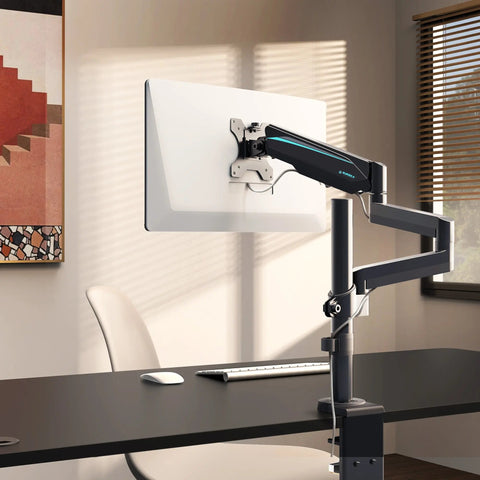
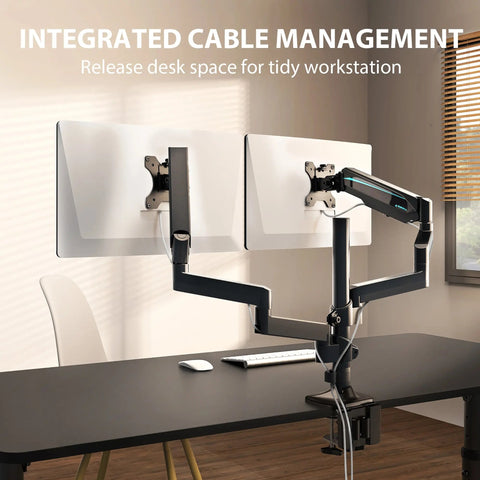
- Load the Workstation: Install all primary equipment, including heavy mounts like our brand's Carbon Fiber Dual Monitor Stand and any heavy CPU towers.
- Initiate Sensitivity Adjustment: Most controllers allow you to toggle through sensitivity levels (usually 1–9 or Low/Med/High).
- The "Soft Impact" Test: Place a cardboard box or a soft foam block on the floor beneath the desk. Lower the desk. If the desk crushes the box significantly before reversing, the sensitivity is too low.
- The "Cable Tension" Check: Raise the desk to its maximum height. If the desk stops prematurely, check for cable tension. Use a flexible management solution like our Magnetic Cable Tie to ensure cables have enough "slack loop" to move freely without pulling on the controller.
Environmental Interference and Diagnostic Protocols
In a professional studio, environmental factors can cause intermittent false triggers that are often mistaken for sensor failure.
- Infrared Sources: Strong ambient infrared sources, such as direct sunlight through large windows or space heaters, can interfere with certain optical sensors. If your desk stops at the same time every afternoon, sunlight is likely the culprit.
- Reflective Surfaces: Highly reflective epoxy floors or polished metal cabinets can cause signal bounce.
- Mechanical Shift: Over time, dust accumulation in the leg assemblies can increase friction. This is why our internal publication, The 2026 Workstation White Paper, emphasizes the importance of sustainable engineering and regular maintenance in converging ergonomic science with practical longevity.
Diagnostic Heuristic: The "Consistent Height" Rule
If a false stop occurs at a consistent height, it is likely a mechanical obstruction or a cable tension issue. If it occurs at random heights but consistent times of day, it is likely environmental (lighting).
Strategic Hardware Integration for Load Management
Managing the center of mass is the most effective way to prevent sensor "alarm fatigue." By distributing weight more effectively, you reduce the bending-torsion loads that cause sensor inaccuracies.
Off-Boarding the CPU
A full-tower PC is often the heaviest single component. Rather than placing it on the desktop, which shifts the center of gravity significantly, consider using a mount such as our Knob-operated Adjustable CPU Holder. This mounts the PC securely to the underside of the desk, ensuring the weight moves with the desk but remains centered under the support structure.
Alternatively, for setups with exceptionally heavy liquid-cooled towers, an independent floor mount like our Mobile Height Adjustable CPU Cart allows the PC to sit on the floor, removing the weight from the desk motors entirely. This approach aligns with general guidelines such as the BIFMA G1-2013 Ergonomics Guideline, which suggests that furniture should be adjustable to fit the 5th to 95th percentile of the population without compromising structural stability.
Enhancing Stability
For high-speed technical work, stability is as important as safety. Reducing micro-wobble (as detailed in our internal stability guide) not only improves focus but also helps reduce the "vibration noise" that can occasionally trigger hyper-sensitive anti-collision sensors. Ensuring your monitor arms are rated for the weight of your screens is a fundamental step in this process. For more on this, refer to our guide on monitor arms and desk stability.
Maintaining a Reliable System
For the professional engineer, the workstation is a tool of precision. Maintaining that precision requires moving beyond a "set it and forget it" mentality. By understanding the physics of load distribution and the logic of anti-collision sensors, you can create an environment that is both ergonomically sound and hardware-safe.
Regularly auditing your setup—checking for cable slack, cleaning leg assemblies, and recalibrating after any equipment change—ensures that your workstation remains a reliable partner in your technical workflow. This proactive approach helps protect your high-value hardware investment and, more importantly, supports your long-term musculoskeletal health by ensuring that the transitions between sitting and standing are safe, smooth, and frequent.
YMYL Disclaimer: This article is for informational purposes only and does not constitute professional medical, legal, or engineering advice. Proper workstation setup and ergonomic health are highly individual. If you suffer from pre-existing musculoskeletal conditions, consult a qualified physiotherapist or occupational health specialist. Always follow the manufacturer's specific safety instructions for your hardware and furniture.
References
- BIFMA G1-2013 Ergonomics Guideline for Furniture
- Canadian Centre for Occupational Health and Safety (CCOHS): Office Ergonomics - Sit/Stand Desk
- Cochrane: Workplace interventions for reducing sitting at work (2018)
- ISO 11226:2000 Evaluation of static working postures
- OSHA eTools: Computer Workstations - Desks
- The 2026 Workstation White Paper: Converging Ergonomic Science and Sustainable Engineering
- Towards preventing the false alarms in indoor physical intrusion detector systems




Leave a comment