

Pick a separate shelf if your room has a spot where it can actually go and you want a clearer desk or a different place to display things. Pick a desk hutch if there's no good spot for a shelf and the hutch you're looking at still leaves the work and display area you need.
Neither one wins in every room. Black Friday may be when you're shopping, but the deciding factors are your floor plan and the desk area you want to protect, not the label on the box.
Hutch or Separate Shelf: Which Fits Your Room?
The choice comes down to two checks: whether your room has a workable location for a shelf, and whether the specific hutch leaves the work and display area you need. A hutch keeps storage attached to the desk, while a separate shelf can stand elsewhere if floor space exists.

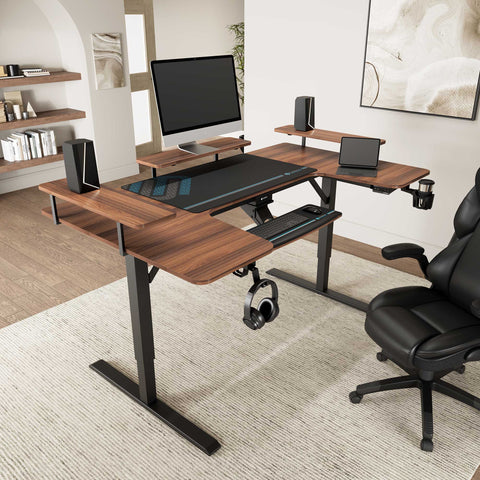
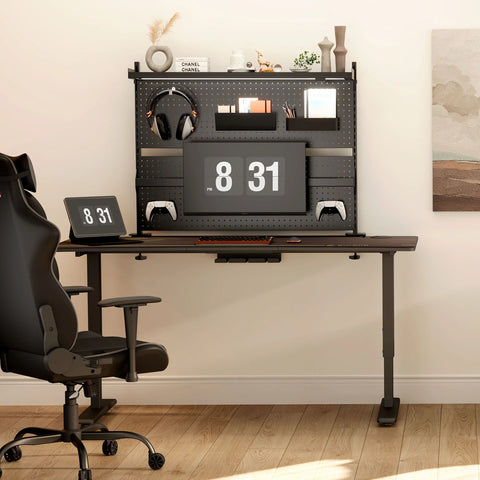
Depending on the unit and your layout, an attached hutch can cut into the area where a monitor or display items would go. Meanwhile, a separate shelf only works if the room has an open wall or corner for it.
| Storage arrangement | When it fits better |
|---|---|
| Desk hutch | No usable spot for a separate shelf, and this hutch leaves the work and display area you need |
| Separate shelf | The room has a usable spot, and you want a clearer or rearranged desk |
The desk itself is a good place to start. Cornell's desk-clearance guidance suggests keeping the center of the desk free of storage and decor. It also says low shelves near or over the desk can hold items you need close by. So both options can keep supplies within reach. What really separates them is whether that storage sits on the desk.
Try this with your own setup. First, mark the exact wall or corner where a separate shelf would go, and make sure it won't block a walkway or door. Next, measure the desk area you want to keep open for your screen, keyboard, notebooks, or display pieces. Then compare that area with the footprint of the specific hutch. If the shelf spot works, a separate unit gives you more freedom. If it doesn't, choose a hutch only if it passes the desk-area check. For more vertical storage ideas, or to compare bookshelves and cabinets, our office storage options are sorted by type.
A Separate Shelf in a Compact Layout
A small room can still have room for a separate shelf. In NYIAD's compact-office example, a room measuring five feet wide at its widest point and three feet at its narrowest pairs a far-end bookshelf with a separate full-size desk. This setup provides workspace for folders, pens, and notepads.

The same source notes that a full-size computer and phone would crowd that desk, while a laptop and cell phone fit fine.
That's just one room. It doesn't set a minimum size for anyone else's space. What it shows is placement freedom: the shelf went where the room had space, and the desk was left for work. Before you copy the idea, check your desk size planning against the gear you'll actually use.
FAQs
Is a desk with a hutch better for a small room?
Not automatically. A hutch uses height above the desk, but whether it suits a small room depends on how much desk surface it leaves. If your room has no other good spot for storage, it can make sense.
What should go on a nearby shelf versus the desk?
Keep the center of the desk open for primary work like your keyboard, monitor, or handwritten tasks. Place secondary essentials—such as a phone, pen holder, or desk lamp—on the nearby shelf so they stay within reach without crowding your work area.
Can I use both a hutch and a separate shelf?
Yes, if your room and desk allow it. Run both checks: a usable spot for the shelf and enough open desk area under the hutch. Then split items between them based on how often you reach for them.
How do I avoid buying the wrong vertical storage on sale?
Measure before you shop. Know where a shelf would go and how much desk area you need. Then compare those numbers with the dimensions of the specific unit, not just its category name.
Leave a comment