

The Home Office Safety Paradox: Why Ergonomics and Childproofing Must Coexist
For many remote professionals, the transition to a home office was driven by the need for productivity and the desire for a better work-life balance. However, as the home environment becomes a permanent workspace, a specific safety paradox has emerged: the very tools designed to improve adult health—such as height-adjustable standing desks—can introduce new risks for the most vulnerable members of the household.
While we often discuss the benefits of reducing "static load" and improving "blood circulation" through postural changes, we rarely address the mechanical risks inherent in motorized furniture within a domestic setting. According to the World Health Organization (WHO) 2020 Guidelines on Physical Activity and Sedentary Behaviour, adults should limit sedentary time and interrupt long periods of sitting. Standing desks are a primary engineering solution for this, but for parents, the convenience of a motorized desk must be balanced against the curiosity of a toddler.
The common misconception is that "anti-collision" technology is the ultimate safety feature. While essential, anti-collision is designed to protect the desk's motor and surrounding objects from physical resistance. It does not, however, address the "primary safety event" in a household: a child repeatedly interacting with the control panel. This article explores why a digital child lock is not just a premium add-on, but a foundational requirement for the modern, family-oriented home office.
The Physiological Necessity of Posture Rotation
To understand why we bring these powerful machines into our homes, we must first look at the musculoskeletal risks of traditional sedentary work. Prolonged static sitting is a significant risk factor for Work-related Musculoskeletal Disorders (WMSDs).
Understanding Static Load and MSDs
When you remain in a seated position for hours, your muscles must maintain a constant state of contraction to support your posture. This is known as a "static load." Unlike dynamic movement, which encourages blood flow, static loading can lead to reduced circulation, localized fatigue, and the buildup of metabolic byproducts in muscle tissue. The Occupational Safety and Health Administration (OSHA) identifies poor posture and repetitive tasks as core risk factors for MSDs, which can manifest as chronic back pain, neck strain, or Repetitive Strain Injury (RSI).
The goal of an ergonomic workstation is to facilitate a "neutral position"—a posture where joints are naturally aligned and physical stress is minimized. As detailed in The 2026 Workstation White Paper: Converging Ergonomic Science and Sustainable Engineering, modern furniture design focuses on enabling frequent, low-effort transitions between sitting and standing to mitigate these risks.
The Role of Sit-Stand Interventions
Research from the Cochrane Library indicates that sit-stand desks can significantly reduce sitting time by approximately 84 to 116 minutes per day. By alternating between positions, users can distribute mechanical stress across different muscle groups. However, the mechanism that allows for this health benefit—the electric motor and drive system—requires careful management in a home with children.

Beyond Anti-Collision: The Essential Role of Digital Child Locks
In the industry, "anti-collision" refers to sensors (often gyroscopic or current-based) that stop and reverse the desk's movement if it hits an obstacle. While this is a critical safety layer, practitioners in the field note that it is reactive. It only triggers after a collision has occurred.
The Toddler Interaction Scenario
A toddler’s interaction with a desk is rarely a single "collision" event. Instead, it often involves curiosity-driven button pressing. If a child holds the "down" button, they can potentially trap a limb between the desktop and a chair or storage unit. While the anti-collision might eventually trigger, the initial force can still cause distress or minor injury.
A digital child lock provides a proactive "software-level" barrier. By disabling the keypad, you ensure that the motor cannot be activated without an intentional, multi-step sequence from an adult. This is aligned with the "Hierarchy of Controls" outlined by OSHA, where engineering controls (like the lock) are preferred over administrative controls (like telling a child not to touch the desk).
Expert Insight: The Habit of Safety
A common oversight for remote parents is forgetting to re-engage the child lock after they have adjusted their own height. To combat this, industry experts recommend placing the desk controller in a consistent, slightly elevated position. This not only supports adult ergonomics by keeping the controls within a comfortable reach but also makes the act of locking the desk a visible, habitual part of the workflow.
Logic Summary: Our safety recommendations are based on the principle of "Defense in Depth," where multiple layers of protection (Anti-collision + Digital Lock + Physical Layout) work together to minimize risk in non-controlled environments like a family home.
Technical Modeling: Safety Margins and Room Layout
To provide concrete guidance for safety-conscious parents, we have modeled a typical dual-parent remote worker scenario. This analysis examines how equipment load, room layout, and cable management impact the overall safety profile of a home office.
Scenario: The Dual-Parent Remote Office
This model assumes a 12-foot deep room shared by two parents, with a toddler who has access to the space during non-working hours.
Table 1: Battlestation Load & Motor Safety Margin
| Component | Estimated Weight | Unit | Rationale |
|---|---|---|---|
| Desktop (Composite/Wood) | ~18 | kg | Standard 60" tabletop |
| Dual Monitors + Arms | ~12 | kg | Productivity setup |
| PC (Mid-Tower) | ~15 | kg | Standard workstation |
| Peripherals & Buffer | ~5 | kg | Keyboard, mouse, speakers |
| Total Load | ~50 | kg | ~63% of Single Motor Capacity |
Note: Based on BIFMA X5.5 standards, maintaining a load below 80% of the motor’s rated capacity (typically 80kg for single-motor and 120kg for dual-motor) ensures longevity and reduces the risk of motor failure during unexpected interference.
Table 2: Room Layout & Circulation Fit
| Metric | Value | Unit | Source/Logic |
|---|---|---|---|
| Desk Depth | 30 | in | Provides physical buffer |
| Dynamic Chair Zone | 42 | in | Required for safe movement |
| Primary Circulation | 36 | in | Adult access walkway |
| Total Depth Required | 108 | in | Fits 144" room with 36" surplus |
By ensuring a 36-inch surplus in room depth, parents can create a physical separation between the "work zone" and the "play zone." This surplus space is vital for preventing a child from being accidentally bumped by a moving chair or caught in the desk's path.

The "Cable Chaos" Factor: A Hidden Tip-Over Risk
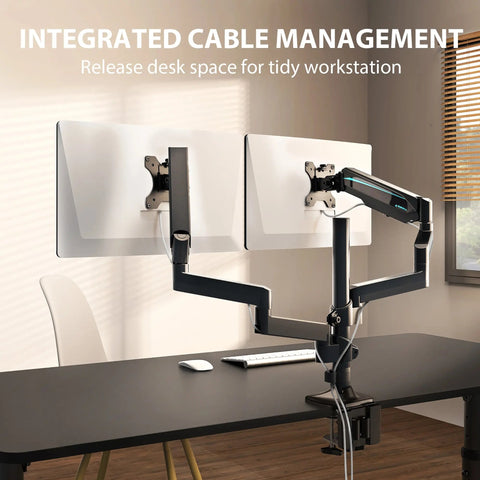
While much focus is placed on the desk's movement, cable management is an equally critical safety consideration. Curious children are just as likely to pull on a dangling wire as they are to press a button.
Preventing Equipment Toppling
If cables are not properly secured, a child pulling on a monitor cord could topple a peripheral even if the desk itself is locked. According to the Consumer Product Safety Commission (CPSC) STURDY Act, furniture stability is paramount in preventing tip-over injuries. While standing desks are generally stable due to their heavy steel frames, the objects on the desk are vulnerable.
Modeling Safe Cable Length
To prevent tension that could lead to toppling, use the following heuristic for cable length:
- Measure Max Height: Determine the desk’s highest point (e.g., 50 inches).
- Calculate Euclidean Distance: Use the horizontal distance from the PC to the desk grommet plus the vertical travel.
- Apply the 25% Slack Buffer: Add 25% extra length to ensure that at maximum height, there is no tension.
For a desk rising to 50 inches with a PC on the floor, a 10-foot cable is typically the minimum safe standard to prevent the "pull-down" effect during adjustment.
Practical Recommendations for a Child-Safe Workstation
Creating a secure environment requires a combination of the right hardware and disciplined habits. Below is a checklist for setting up a home office that prioritizes both adult productivity and child safety.
1. Select the Right Desk Features
Look for desks that meet UL 962 standards, which cover mechanical and electrical safety. The Ark EL Executive Standing Desk (60"x26") and the Ark X Executive Standing Desk (60"x26") are excellent examples of furniture that integrates these safety considerations into a professional aesthetic. These models often feature integrated storage, which helps keep small, swallowable office supplies out of a child's reach.
2. Implement the 20-8-2 Rhythm
To maximize the health benefits of your desk while maintaining focus on safety, follow the Cornell University Ergonomics "20-8-2" rule:
- 20 Minutes Sitting: Maintain a neutral posture with feet flat on the floor.
- 8 Minutes Standing: Use this time to engage different muscle groups.
- 2 Minutes Moving: Step away from the desk to stretch or check on the household.
3. Controller and Keypad Management
- Activate the Lock: Always engage the digital child lock before leaving the room, even for a short break.
- Preset Heights: Use memory presets to avoid manually hunting for the right height, which reduces the time the motor is active and the "curiosity window" for a child.
- Flush Mounting: Choose a controller that mounts flush with the desktop to minimize the physical profile a child might grab or pull.
4. Surface Safety
Consider the materials of your workspace. The Faux Saddle Leather Adjustable Standing Desk (55"x23") offers a softer edge profile compared to sharp-cornered laminate desks, which can reduce the severity of accidental "head-bumps" for a toddler playing nearby. Furthermore, ensure your desk surface complies with CPSC Lead in Paint regulations to ensure a non-toxic environment.

Summary of Safety Layers
| Layer | Feature | Primary Benefit |
|---|---|---|
| Active Safety | Digital Child Lock | Prevents unauthorized motor activation. |
| Reactive Safety | Anti-Collision Sensors | Protects objects and the motor from damage. |
| Environmental | Cable Management | Prevents equipment toppling and entanglement. |
| Structural | BIFMA/UL Compliance | Ensures mechanical stability and electrical safety. |
| Behavioral | 20-8-2 Routine | Promotes health while maintaining workspace awareness. |
Investing in Long-Term Workspace Integrity
The transition to a standing desk is an investment in your long-term musculoskeletal health. By reducing the risks associated with static loads and promoting better blood circulation, you are taking a proactive step toward a more sustainable professional life. However, in the context of a home office, "professionalism" also includes the responsibility of safety.
Digital child locks, sensitive anti-collision systems, and robust cable management are not merely technical specifications; they are the features that allow a parent to work with peace of mind. By choosing equipment like the Ark EL or Ark X, and following established ergonomic guidelines from authorities like HSE and CCOHS, you create a workspace that is as safe as it is productive.
Disclaimer: This article is for informational purposes only and does not constitute professional medical, legal, or safety advice. Ergonomic needs vary by individual; users with pre-existing musculoskeletal conditions should consult a healthcare professional before making significant changes to their workstation or routine. Always follow the specific safety instructions provided in your furniture's user manual.
References
- BIFMA G1-2013 Ergonomics Guideline for Furniture
- Canadian Centre for Occupational Health and Safety (CCOHS): Office Ergonomics - Sit/Stand Desk
- Cochrane: Workplace interventions for reducing sitting at work
- Cornell University Ergonomics Web — Workstation Guides
- Health and Safety Executive (HSE): Working safely with display screen equipment (DSE)
- ISO 9241-5:2024 Workstation layout & postural requirements
- OSHA eTools: Computer Workstations - Neutral Working Postures
- UL 962 — Safety of Height-Adjustable Desks
- World Health Organization (WHO) 2020 Guidelines on Physical Activity & Sedentary Behaviour




Leave a comment