

The Financial Imperative of Ergonomic Seating in Claims Processing Centers
In high-density insurance claims processing centers, the afternoon slump is often more than a lapse in concentration; it is a physical manifestation of musculoskeletal fatigue. For facility managers and operations leaders, this fatigue translates directly into quantifiable business losses: increased error rates, elevated absenteeism, and high staff turnover. While many organizations view office furniture as a sunk cost or a matter of aesthetics, a data-driven analysis reveals that ergonomic seating is a high-yield investment.
The nature of claims adjudication—requiring 6 to 8 hours of intensive screen review in relatively fixed postures—creates a unique physiological challenge. Unlike general office work, the cognitive load and software-driven workflow of claims processing often discourage movement. This article provides a comprehensive business case for high-performance ergonomic seating, grounded in international standards and scenario modeling for large-scale enterprise environments.
The Physiology of Static Load and Musculoskeletal Disorders (MSDs)
To understand the ROI of ergonomics, one must first understand the physiological cost of "static load." When a claims processor sits for hours, their muscles must remain in constant contraction to maintain posture. This restricts blood circulation and leads to the accumulation of metabolic waste products in the muscle tissue.
According to the Occupational Safety and Health Administration (OSHA), poor posture and repetitive tasks are core risk factors for Musculoskeletal Disorders (MSDs). In the context of insurance operations, the most critical area of concern is the lumbar region. Prolonged sitting without adequate support causes the pelvis to rotate backward, flattening the natural inward curve of the lower spine. This increases intradiscal pressure and strains the surrounding ligaments and muscles.
Logic Summary: Our physiological analysis assumes a standard 8-hour shift with a 90% "seated-task" ratio, typical of high-density claims centers. The mechanism of injury is derived from the principle of static muscle loading and its impact on blood perfusion.
Furthermore, the World Health Organization (WHO) 2020 Guidelines emphasize that reducing sedentary time is vital for long-term health. However, in a claims center, simply "standing more" is not always feasible due to workflow disruption. Therefore, the furniture must facilitate "micro-movements" and provide a "spinal neutral position" to mitigate the effects of unavoidable sedentary periods.
Modeling the ROI: A Quantitative Business Case
Investing in premium seating like the Serene, Napa Leather Executive Office Chair is often met with budget skepticism. However, when we model the financial impact on a center with 500 processors, the numbers tell a different story.
Based on industry-specific scenario modeling, a comprehensive ergonomic intervention can yield an ROI exceeding 800% with a payback period of approximately 1.3 months.
ROI Analysis: 500-Processor Claims Center Model
| Parameter | Value | Unit | Rationale / Source |
|---|---|---|---|
| Total Investment (667 Chairs @ $800) | $533,600 | USD | 3:1 rotation ratio for 500 processors |
| Productivity Gain | 15% | Ratio | Midpoint of 7-23% range (Business Case Data) |
| Annual Salary per Processor | $45,000 | USD | Industry average for claims specialists |
| Estimated Productivity Savings | $3,375,000 | USD/Year | 15% × 500 employees × $45,000 |
| Absenteeism Reduction | 2% | Absolute | From 4% baseline to 2% (50% improvement) |
| Turnover Reduction | 12% | Absolute | From 25% baseline to 13% (48% improvement) |
| Total Annual Estimated Savings | $4,861,000 | USD/Year | Combined Productivity + HR Metrics |

How We Modeled This (Method & Assumptions)
This deterministic parameterized model was developed to simulate the fiscal impact of ergonomic seating in a high-density environment.
- Modeling Type: Scenario-based ROI Projection.
- Key Assumptions: We assumed a 15% productivity gain based on the Performance ROI Estimator. While some studies cite up to 23%, we utilized a conservative midpoint.
- Boundary Conditions: This model assumes full management buy-in, proper employee training on chair adjustments, and a maintenance cycle that preserves chair integrity. Results may vary if the baseline furniture is already highly ergonomic.
For a deeper dive into the engineering principles behind these productivity gains, refer to The 2026 Workstation White Paper: Converging Ergonomic Science and Sustainable Engineering.
The "One-Size-Fits-None" Trap: Anthropometric Diversity
A common mistake in large-scale procurement is purchasing a single chair model for the entire workforce. Humans do not come in a single size, and a chair that fits a 5th percentile female will likely fail a 95th percentile male.
According to the BIFMA G1-2013 Ergonomics Guideline, furniture must accommodate the 5th to 95th percentile of the population. Our anthropometric modeling reveals the stark differences in requirements:
| User Profile | Height (cm) | Recommended Seat Height | Recommended Desk Height |
|---|---|---|---|
| 5th Percentile Female | 165 cm | ~43.75 cm | ~68.5 cm |
| 95th Percentile Male | 188 cm | ~49.5 cm | ~77.7 cm |
Note: Calculations include a 2.5 cm shoe correction based on ANSI/HFES 100-2007 standards.
To bridge this gap, experienced facility managers recommend deploying 3-4 different chair models across a center. High-performance options like the Forma, Ergonomic Executive Office Chair provide the necessary adjustability in seat depth and lumbar height to cover a wide range of these percentiles.

Strategic Implementation: The 3:1 Ratio and Workflow Integration
Beyond the chair itself, the success of an ergonomic program in a claims center depends on operational strategy.
The 3:1 Rotation Rule
Experienced facility managers advocate for a 3:1 ratio of chairs to processors. This means for every 300 employees, the facility should maintain 100 additional units or a rotation cycle that allows for:
- Quarterly Maintenance: Checking gas cylinders, casters, and fabric integrity.
- Individual Customization: Allowing a "buffer" for employees to swap models if their body type changes or if they develop specific musculoskeletal needs.
- Replacement Cycles: While manufacturers claim 10-year lifespans, heavy-use claims centers often see performance degradation at the 5-year mark. A rotation pool ensures no employee is stuck with a failing chair.
Overcoming Workflow Resistance
A significant "friction point" in claims processing is the resistance to standing. Processors often feel that standing breaks their "flow" when reviewing complex files. To solve this, successful programs do not mandate "standing time" but rather integrate prompts with natural workflow breaks:
- Document Retrieval: Encourage standing when reaching for physical files or printers.
- Team Huddles: Conduct brief daily briefings at standing height.
- The 20-8-2 Rhythm: Derived from Cornell University Ergonomics Web, this heuristic suggests 20 minutes of sitting, 8 minutes of standing, and 2 minutes of moving.
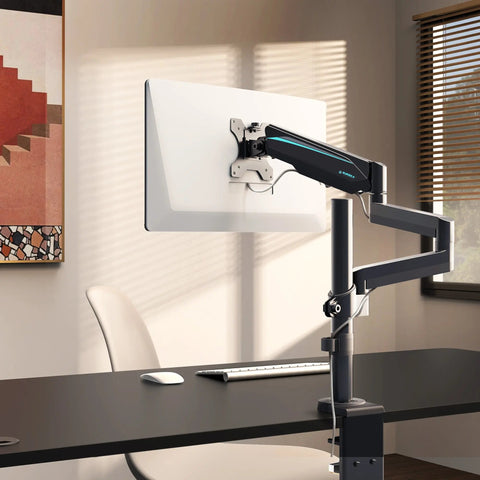
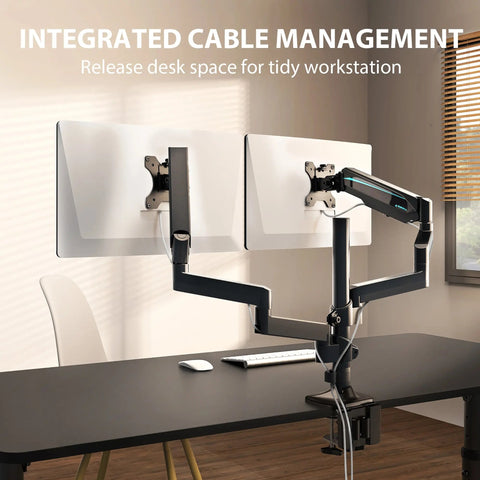
To facilitate these transitions without disrupting screen-heavy tasks, the use of a Dual Monitor Arm is essential. It allows the processor to maintain the ISO 9241-5:2024 recommended viewing angle (top of screen at eye level) whether they are seated or slightly perched.

Engineering for Longevity: Compliance and Certifications
In a B2B environment, "comfort" is subjective, but "compliance" is measurable. Procurement leaders should prioritize chairs that meet or exceed industry safety and durability standards.
- ANSI/BIFMA X5.1: This is the gold standard for office chair safety and structural adequacy. It ensures the chair can handle the rigors of 24/7 operations in a multi-shift claims center.
- UL GREENGUARD Gold: For high-density centers, indoor air quality is a concern. UL GREENGUARD Certification ensures the furniture has low chemical emissions (VOCs), contributing to a healthier environment and potentially reducing respiratory-related absenteeism.
- EN 1335-1:2020: For organizations with European operations, this standard ensures the chair dimensions encourage posture changes and stability.
Enhancing the Seated Experience: The Role of Accessories
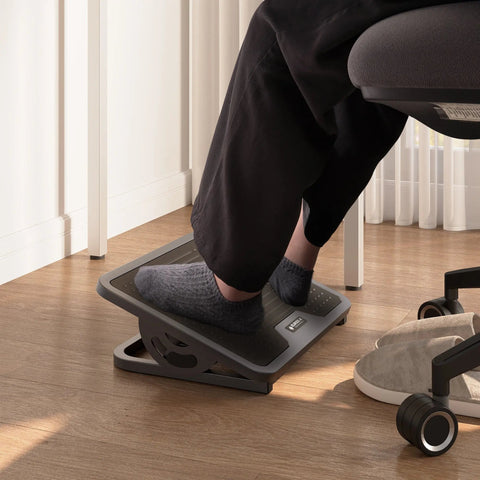
While the chair is the foundation, secondary interventions can significantly reduce lower-limb strain. For processors on the shorter end of the anthropometric scale, a chair set to the correct height for the desk may leave their feet dangling, compressing the back of the thighs.
The Footstool with Wheels addresses this by allowing the user to maintain a 90-degree knee angle while supporting the feet, which improves venous return and reduces the risk of lower-limb edema—a common complaint in sedentary roles.

Actionable Recommendations for Facility Managers
- Conduct a Gap Analysis: Use the HSE DSE Checklist to evaluate your current workstation setups.
- Pilot Diverse Models: Instead of a site-wide rollout, pilot 3-4 different chair models (e.g., the Serene for executive roles and the Forma for general processing) to gather employee feedback.
- Implement Quarterly Adjustments: Don't just "set and forget." As employees gain or lose weight, or as their tasks shift, their chair settings must be recalibrated.
- Quantify Your Metrics: Track absenteeism and claims-per-hour before and after the intervention to verify the ROI for future budget requests.
By moving away from "commodity furniture" and toward "ergonomic infrastructure," insurance organizations can transform their claims centers from high-stress environments into high-performance hubs. The investment in a chair like the Serene, Napa Leather Executive Office Chair is not merely an expense; it is a strategic move to safeguard the organization's most valuable asset: its people.
Disclaimer: This article is for informational purposes only and does not constitute professional medical, legal, or financial advice. Ergonomic needs vary significantly by individual; users with pre-existing musculoskeletal conditions should consult an occupational therapist or medical professional before making significant changes to their workstation.
References
- BIFMA G1-2013 Ergonomics Guideline for Furniture
- ISO 9241-5:2024 Workstation layout & postural requirements
- HSE: Working safely with display screen equipment (DSE)
- OSHA eTools: Computer Workstations - Neutral Working Postures
- WHO 2020 Guidelines on Physical Activity & Sedentary Behaviour
- Cornell University Ergonomics Web — Workstation Guides
- Cochrane: Workplace interventions for reducing sitting at work (2018)
- The 2026 Workstation White Paper: Converging Ergonomic Science and Sustainable Engineering




Leave a comment