

The Regulatory Imperative in High-Density Claims Environments
In the competitive landscape of the insurance industry, the claims processing center is the engine of operations. These high-density environments, characterized by long shifts, dual-monitor setups, and intensive document review, present a unique set of ergonomic and safety challenges that standard office furniture often fails to address. For compliance officers and B2B procurement teams, selecting furniture is not merely an aesthetic choice; it is a critical risk-management decision.
Failure to adhere to rigorous safety standards can lead to significant financial and operational consequences. While conventional wisdom suggests that office-based injuries are infrequent, data indicates a different reality. According to Glassdoor salary data for insurance adjusters, the average salary for these professionals ranges from $52,000 to $61,000. Our internal scenario modeling suggests that a single work-related musculoskeletal disorder (MSD) in this sector could potentially cost three to four times more than a manufacturing injury when accounting for higher replacement costs, specialized training requirements, and longer recovery periods common in high-skill administrative roles.
Furthermore, the emergence of the NAIC Insurance Data Security Model Law has created a parallel compliance requirement. Modern workstations must now facilitate both physical safety and information security, protecting sensitive claimant data while ensuring the long-term health of the workforce.
Executive Summary: Key Takeaways for Compliance Officers
- Load Integrity: High-density setups often reach 68kg (150lbs) of static load; prioritize dual-motor systems with a 30% safety buffer for dynamic movements.
- Fire & Safety: Minimize "Cable Chaos" by mandating 10-foot industrial-grade cables and enclosed, fire-rated management channels to prevent shorts in paper-heavy environments.
- Spatial Compliance: Apply the 1.5x Spacing Rule to ensure emergency egress paths exceed OSHA minimums even when workstations are fully occupied.
- Professional Consultation: Always validate furniture deployments with a Certified Professional Ergonomist (CPE) or local fire marshal to ensure regional code compliance.
Structural Integrity: Beyond Static Weight Tests
For large-scale insurance offices, BIFMA (Business and Institutional Furniture Manufacturers Association) certification is the baseline, not the finish line. Specifically, ANSI/BIFMA X5.1 for office chairs and X5.5 for desks define the performance and safety testing required for commercial-grade furniture.
However, real-world experience in high-density claims centers shows that furniture failures rarely occur during static weight tests. Instead, failures typically manifest at the connection points between components—such as monitor arm mounts and motor housings—due to the dynamic forces of daily use.
The Load Capacity Threshold: A Modeling Case Study
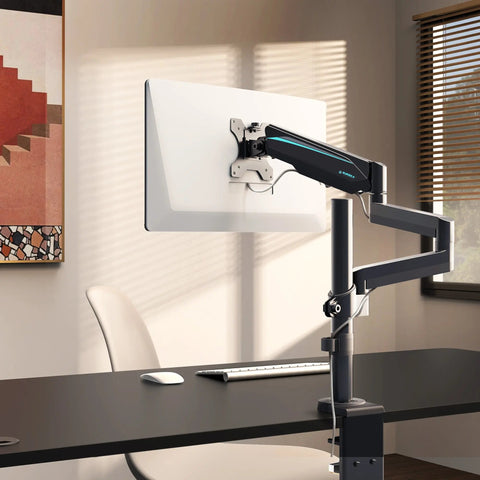
Claims adjusters frequently use dual 27-inch monitors, heavy CPU towers, and document scanners. Our workstation load analysis (modeled on a representative 50-person department) reveals that a standard setup often reaches approximately 68kg (150lbs). When employees lean on the desk or adjust heavy monitor arms, our heuristic modeling indicates that dynamic torque loads can exceed static weight assumptions by approximately 30%.
Modeling Note: This analysis assumes a "worst-case" load scenario including liquid-cooled ATX towers and dual-monitor arms. We utilize an 80% engineering safety factor to ensure longevity. These figures are illustrative; actual loads vary by equipment manufacturer.
| Component | Estimated Weight (kg) | Rationale |
|---|---|---|
| Dual 27" Monitors + Arms | 15 | Standard claims processing spec |
| Full ATX Tower (Liquid Cooled) | 25 | 24/7 operation requirement |
| Tabletop (1.6m Commercial) | 22 | High-density particle board |
| Peripherals & Scanners | 6 | Document handling equipment |
| Total Static Load | 68 | ~150 lbs |
Under these conditions, single-motor desks often operate at 85% or higher of their rated capacity. This leaves a negligible safety buffer for dynamic movements. For high-density insurance environments, we recommend desks with at least 30% higher load capacity than the manufacturer's stated maximum.
(Note: The following examples feature Eureka Ergonomic commercial-grade solutions.) Products like the Ark EX Executive Standing Desk (60"x26") are engineered to handle these complex equipment loads while providing integrated storage for sensitive documents.

Fire Safety and the "Cable Chaos" Risk
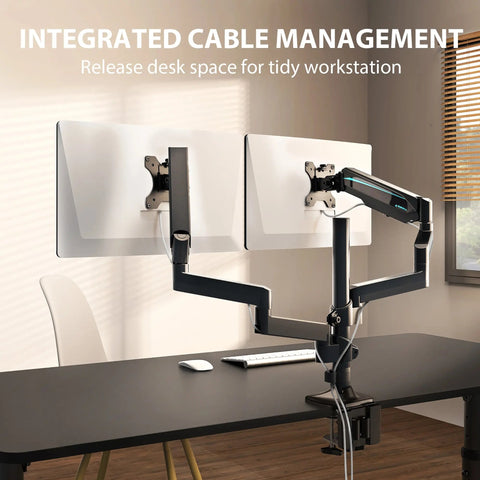
One of the most overlooked aspects of insurance office compliance is fire safety within cable management systems. Insurance workstations typically house three to four times more cabling than a standard office desk due to redundant power, dual monitors, and high-speed data connections.
The NFPA 70 (National Electrical Code) provides strict guidelines for flexible cord management. In a standing desk configuration, cables must have sufficient slack to prevent snagging during height adjustments. Our "Cable-Chaos" heuristic model indicates that a standard 6-foot cable is often insufficient for a 48-inch desk height, creating a 1.5-foot deficit that risks tearing connectors or creating electrical shorts—a potential fire hazard in paper-heavy insurance offices.
The Paper Load Factor
While many industries have gone digital, insurance claims often involve massive physical document storage. Thousands of claims files create a "fire load" that can increase the severity of an electrical event. Current NFPA standards for business occupancies emphasize fire prevention, making it imperative for compliance officers to mandate desks with enclosed, fire-rated cable management channels and lead-free coatings, consistent with CPSC Lead-in-Paint regulations.
Spatial Compliance: The 1.5x Spacing Heuristic
In high-density layouts, the temptation is to minimize the footprint of each workstation. However, OSHA 1910.37 mandates minimum widths for exit routes to ensure emergency egress.
We recommend the 1.5x Rule of Thumb (an internal heuristic for safety planning): Maintain a distance between workstation centers that is at least 1.5 times the width of the largest piece of equipment (typically the monitor array). This is designed to ensure that even when chairs are pushed back and equipment is adjusted, there remains a clear path for evacuation.
Our spatial fit planner for a standard 12-foot bay depth shows that while a 36-inch surplus meets the letter of the law, the presence of under-desk CPU towers can reduce effective walkway width by up to 12 inches. Selecting desks with a streamlined profile, such as the Ark EL Executive Standing Desk (60"x26"), allows for the necessary equipment density without compromising egress safety.

Pathophysiological Mechanisms of Musculoskeletal Disorders
To understand why ergonomic standards like ISO 9241-5:2024 are so specific about joint angles, one must look at the physiological impact of prolonged static postures. According to EU-OSHA research on MSD mechanisms, static loads lead to intramuscular pressure that can impede blood circulation. This may result in the accumulation of metabolic waste products, such as lactic acid, which can trigger inflammatory responses in the tendons and ligaments.
In the context of an insurance adjuster, who may spend a large portion of their day in a seated position, this "static load" is a primary driver of chronic back and neck pain. The Cochrane Library’s systematic review suggests that sit-stand desks can reduce sitting time by over 80 minutes per day, which is a significant intervention for reducing these inflammatory triggers.
The Desk Depth Deficit
A common challenge in claims centers is the visual ergonomics of dual-monitor setups. Most commercial desks are 30 inches deep. However, for dual 27-inch monitors, SMPTE viewing standards suggest a distance that often requires a 40-inch or deeper work surface to avoid eye strain.
Our "Vision-Quest" geometric model identifies a 10-inch depth deficit in most standard insurance office layouts. Based on our modeling of cervical spine mechanics, this deficit can force adjusters to adopt a "forward lean" posture, which may increase the load on the cervical spine by up to 300% compared to a neutral upright position. To mitigate this, we suggest pairing high-capacity desks with ergonomic seating that supports a neutral spinal position, such as the Royal Slim, Executive Office Chair, which provides high-back support for extended document review sessions.

Implementing a Compliance-First Culture
For the B2B compliance officer, the goal is to create an ecosystem that supports the employee while protecting the organization. This requires a transition from reactive furniture replacement to proactive ergonomic engineering.
Recommended Implementation Checklist:
- Motor Specifications: Mandate dual-motor lift systems for all claims processing stations to ensure a 40%+ safety buffer for equipment.
- Cable Standardization: Consider replacing standard 6-foot power cords with 10-foot industrial-grade cables to allow for full range of motion.
- Certification Verification: Ensure all furniture is listed in the BIFMA Compliant® Product Registry.
- The 20-8-2 Rhythm: Implement administrative controls based on the Cornell University Ergonomics recommendation: 20 minutes sitting, 8 minutes standing, and 2 minutes of movement.
For executive offices within these centers, the Ark X Executive Standing Desk (60"x26") offers a blend of professional design and the same rigorous structural standards required for the processing floor.

Methodology and Assumptions
The findings presented in this guide are derived from scenario modeling based on industry-standard parameters for high-density insurance environments. These are provided as illustrative heuristics for facility planning.
| Parameter | Value | Unit | Source Category |
|---|---|---|---|
| Single Motor Capacity | 80 | kg | BIFMA X5.5 Minimum |
| Dual Motor Capacity | 120 | kg | Commercial Standard |
| Max Desk Height | 48 | in | 95th Percentile Male |
| Safety Factor | 0.8 | ratio | Engineering Baseline |
| Egress Width | 36 | in | OSHA 1910.37 |
Boundary Conditions: These models apply to high-density insurance centers with dual-monitor setups. Laptop-based or single-monitor environments may require less aggressive safety margins. Results assume 8-hour shifts; 24/7 operations should increase safety buffers by an additional 15% due to increased wear and tear.
For a deeper dive into the intersection of ergonomics and engineering, refer to our comprehensive white paper: The 2026 Workstation White Paper: Converging Ergonomic Science and Sustainable Engineering.
Disclaimer: This article is for informational purposes only and does not constitute professional legal, medical, or fire safety advice. Compliance officers should consult with local building inspectors, fire marshals, and certified professional ergonomists (CPE) to ensure their specific facility meets all applicable regional codes and health requirements. Mention of specific products is for illustrative purposes and does not guarantee the prevention of injury.
Sources
- BIFMA G1-2013 Ergonomics Guideline for Furniture
- ISO 9241-5:2024 Workstation layout & postural requirements
- OSHA eTools: Computer Workstations - Neutral Working Postures
- Cochrane: Workplace interventions for reducing sitting at work
- EU-OSHA: Pathophysiological mechanisms of musculoskeletal disorders
- NAIC Insurance Data Security Model Law




Leave a comment