

The Hidden Impact of an Unstable Executive Chair
Why does your lower back feel fatigued by 3:00 PM, even when sitting in a premium chair? While many professionals attribute afternoon discomfort to workload or age, the culprit is often a subtle, persistent mechanical instability. A wobbly executive chair is more than a minor annoyance; it is a disruptor of the "spinal neutral position" and a primary contributor to musculoskeletal strain.
When a chair sways or tilts unexpectedly, your body compensates through "micro-contractions." Your core and stabilizer muscles must constantly engage to maintain balance, leading to what ergonomists call "static load" fatigue. Over months, this instability can exacerbate Musculoskeletal Disorders (MSDs), reducing both your physical well-being and professional focus. Restoring stability is not merely a matter of comfort—it is a critical maintenance task for your long-term health.
The Physiology of Instability: Why "Small" Wobbles Matter
To understand why a wobbly chair is problematic, we must look at the physical principles of seated work. According to the ISO 11226:2000 Evaluation of static working postures, maintaining any static position for an extended period places a specific physiological demand on the body. When that position is unstable, the demand increases exponentially.
The Mechanism of Muscle Fatigue
In a stable environment, your chair's lumbar support and seat pan provide the external structure needed to keep your spine in a neutral curve. When the chair develops "play"—mechanical looseness—your musculoskeletal system must provide that missing structure. This results in:
- Increased Static Load: Muscles remain in a state of constant, low-level contraction, which restricts blood circulation and leads to the buildup of metabolic waste products like lactic acid.
- Postural Drift: To avoid the "wobble zone," users often lean into awkward, non-neutral positions, leading to Repetitive Strain Injury (RSI) risks in the neck and shoulders.
- Reduced Proprioceptive Focus: Your brain must dedicate a portion of its processing power to managing balance, subtly detracting from high-level cognitive tasks.
As highlighted in The 2026 Workstation White Paper: Converging Ergonomic-Science and Sustainable Engineering, the integrity of the workstation's foundation is a prerequisite for any ergonomic benefit. Without mechanical stability, even the most advanced lumbar support cannot function as intended.

Anatomy of a Wobble: Identifying the Root Cause
Most users assume a wobbly chair just needs "tightening," but professional troubleshooting requires a more granular approach. Based on patterns observed in technical support and furniture maintenance logs, instability usually originates from one of four specific mechanical interfaces.
1. The Seat-to-Mechanism Connection
This is the most common point of failure. The bolts connecting the seat pan to the tilt mechanism (the "control box") endure constant shear forces as you shift weight. Over time, these can work loose.
2. The Gas Cylinder "Pistoning"
If the chair wobbles vertically or feels "spongy" when you sit, the gas cylinder—the pressurized column that controls height—may be failing. This is often caused by an internal seal failure, leading to what technicians call "pistoning." This is generally not user-serviceable and requires a component replacement.
3. The Center Column Set Screw
A frequently overlooked "gotcha" in executive chair maintenance is the set screw located at the base of the center column. If this screw loosens, the entire upper half of the chair will sway independently of the five-star base.
4. Base and Caster Interface
Wobble can also originate from the star-shaped base. Standard dual-wheel casters can develop play in their plastic sockets. Interestingly, the issue is often the socket in the base itself rather than the wheel stem.
Logic Summary: This troubleshooting framework is built on mechanical pattern recognition from furniture repair scenarios (not a controlled lab study). It assumes standard office chair architecture utilizing a Class 4 gas lift and a multi-function tilt mechanism.
Step-by-Step Troubleshooting and DIY Fixes
Before considering a replacement, follow this systematic guide to restore your chair’s professional reliability.
Step 1: The Hardware Audit
Flip the chair over and inspect all visible bolts.
- The Crisscross Method: When tightening the four main bolts under the seat, use a crisscross pattern (like tightening lug nuts on a car tire). This ensures even pressure distribution across the mechanism housing and prevents uneven stress on the frame.
- Torque Specifications: Avoid "brute force." Based on standard SAE bolt sizes common in premium furniture, M8 bolts should be tightened to approximately 15-20 Nm (11-15 ft-lbs). Over-tightening can strip threads in cast aluminum bases, leading to permanent damage.
Step 2: Checking the Center Column
Inspect the interface where the gas cylinder enters the five-star base. If there is visible lateral movement here, check for a set screw. Tightening this small component can often solve a "mysterious" sway that bolt-tightening failed to fix.
Step 3: Caster and Base Maintenance
For chairs used on hard floors, standard plastic casters often vibrate and contribute to a feeling of instability.
- The Rollerblade Upgrade: Switching to rollerblade-style polyurethane wheels can dramatically reduce wobble and protect flooring.
- The Carpet Factor: If your office is carpeted, a high-density plastic chair mat is essential. Without it, the base legs sink unevenly into the pile, creating a fulcrum effect that makes the chair feel unstable.
When to Repair vs. Replace: The 75% Rule
At what point does maintenance stop being cost-effective? In the world of executive assets, we apply the "75% Rule" of maintenance.
| Parameter | Repair Criteria | Replacement Criteria |
|---|---|---|
| Cost Ratio | Repair cost < 50% of original value | Repair cost > 75% of replacement value |
| Component Type | Loose bolts, worn casters | Cracked base, failed tilt mechanism, torn upholstery |
| Safety Standard | Meets ANSI/BIFMA X5.1 | Fails structural integrity tests |
| Age | Under 3–5 years | Over 7–10 years (out of warranty) |
| Ergonomic Value | Provides adequate lumbar support | Outdated design causing persistent MSD symptoms |
If your current chair requires a full tilt mechanism replacement or a new gas cylinder and is out of warranty, the labor and parts costs often approach the price of a new, high-performance model. Investing in a Serene, Napa Leather Executive Office Chair or a Royal Slim, Executive Office Chair ensures you are backed by modern certifications like the BIFMA G1-2013 Ergonomics Guideline, which guarantees a specific range of adjustability and stability for the 5th to 95th percentile of the population.
Establishing a Stable Workstation Strategy
Fixing the chair is only half the battle. To maximize your productivity and well-being, you must integrate the chair into a standardized ergonomic setup.
The Ideal Sit-Stand Rhythm
Even the most stable chair cannot offset the risks of prolonged sedentary behavior. The World Health Organization (WHO) recommends reducing sedentary time and interrupting long periods of static behavior. We suggest the Cornell "20-8-2" Rule:
- 20 Minutes Sitting: In a stable, neutral position (feet flat, back supported).
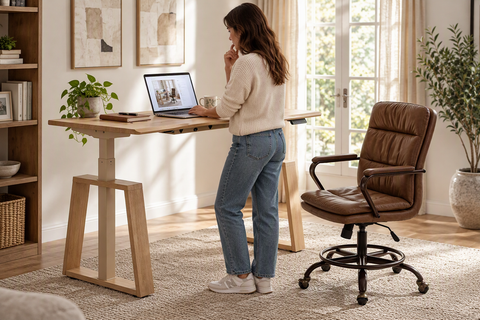
- 8 Minutes Standing: Using a height-adjustable desk.
- 2 Minutes Moving: Gentle stretching or walking to promote blood circulation.
Optimizing Your Seated Posture
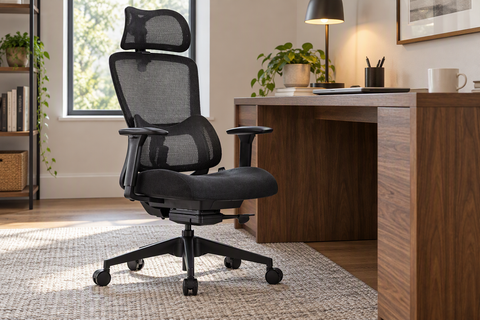
When seated in a premium chair like the Royal II, Silicone & Leather Executive Ergonomic Office Chair, follow these guidelines derived from OSHA eTools: Computer Workstations:
- Elbows: Keep them at a 90-120 degree angle, close to your body.
- Monitor Height: The top of the screen should be at or slightly below eye level to prevent neck strain.
- Feet: Should be flat on the floor. If your chair height prevents this, use a Footstool with Wheels to maintain the 90-degree angle at your knees and hips.

Professional Reliability and Long-Term Care
For executives and high-capacity users (250+ lbs), maintenance should be proactive rather than reactive. The constant micro-movements from reclining and swiveling work hardware loose faster than in static sitting environments.
Preventive Maintenance Schedule:
- Every 6 Months: Retighten all base and mechanism bolts using the crisscross pattern.
- Annually: Clean and lubricate the gas cylinder’s outer housing with a dry silicone spray (avoid WD-40, which can attract dust).
- Ongoing: Inspect casters for hair or debris buildup, which can cause uneven rolling and lateral stress on the base.
By selecting furniture that meets ISO 9241-5:2024 requirements, you ensure that your chair is designed for the rigors of modern professional use. High-quality materials, such as those found in the Serene, Napa Leather Executive Office Chair, provide a more rigid frame that is less prone to developing the "play" that leads to instability.

Summary of Actionable Insights
Addressing a wobbly chair is a high-ROI activity for your health and focus. Start by identifying the specific interface of the wobble—whether it's a loose bolt, a failing cylinder, or an uneven base. Use standardized torque and tightening patterns to ensure a lasting fix. If the chair has reached the end of its mechanical life, prioritize a replacement that adheres to BIFMA and ISO ergonomic standards to safeguard your musculoskeletal health.
A stable chair is the foundation of a high-performance workspace. When your equipment is reliable, your mind is free to focus on the work that truly matters.
Disclaimer: This article is for informational purposes only and does not constitute professional medical or mechanical advice. If you are experiencing chronic pain, please consult a qualified healthcare professional or a certified ergonomist. Always refer to your furniture manufacturer's specific manual before performing repairs to avoid voiding warranties or compromising safety.
References
- BIFMA G1-2013 Ergonomics Guideline for Furniture
- ISO 11226:2000 Evaluation of static working postures
- OSHA eTools: Computer Workstations - Neutral Working Postures
- WHO 2020 Guidelines on Physical Activity & Sedentary Behaviour
- ANSI/BIFMA X5.1 General-Purpose Office Chairs
- ISO 9241-5:2024 Workstation layout & postural requirements




Leave a comment